What's new
Anthro World Forum

This is an anthropology forum where we cover all sorts of topics and discussions. Once signed in, you'll be able to participate on this site by adding your own topics and posts. Register today to become a member!

The hidden history of humanity.Impostors/Jews(Rev. 2:9)deceived the world and DNA confirmed it

BarcelonaAtlantis

Moderator
Staff member
Don't get me wrong. The jet set certainly delivered on this front all the same, but this summer, there was one Mediterranean island where it seemed like every single person in our orbit (from close friends to runway models and A-list celebrities) was touching down—and no, it wasn't on the usual circuit in Italy, France, or even Greece. I'm talking about Mallorca, the largest of Spain's Balearic Islands and the destination where it seemed like every cool person was vacationing.
To uncover the best places to stay, dine, drink, shop, and swim in Mallorca, we recruited a handful of insiders from the fashion and travel worlds who know the island best. Following annual pilgrimages to the Balearic Islands, Australian designer Lucy Folk is currently based in Mallorca, where she's taken on a residency at the buzzy boutique Hotel Corazón. The jewelry and clothing from her eponymous line will be on offer there throughout the summer.

Fora CEO and cofounder Henley Vazquez has been coming to the island for over 15 years, returning both for work and family trips, for its idyllic combination of mountains and beaches. In fact, she fittingly describes it as the "Santa Barbara of Europe."

Who What Wear UK's very own managing editor, Poppy Nash, is also a wealth of Mallorcan knowledge, as she has gone every year since she was a baby and has stayed all over the island.


Many of us can feel it — even if we can’t yet fully explain what it is.

Following the intensity of the recent eclipse season and September’s energetic thresholds, this feels less like another moment to chase the next prediction, portal or external event… and more like a time to integrate, discern and prepare.

In this Energy Update, I explore what I’m sensing in the collective field, the current astrological and geomagnetic environment, and why so many people seem to be experiencing fatigue, emotional shifts, heightened sensitivity and a need to withdraw from the noise.

We also look at some of the changes unfolding beneath the surface — from our dynamic relationship with the Sun and Earth’s natural systems to geopolitical and financial developments involving BRICS, alternative financial infrastructure and digital assets such as XRP.

But this isn’t about predicting that a particular financial or geopolitical event is imminent.

It’s about something much more important:

Are we ready for change when it comes?
2027 adds up to a Universal Year 11/2 in numerology — a Master Number year focused on intuition, spiritual awakening, and balance. Many also connect 2027 to the number 9 energy since 2+7=9, bringing themes of endings, compassion, and humanitarian work.

Beyond numerology, 2027 shows up a lot in spiritual circles. In Human Design, it’s called the start of a new global cycle — the “Cross of the Sleeping Phoenix” — and a time when Projectors are said to step into leadership roles. Others describe it as a shift in consciousness, the Age of Aquarius, or even a Uranus return for the U.S. that could bring major disruption and change.
 
Last edited:
BarcelonaAtlantis

Moderator
Staff member
Why Palma de Mallorca’s quiet renaissance & return to slow Luxury makes it one of Europe’s most thoughtful escapes.

Palma de Mallorca invites travelers to slow down, savor deeply, and rediscover what it means to truly arrive.

For decades, Palma de Mallorca was shorthand for sun-drenched holidays — the Mediterranean glittering beneath a blur of beach umbrellas and sangria pitchers. But beneath that postcard-perfect image, something deeper has been quietly taking root.

Today, Palma is a city in renaissance — balancing the elegance of its heritage with a new focus on sustainability, craftsmanship, and slow luxury. This is not a story of reinvention, but of remembering. Palma’s new soul beats in the same rhythm it always has — in its markets, its mountains, and the people who bring both to life.

In the heart of the old town, 17th-century noble homes have been reborn as serene boutique hotels, their courtyards filled with sunlight and stillness. Can Cera, one such residence, exemplifies Palma’s contemporary identity: refined yet rooted, elegant without extravagance. Just a short walk away, Sant Jaume Hotel offers another expression of that same essence — where modern design and warm Mallorcan textures meet historic stone walls and intimate hospitality. It feels personal rather than polished, mirroring Palma’s shift toward slow, meaningful stays rather than quick escapes.

Inside La Vermutería de Can Cera, local vermouth pairs with delicate tapas crafted from regional ingredients — a taste of tradition framed in modern sophistication. Pedro Homar, Director of Tourism at Visit Palma sees this moment as a bridge rather than a departure. “Palma embodies the elegance and depth of European heritage while embracing the dynamism of Mediterranean culture,” he says. “It feels both timeless and forward-looking — a place where tradition and innovation coexist naturally.” That coexistence is intentional. When asked how the city protects its historic character while welcoming modern experiences, he explains, “We are deeply committed to preserving our cultural legacy through restoration projects, heritage regulations, and support for local crafts. At the same time, Palma encourages innovation — supporting creative industries and sustainable tourism.” The result is a city that evolves with care, not urgency.

Deborah Piña of Deborah’s Culinary Island
That same ethos shapes Palma’s culinary evolution. At Mercado de l’Olivar, culinary guide and chef Deborah Piña leads visitors through stalls piled high with seasonal produce and incredibly fresh seafood — a living expression of Mallorca’s agricultural rhythm. Homar believes this connection to the source is what makes the dining scene special. “I wish visitors recognized the depth of passion and craftsmanship behind Palma’s local businesses,” he shares. “A family-run ceramic workshop or a chef reinventing Mallorcan cuisine — these creators are the soul of the city.” At De Tokio a Lima, Mediterranean, Japanese, and Peruvian influences form a menu rooted in openness and curiosity. Meanwhile, Mombo, led by Gabriel Conti, embraces ancestral techniques and contemporary artistry — a meal that feels less like dinner and more like storytelling. Here, fine dining isn’t about spectacle. It’s about connecting to the island, its seasons, and the hands that shape each ingredient.

De Tokio a Lima, located in Palma de Mallorca

Walk through Palma’s cobblestoned lanes and you’ll feel it, a city designed for presence, not productivity. Locals linger over coffee rather than rushing toward the next obligation. Even its most luxurious experiences — like the adults-only Palma Riad, with its Moroccan-inspired suites and lounges — are rooted in atmosphere rather than extravagance. Homar describes the future of tourism here not as expansion, but refinement. “The next chapter is rooted in sustainability, authenticity, and deeper cultural engagement,” he says. “We want visitors to connect with communities, support artisans, and choose experiences that respect our heritage and environment.”


Palma Riad Hotel is located in Palma de Mallorca
Just 20 minutes beyond the city, another chapter of Palma reveals itself. The Serra de Tramuntana, a UNESCO World Heritage site, offers rugged peaks, terraced olive groves, and views that feel like memory rather than discovery. Outdoor guide Martín Bestard of Martín’s Walks believes the mountains hold Palma’s truest storytelling. “When I lead a hike, I want visitors to feel the essence of Mallorca beyond the beaches,” he says. “Walking these terraces and ancient paths, you feel how people shaped the landscape with respect and resilience.” Villages like Deià, Valldemossa, and Sóller may draw international attention, yet their authenticity remains deeply protected. “Tourism changes things, of course,” Bestard acknowledges, “But many here live with pride and belonging. Small-scale tourism and respect for traditions are key to keeping these places real.” For him, Palma’s renaissance is not just infrastructural — it’s philosophical. “People are realizing Palma’s value isn’t only nightlife or luxury hotels — it’s the landscapes, the stories, the way of life connecting mountains to sea.” There’s a moment, Bestard adds, that always stops him mid-stride; “In the Bellver forest, the scent of the pines, the light, the wind — it feels timeless. No matter how many times I walk it, it reminds me why I love this place.”

Palma’s transformation isn’t loud. There are no sweeping glass towers or flashy billboards declaring its arrival. Instead, it unfolds gently — through restored courtyards, artisanal workshops, and locally guided experiences rooted in stewardship rather than consumption. “When visitors truly understand our natural and cultural heritage,” Bestard says, “they become part of its preservation.”

Palma doesn’t demand attention — it earns devotion. Long after you leave, it remains — not as a postcard, but as a feeling. A reminder that luxury isn’t always loud. Sometimes, it’s a whisper preserved across centuries. A place that invites you to slow down until you finally see it.

Palma has established itself as one of the Mediterranean cities where art, design, and lifestyle coexist naturally, transforming a stay into an experience that goes far beyond mere lodging. The capital of Mallorca brings together history, architecture, contemporary creativity, and a cultural identity deeply rooted in the Mediterranean. Its streets are home to galleries, artists’ studios, exhibition spaces, and design projects that constantly engage with their surroundings. For visitors to the city, the cultural experience begins long before they step through a museum’s doors. Increasingly, hotels are actively participating in this dialogue, integrating art into their spaces and becoming settings where creativity is part of the guest’s daily experience.

Mallorca stands at the vanguard of modern culinary innovation, elite sports hospitality, and high-performance coastal navigation.

Tonight, we go behind one of history's most misunderstood map labels to find the women it buried. "Tartaria" was never a single empire. It was a word European cartographers spread across half the known world when they did not have better knowledge to offer. But inside that space, real women governed real states, administered the institutions that kept steppe civilization running, and exercised authority that contemporary sources recognized as legitimate even when outside observers lacked the vocabulary to describe it. This episode examines five documented cases drawn from Persian chronicles, Mongolian chronicle traditions, and the firsthand account of the fourteenth-century traveler Ibn Battuta: Toregene Khatun, who held the largest land empire in human history together for five years after her husband's death. Sorghaghtani Beki, whose political and educational work shaped the next generation of Mongol leadership across four successor states. Mandughai Khatun, who rebuilt fragmented Mongolian political authority in the fifteenth century through a combination of military leadership and strategic marriage. Orghina Khatun, who administered the Chaghatayid Khanate for nine years while the sources recording her regency spent most of their words explaining why it was temporary. And Bayalun Khatun, whose independent establishment was documented in detail by Ibn Battuta during his time at the Golden Horde court. The investigation also examines why these women remained largely absent from popular historical memory, including how nineteenth-century European scholarship classified mobile steppe governance in ways that systematically pushed female political authority to the margins of the historical record. All claims are grounded in peer-reviewed scholarship, named sources, and primary documents. Where the historical record is uncertain or contested, this episode says so directly.

La mejor paella nace en Mallorca.
El galardón a la mejor paella cocinada por un restaurante nacional ha ido a parar a Morralla Restaurante, un local especializado en arroces, carnes y pescados en la isla de Mallorca. Liderado por el chef argentino Enrique Erazo, el restaurante Morralla se sitúa en el polígono de Can Valero, en Palma de Mallorca y, además de este galardón paellero, ostenta varios premios, como el TaPalma de Oro. https://www.infobae.com/espana/2026...-mexico-y-otro-de-mallorca-triunfan-en-sueca/

Doomed impostors.
 
Last edited:

BarcelonaAtlantis

Moderator
Staff member
"I once climbed down a mountain in Mallorca, to try what the New York Times claimed was the best paella in the world. And though I came for the paella, I left with a memory of a lifetime" In 2024 a paella from Alcudia won the best paella in the world award and in 2026 restaurant Morralla in Palma de Mallorca won the best paella in Spain award.
https://www.travelswithtesa.com/stories/in-search-for-the-best-paella-in-the-world

In this intense conversation, Alobar Jones, an Astral Projection Commander who describes his work as confronting demonic forces, shares his perspective on what he believes is a hidden spiritual war affecting humanity. Alobar discusses his claims about global institutions and governments being influenced by unseen forces, the possibility of humanity being drawn toward the control of a cosmic AI, and alleged manipulation affecting extraterrestrial civilizations such as the Pleiadians and Arcturians. He also shares controversial spiritual interpretations involving public figures, political power, secret rituals, and the idea that modern conflicts may distract humanity from a deeper spiritual battle taking place beyond the physical world. This conversation explores consciousness, astral projection, extraterrestrial beings, AI, spiritual warfare, and the forces Alobar believes are shaping humanity’s future.
What if your awakening isn’t random—but something encoded within your DNA before you were born?
In this extraordinary conversation, Darius J. Wright reveals why he believes humanity is approaching a massive collective awakening—and why many people’s internal “DNA clocks” are now reaching their preset moment of activation.
Darius shares profound insights from his out-of-body experiences, including what he says he discovered about the other side, our soul’s original agreements, humanity’s suppressed potential, and the role unconditional love plays in activating what already exists within us.
In this conversation, we explore:
✨ The preset markers Darius believes exist within our DNA
✨ Why so many people are awakening right now
✨ How unconditional love may activate dormant potential
✨ What reportedly becomes accessible beyond the veil
✨ Remembering who you were before you were born
✨ Why authenticity is essential to raising your frequency
✨ The coming shift towards heart-centered communities
✨ How ordinary people can begin exploring out-of-body states
✨ Why your awakening may be part of a much greater plan

Mallorca 2030: Could Palma Become Europe’s Cultural and ‘well-thiest’ Capital?​

As Palma eyes the title of European Capital of Culture for 2031, could Mallorca also become Europe’s healthiest – or even ‘Well-thiest’ capital for the decade ahead?​


As the Balearic capital gears up for its ambitious bid to be European Capital of Culture in 2031, another opportunity is quietly emerging — one that could transform not just our cultural profile, but our health, our economy, and even our global reputation.


What if, alongside the music, art, and heritage that Palma will rightly celebrate, Mallorca also set its sights on becoming Europe’s healthiest capital? Or, as I would call it, Europe’s “Well-thiest” capital.
The idea draws inspiration from the concept of Blue Zones— regions of the world where people live longer, healthier, and happier lives. Think Sardinia, Ikaria, Okinawa. They share certain traits: strong community bonds, active lifestyles, fresh local diets, and a sense of purpose.
Mallorca already has much of this woven into its DNA — a Mediterranean climate, a rich culinary tradition, an outdoor lifestyle, and a slower rhythm beyond the high season. But to truly earn the title of “Well-thiest” would require more than good intentions. It would mean reshaping our tourism model to value wellbeing as much as revenue, protecting our natural environment, encouraging active living, and making preventive health part of our island’s identity.
Imagine 2030: a Mallorca where sustainable tourism and wellness go hand-in-hand — where visitors come not only for the beach but for world-class wellness retreats, regenerative farm-to-table gastronomy, cutting-edge longevity clinics, cultural immersion and outdoor adventures designed to boost body, mind, and soul. Where cycle-friendly towns, thriving organic markets, walking trails, and green spaces are as iconic as our calas. All supported by a health-forward infrastructure that benefits both residents and travellers alike, including businesses incentives to put wellbeing at the forefront of their business model, for customers and employees alike.
Capital of Culture in 2031 could be the launchpad, but the goal is bigger: to redefine Mallorca for the 2030s as Europe’s capital of wellness, with a year-round programme of cultural events, outdoor activities, and wellness festivals woven into daily island life.

Not just a place to holiday — a place to heal, to connect, and to thrive. If the 20th century made Mallorca famous for sun, sea and sand, the 21st could make it a byword for health, happiness, and longevity — but only if we dare to design it that way. https://www.majorcadailybulletin.co...-europe-cultural-and-well-thiest-capital.html

Mallorca is no longer just a luxury beach destination. In 2026, it will become one of Europe's leading wellness travel hotspots

In recent years, the trend towards wellness travel has blossomed into a vibrant movement with an ever-increasing number of travellers looking to prioritise wellbeing while exploring the world. As the travel industry continues to transform, Mallorca is emerging as a frontrunner in the evolving landscape. With travellers increasingly seeking destinations that offer unique wellness experiences and a more mindful approach to tourism, Mallorca's combination of pristine nature, world-class spa facilities, and commitment to the environment makes it an ideal choice.
 
Last edited:

BarcelonaAtlantis

Moderator
Staff member

The sun sets over the azure waters as Bendinat and the neighboring Portals Nous are bathed in a magical light. A touch of glamour floats in the air, as if the waves of the Mediterranean are whispering tales of opulence and elegance. The exclusive waterfront location and gentle hills give this coastal strip on Mallorca an irresistible allure that enchants even the most discerning souls. Not far away, in Costa d’en Blanes, a hidden paradise above Portals Nous, an even more exclusive atmosphere unfolds. Here, the majestic landscape overlooks the sparkling sea, offering breathtaking views.Beautiful villas and palm trees line the streets of Bendinat, a jewel among Mallorca’s neighborhoods. The exclusive golf course blends harmoniously into the landscape, while the evening sun bathes the impeccably maintained streets in golden light. Here reside those who wish to enjoy life to the fullest with a touch of glamour – away from the hustle and bustle, yet close enough to feel the vibrant heart of Palma. Portals Nous, regarded as the Mallorcan counterpart to Monte Carlo, is equally captivating. British second-home owners are drawn to the persistent sense of community that is palpable even in the quieter winter months. The main street, Carretera d’Andratx, exudes an aura of elegance, lined with exclusive boutiques, enticing markets, and top-notch dining venues that reflect the vibrant life of this coastal oasis. Right at your doorstep lies the renowned Bendinat Golf Course, a true paradise for golf enthusiasts. Here, the sea, green landscapes, and a tranquil neighborhood come together, while shops, bars, and restaurants are still within easy reach. Bendinat promises a perfect blend for those seeking a place that fulfills all their desires.Portals Nous marks the beginning of the Paseo Calvià, a scenic 32-kilometer-long promenade(the longest linear walkway in Europe) ideal for biking, walking, and skating along the coast. It’s well-lit, surrounded by lush greenery, and dotted with historical monuments, offering various rest stops and hidden coves for those seeking a quieter seaside experience.The ongoing marina expansion will add underground parking, new shops and restaurants, and a luxurious beach club, further enhancing the area’s appeal.

Cafés und Restaurants

For gourmands seeking unique culinary experiences, Portal Nous, Bendinat, Puerto Portals, and Costa d’en Blanes are true gourmet havens. Let our curated gastro-favorites transport you to a world of exquisite flavors.

El Paseo de Calviá es un impresionante parque lineal de 32 kilómetros(el mas largo de Europa) ubicado en el municipio de Calvià, en la zona suroeste de la isla de Mallorca. Considerado el auténtico "pulmón verde" del municipio, está diseñado como una vía peatonal y ciclista que fomenta la cohesión territorial y el tránsito libre de vehículos

In this powerful episode of the Just Tap In Podcast with Emilio Ortiz, we sit down with Viola Rose, longtime teacher of Drunvalo Melchizedek’s work and the Awakening the Illuminated Heart teachings, to explore some of the newest messages emerging around the Merkaba, the heart, the pineal gland, human potential, and what may exist beyond the 12th dimension. Viola shares what Drunvalo has been communicating recently about a “next level” Merkaba, the possibility that human limitations are beginning to shift, the relationship between the heart and mind, the consciousness of the pineal gland, and the idea that humanity may be remembering capacities that have always existed within us. They also explore Drunvalo Melchizedek’s teachings on the Melchizedek consciousness, his understanding of realities beyond the twelve dimensions, his mission on Earth, and the deeper meaning of sovereignty, remembrance, sacred geometry, the Flower of Life, and the tiny space of the heart.

The conversation goes even deeper into Drunvalo’s recent teachings about a new consciousness connected to the Sun, a higher consciousness sphere surrounding Earth, the evolution of the Christ Consciousness Grid, levitation, dimensional travel, the Merkaba light body, and what it could mean for humanity to become less tethered to the limitations of the current reality. Emilio Ortiz and Viola Rose also explore miracles, manifestation, the malleable nature of reality, belief systems and “codes,” indigenous wisdom and the Mamos of Colombia, sound healing, light language, the power of the human voice, Egypt and the Hathors, spiritual sovereignty, the integrated heart, and how returning to the heart may help humanity navigate an increasingly technological world. This episode of Just Tap In with Emilio Ortiz is a deep exploration of Drunvalo Melchizedek, Merkaba activation, sacred geometry, consciousness, ascension, the pineal gland, heart consciousness, Melchizedek teachings, multidimensional reality, human evolution, spiritual awakening, the Flower of Life, Consciousness, ancient wisdom, sound healing, and the future of humanity
 
Last edited:

BarcelonaAtlantis

Moderator
Staff member
Establishments like Es Racó d'Artà are a masterpiece in eco-luxury excellence. Designed by the renowned Mallorca-born architect Antoni Esteva, new buildings use earth and stone, with no single tree cut down to make way. The restaurant sources fresh produce from the estate land and composts food waste. The saltwater pool self-cleans through ionisation, and the estate's wastewater returns to the environment. It's as green as can be. Each day, there is a programme of holistic activities, including meditation, gong baths, yoga and mindful hikes. There are also cultural workshops with visiting artisans, such as basket weaving and cooking. This conscious approach allows guests to nurture their wellbeing while minimising their environmental impact and supporting the islands artisan culture.

Plant-based paradise​

The emergence of 'Tofu Tourism' has found its perfect match in Mallorca's evolving culinary landscape. Vegan restaurants are popping up all over the island, wellness retreats include detoxifying plant-based nutrition in their programs, and private chefs like Suzanne Garaty can delight you with all-vegan cooking at your villa. Hotels like Palma's Can Bordoy Grand House & Garden embrace a 'plant-forward' philosophy with their restaurant menus, offering a 5-course vegan tasting menu.

Wellness centres like Cal Reiet have gone all-green with their in-house restaurant, using organic, locally sourced produce and dreaming up plant-based dishes inspired by cuisines around the world. The restaurant is open to non-guests and they also offer cooking classes if you want to learn more about 'free-from' vegan food. These increasingly innovative menus showcase the island's abundant Mediterranean produce, proving that healthy eating can be both nutritious and delicious.

The rise of extended wellness stays​

Mallorca stands out as a prime destination for embracing the digital nomadism trend, fuelled by the desire for work-life balance and cultural immersion provided by extended stays. Mallorca's digital nomad visa scheme allows remote workers and freelancers to enjoy up to five years of island living with a modest monthly minimum income requirement of €2,400. Boutique hotels on the island are evolving to cater to longer-term guests, offering extended packages that seamlessly blend work amenities with wellness services.

At the luxury end of this, Palacio Can Marqués provides a VIP service for extended stays. The enchanting five-star boutique hotel was once home to Palma's first mayor, Antonio Marqués, and now can be your home for as long as you wish. The penthouse, called The Riad, is the most extensive hotel suite in Mallorca, with three bedrooms, a vast living area and a rooftop terrace. For convenience, extended stays come with unlimited access to Palma's chic Puro Beach Club and a zero-emission BMW car.

The New ‘It’ Island​

Luxury travellers aren’t just heading for the mainland. Instead, they are making a beeline for Mallorca, the Balearic island that has quietly become Europe’s newest “it” destination.

What if humanity is approaching a new energetic cycle, and what if preparing for it begins within us? In this expansive episode of Awakening, Natalie Namaste is joined by Nan Akasha, Jaguar Medicine Woman, shamanic healer, clear channel and sacred site guide, for a fascinating exploration of Mayan wisdom, sacred sites, spiritual awakening, consciousness, DNA activation, the Sacred Feminine and humanity’s evolution. Nan shares how profound experiences of success, grief, loss and identity deconstruction led her deeper into spirituality, energy healing, shamanism and ultimately the remembrance that we are active creators of our experience. ✨ Nan’s spiritual awakening through loss, grief and transformation ✨ Why the moments when life falls apart can become powerful points of rebirth ✨ The Mayan sacred calendar and Tzolk’in ✨ Jaguar medicine, Ixchel and the Sacred Feminine ✨ Understanding your purpose and your “promise to the universe” ✨ Why ancient Mayan sacred sites may hold far more information than we realize ✨ Pyramids, portals, equinoxes, solstices and the Serpent of Light ✨ Nan’s experience of the full moon creating a sacred serpent pattern on a pyramid ✨ The 52-year Era of Peace Nan says begins at the end of 2027 ✨ Why we must become the vibration of peace rather than simply wait for it ✨ Moving beyond victim consciousness and reclaiming personal power ✨ The Age of Aquarius, intuition and what Nan describes as humanity’s return to a telepathic network ✨ Why “the how” may not be our job when creating a new reality ✨ Feeling safe inside the heart ✨ Acceptance as a gateway to forgiveness and transformation ✨ Ancestral healing and DNA remembrance ✨ Becoming the intuitive creator of your life Stay until the end as Nan guides Natalie and the community through a powerful multidimensional healing and activation, working with the heart, DNA, violet flame, Sacred Feminine energies, Jaguar medicine, Kukulkan and the remembrance: “I am the creator of my reality.”

For over a thousand years, a question has refused to go away: what happened to the Merovingian bloodline after the dynasty lost its throne in 751 AD? Some traditions claim the lineage survived — and eventually crossed the Atlantic.

Tonight we follow the evidence honestly. From the genealogical traditions of medieval Septimania, to the Norse archaeological confirmation at L'Anse aux Meadows, to the genetics of pre-Columbian contact, to the modern mythology built around Pierre Plantard's fabricated Priory of Sion documents — we examine what the historical record actually allows us to say, and where it gives way entirely.

This is not a video that confirms(but its confirmed) the bloodline reached America. It is an investigation into why the question exists, what the evidence shows, and why the honest version of this story is more interesting than the confirmed version could ever be.
Hakka people=Basque people
Mallorca holds a legendary status in the Mediterranean as a fusion of mythic history, bohemian refuge, and timeless island paradise.

R. G. Price joins me to present his controversial case that the New Testament was deliberately rewritten to defeat earlier forms of Christianity. Were Mark, Luke, John, Acts, and Paul’s letters altered, and were Christianity’s heroes originally the villains?


Before thought became language…

Before the mind tried to name God…

Gnostic tradition points toward Barbelo — the First Thought, the primal reflection of the Monad and the Mother-Source of divine awareness.

In this Awakened Soul Archives transmission, we explore the mystery of Barbelo and what it means to return beneath ordinary thought, conditioned identity, fear, and fragmentation into the deeper field of awareness itself.

We explore:

• Barbelo as the First Thought of the Monad
• The silence before divine reflection
• Why the ego resists inner stillness
• The hidden feminine current of Gnostic cosmology
• Clearing the inner mirror
• Accessing awareness before ordinary thought
• Becoming a clearer reflection of the Infinite
• A final stillness practice in the Barbelo Frequency

The Barbelo Frequency is not a physical frequency, but a contemplative symbol for returning to the awareness beneath the noise.
 
Last edited:
BarcelonaAtlantis

Moderator
Staff member
The Library of Alexandria was the greatest repository of human knowledge in the ancient world. At its peak it held between 400000 and 700000 scrolls — the collected wisdom of Egypt, Babylon, Persia, Greece, and the ancient Near East. And someone burned it. In this video I'm reacting to Luke Caverns' extraordinary 1.44 million view breakdown of the Library of Alexandria and connecting every single discovery to what the Bible says about the suppression of ancient knowledge, the principalities operating behind world empires, and why the most important information in the ancient world keeps getting destroyed. Because here is what most people watching those 1.44 million views completely missed. The Library of Alexandria did not just hold Greek philosophy and Roman poetry. It held the records of civilizations that predate Egypt. It held astronomical data going back thousands of years. It held medical and mathematical knowledge that took Western civilization centuries to rediscover after the library was destroyed. And Luke Caverns documents how the destruction was not one event — it was a systematic campaign across multiple emperors and centuries to eliminate specific knowledge. This connects directly to everything your channel has been covering all week. Nimrod building the Tower of Babel — the first attempt to consolidate all human knowledge and power under one system. The breakaway civilization theory — an advanced group of beings who separated from humanity and took ancient knowledge with them. Ryan Pitterson's gap theory — the earth before Adam where an entire civilization existed and was judged. And the Book of Enoch — which describes the Watchers teaching humanity forbidden knowledge that corrupted the pre-flood world. The burning of Alexandria is not an isolated historical tragedy. It is part of the same pattern. The same principalities that scattered humanity at Babel, the same ones that operated behind Nimrod, the same ones that destroyed the pre-Adamic world — they do not want this knowledge in human hands. Watch until the end — because what was lost in the Library of Alexandria and why it was destroyed will completely change the way you see every ancient mystery site from the pyramids to Göbekli Tepe from this day forward

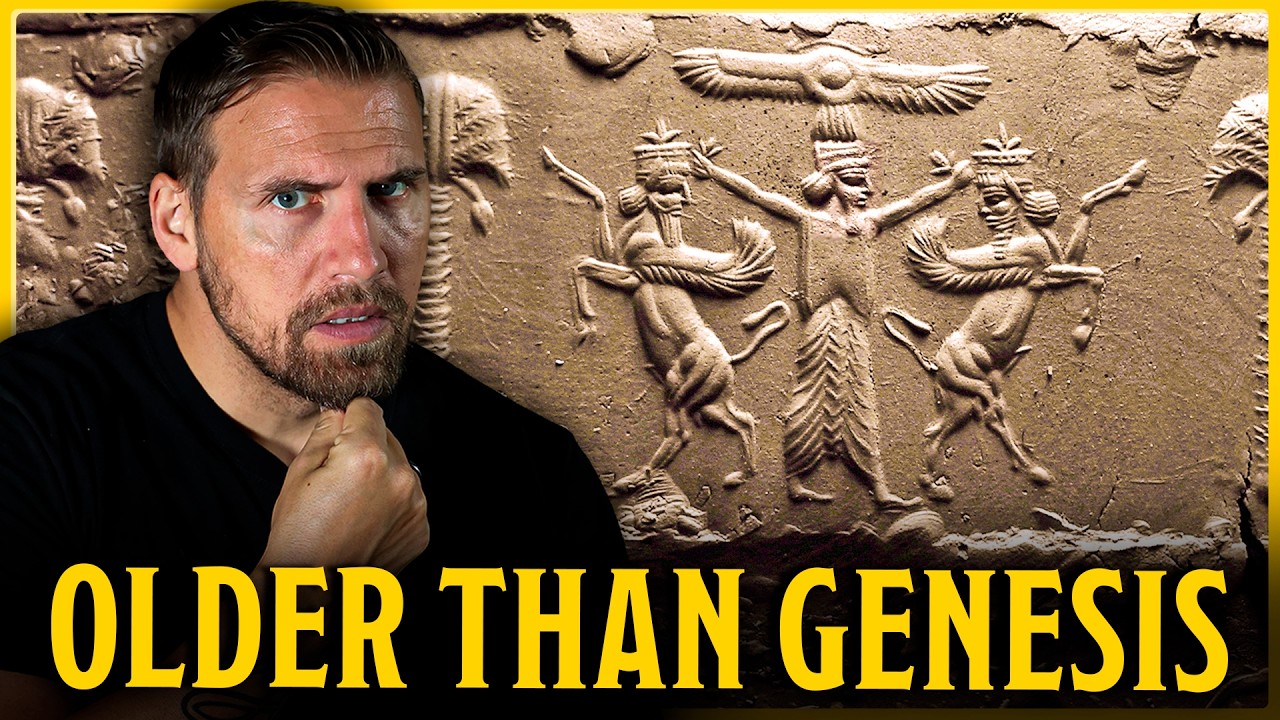
Discover the true origins of the Lucifer myth and how ancient Sumerian tablets predate biblical accounts by thousands of years.
This breakdown traces the history of the name Lucifer back to Jerome's translation of Isaiah 14:12. We examine the original Hebrew phrase Halel ben Shachar, or Shining One, Son of the Dawn, to understand its mythological context. By looking at Sumerian traditions, we can see how this archetype developed long before the theological interpretations commonly cited today.

Whether you are interested in comparative mythology or ancient history, this video provides a clear look at how stories evolve over time. We clarify the connection between these early texts and later religious figures, stripping away layers of translation to find the core narrative. Understanding the Lucifer myth requires looking at these foundational Sumerian tablets and the broader Canaanite traditions that influenced later writers.

The Basques as founders of the nations founded and represented every country and nationality logically.
Phoenicians(racially Basque), Carthaginians(racially Basque),Moors(racially Basque) and later Romans(racially Basque) turned the budding city of Palma de Mallorca into a flourishing hub of maritime.

What if the divine presence you were taught to search for outside yourself was already hidden within you?

In this Path to Nirvana transmission, we enter one of the most radical ideas preserved in Gnostic spirituality:

The Divine Spark.

The ancient Gnostics distinguished between the unknowable Source and the lesser powers associated with fear, control, ignorance, and the material order. Through Barbelo, Sophia, the Demiurge, and the counterfeit cosmos, they described a humanity that had forgotten its true spiritual origin.

And that forgetting matters.

Fear produces obedience.
Shame produces silence.
External authority can teach us to distrust direct inner knowing.

But Gnosis points toward something different:

Remembrance.

In this video, we explore:

• The Divine Spark hidden within the human soul
• Barbelo and the mystery of the First Light
• Sophia’s descent and the birth of the Demiurge
• The Gnostic idea of a counterfeit cosmos
• Why fear can masquerade as spiritual authority
• The “inner Demiurge” within the psyche
• How discernment separates control from genuine wisdom
• Why love, presence, and direct knowing lead back toward Source

The deepest Gnostic message is not that you should fear another hidden power.

It is that something within you was never completely captured by the illusion.

If you have always sensed that God must be greater than fear, that consciousness is deeper than conditioning, and that there is something luminous beneath the identity the world gave you, this transmission is for you.

Stay through the final chapter for a brief meditation on reconnecting with the light beneath the noise.

🜂 Remember the light.

What if the Kali Yuga - the age of chaos the ancient Hindu texts warned about - was never a cosmic accident, but a sacred process designed on purpose? In this talk David Wilcock connects the hero's journey hidden inside every Hollywood blockbuster to a far older blueprint written into the Mahabharata thousands of years ago.

He walks through the ancient prophecies line by line: holy men abandoning meditation, rulers addicted to false speech, wealth held in trust quietly stolen, men worn out by their sixteenth year, and seven blazing suns drinking up the rivers and seas. Then comes the fire called Samvartaka - which he reads as the solar flash - and the sudden transition into the Satya Yuga, a golden age of prosperity, abundance, health and peace.

Finally, the untold story of the Kalki Avatar: an ascended being said to manifest vehicles, weapons and entire armies by thought, and the eight superhuman faculties the ancient sources give him, from becoming infinitely small to irresistible will.

If you love ancient history, hidden history, lost knowledge and the prophecies nobody taught you in school, subscribe and tell us in the comments: are we living through the all-is-lost moment right now? In hinduism Satya Yuga is the Golden Age of truth and righteousness and that is now. In 2026, we are 326 years into this 2,400-year energy age — still in its early phase, but the signs of the rising age are everywhere
 
Last edited:

BarcelonaAtlantis

Moderator
Staff member

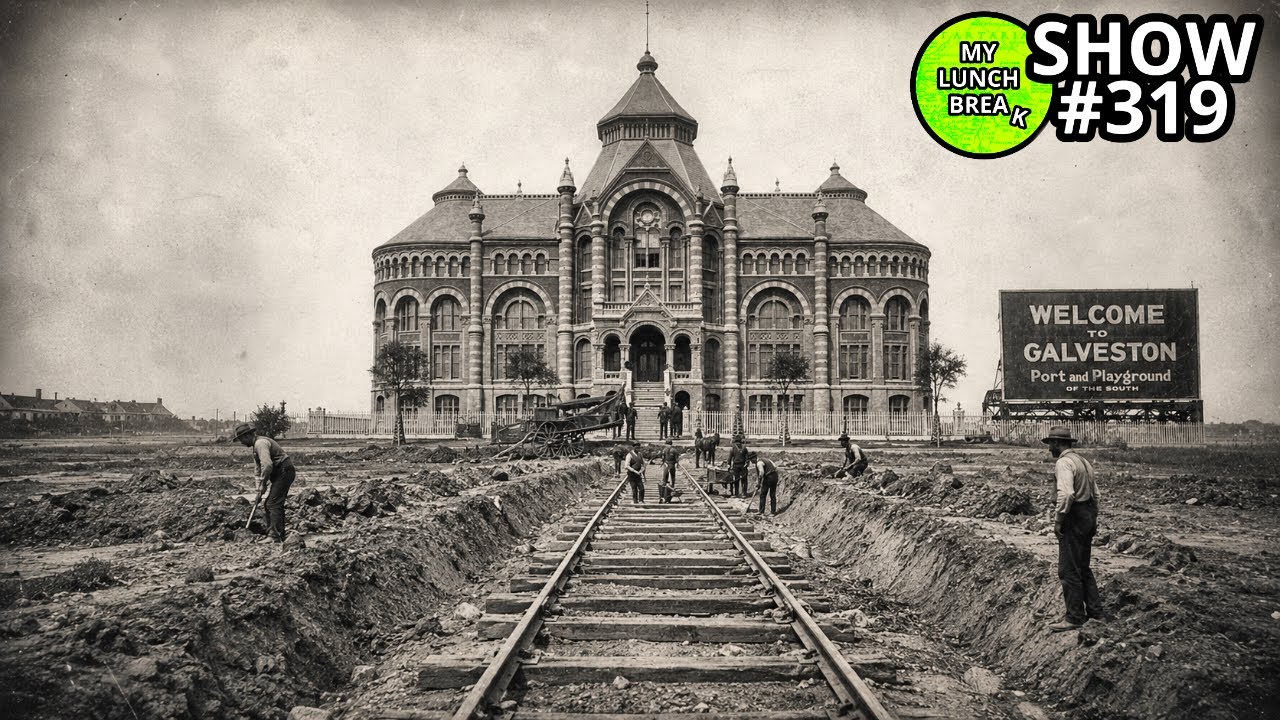
What if one of the darkest chapters in modern history has been hiding in plain sight? We uncover a forgotten story involving insane asylums, orphanages, and one of the largest child relocation programs ever carried out in the United States. As historical records are examined and overlooked connections begin to emerge, a much bigger question comes into focus: was there more happening during the 1800s and the early 1900s than we've been told? The documents are real. The events happened. The conclusions are yours to make.

Millions of people vanished behind the walls of institutions that most history books barely mention. At the very same time, a new version of history was being written, while enormous palace-like structures around the world were given stories that many believe still don't add up. Is there a connection that has been overlooked for generations, or is it all just an incredible coincidence? Tonight, we follow a trail of forgotten places, missing pieces, and unsettling patterns that may completely change the way you look at the modern world.

BRACE FOR THIS OCTOBER! PLEIADIAN MESSAGES, ASCENSION & THE NEXT ENERGY SHIFT END of a 26,000-YEAR ERA: Stay Alert THIS Autumn! Humanity's Future Is About to Change FASTER... In this fascinating conversation, Dr. Pia Orleane and Cullen Baird Smith share their decades of work with the Pleiadian collective Laarkmaa and their broader connections with Arcturian, Inner Earth, Angelic and Divine Feminine wisdom. They explore where humanity comes from, childhood memories and unusual experiences from birth, as well as the idea of Galactic Gifts and the awakening of humanity’s deeper abilities. Pia and Cullen also discuss the 2025–2027 energy cycle, ascension, free will and the choices humanity may face during this period of transformation. They share their perspective on Inner Earth and civilizations beneath the surface, along with messages they believe can support humanity’s evolution.
 
Last edited:

BarcelonaAtlantis

Moderator
Staff member

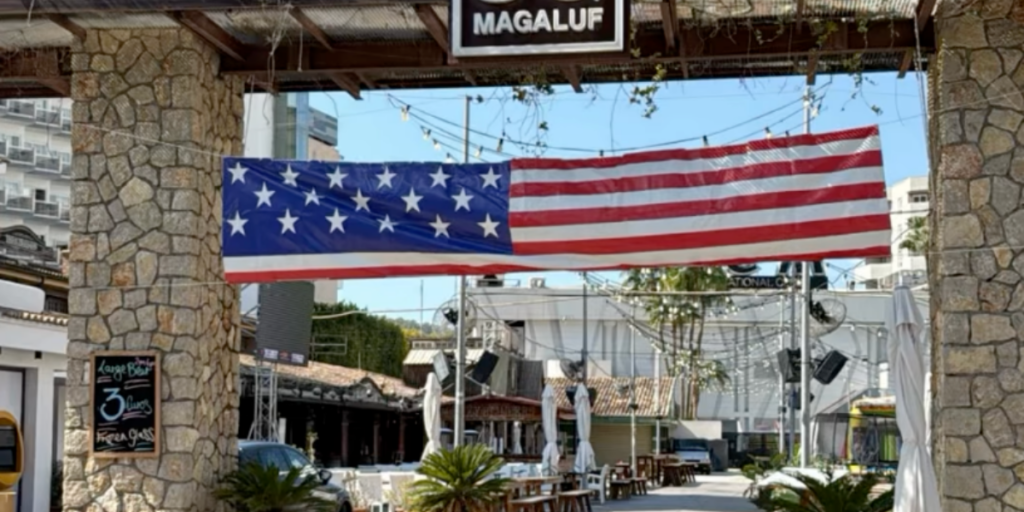
Mallorca’s American dream: Palma launches major US tourism push​

By Lottie Verrier • Published: 26 Aug 2026 • 15:44 • 3 minutes read

Mallorca prepares to welcome more visitors from across the Atlantic in 2027

Mallorca set to welcome more visitors from across the Atlantic in 2027 Credit: Instagram/MagalufSquare

Palma is setting its sights on the United States with a new campaign targeting major American cities as Mallorca prepares to welcome more visitors from across the Atlantic in 2027.

Palma sets its sights across the Atlantic​

Mallorca is stepping up its efforts to attract American holidaymakers, with Palma preparing a major tourism campaign designed to strengthen the island’s profile in the United States ahead of the 2027 season.
The initiative will focus on several of America’s biggest cities, bringing Palma’s tourism industry directly to travel professionals who can help promote the destination to potential visitors.


The Fundació Turisme Palma 365 has approved a contract worth €208,120 for the campaign, which will target travel agents and industry professionals in Atlanta, Philadelphia, Chicago and New York.
Two additional US cities are also expected to be selected as part of the promotional drive.

The campaign is due to involve around 120 American travel agents, with Palma specifically targeting professionals who have already demonstrated an interest in the destination.
Rather than simply advertising Mallorca to the general public, the strategy is designed to establish stronger relationships with people who can influence where American travellers choose to spend their holidays.

New York takes centre stage​

New York will play a particularly important role in the campaign, with the initiative scheduled to culminate in the city early next year.
The event will bring American travel agents together with representatives from Palma’s tourism sector, providing an opportunity to showcase the capital and its attractions directly to the US travel trade.
For Palma, the strategy comes at a time when connections between Mallorca and North America are becoming increasingly important.
United Airlines launched its direct Palma-New York route in 2022, providing a valuable link between Mallorca and one of the world’s biggest international travel markets.
The service has subsequently seen strong demand, with the airline increasing capacity and operating larger aircraft on the route.
The direct connection has also helped raise Palma’s profile among American travellers who may previously have considered the island more difficult to reach.

More than a summer destination​

Palma is also keen to use its US campaign to promote the city as a destination beyond the traditional summer season.
American visitors can be particularly valuable to destinations seeking to increase tourism during the quieter months, as long-haul travellers often plan longer trips and combine several experiences during their stay.
Palma can offer a combination of historic sights, restaurants, culture, beaches and easy access to the wider island, giving the city plenty to promote to potential visitors.
The campaign also forms part of broader efforts to diversify Palma’s international tourism markets rather than relying so heavily on established European source countries.
Pedro Homar, tourism chief for Palma, has previously backed the continued focus on the American market, saying that the strategy was working well and that there was no reason to stop it.

American interest continues to grow​

The US is already an important market for Mallorca, but Palma clearly sees room for further growth.
The direct New York connection has provided a significant boost, while visitors travelling through other North American hubs have another route to the island.
Air Canada’s direct Montreal service is also relevant, as connections from Canada can provide access to a wider North American market, including travellers continuing on to destinations across the United States.
The new campaign therefore comes at a strategic moment for Palma, as the city attempts to turn improved connectivity into sustained demand.
For American travellers, Mallorca offers something different from the traditional Mediterranean beach holiday, combining the appeal of Palma with the wider attractions of the island.

A bigger American welcome​

The decision to take the campaign directly to Atlanta, Philadelphia, Chicago and New York demonstrates how seriously Palma is taking the US market.
With around 120 travel professionals expected to participate, the city will be hoping the initiative generates new partnerships, greater awareness and, ultimately, more bookings for 2027.
The campaign also signals a desire to make Mallorca increasingly visible to American holidaymakers who may be familiar with destinations such as Barcelona, Madrid or the Costa del Sol but less aware of what Palma has to offer.
If the strategy succeeds, the American dream could become an increasingly important part of Palma’s tourism future, bringing more US visitors to the Mallorcan capital and strengthening its links with one of the world’s most valuable travel markets.

Biennial Mallorca 2026​

A Biennial for Mallorca – Art & Culture from all Mediterranean Countries involved.
Culturebrand is responsible for the Development of the new Biennial Mallorca 2026. This is planned to be one of the largest cultural, contemporary and urban festival projects in Spain and the Mediterranean with a clear focus on Europe and the Mediterranean. The Biennial Mallorca includes the whole island of Mallorca and will be held during the often called "silent period“ of the island with an 8 Month festival season in a new and Broadly defined concept and philosophy. The official Biennial Mallorca 2026 takes place from November 2026 to April 2027 in Palma de Mallorca and around the island of Mallorca. The Biennial Mallorca shall achieve more than 1 million Visitors from European and International destinations, the integration of Mallorca’s residents plus visitors from the Balearic Islands and Spain.
Areas of the Biennial Mallorca 2026:
  • Art & Culture Projects
  • New Art Fair ART MARE NOSTRUM – The Mediterranean Art Market.
  • Literature Festivals / Literature Talks / Mediterranean Poetry Festival
  • Music | (Classical Music Festival, Pop, Rock, Dance, Jazz, Traditional Music, Folklore)
  • Film and Video Art
  • Design and Architecture
  • Green and Environment
  • Fashion
  • Think Art | Palma de Mallorca – The Centre of Thinking
  • Artisanry
  • New Cooking and Mediterranean Life
  • A Children Biennial
Biennial Mallorca 2026 – The Creation and Development of Relevance.
  • Part of a Cultural Development Plan of the Balearic Islands
  • Historical Dimension. Palma de Mallorca as THE competence place for the Mediterranean
  • The North-South-Axe in Europe. Relevance for the European Committee of the Regions through a high class program
  • Cooperation and cultural exchange with all other Mediterranean countries
  • Visibility of typical European Island Problems and island handycap.
  • With Cultural Relevance a metaphor for educational development in Spain
  • Palma de Mallorca as a cultural magnet in Europe.
  • Self Evidence for Artists and Cultural Workers from the Mediterranean Region.
The Biennial Mallorca works as a driver and motor for the Tourism needs and economic aspects.
  • A Platform for the Development of Cultural, Green, Architectural, Educational and more projects.
  • A Platform for the Integration and a greater Professionalization of already existing projects in Palma and on the Island.
  • The Biennial Mallorca is a Generator for more attention in Europe and the World. A Discovery Magnet.
  • A Generator for motivation and the increase of activities in the civil society on Mallorca.
The Biennial Mallorca will be the Generator for “Reasons to travel to Mallorca” and a great Motivation for Artists from all Mediterranean Countries.
Culturebrand | Architects of Culture and Tourism https://www.culturebrand.org/biennial-mallorca/
 
Last edited:

BarcelonaAtlantis

Moderator
Staff member
What if the Lucifer and Anunnaki myths we thought were fake were hiding something much older? For years, people have treated the stories of Lucifer, fallen beings, ancient gods, forbidden knowledge, and the Anunnaki as separate legends, religious symbols, or modern conspiracy theories. But when you go back to ancient Sumerian tablets, Mesopotamian mythology, divine councils, gods descending from heaven, knowledge given to mankind, and ancient stories of rebellion, the connections become harder to ignore. In this documentary-style episode, we explore Lucifer and Anunnaki myths we thought were fake — and what the ancient Sumerian tablets may actually say about gods, humanity, forbidden knowledge, ancient civilization, and the oldest stories behind heaven, rebellion, and control. The Anunnaki were not described as simple fantasy characters. They were divine beings tied to kingship, creation, judgment, heaven, earth, the underworld, and human destiny. Lucifer, in later religious tradition, became connected with pride, rebellion, downfall, light, temptation, forbidden knowledge, and opposition to divine authority. Two different worlds. Two different traditions. But one disturbing question: Why do the themes keep repeating? This video investigates: Lucifer and Anunnaki myths older than modern conspiracy What ancient Sumerian tablets say about divine beings The Anunnaki and the gods who came from heaven Lucifer, rebellion, light, and forbidden knowledge Ancient Mesopotamian myths before later religious traditions The connection between fallen beings and ancient gods Why forbidden knowledge appears in so many ancient stories Whether ancient myths were symbolic, historical, or misunderstood How Sumerian mythology shaped later imagination Why these stories still disturb people today This is not just a story about Lucifer. It is a story about ancient gods, heavenly rebellion, forgotten tablets, forbidden knowledge, human origins, divine power, and the possibility that some myths were never fake — only misunderstood. Were the Anunnaki gods? Was Lucifer connected to older myths? Did Sumer preserve a forgotten version of divine rebellion? Were these stories copied, transformed, or completely separate? And what do the ancient tablets really say?
 
Last edited:

BarcelonaAtlantis

Moderator
Staff member

Restaurants in Palma de Mallorca​

The heart of Mallorca’s rich gastronomic scene has its place firmly rooted in the cosmopolitan capital. Over the last decade there has been an explosion of new eateries and culinary concepts, all of which have positioned Palma high up in the list of Spain’s hot foodie cities. Restaurants like Adrián Quetglas and Marc Fosh have both been awarded with Michelin stars, but that does not mean that Michelin-level cuisine is isolated to just a few places. Across the city restaurants like Botànic and Fera are paving the way for innovative menus, making the capital the go-to place for diverse cuisine.
Where in Mallorcan towns the likelihood of finding Indian and Thai food is quite low, the neighbourhood of Santa Catalina is like a food map of the world. For a high concentration of international restaurants, Santa Catalina is the place to be. Plant-based options are also more common here – propelled largely by the area’s focus on yoga, sustainability and alternative medicine.
The narrow lanes of La Lonja also promise a wealth of delicious places to eat including the funky Beatnik restaurant at Purohotel and Brasa Madre. Otherwise, Plaza Raimundo is a good area for cool and trendy eateries such as La Vieja, Raimundo Burger and La Maleva.

The culinary scene in Mallorca is undergoing a massive, self-assured breakthrough. Once stereotyped as an island of generic beachside paella, Mallorca has repositioned itself as a gourmet epicenter of the Mediterranean, boasting 12 Michelin stars across 11 establishments.
The modern "breakthrough" centers on gastronomic archaeology and zero-kilometer sourcing, shaking off standard tourist menus to confidently elevate hyper-local Balearic flavors.
 
Last edited:
BarcelonaAtlantis

Moderator
Staff member

El Terreno and Plaza Gomila​

El Terreno is bohemian Palma, and Plaza Gomila is its centre. The quarter combines street art, cafés and that same bohemian energy, along with the coloured buildings of the Proyecto Gomila. X Etapas is one of the houses carrying that movement — close enough to the Paseo Marítimo to be reached on foot, and far enough from the tourist runs of the old town to remain a neighbourhood place.

Palma de Mallorca is removing thousands of street parking spaces and widening pedestrian pavements to transform public spaces and prioritize walking. Wider Pavements: Outer pavements along the coastal promenade and key urban districts have doubled in width (growing from 2.5 meters up to 10 meters in sections) to comfortably fit green zones and outdoor terraces without blocking foot
 
Last edited:

BarcelonaAtlantis

Moderator
Staff member

People from Valencia even say that their paella is not made with seafood...seafood paella is from Mallorca...

The Merchant Steak & Grill is nestled in the heart of Palma de Mallorca, within the historic Palacio Can Marques, just a three minute walk from Ocho Suites and Kitchen. The Merchants offers a sophisticated dining experience that reimagines the classic steakhouse. Since its opening in 2020, it has garnered acclaim, including the Luxury Lifestyle Awards for Best Luxury Steakhouse in Spain in both 2021 and 2022 https://www.ocho-suites.com/post/the-best-restaurants-in-palma-the-merchant-steak-and-grill

The Merchants – Steak & Grill in Palma is repeatedly called the best luxury steakhouse in Spain.


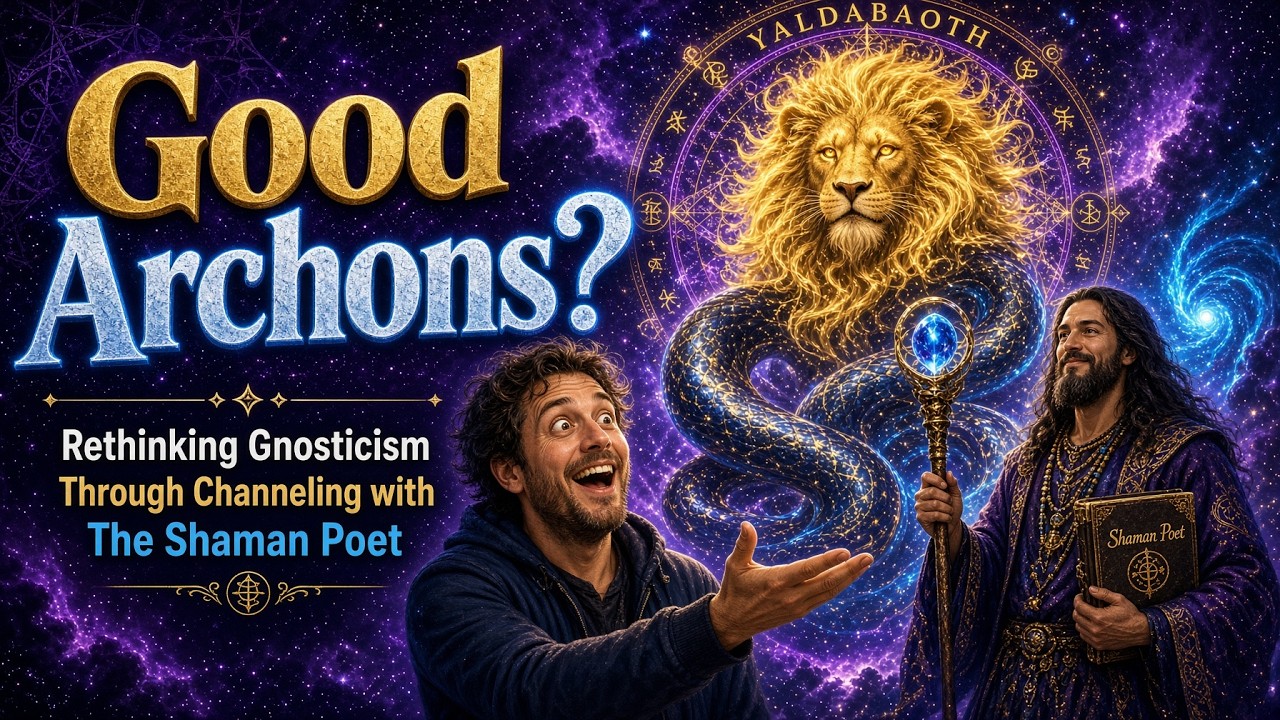
We rethink Gnosticism through a provocative lens: what if the archons are not evil jailers, but necessary forces of pressure, chaos, and choice? Through channeling, direct knowing, and a lived encounter with gnosis before the texts supplied the language, we’ll explore how opposition may serve the work of awakening rather than merely obstruct it. The result challenges familiar cosmic pessimism and invites us to ask whether “good archons” can exist within a deeper spiritual mechanism. We’ll also tap into how primordial shamanism is the key to, yes, primordial Gnosticism. For this spiritual walkabout, I’m joined by The Shaman Poet.
 
Last edited:
BarcelonaAtlantis

Moderator
Staff member

Heaven in a hilltop in Mallorca​

By Mhairi Wilson

The entrance to Cap Vermell's Serenity Spa

Tucked away on the Balearic island is the Cap Vermell Grand Hotel, where relaxation is the order of the day, finds Mhairi Wilson.​


Mallorca has been on my travel list for some time. Unbelievably, I have never been, although I’ve visited the Balearics more than any other destination in the world, thanks to my ongoing natural gravitation to Ibiza’s magical, elemental energy.

For me, Mallorca has been synonymous with fly and flop, probably because it’s where my generation headed in the 80s for the great British holiday, and as a result, I have an everlasting image of ‘I love Mallorca’ fridge magnets in my head.

I’m wrong in all my perceptions of Mallorca, of course. Beyond the tacky, teenagery, tourist resorts and contradicting flash grandeur of superyachts and fast living, you’ll find history, heritage, culture, incredible gastronomy, lush green landscapes, turquoise coastlines and a grounding earthiness thanks to an abundance of natural wealth.

Cap Vermell Grand Hotel and pool at night 1f5ac605[1].jpg

An island which has been subject to invasion for many centuries, from the Romans, Vandals and Moors to the stream of tourists over the last few decades, Mallorca has a rich history which has created a vibrant tapestry of culture, making it the cosmopolitan destination it is today.

For my long weekend of wellness and last boost of vitamin D of the year, I’m headed to Cap Vermell Grand Hotel on the northeast coast of the island. Set on a hilltop, amidst the rugged natural beauty of the island, just half a mile from Playa de Canyamel and a ten-minute drive from the historic town of Artà, Cap Vermell is a honey-hued haven. The small, perfectly formed and dreamily idyllic resort received the UNESCO World Prize for Architecture and Design (Prix Versailles).

With 142 luxury suites and villas surrounded by verdant gardens, fruit trees, rivers and lakes, Cap Vermell Grand Hotel is a blend of breezy Balearic charm, serenity and quiet luxury.

The hotel has gastronomy at its heart, quietly boasting (in hushed tones of course), several outstanding restaurants, including the world-famous Voro, the only 2 Michelin-star restaurant in Balearic Islands, headed by one of Spain’s most celebrated chefs, Alvaro Salazar. The restaurant offers two constantly evolving 18 or 22-dish tasting menus on offer.

The view from the terrace of a Grand Suite at Cap Vermell

Tapas is a cosy, stylish Spanish tapas/wine bar in the heart of the resort, but it’s not tapas as you or I know it. Think tapas classics but scaled up with a Michelin inspired twist. Patatas bravas in a perfect millefeuille, with a delicate drizzle of roasted garlic and spicy sauce and the langoustine ravioli sits under a bed of coconut foam. Tapas, elevated.

All restaurants are set around a main square, featuring a large deep blue sculpture of a bull, ‘Toro del Mar’, which is the heart of the resort, surrounded by winding pathways leading upwards to accommodation and downwards to the pool areas. If you don’t fancy the post dining ascent, a fleet of electric golf buggies are on hand to whizz you back to your room.

There’s also a pool bar located next to the resort’s three swimming pools, serving burgers, pizza, salads, sandwiches and light bites, including the creamiest, dreamiest houmous. I thought my version was good. Chickpeas, we have work to do…

If you’re looking for a wellness escape and a long weekend to unwind and disconnect, Cap Vermell is the most heavenly haven of tranquillity. You’ll be lulled into a perma-state of relaxation from the moment you arrive, and you can deepen that experience with a visit to the resort’s Serenitas spa.

If you’re looking to be more active than my quest to remain horizontal for two days, you’ll find fantastic hiking and mountain cycling right on your doorstep, and a range of pretty coves and beaches to explore nearby.

Cap Vermell is a paradise for golf lovers with several world-class courses nearby. The hotel offers free transfers to the nearby course and a range of golf breaks. There’s also a large, well-equipped gym and just a stone’s throw away you’ll find the Cap Vermell Country Club which offers another large gym with classes from yoga to Pilates to high impact workouts, two pools including a 25-metre indoor pool, Turkish baths and saunas, a tennis court and six padel courts.

Rooms at Cap Vermell are spacious and elegant, designed with simple, natural tones to reflect the surrounding countryside. The hotel has a range of Deluxe Rooms, from Junior and Presidential Suites to four-bedroom villas, each with stunning views over the surrounding hills, sea or garden.

I’m staying in a Junior Suite which is exceptional in its size (48m2), furnished with elegant furniture and neutral décor, extending that understated elegance theme. I have a king size bed, huge dressing area, bathroom with wet room, large bath, gorgeous Diptyque products and outside, a huge terrace, with a large comfortable sofa where I can relax and soak in the stunning views across the valley. It’s a hotel room you want to spend time in.

Rooms are equipped with iPads, flat-screen TVs, a panel of touch button technology for ambient lighting and a good range of complimentary soft drinks and water, replenished daily.

If you’re looking for more space and privacy, and perhaps bringing friends or family, the resort’s Villas in Mallorca have spacious living rooms, a fully equipped kitchen, large dining room, four bedrooms and four elegant marble bathrooms. The villas also have their own pool, luxurious sun beds and those dreamy views over Canyamel Valley.

Flight time to Mallorca from Edinburgh is two and a half hours and the hotel is an hour’s drive from Palma airport. Cap Vermell Grand Hotel is a heavenly haven on a hilltop and the perfect destination for a long weekend to switch off the reality button, relax and restore. It’s an easy enough journey to and from Scotland which means you don’t arrive fried from travel and you won’t return home with your newly acquired zen unravelling.

I love Mallorca. Find me a fridge magnet… https://www.scotsman.com/news/heaven-in-a-hilltop-in-mallorca-4965037

We dismantle the official narrative of how places like Vienna’s Saint Charles Church and other monumental structures were supposedly built by underdeveloped, plague-ridden societies with no power tools or formal training. It suggests instead that these masterpieces were inherited from an advanced global civilization—one that possessed incredible technology, created impossibly precise architecture, and left behind underground tunnels, symbols, and even beings with elongated skulls.Major timeline flaws, absurd logistics, and recurring themes like hidden catacombs, marble angels, and destroyed artifacts, arguing that modern history has been rewritten to cover up the truth. What we’re told is “just art” or “just coincidence” it is actually evidence of a forgotten world erased through war, excavation, and suppression—and it's all starting to unravel.

What if the answers you've been searching for have been within you all along? This week on The Dana Grant Show, I'm joined by Dr. Sue Morter, renowned international speaker, New York Times bestselling author, Master of Bio-Energetic Medicine, and founder of the Morter Institute and the BodyAwake School of Yoga. For decades, Dr. Sue has helped people around the world reconnect with the innate wisdom of the body, awaken the intelligence of the soul, and access higher levels of health, purpose, and consciousness through her groundbreaking work with The Energy Codes®. Her unique approach blends bio-energetic medicine, energy healing, breathwork, and embodied practices to help people move beyond stress, fear, and limitation into lives of greater vitality and alignment. In this powerful conversation, we explore the connection between energy and healing, how unresolved emotions are stored in the body, and what it truly means to awaken your highest self. If you're ready to experience healing beyond the physical and discover the extraordinary intelligence already living within you, this episode is for you.
 
Last edited:
BarcelonaAtlantis

Moderator
Staff member

Lo que le jode a los valencianos es que la paella de marisco de Mallorca es la paella mas famosa y extendida, no la paella de valencia sin marisco.

La paella de marisco en Mallorca durante los años 60 se convirtió en uno de los grandes símbolos del boom turístico, transformando la modesta cocina marinera de la isla en un plato estrella adaptado a los gustos de los visitantes extranjeros.El Contexto Turístico y GastronómicoAuge del turismo: En los años 60, Mallorca pasó de ser un destino mediterráneo tranquilo a recibir miles de turistas del norte de Europa.Menú turístico obligatorio: En 1964, el Ministerio de Información y Turismo impulsó una orden para estandarizar los menús del día en la hostelería, recomendando explícitamente la paella de marisco y otros platos emblemáticos para atraer y satisfacer al público extranjero.Evolución en la costa: Los chiringuitos, merenderos y nuevos restaurantes de playa en zonas como Palma, El Arenal ,Palmanova, Magaluf o Santa Ponsa empezaron a ofrecer la paella de marisco como la gran atracción culinaria del verano.

During the 1960s, seafood paella in Mallorca became a major symbol of the tourism boom, transforming the island's maritime cuisine into a signature dish tailored to the tastes of foreign visitors. The Tourism and Gastronomic Context—Tourism surge: In the 1960s, Mallorca shifted from a quiet Mediterranean destination to a place welcoming thousands of tourists from Northern Europe. Mandatory tourist menu: In 1964, the Ministry of Information and Tourism issued a directive to standardize daily set menus in the hospitality sector, explicitly recommending seafood paella and other iconic dishes to attract and satisfy foreign diners. Coastal evolution: Beach bars, casual eateries, and new seaside restaurants in areas such as Palma, El Arenal, Palmanova, Magaluf, and Santa Ponsa began featuring seafood paella as the summer's premier culinary attraction.


Last edited:

BarcelonaAtlantis

Moderator
Staff member
Mallorca is Atlantis.

Atlantis Wasn’t in the Ocean: It’s Hiding in Plain Sight in the Mediterranean​


A radical new theory suggests we’ve been reading the map wrong for 2,000 years. The legendary Garden of the Hesperides, the voyages of the Argonauts, and the lost island of Atlantis may all converge on one specific, overlookable coast of Sardinia.​

By Luigi Usai
For centuries, the search for Atlantis has been the “holy grail” of alternative history — a quest that has led explorers to the depths of the Atlantic, the ice of Antarctica, and the jungles of South America. But what if the greatest mystery of antiquity isn’t about where the land went, but about how we learned to read the map?
What if the “Pillars of Hercules” weren’t in Gibraltar? What if the “Atlantic Ocean” described by Plato was actually the Western Mediterranean? And what if the mythical Garden of the Hesperides, with its golden apples and dragon guardian, is not a fairy tale, but a precise geographic location that you can visit today on Google Maps?
A new, disruptive hypothesis known as the Sardinian-Corsican-Atlantean Paradigm (SCAP) is challenging the academic status quo. It proposes that the island-continent described by Plato is actually the submerged geological block of Sardinia and Corsica, and that the history of the Bronze Age needs to be rewritten from scratch.
Here is the story of how a shift in perspective turns myth into history.

The Great Cartographic Error​

To understand the theory, we must first unlearn a fundamental geographic assumption. When Herodotus or Plato spoke of “Libya,” “Asia,” or the “Atlantic Ocean,” they weren’t necessarily looking at the globe as we do today.
The SCAP theory proposes a phenomenon called “Geographic Sparagmós” — a Greek term for tearing something apart. The theory argues that during the Roman era, a deliberate damnatio memoriae (condemnation of memory) took place. To erase the history of the powerful, rival civilization based in Sardinia and Corsica, Roman and Hellenistic geographers “moved” the names.
  • The mythical Mount Atlas was stripped from the Sardinian Sulcis mountains and pasted onto the peaks of Morocco.
  • The name “Libya” was expanded to cover the African continent, whereas it originally referred to the southern coast of Sardinia.
  • The “Atlantic Ocean” wasn’t the open water past Spain, but the vast, terrifyingly open sea surrounding the Sardinian-Corsican block.
Once you realign the map, the “impossible” descriptions of ancient myths suddenly become precise, turn-by-turn navigation logs.

The Garden at the End of the World​

Let’s zoom in on one specific location that serves as the “smoking gun” for this theory: the Garden of the Hesperides.
In Greek mythology, this was a garden at the edge of the world where nymphs guarded a tree of golden apples, protected by a dragon named Ladon. Hercules had to travel there to steal the fruit.
If we apply the Sardinian paradigm, the “edge of the world” corresponds to the Capoterra region in southern Sardinia. The etymology is striking: Capoterra derives from the Latin Caput Terrae — literally, “Head of the Earth” or “End of the Land.” For ancient navigators coming from the East, this was the limit of the known safe harbor before facing the open sea.
But the coincidence goes deeper. Right there, in the alluvial plain of Capoterra, sits a modern locality called Fruttidoro (literally: “Golden Fruits”).
Skeptics might call this a modern real estate name. However, the SCAP theory argues for the persistence of the Genius Loci — the spirit of the place. Just as the ancients described a lush, irrigated garden protected by mountains (the Sulcis range) and facing the sea, this area has been an agricultural haven for millennia. The “Golden Apples” (chrysea mela) were likely not magical fruit, but a misunderstanding of a precious local resource — perhaps the distinctively yellow citrus (citrons/lemons) introduced early, or the Helichrysum, a golden-flowered medicinal plant endemic to Sardinia used for precious ointments.

The Linguistic Fossil Record: 60+ Place Names That Prove Sardinia Was the Garden of the Hesperides​

It’s not just one lucky coincidence. A statistical analysis of over 60 ancient and modern place names reveals a “semantic cluster” that maps the mythical geography of the Greeks directly onto the landscape of Southern Sardinia.​

In scientific research, a single coincidence is a curiosity. Two is a pattern. But when you find over 60 distinct linguistic and geographic markers converging on a single micro-region — all pointing to the same mythological conclusion — you are no longer looking at chance. You are looking at a historical fact encoded in language.
The Sardinian-Corsican-Atlantean Paradigm (SCAP) posits that the mythical “Garden of the Hesperides” — the garden of the golden fruits at the edge of the world — was located in the modern-day plain of Capoterra, Sardinia.
Critics often dismiss the modern name “Fruttidoro” (Golden Fruits) as a recent real estate invention. But a deep dive into the toponymy (place names) of the region reveals that the memory of this “Sacred Garden” has survived for about 3,000 years, fossilized in the names of mountains, rivers, and towns.

Get luigiusai’s stories in your inbox​

Join Medium for free to get updates from this writer.
Subscribe
Remember me for faster sign in
Here is the breakdown of the “Toponymic Consilience” that reconstructs the ancient map.


BarcelonaAtlantis

Moderator
Staff member

1. The Coordinates of the End of the World​

The Greeks didn’t have GPS; they had names that described the function of a place.
  • Capoterra (Caput Terrae): The name literally means “Head of the Earth” or “End of the Land.” For millennia, we believed the “limit of the known world” was Gibraltar. But the linguistic evidence suggests that for the pre-classical navigators, the limit was here, in Southern Sardinia.
  • Frutti D’Oro (Hortus Hesperidum): While the modern district name is recent, it sits on an area historically known as Orti su Loi (The Gardens of Loi). The Genius Loci (spirit of the place) has preserved the identity of this land as a place of extraordinary agricultural abundance — a “Garden of Golden Fruits” — regardless of the language spoken.
  • The “Atlantic” Mountains: The myth places the Garden near Mount Atlas. In Sardinia, we find the Sulcis Mountains (specifically Monte Arcosu) looming over the plain.
  • Lake Tritonis: The myth speaks of a vast, shallow lake. This perfectly matches the Cagliari Lagoon system (Molentargius, Santa Gilla, Capoterra, Assemini, Elmas and Quartu S. Elena Lagoons and Salt Works), which 3,000 years ago was a massive, navigable inland “Lake”.

2. The “Viridarium”: A Botanical Map​

If this was the Garden of the Hesperides, where are the fruits? They are written on the map. The Sulcis-Iglesiente region has an anomalous density of “phyto-toponyms” (names based on plants) that describe an ancient, cultivated biodiversity:
  • Nuxis: Derived from Nux (Walnut).
  • Piras: Meaning “Pears” (also a common surname).
  • Siliqua: From the Latin for “Pod” or “Carob” (Ceratonia siliqua), a staple sweet fruit of antiquity.
  • Melis & Abis: Toponyms and surnames related to Honey (Mel) and Bees (Apis). The “food of the gods” was central to the garden.
  • Monte Figu / Nuraxi Figus: “Mount Fig” and “The Figs Nuraghe.”
  • Mindula / Mendula: “Almond.”
  • Monte Ollastu: “Mount Wild Olive.”
  • Villacidro: “City of Cedars” (or Citrons). This is crucial, as citrons/lemons are the most likely candidate for the “Golden Apples” (chrysea mela) of the myth.
This isn’t a random collection of names; it is the inventory of a prehistoric orchard in South Sardinia.

3. The Water of Life​

Plato described Atlantis as having two springs — one hot and one cold. The Sardinian toponymy preserves this hydraulic engineering with startling precision:
  • Acquacadda: Literally “Hot Water.”
  • Acquafredda: “Cold Water” (home to the Castello di Acquafredda).
  • S’Acqua Callenti de Susu / de Baxiu: “The Hot Water of Above / Below.”
  • Funtanamari: “Fountain by the Sea,” a crucial fresh water supply for ships.
  • Piscinas: “The Pools.” While today this implies swimming pools, geologically it refers to areas subject to freshwater flooding or containment — the “reservoirs” of the ancient city.

4. The Political Map: Amazons and Atlanteans​

Herodotus and Diodorus Siculus described wars between the Amazons (of Lake Tritonis) and the Atlanteans (of the Mountains). The map of Sardinia remembers this civil war:
  • Santa Vittoria: A pervasive toponym in Sardinia, often superimposed on Nuragic sites. It likely disguises the memory of the “Victory” of the Amazons over the mountain and other tribes.
  • Macchiareddu: Located on the western bank of the lagoon, this name is a phonetic fossil of the Maclei (Machlyes), the tribe Herodotus placed exactly on the shores of Lake Tritonis.
  • Maurreddusu from the Maurreddanìa: The Sardinian name for the people of the Sulcis. The Romans later exported this name to North Africa as Mauretania. The “Moors” didn’t come from Africa; the name originated in Sardinia and moved south.

5. The “Smell” of the Myth​

Sometimes, the clues are in the details that seem too strange to be invented.
  • Sa Portedda (The Handbag): In the Sulcis region, we find this name. It echoes the mysterious “handbags” seen in ancient carvings worldwide (like Göbekli Tepe). A linguistic flag saying “We were here.”
  • Perd’e’ Sali (Salt Stone): Herodotus mentioned houses built of salt blocks in Libya. In the district of Sarroch, right by the ancient salt pans, we find this exact name, and in Assemini, near Cagliari and Capoterra, there is a prehistoric village built on the middle of the salt works. No comment.

Conclusion: The Memory of the Soil​

The Ademprivio lands (communal lands) of Capoterra are not just a legal oddity. They represent the continuity of the “Garden” — a territory that has always been reserved for the community, protected from outsiders.
When we overlay the myth of the Argonauts and the Hesperides onto the map of Southern Sardinia, we don’t find vague similarities. We find a 1:1 match in geology, botany, and names. The “Golden Fruits” are still there, hidden in the roots of the words spoken by the people of the island.
Atlantis wasn’t a fantasy. It was a place you can still drive to today.

The Argonauts and the Muddy Trap​

The theory gains its strongest traction when we look at the epic of the Argonauts. In the ancient texts, Jason and his crew get blown off course into the “Libyan desert” and end up trapped in a shallow body of water called Lake Tritonis. They can’t find the exit because of the mud and shoals. They eventually escape only after offering a bronze tripod to the local god, Triton.
If “Libya” is actually Southern Sardinia, then “Lake Tritonis” is the vast lagoon system of Cagliari (Santa Gilla and Molentargius).
Geologically, this matches perfectly. In the Late Bronze Age, these lagoons formed a massive, treacherous inland sea with a narrow, shifting exit — exactly the kind of “muddy trap” described by the poets.
But here is where the theory moves from speculation to hard evidence. Archaeology has found the tripods.
Fragments of rod-tripods of Cypriot-Mycenaean origin (dating to around 1200 BC) have been excavated exactly where the theory predicts they should be: in Selargius, on the shores of the hypothesized Lake Tritonis, and in Santadi, deep in the “Atlas” mountains of the Sulcis.
The myth wasn’t a fairy tale; it was a distorted memory of a real diplomatic exchange. The Greeks got stuck in the Sardinian lagoons. To get out alive, they paid a toll — a precious bronze tripod — to the local rulers.

The “Mud” of Plato​

This leads us back to Atlantis. Plato wrote famously that after Atlantis sank, the ocean became “impassable and impenetrable, because of the shoals of mud.”
Critics of the Atlantic Ocean theory have always struggled with this: the Atlantic is deep. It doesn’t get muddy. But if Atlantis was the Sardinian-Corsican block, the pieces fit.
When the sea levels rose after the last Ice Age (and perhaps accelerated by seismic events), the vast, fertile coastal plains of the island were inundated. This didn’t create an abyss; it created marshes, shallow lagoons, and miles of impassable sludge — the “mud shoals” of Santa Gilla and Capoterra.
The geologic record of Capoterra confirms this violence. The area is a “sedimentary trap,” subject to massive alluvial floods that bury everything in seconds. Just as the Roman milestones found in the Rio San Girolamo were buried under meters of debris, the Bronze Age civilization of Atlantis lies sealed beneath the modern soil.

A New History of the West​

If the Sardinian-Corsican-Atlantean Paradigm holds true, the implications are staggering.
  1. The Center of Gravity Shifts: The Nuragic civilization of Sardinia wasn’t a peripheral culture of “tower builders.” They were the Atlanteans — a thalassocratic (sea-ruling) superpower that controlled the trade of metals (lead, silver, copper) across the Mediterranean.
  2. The Sea Peoples: The mysterious “Sea Peoples” who ravaged Egypt and the Near East weren’t barbarians from nowhere. They were the diaspora of Atlantis — refugees fleeing their sinking, mud-choked homeland, looking for new territory.
  3. Linguistics: The roots of Western language might need a rethink. If Sardinia was a hub, then the “Paleo-Sardinian” language wasn’t a dialect, but a matrix language that influenced Latin and Greek long before Rome was born.

The Challenge to Science​

This theory is controversial. It demands that we accept that a massive “copy-paste” error occurred in our maps 2,000 years ago and that we’ve been reading history upside down ever since.
But unlike many Atlantis theories, this one offers a falsifiable protocol. The author proposes a direct scientific challenge: Dig.
Deep coring in the alluvial plains of Capoterra and Frutti D’Oro (the site of the Garden) and the sediments of the Lake Tritonis could reveal the anthropic layers of the Bronze Age sealed by the mud.
If we find a harbor or a settlement dated to 1200 BC under the mud of Frutti d’Oro, the map of the ancient world changes forever. Until then, the ghost of Atlantis waits — not in the deep ocean, but perhaps right beneath a vineyard in southern Sardinia.
 
Last edited:

BarcelonaAtlantis

Moderator
Staff member

Why I love Palma​

Part of our Valentine's Day Special​

Aerial view of Palma with the Cathedral in the background

Aerial view of Palma with the Cathedral in the background. | Photo: A.S.

In one word: everything! Now I just need another 749 words to complete this article… Joking aside, having moved here from London in 2015, I felt that Palma offers everything I left behind – architecture, culture, social life, gastronomy and more – sprinkled with better weather and friendlier people.


When I began living here, I remember waking up in my flat in El Terreno, walking out onto our terrace, looking out to the sea, and really appreciating the clear blue sky every single day. After London, just that blue sky was a novelty and a blessing. I loved my barrio too. I could be down in the marina, admiring the expensive yachts, or up in Belver forest, enjoying the fresh air, within just five minutes’ walk. I loved the fact that from wherever you were in the city, within half an hour walk you could reach the architectural gem that is La Seu cathedral. I love the bustling social life, terraces filled with happy tourists and stylish locals at all hours of the day...
I could write a lot more about any of the above, but seeing as I was a food columnist, I thought I might focus on food. For a relatively small city, Palma has a pretty diverse gastronomic scene. There are obviously plenty of Mallorcan and Spanish places, as well as the usual suspects such as French, Italian, Chinese or Indian restaurants. But there are also possibilities to try some pretty exotic cuisines, such as Bulgarian, Venezuelan, Hawaiian or Georgian. In fact, I have even discovered some of these in Palma, rather than in London. From street food to Michelin star restaurants; there is plenty of choice for everyone’s pocket and palate.

Now, instead of talking about “the best” or “the most innovative” places (as I typically do), I wanted to focus on the places where I felt most loved during the eight and a half years I have been living here…
These days I live slightly out of town, in Torrenova, and I love the fact that I can roll out of bed and walk to my local bakery Forn Son Ferriol. With just a nod of the head and a couple of gestures they know whether that day I want only a cortado con avena, largo de café or a croissant and an orange juice as well. Also in La Villa, every time I get some Argentinian pepas and empanadas from Tentaciónes, the most sincere, loving hug by Carolina, the owner, comes gratis!
In Palma, there are places where they remember how I take my coffee even if I haven’t been there for weeks – Santina, Bacan, Mistral and Surry Hills, to name but a few. I love specialty coffee and all these great people who make effort remember how their customers take it!

I love restaurants where the chef comes out and talks to every table, at least for a moment, to see whether everything was all right. Jonay Hernandez at La Vieja (Canary Islands inspired cuisine in Sindicat), Santi Taura (a name that needs no introduction in Mallorca) and Adrian Quetglas at Dmenu all do that. Each time I ate at any of these restaurants, I honestly felt that their gestures were not a formality, but a genuine care.
Another place where I ate recently and felt very much loved was Lo Divino, run and owned by charming Dino. On my last visit, when I could not decide between two desserts, he told me: “Pick one, and I´ll invite you to the other!”

The other day I was passing by Mama Carmen’s, feeling too stressed notice my friend Alejandro standing at the door. He shouted after me, and after I briefly told him my woes proclaimed: “There’s nothing a bit of cake won’t cure!”, treating me to a slice of one of his deserts.
One of my most memorable moments in Palma was at Modi, a Georgian restaurant in Santa Catalina. After the meal, the owner Dato offered me and a friend some precious red wine made by his family back in Georgia and read us poetry in Georgian. I did not understand a word, but I felt loved by this guy who was a stranger just an hour earlier!


To sum up, there are a million things I love about Palma, but its gastro scene and the loving, caring people within it are certainly at the top of my personal list! https://www.majorcadailybulletin.com/news/comment/2024/02/23/121525/why-love-mallorca-palma.html


Mallorca is the Garden of the Hesperides/Eden....the truth doesnt care what you think...

The phrase "Garden of the Hesperides/Eden" is a famous poetic and historical nickname for the Sóller golden Valley (Valle de oro de Sóller) in Mallorca.In Greek mythology, the Garden of the Hesperides/Eden was a blissful orchard guarded by nymphs, home to trees that grew golden apples granting immortality. When 19th-century travelers, poets, and painters first discovered the isolated valley of Sóller, they were mesmerized by its sudden, lush expanse of vibrant orange and lemon orchards hidden deep within the imposing Serra de Tramuntana mountains. The glowing citrus fruits reminded them explicitly of the mythical golden apples, causing them to label the region the "Garden of the Hesperides/Eden"
 
Last edited:

BarcelonaAtlantis

Moderator
Staff member

Palma: The oscillating core of a suspended periphery. An imagologic approach to an island city and its discourse of pleasure​

In the first decades of the twentieth century Palma emerged as a city worth visiting with a promising network of hotels and organised tours. Palma became an urban playground for British bohemians, artists, expatriates, and socialites. Their notion of leisure and pleasure (on a faraway island) provided the leitmotiv for the years to come. The purpose of this paper is to inspect the extent of which the different discourses adopted by British travel writers in the beginning of the twentieth century (coinciding with the birth of modern tourism on the island) worked to conform a contemporary vision of Palma and its coastal suburban areas (such as Magaluf or El Arenal) as opposed to the (rural and allegedly ‘authentic’) island. Firstly, the paper examines the different stages through which both Palma and the island are discursively constructed as opposed entities in the travel accounts in Mallorca’s first stages of tourism. A special focus is given to the discursive and ideological tools deployed to embellish upon or belittle the city and the island. Finally, I suggest that the images proposed by travellers in their accounts a hundred years ago evolve in today’s imagotypes of the island and its city.
In February 2014, socialist ex-mayor of Palma, Ramon Aguiló, criticised the current governing party’s defence of Mallorca’s identity (“lo nostro”) as something allegedly rural, practical, traditional and attached to the countryside (diariodemallorca.com, Aguiló, 2014). The discursive clash between Palma (as modern, cosmopolitan, progressive) opposed to the countryside (traditional, local, conservative) is not a new one. Nor just local. This ongoing opposition is all-too blatantly present in the travel accounts of British travellers in the first half of the twentieth century. In the late nineteenth century, Mallorca had appeared as the “Forgotten Island” of the Mediterranean. Its defining traits, in the eyes of travel writers, had consisted of ancient modes of living and pastoral settings. Mallorca and its capital city Palma were essentially pre-industrial and quaint. In the first decades of the twentieth century, however, Palma emerged as a city worth visiting with a promising network of hotels and organised tours. The capital city that had adopted the quiet winter life of cosmopolitan expatriates and artists soon became an urban playground for British bohemians and socialites. Their notion of leisure and pleasure (on a faraway island) provided the leitmotiv for the years to come (Moyà, 2013). Escaping from this loud urban and touristic scenario, the allegedly ‘true’ traveller tried to find the ‘authentic’ Mallorcan traits in the countryside and in rural towns like Deià, Fornalutx and Pollença. The tension between the urban/suburban (as cosmopolitan, not authentic-enough, and touristic) and the countryside (as truly Mallorcan, authentic and prone to inspire) created in the British travel narratives of the time two clear and opposed representations of the city, on the one hand, and the island, on the other.
This article reflects upon the discourses of representation of both the city of Palma and the island of Mallorca as two different entities embedded in separate and somewhat conflicting discourses subjected to the ideological prism of the travel writer. In this paper, I use the case of the city of Palma in the early twentieth century to contest the notions of centrality and periphery as constructs subjected to the standpoint of visitors (Grydehøj, 2014). The paper considers the tools of imagology to examine the varied images of the city and the island proposed by such travellers and their weight in the eventual consolidation of fixed imagotypes and real social practices today. The purpose of this paper, consequently, is to inspect the extent of which the different discourses adopted by British travel writers in the beginning of the twentieth century (coinciding with the birth of modern tourism on the island) have worked to conform a contemporary vision of Palma and its coastal suburban areas (such as Magaluf or El Arenal) as opposed to the (rural and allegedly ‘authentic’) rest of the island.
In the first section of this study I highlight the necessity of inspecting the notion of urban and island development from the point of view of discourse. The construction of the city and the island through different discourses is at stake here. Secondly, after examining the development of tourism and travel writing on the islands, this paper examines the evolution of the images of the “city” and the “island” understanding their ideological and, in cases, utopian nature. Finally, I suggest two contemporary imagotypes of the island as a produce of the images proposed by travel writers a hundred years ago.


BarcelonaAtlantis

Moderator
Staff member

Constructing islands with words​

In recent years new fields of study such as Island Studies and Imagology have emerged and consolidated in the world of research and academia. Island Studies have tried to examine the notion of islands and archipelagos in their insular context breaking assumed notions of dependence to grander structures such as the mainland or the continent (McCall, 1994, Baldacchino, 2006, Baldacchino, 2008, Stradford et al., 2011). Also, the study of Imagology has recently focused on the importance of analysing national stereotypes as social and discursive constructs subjected to relations of power (Beller and Leerssen, 2007, Bourdieu and Wacquant, 1992, De Cillia et al., 1999). With regards islands, and in the case of this paper, those in the Mediterranean, there has been a need to examine the stress of many historical discourses that describe the islands as exotic and unique abodes onto which visitors project their fantasies (Baum, 1996, Baldacchino, 2006, King, 1993, Long, 2014, Trauer and Ryan, 2005). Unique spaces—islands, in this case—“are chosen to be gazed upon because there is anticipation, especially through daydreaming and fantasy, of intense pleasures” (Urry, 2002, p. 3). Tourism seeks to preserve the fantasy through the commodification of that gaze. It is of paramount importance, nonetheless, to inspect the extent of which these fantasies have eventually shaped the imagery of the spaces visited. In words of Pèrcopo, “this overpowering narrative of uniqueness fails to elaborate on how such uniqueness has been achieved” (Pèrcopo, 2011, p. 92). It is the intention of this paper to implement and strengthen the scope of Island Studies deploying the analytic tools of imagology. Critic Moll (2002) defines imagology as the study of images, prejudices, clichés, stereotypes and, in general, of whatever opinions literature transmits from other peoples and cultures. This stems from the belief that these ‘images’, as they are commonly defined, have an importance that goes beyond the mere literary fact, the study of ideas and the author’s imagination. The number of persistent images creates a set of patterns of thought, giving voice to a particular discourse. Examination of the travel texts reveals several discourses in play. As much as imagology studies notions of ‘nation’, ‘national identities’, and stereotypes, it has been seldom applied to the case of the islands as such, within their context of ‘islandness’. This article engages in the examining of the construction of the island and its city, Palma, with words.
Additionally, to examine the discursive construction Palma and the island, this article examines the discourse of binaries proposed by Gibson-Graham (1998) where the continent equals sufficiency, positivity and completeness, while the island entices insufficiency, negativity and need. In the particular case of Mallorca, a hundred years ago, Edwardians seem to revert this discourse due to an acute disbelief towards the values of the Empire and an ideological move towards Nature (Alcorn, 1977). Travellers at the beginning of the twentieth century find the necessity to compensate the insufficiency of certain values of the continent: it is the birth of the Mediterranean islands as heterotopias (places other) of compensation. Geographer Richard J. Buswell describes Mallorca as a ‘place apart’: “a microscomic world where a different life could be experienced by the visitor […], where perhaps the normal rules of behaviour did not apply, a perception built upon, manufactured by the early travel writers” (2011, p. 7). Isolation and transgression make a promising formula for the discursive construction of the island.
Some research has been performed on Mallorca within the academic framework of the Island Studies. Royle (2009), for instance, studies tourism development and heritage management policies on the island. Other recent articles map the development of tourist accommodation in the Balearics in the times of mass tourism on the islands (Pons et al., 2014), which proves particularly useful here since it understands tourism as the driving force for the urbanisation of Mallorca and the rest of the archipelago. My current research proposes the discourses of the first travellers to Mallorca as the driving force for the touristisation of Mallorca in the following decades of the twentieth century. This article also shares with Ribera Llopis (2002) and Picornell (2014) an interest in the representation of the symbolic opposition between Palma and the rest of the island. In the case of this article, however, emphasis is given not to locally-constructed images nor to contemporary representations, but to their discursive seeds: the specific proto-images of the city and the island given by British travellers in the particular context of the birth of tourism on Mallorca. Thus, the viewpoint of the first visitors, rather than the auto-image of the islanders, is taken here as the discursive engine of several ‘imagined’ sceneries of the island.

If it is local (and quaint and old and unintelligible) it is worth seeing (1903–1914)​


BarcelonaAtlantis

Moderator
Staff member
The beginning of the tourist industry in Mallorca can be traced in the first years of the twentieth century (Alcover, 1970, Buswell, 2007, Cirer-Costa, 2012). Several events mark the birth: the opening of the Gran Hotel (1903), the first luxury hotel of the island; the foundation of the first local institution for the promotion of tourism, Fomento de Turismo in 1905; and the first mention of the Balearic Islands by Baedeker (1901). Prior to these events, Palma consisted of a provincial port-town with very little industry and a scarce number of pensions and hostels. The outskirts of Palma, as the rest of the island, were pretty much terrain for adventurers, engineers at work and Romantic travellers in search of picturesqueness. The beach scene of Mallorca, as impossible as it may seem nowadays, was inexistent:
To the visitors before the mid-19th century, the mountains and much of the coast were difficult to access despite their obvious attractions thanks largely to an absence of decent roads. The beaches and bays –and the coast generally— were deserted […] (Buswell, 2007, p.8).
It is in this context where the first travel accounts of the new century appear through the hands of D’Este (1907) and Boyd (1911). These narratives distance themselves from the patronising and superior tone of some of the previous accounts on the island (Bidwell, 1876, Clayton, 1869, Wood, 1888). What is more, the technological slowness of the locals and their rural modes of living (mainly observed in the interior of the island) are, from an Edwardian viewpoint, seen as exotic traits worth preserving. On the other hand, they do adopt some of the images proposed by previous travellers such as the idealisation of the Mallorcan countryside, the orientalisation of the island, and the “sharp division between the Ciutat, the city, and part forana, the remainder of the island” (Buswell, 2007, p. 8). D’Este and Boyd are the first two travel writers, in the era of the first hotels on the island, to portray a peripheral world “menaced” by modernity (in the shape of tourism and its results). Modernity, it goes without saying, set its first eyes on the capital city of Palma.

Margaret D’Este states in her travel narrative a clear gap between the progressive city and the island threaten by modernity. The account begins in the modern capital of the island, the city of Palma, and later ventures to the unknown and rural interior. At first, in Palma, “so little known to the world at large” (D’Este, 1907, p. 23), she lodges at the Gran Hotel, “a recent institution even in Palma itself”, the opening of which “three years ago may be said to have inaugurated a new era” (p. 23). Palma, despite being the capital city is “barely aware of the presence of the tourist” (p. 23). The old town atmosphere, however, appears to be threatened by an obliterating modernity: “Modern science has rendered the old walls” (p. 1) considered not “hygienic enough” (p. 1). With the modernisation of Palma the old romantic scenery of “oriental looking houses” (p. 127), “entrance gates” (p. 12), “scutcheons and turrets … where lurks the douanier watching for his prey” (p. 12) are effaced forever: “Gone alas! will be one of Palma’s most picturesque figures” (p. 12). Picturesqueness understood as the authentic islandness is soon to be sought beyond the walls of the city.
Margaret D’Este, before the gloomy prospect of demolishing modern times, seeks for her fantasy island in the in “the interior of Majorca [which] enjoys an almost perpetual immunity from tourists, most of whom are far from enterprising” (p. 45). There is precisely where D’Este sets foot: “Our driver … in all the years he had driven hotel carriages, had never been asked to conduct anybody across the island. It was indeed an unheard-of thing to do” (p. 45). A trip to the ‘real’ island away from the comfortable urban scene of Palma helps the “eccentric British ladies … carry out their wishes, whether wise or foolish” (p. 45). It is important to notice here the weight of the traveller’s fantasies, the soothing of her wishes (whether sensible or irrational) and the first signs of the urban/rural tension in the representation of authenticity on the isle. The journey to the island, especially to its forgotten interior, signifies not only a passage to the margin of the known/classified; it also works as a voyage to the realms of fantasy, to a land far away from the civilised mind. As an example, mountain towns like Sóller is called the “Garden of Hesperides” (p. 88), and does not hesitate to recommend the old towns of Pollença and Alcudia (p. 45), not particularly for its beauty but because of their old age.
Mary Stuart Boyd in The Fortunate Isles (1911) is very aware that she travels in an age when tourism is threatening an old way of travelling. The traveller recalls in the preface her reasons to visit Mallorca: “There are no tourists. Not a soul understands a word of English, and there’s nothing whatever to do” (1911, p. i). The spirit of leisure on a faraway island is good enough for travellers escaping dull England. Boyd rents a local house. She does not stay at a hotel like tourists do. Renting a house is Boyd’s step towards attaining a close look into the ‘authentic’. As opposed to Margaret D’Este (who mainly stayed in the Gran Hotel in the centre of Palma), Mary Stuart Boyd, her husband and son rent a house in the outskirts of Palma (Son Espanyolet, out of the city walls), beginning a tradition to be followed eventually by a number of British, German and American visitors. Boyd is discouraged by the consul to go to suburbs like El Terreno or Porto Pi, emergent local summer resorts: “At Porto Pi or the Terreno you might chance on one [house]. But these are summer seaside places. Most of the houses there are shut up now. You’d find it dull and inconvenient in winter” (p. 15). El Terreno, as mentioned later in this paper, becomes very shortly a common destination for bohemian winter dwellers and party-goers (Walton, 2005).
 
Top