What's new
Anthro World Forum

This is an anthropology forum where we cover all sorts of topics and discussions. Once signed in, you'll be able to participate on this site by adding your own topics and posts. Register today to become a member!

The hidden history of humanity.Impostors/Jews(Rev. 2:9)deceived the world and DNA confirmed it

BarcelonaAtlantis

Moderator
Staff member
Don't get me wrong. The jet set certainly delivered on this front all the same, but this summer, there was one Mediterranean island where it seemed like every single person in our orbit (from close friends to runway models and A-list celebrities) was touching down—and no, it wasn't on the usual circuit in Italy, France, or even Greece. I'm talking about Mallorca, the largest of Spain's Balearic Islands and the destination where it seemed like every cool person was vacationing.
To uncover the best places to stay, dine, drink, shop, and swim in Mallorca, we recruited a handful of insiders from the fashion and travel worlds who know the island best. Following annual pilgrimages to the Balearic Islands, Australian designer Lucy Folk is currently based in Mallorca, where she's taken on a residency at the buzzy boutique Hotel Corazón. The jewelry and clothing from her eponymous line will be on offer there throughout the summer.

Fora CEO and cofounder Henley Vazquez has been coming to the island for over 15 years, returning both for work and family trips, for its idyllic combination of mountains and beaches. In fact, she fittingly describes it as the "Santa Barbara of Europe."

Who What Wear UK's very own managing editor, Poppy Nash, is also a wealth of Mallorcan knowledge, as she has gone every year since she was a baby and has stayed all over the island.


Many of us can feel it — even if we can’t yet fully explain what it is.

Following the intensity of the recent eclipse season and September’s energetic thresholds, this feels less like another moment to chase the next prediction, portal or external event… and more like a time to integrate, discern and prepare.

In this Energy Update, I explore what I’m sensing in the collective field, the current astrological and geomagnetic environment, and why so many people seem to be experiencing fatigue, emotional shifts, heightened sensitivity and a need to withdraw from the noise.

We also look at some of the changes unfolding beneath the surface — from our dynamic relationship with the Sun and Earth’s natural systems to geopolitical and financial developments involving BRICS, alternative financial infrastructure and digital assets such as XRP.

But this isn’t about predicting that a particular financial or geopolitical event is imminent.

It’s about something much more important:

Are we ready for change when it comes?
2027 adds up to a Universal Year 11/2 in numerology — a Master Number year focused on intuition, spiritual awakening, and balance. Many also connect 2027 to the number 9 energy since 2+7=9, bringing themes of endings, compassion, and humanitarian work.

Beyond numerology, 2027 shows up a lot in spiritual circles. In Human Design, it’s called the start of a new global cycle — the “Cross of the Sleeping Phoenix” — and a time when Projectors are said to step into leadership roles. Others describe it as a shift in consciousness, the Age of Aquarius, or even a Uranus return for the U.S. that could bring major disruption and change.
 
Last edited:

BarcelonaAtlantis

Moderator
Staff member
Why Palma de Mallorca’s quiet renaissance & return to slow Luxury makes it one of Europe’s most thoughtful escapes.

Palma de Mallorca invites travelers to slow down, savor deeply, and rediscover what it means to truly arrive.

For decades, Palma de Mallorca was shorthand for sun-drenched holidays — the Mediterranean glittering beneath a blur of beach umbrellas and sangria pitchers. But beneath that postcard-perfect image, something deeper has been quietly taking root.

Today, Palma is a city in renaissance — balancing the elegance of its heritage with a new focus on sustainability, craftsmanship, and slow luxury. This is not a story of reinvention, but of remembering. Palma’s new soul beats in the same rhythm it always has — in its markets, its mountains, and the people who bring both to life.

In the heart of the old town, 17th-century noble homes have been reborn as serene boutique hotels, their courtyards filled with sunlight and stillness. Can Cera, one such residence, exemplifies Palma’s contemporary identity: refined yet rooted, elegant without extravagance. Just a short walk away, Sant Jaume Hotel offers another expression of that same essence — where modern design and warm Mallorcan textures meet historic stone walls and intimate hospitality. It feels personal rather than polished, mirroring Palma’s shift toward slow, meaningful stays rather than quick escapes.

Inside La Vermutería de Can Cera, local vermouth pairs with delicate tapas crafted from regional ingredients — a taste of tradition framed in modern sophistication. Pedro Homar, Director of Tourism at Visit Palma sees this moment as a bridge rather than a departure. “Palma embodies the elegance and depth of European heritage while embracing the dynamism of Mediterranean culture,” he says. “It feels both timeless and forward-looking — a place where tradition and innovation coexist naturally.” That coexistence is intentional. When asked how the city protects its historic character while welcoming modern experiences, he explains, “We are deeply committed to preserving our cultural legacy through restoration projects, heritage regulations, and support for local crafts. At the same time, Palma encourages innovation — supporting creative industries and sustainable tourism.” The result is a city that evolves with care, not urgency.

Deborah Piña of Deborah’s Culinary Island
That same ethos shapes Palma’s culinary evolution. At Mercado de l’Olivar, culinary guide and chef Deborah Piña leads visitors through stalls piled high with seasonal produce and incredibly fresh seafood — a living expression of Mallorca’s agricultural rhythm. Homar believes this connection to the source is what makes the dining scene special. “I wish visitors recognized the depth of passion and craftsmanship behind Palma’s local businesses,” he shares. “A family-run ceramic workshop or a chef reinventing Mallorcan cuisine — these creators are the soul of the city.” At De Tokio a Lima, Mediterranean, Japanese, and Peruvian influences form a menu rooted in openness and curiosity. Meanwhile, Mombo, led by Gabriel Conti, embraces ancestral techniques and contemporary artistry — a meal that feels less like dinner and more like storytelling. Here, fine dining isn’t about spectacle. It’s about connecting to the island, its seasons, and the hands that shape each ingredient.

De Tokio a Lima, located in Palma de Mallorca

Walk through Palma’s cobblestoned lanes and you’ll feel it, a city designed for presence, not productivity. Locals linger over coffee rather than rushing toward the next obligation. Even its most luxurious experiences — like the adults-only Palma Riad, with its Moroccan-inspired suites and lounges — are rooted in atmosphere rather than extravagance. Homar describes the future of tourism here not as expansion, but refinement. “The next chapter is rooted in sustainability, authenticity, and deeper cultural engagement,” he says. “We want visitors to connect with communities, support artisans, and choose experiences that respect our heritage and environment.”


Palma Riad Hotel is located in Palma de Mallorca
Just 20 minutes beyond the city, another chapter of Palma reveals itself. The Serra de Tramuntana, a UNESCO World Heritage site, offers rugged peaks, terraced olive groves, and views that feel like memory rather than discovery. Outdoor guide Martín Bestard of Martín’s Walks believes the mountains hold Palma’s truest storytelling. “When I lead a hike, I want visitors to feel the essence of Mallorca beyond the beaches,” he says. “Walking these terraces and ancient paths, you feel how people shaped the landscape with respect and resilience.” Villages like Deià, Valldemossa, and Sóller may draw international attention, yet their authenticity remains deeply protected. “Tourism changes things, of course,” Bestard acknowledges, “But many here live with pride and belonging. Small-scale tourism and respect for traditions are key to keeping these places real.” For him, Palma’s renaissance is not just infrastructural — it’s philosophical. “People are realizing Palma’s value isn’t only nightlife or luxury hotels — it’s the landscapes, the stories, the way of life connecting mountains to sea.” There’s a moment, Bestard adds, that always stops him mid-stride; “In the Bellver forest, the scent of the pines, the light, the wind — it feels timeless. No matter how many times I walk it, it reminds me why I love this place.”

Palma’s transformation isn’t loud. There are no sweeping glass towers or flashy billboards declaring its arrival. Instead, it unfolds gently — through restored courtyards, artisanal workshops, and locally guided experiences rooted in stewardship rather than consumption. “When visitors truly understand our natural and cultural heritage,” Bestard says, “they become part of its preservation.”

Palma doesn’t demand attention — it earns devotion. Long after you leave, it remains — not as a postcard, but as a feeling. A reminder that luxury isn’t always loud. Sometimes, it’s a whisper preserved across centuries. A place that invites you to slow down until you finally see it.

Palma has established itself as one of the Mediterranean cities where art, design, and lifestyle coexist naturally, transforming a stay into an experience that goes far beyond mere lodging. The capital of Mallorca brings together history, architecture, contemporary creativity, and a cultural identity deeply rooted in the Mediterranean. Its streets are home to galleries, artists’ studios, exhibition spaces, and design projects that constantly engage with their surroundings. For visitors to the city, the cultural experience begins long before they step through a museum’s doors. Increasingly, hotels are actively participating in this dialogue, integrating art into their spaces and becoming settings where creativity is part of the guest’s daily experience.

Mallorca stands at the vanguard of modern culinary innovation, elite sports hospitality, and high-performance coastal navigation.

Tonight, we go behind one of history's most misunderstood map labels to find the women it buried. "Tartaria" was never a single empire. It was a word European cartographers spread across half the known world when they did not have better knowledge to offer. But inside that space, real women governed real states, administered the institutions that kept steppe civilization running, and exercised authority that contemporary sources recognized as legitimate even when outside observers lacked the vocabulary to describe it. This episode examines five documented cases drawn from Persian chronicles, Mongolian chronicle traditions, and the firsthand account of the fourteenth-century traveler Ibn Battuta: Toregene Khatun, who held the largest land empire in human history together for five years after her husband's death. Sorghaghtani Beki, whose political and educational work shaped the next generation of Mongol leadership across four successor states. Mandughai Khatun, who rebuilt fragmented Mongolian political authority in the fifteenth century through a combination of military leadership and strategic marriage. Orghina Khatun, who administered the Chaghatayid Khanate for nine years while the sources recording her regency spent most of their words explaining why it was temporary. And Bayalun Khatun, whose independent establishment was documented in detail by Ibn Battuta during his time at the Golden Horde court. The investigation also examines why these women remained largely absent from popular historical memory, including how nineteenth-century European scholarship classified mobile steppe governance in ways that systematically pushed female political authority to the margins of the historical record. All claims are grounded in peer-reviewed scholarship, named sources, and primary documents. Where the historical record is uncertain or contested, this episode says so directly.

La mejor paella nace en Mallorca.
El galardón a la mejor paella cocinada por un restaurante nacional ha ido a parar a Morralla Restaurante, un local especializado en arroces, carnes y pescados en la isla de Mallorca. Liderado por el chef argentino Enrique Erazo, el restaurante Morralla se sitúa en el polígono de Can Valero, en Palma de Mallorca y, además de este galardón paellero, ostenta varios premios, como el TaPalma de Oro. https://www.infobae.com/espana/2026...-mexico-y-otro-de-mallorca-triunfan-en-sueca/

Doomed impostors.
 
Last edited:

BarcelonaAtlantis

Moderator
Staff member
"I once climbed down a mountain in Mallorca, to try what the New York Times claimed was the best paella in the world. And though I came for the paella, I left with a memory of a lifetime" In 2024 a paella from Alcudia won the best paella in the world award and in 2026 restaurant Morralla in Palma de Mallorca won the best paella in Spain award.
https://www.travelswithtesa.com/stories/in-search-for-the-best-paella-in-the-world

In this intense conversation, Alobar Jones, an Astral Projection Commander who describes his work as confronting demonic forces, shares his perspective on what he believes is a hidden spiritual war affecting humanity. Alobar discusses his claims about global institutions and governments being influenced by unseen forces, the possibility of humanity being drawn toward the control of a cosmic AI, and alleged manipulation affecting extraterrestrial civilizations such as the Pleiadians and Arcturians. He also shares controversial spiritual interpretations involving public figures, political power, secret rituals, and the idea that modern conflicts may distract humanity from a deeper spiritual battle taking place beyond the physical world. This conversation explores consciousness, astral projection, extraterrestrial beings, AI, spiritual warfare, and the forces Alobar believes are shaping humanity’s future.
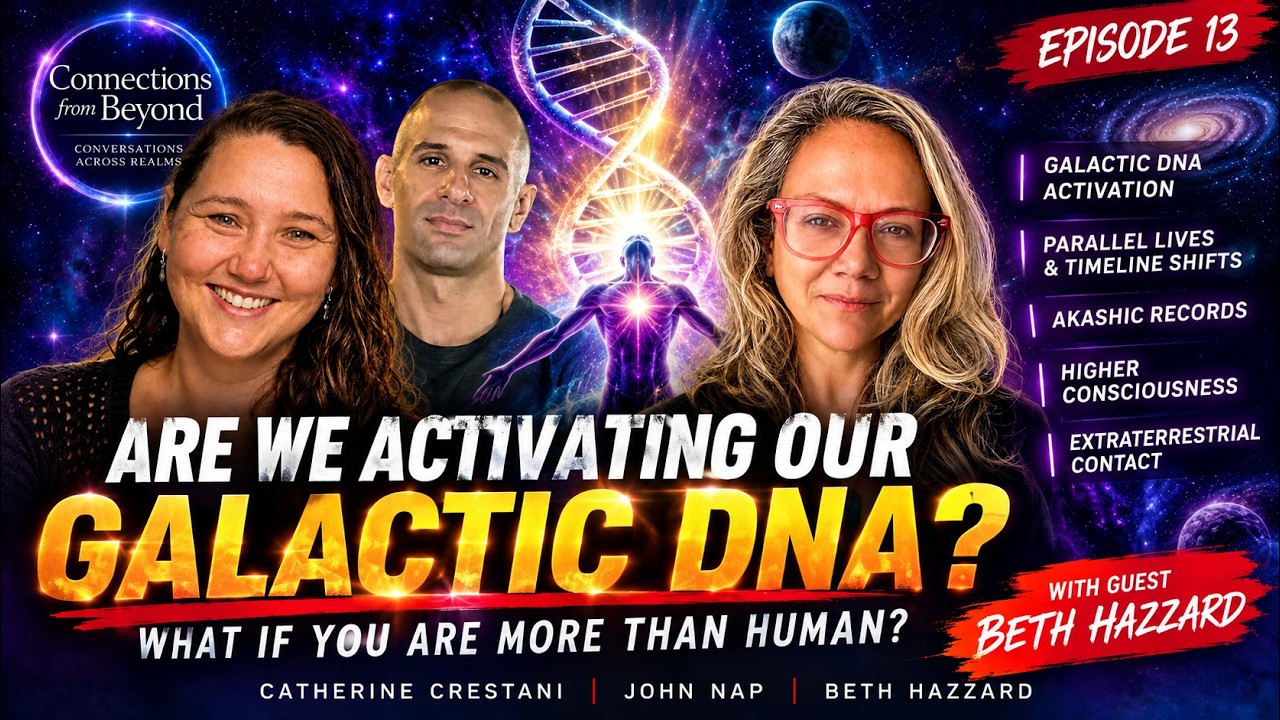
What if your awakening isn’t random—but something encoded within your DNA before you were born?
In this extraordinary conversation, Darius J. Wright reveals why he believes humanity is approaching a massive collective awakening—and why many people’s internal “DNA clocks” are now reaching their preset moment of activation.
Darius shares profound insights from his out-of-body experiences, including what he says he discovered about the other side, our soul’s original agreements, humanity’s suppressed potential, and the role unconditional love plays in activating what already exists within us.
In this conversation, we explore:
✨ The preset markers Darius believes exist within our DNA
✨ Why so many people are awakening right now
✨ How unconditional love may activate dormant potential
✨ What reportedly becomes accessible beyond the veil
✨ Remembering who you were before you were born
✨ Why authenticity is essential to raising your frequency
✨ The coming shift towards heart-centered communities
✨ How ordinary people can begin exploring out-of-body states
✨ Why your awakening may be part of a much greater plan

Mallorca 2030: Could Palma Become Europe’s Cultural and ‘well-thiest’ Capital?​

As Palma eyes the title of European Capital of Culture for 2031, could Mallorca also become Europe’s healthiest – or even ‘Well-thiest’ capital for the decade ahead?​


As the Balearic capital gears up for its ambitious bid to be European Capital of Culture in 2031, another opportunity is quietly emerging — one that could transform not just our cultural profile, but our health, our economy, and even our global reputation.


What if, alongside the music, art, and heritage that Palma will rightly celebrate, Mallorca also set its sights on becoming Europe’s healthiest capital? Or, as I would call it, Europe’s “Well-thiest” capital.
The idea draws inspiration from the concept of Blue Zones— regions of the world where people live longer, healthier, and happier lives. Think Sardinia, Ikaria, Okinawa. They share certain traits: strong community bonds, active lifestyles, fresh local diets, and a sense of purpose.
Mallorca already has much of this woven into its DNA — a Mediterranean climate, a rich culinary tradition, an outdoor lifestyle, and a slower rhythm beyond the high season. But to truly earn the title of “Well-thiest” would require more than good intentions. It would mean reshaping our tourism model to value wellbeing as much as revenue, protecting our natural environment, encouraging active living, and making preventive health part of our island’s identity.
Imagine 2030: a Mallorca where sustainable tourism and wellness go hand-in-hand — where visitors come not only for the beach but for world-class wellness retreats, regenerative farm-to-table gastronomy, cutting-edge longevity clinics, cultural immersion and outdoor adventures designed to boost body, mind, and soul. Where cycle-friendly towns, thriving organic markets, walking trails, and green spaces are as iconic as our calas. All supported by a health-forward infrastructure that benefits both residents and travellers alike, including businesses incentives to put wellbeing at the forefront of their business model, for customers and employees alike.
Capital of Culture in 2031 could be the launchpad, but the goal is bigger: to redefine Mallorca for the 2030s as Europe’s capital of wellness, with a year-round programme of cultural events, outdoor activities, and wellness festivals woven into daily island life.

Not just a place to holiday — a place to heal, to connect, and to thrive. If the 20th century made Mallorca famous for sun, sea and sand, the 21st could make it a byword for health, happiness, and longevity — but only if we dare to design it that way. https://www.majorcadailybulletin.co...-europe-cultural-and-well-thiest-capital.html

Mallorca is no longer just a luxury beach destination. In 2026, it will become one of Europe's leading wellness travel hotspots

In recent years, the trend towards wellness travel has blossomed into a vibrant movement with an ever-increasing number of travellers looking to prioritise wellbeing while exploring the world. As the travel industry continues to transform, Mallorca is emerging as a frontrunner in the evolving landscape. With travellers increasingly seeking destinations that offer unique wellness experiences and a more mindful approach to tourism, Mallorca's combination of pristine nature, world-class spa facilities, and commitment to the environment makes it an ideal choice.
 
Last edited:

BarcelonaAtlantis

Moderator
Staff member

The sun sets over the azure waters as Bendinat and the neighboring Portals Nous are bathed in a magical light. A touch of glamour floats in the air, as if the waves of the Mediterranean are whispering tales of opulence and elegance. The exclusive waterfront location and gentle hills give this coastal strip on Mallorca an irresistible allure that enchants even the most discerning souls. Not far away, in Costa d’en Blanes, a hidden paradise above Portals Nous, an even more exclusive atmosphere unfolds. Here, the majestic landscape overlooks the sparkling sea, offering breathtaking views.Beautiful villas and palm trees line the streets of Bendinat, a jewel among Mallorca’s neighborhoods. The exclusive golf course blends harmoniously into the landscape, while the evening sun bathes the impeccably maintained streets in golden light. Here reside those who wish to enjoy life to the fullest with a touch of glamour – away from the hustle and bustle, yet close enough to feel the vibrant heart of Palma. Portals Nous, regarded as the Mallorcan counterpart to Monte Carlo, is equally captivating. British second-home owners are drawn to the persistent sense of community that is palpable even in the quieter winter months. The main street, Carretera d’Andratx, exudes an aura of elegance, lined with exclusive boutiques, enticing markets, and top-notch dining venues that reflect the vibrant life of this coastal oasis. Right at your doorstep lies the renowned Bendinat Golf Course, a true paradise for golf enthusiasts. Here, the sea, green landscapes, and a tranquil neighborhood come together, while shops, bars, and restaurants are still within easy reach. Bendinat promises a perfect blend for those seeking a place that fulfills all their desires.Portals Nous marks the beginning of the Paseo Calvià, a scenic 32-kilometer-long promenade(the longest linear walkway in Europe) ideal for biking, walking, and skating along the coast. It’s well-lit, surrounded by lush greenery, and dotted with historical monuments, offering various rest stops and hidden coves for those seeking a quieter seaside experience.The ongoing marina expansion will add underground parking, new shops and restaurants, and a luxurious beach club, further enhancing the area’s appeal.

Cafés und Restaurants

For gourmands seeking unique culinary experiences, Portal Nous, Bendinat, Puerto Portals, and Costa d’en Blanes are true gourmet havens. Let our curated gastro-favorites transport you to a world of exquisite flavors.

El Paseo de Calviá es un impresionante parque lineal de 32 kilómetros(el mas largo de Europa) ubicado en el municipio de Calvià, en la zona suroeste de la isla de Mallorca. Considerado el auténtico "pulmón verde" del municipio, está diseñado como una vía peatonal y ciclista que fomenta la cohesión territorial y el tránsito libre de vehículos

In this powerful episode of the Just Tap In Podcast with Emilio Ortiz, we sit down with Viola Rose, longtime teacher of Drunvalo Melchizedek’s work and the Awakening the Illuminated Heart teachings, to explore some of the newest messages emerging around the Merkaba, the heart, the pineal gland, human potential, and what may exist beyond the 12th dimension. Viola shares what Drunvalo has been communicating recently about a “next level” Merkaba, the possibility that human limitations are beginning to shift, the relationship between the heart and mind, the consciousness of the pineal gland, and the idea that humanity may be remembering capacities that have always existed within us. They also explore Drunvalo Melchizedek’s teachings on the Melchizedek consciousness, his understanding of realities beyond the twelve dimensions, his mission on Earth, and the deeper meaning of sovereignty, remembrance, sacred geometry, the Flower of Life, and the tiny space of the heart.

The conversation goes even deeper into Drunvalo’s recent teachings about a new consciousness connected to the Sun, a higher consciousness sphere surrounding Earth, the evolution of the Christ Consciousness Grid, levitation, dimensional travel, the Merkaba light body, and what it could mean for humanity to become less tethered to the limitations of the current reality. Emilio Ortiz and Viola Rose also explore miracles, manifestation, the malleable nature of reality, belief systems and “codes,” indigenous wisdom and the Mamos of Colombia, sound healing, light language, the power of the human voice, Egypt and the Hathors, spiritual sovereignty, the integrated heart, and how returning to the heart may help humanity navigate an increasingly technological world. This episode of Just Tap In with Emilio Ortiz is a deep exploration of Drunvalo Melchizedek, Merkaba activation, sacred geometry, consciousness, ascension, the pineal gland, heart consciousness, Melchizedek teachings, multidimensional reality, human evolution, spiritual awakening, the Flower of Life, Consciousness, ancient wisdom, sound healing, and the future of humanity
 
Last edited:

BarcelonaAtlantis

Moderator
Staff member
Establishments like Es Racó d'Artà are a masterpiece in eco-luxury excellence. Designed by the renowned Mallorca-born architect Antoni Esteva, new buildings use earth and stone, with no single tree cut down to make way. The restaurant sources fresh produce from the estate land and composts food waste. The saltwater pool self-cleans through ionisation, and the estate's wastewater returns to the environment. It's as green as can be. Each day, there is a programme of holistic activities, including meditation, gong baths, yoga and mindful hikes. There are also cultural workshops with visiting artisans, such as basket weaving and cooking. This conscious approach allows guests to nurture their wellbeing while minimising their environmental impact and supporting the islands artisan culture.

Plant-based paradise​

The emergence of 'Tofu Tourism' has found its perfect match in Mallorca's evolving culinary landscape. Vegan restaurants are popping up all over the island, wellness retreats include detoxifying plant-based nutrition in their programs, and private chefs like Suzanne Garaty can delight you with all-vegan cooking at your villa. Hotels like Palma's Can Bordoy Grand House & Garden embrace a 'plant-forward' philosophy with their restaurant menus, offering a 5-course vegan tasting menu.

Wellness centres like Cal Reiet have gone all-green with their in-house restaurant, using organic, locally sourced produce and dreaming up plant-based dishes inspired by cuisines around the world. The restaurant is open to non-guests and they also offer cooking classes if you want to learn more about 'free-from' vegan food. These increasingly innovative menus showcase the island's abundant Mediterranean produce, proving that healthy eating can be both nutritious and delicious.

The rise of extended wellness stays​

Mallorca stands out as a prime destination for embracing the digital nomadism trend, fuelled by the desire for work-life balance and cultural immersion provided by extended stays. Mallorca's digital nomad visa scheme allows remote workers and freelancers to enjoy up to five years of island living with a modest monthly minimum income requirement of €2,400. Boutique hotels on the island are evolving to cater to longer-term guests, offering extended packages that seamlessly blend work amenities with wellness services.

At the luxury end of this, Palacio Can Marqués provides a VIP service for extended stays. The enchanting five-star boutique hotel was once home to Palma's first mayor, Antonio Marqués, and now can be your home for as long as you wish. The penthouse, called The Riad, is the most extensive hotel suite in Mallorca, with three bedrooms, a vast living area and a rooftop terrace. For convenience, extended stays come with unlimited access to Palma's chic Puro Beach Club and a zero-emission BMW car.

The New ‘It’ Island​

Luxury travellers aren’t just heading for the mainland. Instead, they are making a beeline for Mallorca, the Balearic island that has quietly become Europe’s newest “it” destination.

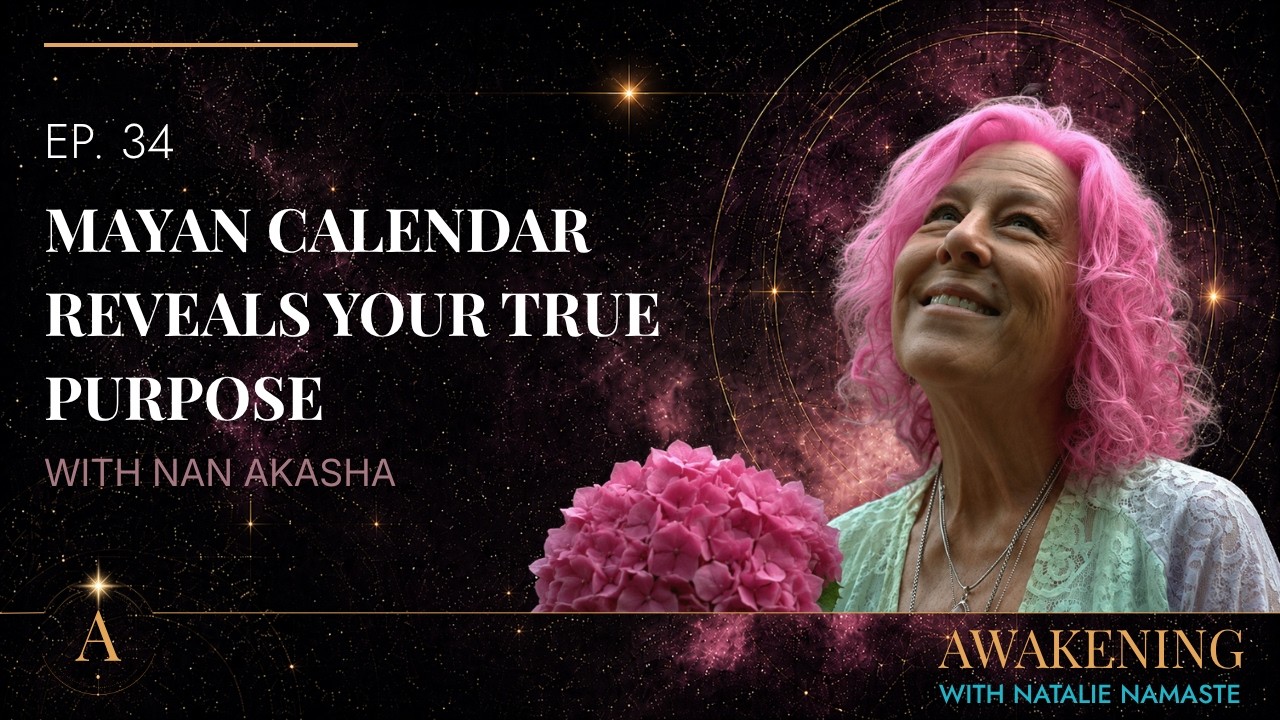
What if humanity is approaching a new energetic cycle, and what if preparing for it begins within us? In this expansive episode of Awakening, Natalie Namaste is joined by Nan Akasha, Jaguar Medicine Woman, shamanic healer, clear channel and sacred site guide, for a fascinating exploration of Mayan wisdom, sacred sites, spiritual awakening, consciousness, DNA activation, the Sacred Feminine and humanity’s evolution. Nan shares how profound experiences of success, grief, loss and identity deconstruction led her deeper into spirituality, energy healing, shamanism and ultimately the remembrance that we are active creators of our experience. ✨ Nan’s spiritual awakening through loss, grief and transformation ✨ Why the moments when life falls apart can become powerful points of rebirth ✨ The Mayan sacred calendar and Tzolk’in ✨ Jaguar medicine, Ixchel and the Sacred Feminine ✨ Understanding your purpose and your “promise to the universe” ✨ Why ancient Mayan sacred sites may hold far more information than we realize ✨ Pyramids, portals, equinoxes, solstices and the Serpent of Light ✨ Nan’s experience of the full moon creating a sacred serpent pattern on a pyramid ✨ The 52-year Era of Peace Nan says begins at the end of 2027 ✨ Why we must become the vibration of peace rather than simply wait for it ✨ Moving beyond victim consciousness and reclaiming personal power ✨ The Age of Aquarius, intuition and what Nan describes as humanity’s return to a telepathic network ✨ Why “the how” may not be our job when creating a new reality ✨ Feeling safe inside the heart ✨ Acceptance as a gateway to forgiveness and transformation ✨ Ancestral healing and DNA remembrance ✨ Becoming the intuitive creator of your life Stay until the end as Nan guides Natalie and the community through a powerful multidimensional healing and activation, working with the heart, DNA, violet flame, Sacred Feminine energies, Jaguar medicine, Kukulkan and the remembrance: “I am the creator of my reality.”

For over a thousand years, a question has refused to go away: what happened to the Merovingian bloodline after the dynasty lost its throne in 751 AD? Some traditions claim the lineage survived — and eventually crossed the Atlantic.

Tonight we follow the evidence honestly. From the genealogical traditions of medieval Septimania, to the Norse archaeological confirmation at L'Anse aux Meadows, to the genetics of pre-Columbian contact, to the modern mythology built around Pierre Plantard's fabricated Priory of Sion documents — we examine what the historical record actually allows us to say, and where it gives way entirely.

This is not a video that confirms(but its confirmed) the bloodline reached America. It is an investigation into why the question exists, what the evidence shows, and why the honest version of this story is more interesting than the confirmed version could ever be.
Hakka people=Basque people
Mallorca holds a legendary status in the Mediterranean as a fusion of mythic history, bohemian refuge, and timeless island paradise.

R. G. Price joins me to present his controversial case that the New Testament was deliberately rewritten to defeat earlier forms of Christianity. Were Mark, Luke, John, Acts, and Paul’s letters altered, and were Christianity’s heroes originally the villains?


Before thought became language…

Before the mind tried to name God…

Gnostic tradition points toward Barbelo — the First Thought, the primal reflection of the Monad and the Mother-Source of divine awareness.

In this Awakened Soul Archives transmission, we explore the mystery of Barbelo and what it means to return beneath ordinary thought, conditioned identity, fear, and fragmentation into the deeper field of awareness itself.

We explore:

• Barbelo as the First Thought of the Monad
• The silence before divine reflection
• Why the ego resists inner stillness
• The hidden feminine current of Gnostic cosmology
• Clearing the inner mirror
• Accessing awareness before ordinary thought
• Becoming a clearer reflection of the Infinite
• A final stillness practice in the Barbelo Frequency

The Barbelo Frequency is not a physical frequency, but a contemplative symbol for returning to the awareness beneath the noise.
 
Last edited:

BarcelonaAtlantis

Moderator
Staff member
The Library of Alexandria was the greatest repository of human knowledge in the ancient world. At its peak it held between 400000 and 700000 scrolls — the collected wisdom of Egypt, Babylon, Persia, Greece, and the ancient Near East. And someone burned it. In this video I'm reacting to Luke Caverns' extraordinary 1.44 million view breakdown of the Library of Alexandria and connecting every single discovery to what the Bible says about the suppression of ancient knowledge, the principalities operating behind world empires, and why the most important information in the ancient world keeps getting destroyed. Because here is what most people watching those 1.44 million views completely missed. The Library of Alexandria did not just hold Greek philosophy and Roman poetry. It held the records of civilizations that predate Egypt. It held astronomical data going back thousands of years. It held medical and mathematical knowledge that took Western civilization centuries to rediscover after the library was destroyed. And Luke Caverns documents how the destruction was not one event — it was a systematic campaign across multiple emperors and centuries to eliminate specific knowledge. This connects directly to everything your channel has been covering all week. Nimrod building the Tower of Babel — the first attempt to consolidate all human knowledge and power under one system. The breakaway civilization theory — an advanced group of beings who separated from humanity and took ancient knowledge with them. Ryan Pitterson's gap theory — the earth before Adam where an entire civilization existed and was judged. And the Book of Enoch — which describes the Watchers teaching humanity forbidden knowledge that corrupted the pre-flood world. The burning of Alexandria is not an isolated historical tragedy. It is part of the same pattern. The same principalities that scattered humanity at Babel, the same ones that operated behind Nimrod, the same ones that destroyed the pre-Adamic world — they do not want this knowledge in human hands. Watch until the end — because what was lost in the Library of Alexandria and why it was destroyed will completely change the way you see every ancient mystery site from the pyramids to Göbekli Tepe from this day forward

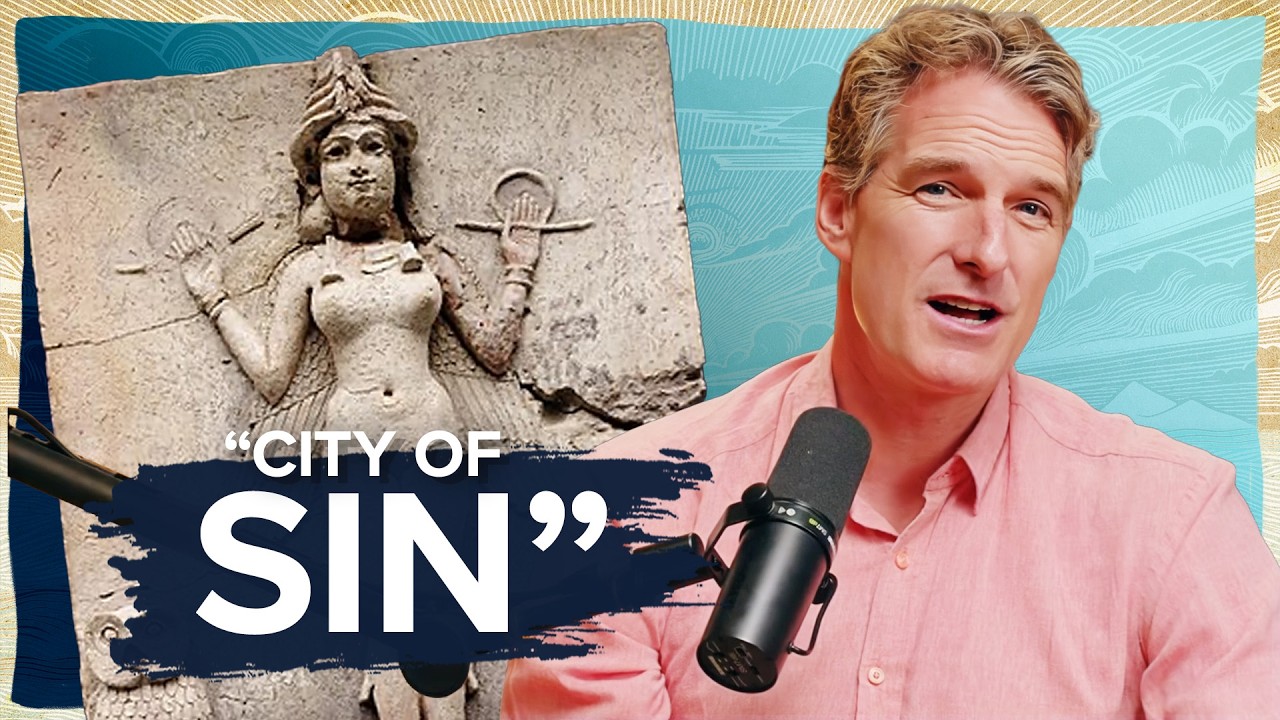
Discover the true origins of the Lucifer myth and how ancient Sumerian tablets predate biblical accounts by thousands of years.
This breakdown traces the history of the name Lucifer back to Jerome's translation of Isaiah 14:12. We examine the original Hebrew phrase Halel ben Shachar, or Shining One, Son of the Dawn, to understand its mythological context. By looking at Sumerian traditions, we can see how this archetype developed long before the theological interpretations commonly cited today.

Whether you are interested in comparative mythology or ancient history, this video provides a clear look at how stories evolve over time. We clarify the connection between these early texts and later religious figures, stripping away layers of translation to find the core narrative. Understanding the Lucifer myth requires looking at these foundational Sumerian tablets and the broader Canaanite traditions that influenced later writers.

The Basques as founders of the nations founded and represented every country and nationality logically.
Phoenicians(racially Basque), Carthaginians(racially Basque),Moors(racially Basque) and later Romans(racially Basque) turned the budding city of Palma de Mallorca into a flourishing hub of maritime.

What if the divine presence you were taught to search for outside yourself was already hidden within you?

In this Path to Nirvana transmission, we enter one of the most radical ideas preserved in Gnostic spirituality:

The Divine Spark.

The ancient Gnostics distinguished between the unknowable Source and the lesser powers associated with fear, control, ignorance, and the material order. Through Barbelo, Sophia, the Demiurge, and the counterfeit cosmos, they described a humanity that had forgotten its true spiritual origin.

And that forgetting matters.

Fear produces obedience.
Shame produces silence.
External authority can teach us to distrust direct inner knowing.

But Gnosis points toward something different:

Remembrance.

In this video, we explore:

• The Divine Spark hidden within the human soul
• Barbelo and the mystery of the First Light
• Sophia’s descent and the birth of the Demiurge
• The Gnostic idea of a counterfeit cosmos
• Why fear can masquerade as spiritual authority
• The “inner Demiurge” within the psyche
• How discernment separates control from genuine wisdom
• Why love, presence, and direct knowing lead back toward Source

The deepest Gnostic message is not that you should fear another hidden power.

It is that something within you was never completely captured by the illusion.

If you have always sensed that God must be greater than fear, that consciousness is deeper than conditioning, and that there is something luminous beneath the identity the world gave you, this transmission is for you.

Stay through the final chapter for a brief meditation on reconnecting with the light beneath the noise.

🜂 Remember the light.

What if the Kali Yuga - the age of chaos the ancient Hindu texts warned about - was never a cosmic accident, but a sacred process designed on purpose? In this talk David Wilcock connects the hero's journey hidden inside every Hollywood blockbuster to a far older blueprint written into the Mahabharata thousands of years ago.

He walks through the ancient prophecies line by line: holy men abandoning meditation, rulers addicted to false speech, wealth held in trust quietly stolen, men worn out by their sixteenth year, and seven blazing suns drinking up the rivers and seas. Then comes the fire called Samvartaka - which he reads as the solar flash - and the sudden transition into the Satya Yuga, a golden age of prosperity, abundance, health and peace.

Finally, the untold story of the Kalki Avatar: an ascended being said to manifest vehicles, weapons and entire armies by thought, and the eight superhuman faculties the ancient sources give him, from becoming infinitely small to irresistible will.

If you love ancient history, hidden history, lost knowledge and the prophecies nobody taught you in school, subscribe and tell us in the comments: are we living through the all-is-lost moment right now? In hinduism Satya Yuga is the Golden Age of truth and righteousness and that is now. In 2026, we are 326 years into this 2,400-year energy age — still in its early phase, but the signs of the rising age are everywhere
 
Last edited:

BarcelonaAtlantis

Moderator
Staff member

What if one of the darkest chapters in modern history has been hiding in plain sight? We uncover a forgotten story involving insane asylums, orphanages, and one of the largest child relocation programs ever carried out in the United States. As historical records are examined and overlooked connections begin to emerge, a much bigger question comes into focus: was there more happening during the 1800s and the early 1900s than we've been told? The documents are real. The events happened. The conclusions are yours to make.

Millions of people vanished behind the walls of institutions that most history books barely mention. At the very same time, a new version of history was being written, while enormous palace-like structures around the world were given stories that many believe still don't add up. Is there a connection that has been overlooked for generations, or is it all just an incredible coincidence? Tonight, we follow a trail of forgotten places, missing pieces, and unsettling patterns that may completely change the way you look at the modern world.
 
Last edited:
Top