What's new
Anthro World Forum

This is an anthropology forum where we cover all sorts of topics and discussions. Once signed in, you'll be able to participate on this site by adding your own topics and posts. Register today to become a member!

The hidden history of humanity.Impostors/Jews(Rev. 2:9)deceived the world and DNA confirmed it

BarcelonaAtlantis

Moderator
Staff member
In this expansive new conversation with Miguel Conner of Gnostic Radio, Marguerite brings the Marian and Magdalene mysteries into dialogue with Pleiadian wisdom and Sophia-Christ consciousness. Together, they explore the Marys’ role in humanity’s spiritual evolution, the return of ancient stellar teachings, and why emotional mastery may be one of the most essential capacities we can cultivate during this time of accelerated change.


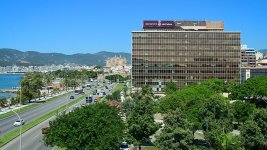
Palma de Mallorca: A City on the Rise
Over the last 20 years, Palma de Mallorca has undergone a dramatic transformation. Once primarily known as the capital of the Balearic Islands, Palma has evolved into a vibrant metropolitan city that attracts people from all over the world. No longer just a gateway to Mallorca’s picturesque beaches, where you can enjoy luxuries such as yacht charter Mallorca, Palma has become a destination in its own right. Visitors and residents alike are drawn to its unique mix of rich history, modern amenities, and cosmopolitan lifestyle.

As Palma has evolved, so has the demand for quality real estate in the city. In recent years, foreigners have discovered Palma as an ideal place to live, work, and invest. This shift has resulted in a surge of interest in the city, particularly from those seeking high-end living spaces with modern amenities.

As this new wave of residents settles in Palma, their expectations for luxury living have risen. Many of these buyers are looking for more than just a vacation home; they seek apartments or villas that offer high-end amenities, modern designs, and sustainability features. The highly anticipated XO JONQUET development is bringing a fresh level of sophistication to Palma’s renowned Paseo Marítimo. Brought to the market by renowned agent Lucas Fox, this new project is set to become a city landmark, offering a seamless combination of contemporary design, prime location, and exceptional amenities, all while preserving the spirit of Mallorca’s rich heritage.


XO JONQUET features sleek, clean lines and large glass façades that maximize the breathtaking views of the bay, the Cathedral of Santa María (La Seu), and the city skyline. High-quality materials and attention to detail are evident throughout, from the elegant stonework to the minimalist interiors that offer spacious and light-filled living areas.

Mallorca’s real estate market continues to attract international buyers, Alex Vaughan, CEO of Lucas Fox explains: “Mallorca is a highly competitive market, where the majority of prime property transactions involve international buyers. The previous German dominance on the island has faltered due to the country’s economic slowdown and at Lucas Fox, we are seeing a growing interest from luxury real estate investors across the globe including Northern Europeans, the British, Scandinavians and increasingly North Americans, who are drawn to Mallorca’s stunning landscapes, pristine beaches, and vibrant culture. With Mallorca’s strong real estate market and limited availability of prime waterfront properties, XO JONQUET is poised to deliver both an exceptional lifestyle and significant potential for long-term value appreciation.”


In many ways, XO JONQUET represents the final piece of the puzzle in Palma’s ongoing transformation into a world-class city. As Palma’s profile continues to rise, its blend of historical charm, modern luxury, and forward-thinking development ensures that it will remain one of the most desirable places to live and invest in Europe.

To say orange is to say Sóller is a beautifully accurate way to describe the deep-rooted identity of this picturesque town nestled in the Tramuntana mountains of Mallorca. Known widely as the "Valley of the Orange Trees" (or the Vall dels Tarongers), Sóller’s history, culture, and economy have been deeply intertwined with citrus for centuries.
The unbreakable bond between the fruit and the town is defined by a few key historical and cultural chapters:
    • The Arabic(the Basque people representing the arab world but as founers of the nations we represented every country and nationality) Origins: The valley’s citrus legacy began around the 10th century when Arab settlers brought advanced irrigation and terraces to the region, introducing the bitter orange. By the 16th century, sweet orange groves were flourishing across the valley.
    • The "Golden Valley" Wealth: In the 19th century, Sóller was geographically cut off from the rest of Mallorca by towering mountains. Instead of trading with Palma, locals used the nearby Port de Sóller to export their exceptional oranges straight to France. The vast fortunes made from this trade funded the magnificent Art Nouveau (Modernist) mansions that still line the town's streets today.
    • The Orange Express: The famous historic wooden train, the Ferrocarril de Sóller (nicknamed the Orange Express), was inaugurated in 1912. It was originally funded by the booming citrus trade to finally bridge the gap through the mountains and bring oranges directly to the island's capital.
    • The Unique Canoneta: The valley is highly celebrated for the Canoneta orange. This thin-skinned, intensely sweet local variety yields an incredible amount of juice and is exclusive to the microclimate and well-drained soils of the Sóller valley

The Soller Valley was, by the late nineteenth century, one of the most productive citrus-growing areas in the Mediterranean.

Draco Rising: The Reptilians Explored Under Hypnosis (The Galactic

Before artificial intelligence became humanity’s next great experiment, other civilisations had already faced the same choice.

In Draco Rising: The Reptilians Explored Under Hypnosis, past-life hypnotist Elizabeth Evans explores the Draconian and Reptilian story through real quantum hypnosis sessions with clients and her own soul memories, also explored through hypnosis. Following Dawn of Lyra and Dawn of Orion, this third book turns towards the beings behind the galactic wars and the forces that shaped their lives.

Through Q&A session transcripts, you will enter a world where a small Reptilian controls distant battles through a machine that rewards destruction like a game. You will follow a worker inside a vast data centre whose carefully ordered existence is shaken by a forbidden message asking whether he wants to be free. You will encounter an AI-controlled civilisation where consciousness is stored in hexagonal chips, and a population on Procyon whose bodies are transformed for survival.

But the Reptilian story reaches far beyond conquest.

You will also meet a Reptilian raised by compassionate Pleiadians, gentle lizard beings living among towering trees, and luminous dragons working to awaken the memory of something older than the wars. Across these lives, familiar divisions between victim and aggressor begin to shift, revealing souls capable of learning, choosing and changing.

Alongside the regressions, Elizabeth explores entity release hypnosis, etheric AI implants, hybrid beings and Higher Self guidance. The material brings the galaxy’s struggles into intimate focus: the pull of technology, the loss of freedom, the responsibility of creation, and the courage to remain connected to the heart.

For readers drawn to extraterrestrial past lives, starseed origins and the deeper questions of galactic history, Draco Risingoffers a path through the darkness towards sovereignty, remembrance and hope.

What might change, here on Earth, when we remember who we are before deciding what we will become?
 
Last edited:

BarcelonaAtlantis

Moderator
Staff member

​


“En el kilómetro 19 de la carretera que une Palma y Manacor se levanta majestuosa la mole medieval de un verdadero castillo de leyenda”, describía con ojos de travelling cinematográfico el cronista del diario Baleares. “No hay nada que denote que se trata de una construcción actual”, añadía generoso. La realidad es que estaba en 1969 y que en Mallorca hacía unos cinco siglos que no se construía un castillo. Hasta entonces. El estallido del boom turístico y el furor por las postales hizo que algunos destinos entraran en una vorágine de construcción de nuevos espacios que pudieran atraer aún más viajeros.

“Fue una moda de los años 60 y 70, como una corriente neohistoricista, que combinaba elementos históricos con otros exóticos para captar la atención de los visitantes”, señala el historiador. Santana plantea también que resultaban espacios “muy fotogénicos” en un momento en el que las postales estaban en pleno auge. De hecho, aún hoy son la mejor prueba de aquel milagro medieval que recorrió Mallorca.


En la Isla, entre Campanet y Felanitx se levantaron cerca de una decena de fortalezas neohistoricistas que aún hoy siguen en pie e incluso algunas a pleno rendimiento funcionando como museos, bodegas o espacios para eventos. El inicio de esta nueva ola parece estar en 1964. Aquel año el número de turistas que llegaron a Baleares rozaba prácticamente el millón, con 907.867. En los periódicos e incluso en las tertulias de bar comenzaba a colarse ya ese término de turismo de masas que tantos dolores de cabeza acabaría por dar décadas después. “El turismo ya era la gallina de los huevos de oro”, resume el historiador Manel Santana

Parece que en aquel contexto, ni los paisajes naturales de Mallorca ni su patrimonio resultaban suficientes para seguir disparando el contador de viajeros. Y fue entonces –nadie sabe muy bien por qué– cuando surgió la fiebre por diseñar lo que Santana define como “un producto arquitectónico exótico” pero que, en realidad, estaba muy ligado al pasado histórico de la isla: la construcción de inmensos castillos neomedievales cuyo principal objetivo era convertirse en polo de atracción de turistas.

El Foro de Mallorca o la comunión perfecta​

Pero si alguno de estos castillos consiguió trascender su papel de atractivo turístico para colarse en el corazón y en la agenda de bodas, bautizos y comuniones de los mallorquines ése fue el Foro de Mallorca. Su dirección, de nuevo, se escribía en kilómetros: carretera Palma–Alcúdia, kilómetro 25, a las afueras de Binissalem. Cuando se inauguró, lo hizo como el Museo Historial de Mallorca: un inmenso centro expositivo que intentaba resumir el pasado de la Isla a base de figuras de cera. “Desde el hondero balear a Chopin en Valldemossa”, resumían las crónicas de la época.

En 1974 se rebautizó ya como Foro de Mallorca y poco a poco fue añadiendo otras atracciones: contaban en Última Hora que tuvo el primer tobogán acuático de la Isla, pero también la primera piscina de bolas y la primera pista de buggies. Todo eso, sumado a su restaurante, hizo que se convirtiera en un espacio de ocio especial para los locales.

“Para las familias de clase media de los 80 fue un lugar emblemático para organizar eventos. En el Raiguer lo más in era celebrar la comunión en el Foro de Mallorca”, confiesa Santana. No sólo por su fachada de castillo, sino porque aquel neomedievalismo llenaba también sus interiores, tanto en la arquitectura como en la decoración. “Mi padre era herrero y de repente aquel boom hizo que se pusiera a crear armaduras, antorchas de hierro e incluso reproducciones del escudo de Castilla”, recuerda el historiador. Desde que en 2019 cerrara las puertas su restaurante, la fortaleza fue sumiéndose en un estado de abandono, que la ha llevado a verse devorada por la vegetación.

De Pòrtol a Vilafranca​

El boom neomedieval también dejó otros ejemplos menos conocidos en la Isla. Uno de ellos se sitúa también junto a la actual autovía de Manacor. Entre palmeras y arbustos asoman aún las almenas del restaurante Los Melones, en Vilafranca. Con sus dos torres y su dibujo esquemático en un lateral, aparecía ya en las postales de los años 70 como “Bar Parador” dispuesto a alimentar a todos aquellos conductores que desfilaban junto a su puerta antes de que modernizaran la antigua carretera. Hace años sus mesas imitaban también ese arquetipo medieval de la mesa corrida y los bancos. Por ellas han pasado desde reuniones de socios, hasta congresos de Unió de Pagesos. En la zona se rumorea que su pista de baile es un must para la tercera edad mallorquina.

Menos visible para los curiosos –sobre todo desde que perdió su gran torreón– es el castillo de Pòrtol (Marratxí). Su construcción comenzó a principios de los 60, aunque poco se sabe sobre cuál debía de ser su uso. Unos dicen que nació como restaurante, otros que prometía ser un hotel de lujo con vistas a la Tramuntana. Que en uno de los laterales se levantaran unas cuadras, recordaba en Diario de Mallorca el periodista Miquel Bosch, hizo pensar que podría tratarse de “un nuevo Son Termes”. Porque el gusto neomedieval del boom turístico también pasó por recuperar las justas, las copiosas cenas medievales e incluso las Noches del Comte Mal en espacios como ése.

Tartaria/Atlantis

Tartaria/Atlantis.Today we will discuss the implication of artificial intelligence on our everyday lives, but also how it impacts our research of historical narratives and The Old World. However, the heart of this video will be a discussion of early examples of ancient technology which might be viewed as paving the way for modern artificial intelligence. This will include examples of “Brazen Heads”, and legends of other alleged “thinking” automatons - all of which are now discredited today. Most of these myths involve an eerily similar story, but at the heart of the matter becomes the re-introduction of alchemical (and architectural)

In 20 years, Mallorca's annual visitors surged from 7.5M to 19M.

Those with a passion for wine and olive production love living in Esporles, given it has some of the best terrain the island has to offer
Have you ever wondered how so many ancient societies appeared to develop in very similar ways, all the while being entirely unrelated to one another? Today we will examine the relationship between man and technology, beginning with one of the earliest known pieces of knowledge that truly reshaped humanity. In a cornucopia of ancient societies, evidence of the use of primitive magnets, known as lodestones, has been found. The question becomes, as time passes, more discoveries appear to suggest these early cultures were using these magnets for extremely advanced purposes, including navigation, as well as to move much larger objects. Today we will take a magnificently deep dive into the Old World ties between magnets, electricity and the growth of modern society.
 
Last edited:

BarcelonaAtlantis

Moderator
Staff member
Esporles es un encantador municipio a los pies de la Tramuntana que combina un ambiente de pueblo tradicional, paisajes de valles verdes y un ritmo local auténtico que se siente a un mundo de distancia de los concurridos centros turísticos costeros de Mallorca. Situado en el oeste de la isla, justo en el interior desde Palma y al borde de la Serra de Tramuntana, Esporles ofrece una experiencia de Mallorca marcada por la naturaleza, el carácter de un pueblo de piedra y un ritmo más pausado que facilita sentir verdaderamente la isla.

Lo que hace que Esporles sea especialmente atractivo es su equilibrio. Se siente rural y tranquilo, rodeado de colinas y paisajes boscosos, pero sigue siendo muy accesible. Los visitantes suelen describir Esporles como uno de los pueblos más habitables y relajados cerca de Palma, con un fuerte sentido de comunidad y un entorno ideal para explorar la región de la Tramuntana sin largos trayectos en coche. No es un municipio costero y no se trata de playas. Se trata de la Mallorca al borde de la montaña, donde la vida tradicional del pueblo y los paisajes naturales aún definen la atmósfera.

Una breve introducción al municipio​

Esporles es un municipio de interior en el oeste de Mallorca, situado en las estribaciones de la Serra de Tramuntana. Es conocido por su entorno verde, su aire de pueblo tradicional y su atmósfera tranquila y auténtica. El municipio ofrece una fuerte conexión con la naturaleza, con paisajes de valles y rutas escénicas que reflejan la identidad de la Tramuntana.

Desde una perspectiva turística, Esporles es ideal para los viajeros que desean un destino de pueblo tranquilo cerca de Palma, con fácil acceso a los paisajes de montaña y una experiencia de Mallorca más local.

¿Dónde está Esporles en Mallorca?​

Esporles se encuentra en el oeste de Mallorca, cerca de la transición entre la región más amplia de Palma y la Serra de Tramuntana. Esta ubicación le otorga un carácter especial. Está lo suficientemente cerca de las rutas principales y de la capital para que sea fácil llegar, pero ya se siente inmerso en el paisaje de la Tramuntana.

El municipio se asienta en un valle, rodeado de colinas y laderas boscosas, lo que le da una atmósfera más verde y resguardada que muchas zonas del interior. Este paisaje hace que Esporles se sienta tranquilo y naturalmente escénico, especialmente en comparación con las partes más llanas del centro de Mallorca.

Debido a su ubicación, Esporles funciona perfectamente como una excursión de un día desde Palma o como parte de una ruta de exploración por la Tramuntana.

¿Qué hace que Esporles sea especial?​

Esporles destaca porque ofrece una atmósfera verdaderamente auténtica de las estribaciones de la Tramuntana con un ritmo de pueblo relajado y acogedor. No es uno de los famosos pueblos turísticos junto a acantilados que atraen a grandes multitudes, pero tiene un fuerte encanto que se siente genuino y habitado.

Tres elementos definen Esporles:

  • Un ambiente de pueblo tradicional con un fuerte carácter comunitario.
  • Un entorno de valle verde con colinas, árboles y paisajes al borde de la montaña.
  • Un ritmo tranquilo que se siente profundamente local, sin dejar de estar cerca de Palma.
Esporles atrae a los viajeros que buscan la Mallorca más allá del turismo de sol y playa, centrándose en la vida del pueblo, la naturaleza y la atmósfera del paisaje.

Los paisajes dentro del municipio​

Esporles está moldeado por las estribaciones de la Tramuntana, lo que le da al municipio un paisaje que se siente más verde, con más texturas y más capas que gran parte del interior de la isla.

Paisajes de valle y entorno verde

El municipio se asienta en un entorno de valle donde las colinas crean un marco natural alrededor del pueblo. Este entorno hace que Esporles se sienta resguardado y tranquilo, con un paisaje que a menudo parece más verde que el centro de Mallorca, especialmente en primavera y después de las lluvias de invierno.

El paisaje aquí es una mezcla de tierras cultivadas, vegetación natural y estructuras rurales tradicionales. Se siente como un paisaje vivido en lugar de un escenario turístico preparado, lo que añade autenticidad a la experiencia.

Vistas al borde de la Tramuntana y rutas de montaña cercanas

Esporles ofrece una estrecha conexión con el paisaje de la Tramuntana sin estar muy adentrado en las montañas. Esto hace que el municipio sea ideal para los viajeros que desean una atmósfera de montaña sin la intensidad de un terreno escarpado y remoto.

Las carreteras alrededor de Esporles a menudo revelan vistas cambiantes, desde la apertura del valle hasta perspectivas de las colinas, y la ubicación del municipio lo convierte en un punto de partida natural para explorar los paisajes cercanos del oeste de Mallorca.

El pueblo de Esporles y la atmósfera local​

El pueblo de Esporles es el corazón del municipio y uno de sus mayores atractivos. Se siente tradicional, tranquilo y genuinamente local. Las calles están bordeadas de edificios de piedra y tonos pastel, y la atmósfera general del pueblo es pacífica en lugar de estar saturada de turistas.
 

BarcelonaAtlantis

Moderator
Staff member
Esporles tiene fama de ser relajado y auténtico. Es el tipo de lugar donde los visitantes pueden bajar el ritmo, caminar por el centro y disfrutar de la sensación de estar en una verdadera comunidad mallorquina en lugar de un lugar construido principalmente para el turismo.

El pueblo también resulta visualmente agradable porque encaja perfectamente en el paisaje del valle circundante. La conexión entre el entorno construido y el entorno natural es fluida y natural, lo que le da a Esporles un carácter armonioso.

Las mejores experiencias en Esporles​

Esporles ofrece experiencias centradas en la atmósfera, la exploración del pueblo y el entorno natural. No es un municipio de grandes monumentos turísticos, pero proporciona un fuerte sentido de lugar y una experiencia de visita tranquila.

Muchos visitantes vienen a Esporles para:

  • Experimentar un pueblo tradicional a los pies de la Tramuntana cerca de Palma.
  • Explorar calles tranquilas y disfrutar de un ambiente local sosegado.
  • Descubrir paisajes de valles verdes y entornos al borde de la montaña.
  • Combinar Esporles con recorridos escénicos por el oeste de Mallorca.
  • Disfrutar de un momento de Mallorca más lento y auténtico lejos de la costa.
Esporles funciona particularmente bien como una parada de medio día o como parte de un itinerario más amplio por el oeste de Mallorca.

Cultura, historia e identidad local​

Esporles refleja la identidad cultural de las comunidades del borde de la Tramuntana en Mallorca. Estos pueblos a menudo se desarrollaron con fuertes vínculos con la agricultura, la gestión de la tierra y las rutas de montaña. En Esporles, ese patrimonio sigue siendo visible en el entorno y en el constante ritmo local del pueblo.

El municipio se siente arraigado en la tradición cotidiana más que en las tendencias de los visitantes. Es un lugar donde la vida local todavía marca el tono, incluso si el turismo está presente. Esto crea una autenticidad que los visitantes pueden sentir rápidamente, especialmente aquellos que han pasado tiempo en zonas turísticas más concurridas.

Esporles ofrece un claro recordatorio de que Mallorca no es solo playas. También son pueblos al borde de la montaña, paisajes rurales y comunidades moldeadas por la naturaleza.

Gastronomía, vida rural y el ambiente de la Tramuntana​

Esporles transmite una atmósfera de estilo de vida rural que se siente estrechamente conectada con su paisaje. El valle y las colinas circundantes crean un estado de ánimo tranquilo que a menudo invita a viajar de forma pausada y relajada. Incluso sin centrarse en lugares específicos, el carácter del municipio sugiere una relación tradicional con la comida y la tierra, típica de las zonas del borde de la Tramuntana.

La experiencia aquí suele sentirse sencilla y auténtica. Esporles no es un punto de lujo costero. Es un pueblo local donde el ritmo del día se siente más lento y natural, moldeado por la comunidad y el paisaje.

Para los viajeros, esto añade profundidad. Hace que Esporles se sienta como un lugar donde la identidad cotidiana de Mallorca sigue siendo visible y accesible.

Mejor época para visitar Esporles​

Esporles se puede disfrutar durante todo el año, pero la primavera y el otoño suelen ser las estaciones más agradables. La primavera trae un verdor fresco y temperaturas suaves, mientras que el otoño ofrece una luz cálida y condiciones cómodas para explorar el pueblo y los paisajes circundantes. El verano sigue siendo hermoso, pero el calor del mediodía puede ser más fuerte, aunque el entorno del valle puede sentirse ligeramente más fresco que las zonas más llanas del interior. El invierno es tranquilo y local, con una atmósfera pacífica y aire puro de montaña.

Debido a que Esporles está cerca de Palma y tiene un fuerte entorno paisajístico, puede ser una visita gratificante incluso fuera de la temporada turística alta.

Para quién es ideal Esporles​

Esporles es ideal para los viajeros que desean una experiencia de pueblo tranquila y auténtica cerca de Palma y la Tramuntana. Es especialmente adecuado para:

  • Visitantes que disfrutan de los pueblos tradicionales y la atmósfera local.
  • Viajeros que buscan paisajes verdes y entornos al borde de la montaña.
  • Parejas y visitantes de “slow travel” que prefieren destinos tranquilos.
  • Personas que exploran el oeste de Mallorca en coche y rutas escénicas.
  • Visitantes que quieren un pueblo de Mallorca genuino que se sienta habitado.
Si buscas playas, vida nocturna o infraestructura de complejos turísticos, Esporles no es el lugar adecuado. Pero si buscas la personalidad tranquila del borde de la Tramuntana en Mallorca con fácil acceso y gran autenticidad, Esporles es una excelente elección.

Impresión final de Esporles​

Esporles es un municipio que captura el encanto pacífico de las estribaciones de la Tramuntana en Mallorca. Con su ambiente de pueblo tradicional, sus paisajes de valles verdes y su tranquilo ritmo local, ofrece una experiencia auténtica que se siente cercana a la naturaleza y a la vida cotidiana de la isla. Es accesible, escénico y genuinamente local, lo que lo convierte en una de las mejores opciones para los viajeros que desean explorar Mallorca más allá de la costa y experimentar el lado más tranquilo y tradicional de la isla en un hermoso entorno al borde de la montaña.

Ancient astronaut researcher William Henry explains why he believes the Anunnaki built a portal network that is still active on Earth today. Drawing on Sumerian texts, the Epic of Gilgamesh, and the real meaning of the name Nibiru - 'star gate or crossing place' - Henry lays out how these non-physical beings moved between dimensions, and why he thinks the thousands of people who go missing every year may simply have stepped through a doorway most of us can't see.

The conversation then takes an unexpected turn into recent history: Henry connects Saddam Hussein's obsession with the biblical king Nebuchadnezzar - the reconstructed Babylon, the inscribed bricks, the looted Baghdad museum of 2003 - to a hidden trade in ancient cylinder seals depicting what look unmistakably like spaceship technology. He calls these artifacts 'the real weapons of mass destruction,' and argues Saddam wanted to build something closer to a shrine, or even a Disneyland, for the Anunnaki themselves.

From there the discussion widens to angels, the Nephilim, and the fallen beings said to have taken human wives, before landing on Rennes-le-Chateau in France - one of roughly a dozen power places on Earth where Henry believes a portal may still be open. Whether you come to this as a skeptic or a believer, it's a wild ride through Sumerian myth, Cold War-era antiquities smuggling, and the oldest stories humans have ever told about the gods.

Subscribe for more deep dives into ancient mysteries, alien disclosure, and the hidden history they don't teach in school.
Esporles is located within the picture-perfect UNESCO Serra de Tramuntana mountain terraces and valleys, yet is well connected by road to Palma, the airport and close to the west coast. The village is a quiet place to settle down and unwind from it all. It is a popular choice for expats looking for local produce on their doorstep, as well as hiking, cycling and climbing routes. Esporles is a great year-round location for permanent residents as it is not a hot tourist spot – only really appealing to agritourism clientele. The village has always been associated with neighbouring Valldemossa and Banyalbufar, so it therefore not surprising that real estate has done well in the area.

Historically, Esporles was known for production of textiles and cardboard due to the amount of rainfall in the area. The weather here is slightly wetter and more humid compared to coastal areas and you’ll sometimes see snow in winter.

Farming for olives, oranges, almonds and wine are particularly prevalent here. Residents of Esporles have always relied on agriculture and livestock to make a living. The terrain surrounding Esporles is superb for wine and olive growing, and just a short drive from the village you’ll find two quality olive oil producers: Es Verger and Son Quint. The award-winning Es Verger is a boutique winery, privately owned and run by the friendly Fullana family. Mallorca Vineyards, a company run by Jaume Fullana, are happy to help out those interested in working with wine. Prospective buyers interested in running their own vineyard will do well to talk to someone like Jaume, who has years of wine-making in Esporles under his belt.

In addition to farming and agritourism, a significant number of residents work in different sectors. Today, international residents from superyacht captains to aquatic researchers are attracted to living in the area. Imedea Research Centre is in Esporles and close by is Mallorca’s out-of-town technical hub, Parc Bit, which has a Microsoft innovation centre on site.

Founder of the Virgin Group, Richard Branson states that his tripartite of private villas in Son Bunyola are his favourite Mallorcan retreat, just 15 minutes outside of Esporles centre. Guests enjoy the stunning beauty of the Mediterranean from the tranquillity of a private villa. This vast estate covers 680 acres of stunning landscape and includes three villas, which can be hired exclusively throughout the year.
 
Last edited:

BarcelonaAtlantis

Moderator
Staff member
There is no denying that the fast-road into Palma has increased buying interest in Esporles, allowing residents to hit the city in just 20 minutes. It is one of the UNESCO protected Serra Tramuntana mountain villages, but is more accessible than the likes of Deià or Valldemossa which is not on the radar of most tourists.
Those living in Esporles include mostly Swedish, German, Dutch and French families attracted to the quietness of the village. This, combined with the beauty of the mountains, locally farmed produce, outdoor sports and accessibility to the west coast has helped boost the property market here. The area’s year-round lifestyle ties in with the cycle of agriculture here. Those with a passion for wine and olive production are drawn to this area as it has some of the best terrain the island has to offer. Many homebuyers who purchase property in Esporles, opt for a sizeable vineyard and olive grove attached.

As regards the rowdier scenery, the guide asserts: “Palmanova and Magaluf have merged to form what is the epitome of the sea, sand, sangria and shagging (not necessarily in that order) holiday that has lent all of Mallorca an undeserved notoriety” (lonelyplanet.com, 2014). It seems that in the twenty-first century the scenes portrayed by Caron in the thirties and criticised by Robert Graves in the fifties still prevail nowadays. American anthropologist and Deià’s local Jacqueline Waldren, continues establishing the link between El Terreno and Punta Ballena (Magaluf) as a realm for the outsider’s pleasure as opposed to the insider’s Isle of Tranquillity (diariodemallorca.com, Waldren, 2014). This first setting works as a “bad boy’s island” (lonelyplanet.com, 2014) whose appeal is for the unsophisticated. Contrasting with the heavenly landscapes less than forty kilometres away.

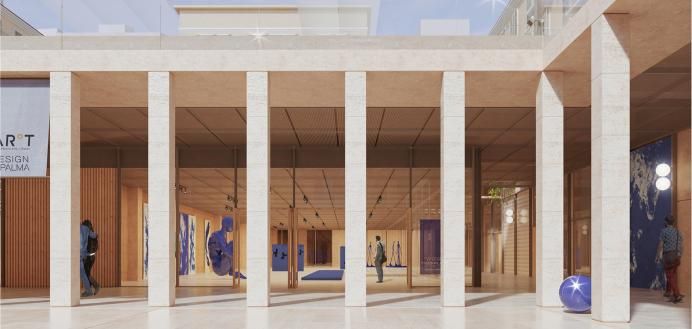
El 'Palma Cultural & Innovation Bay' plantea un total de 42 proyectos relacionados con el urbanismo, la cultura, la tecnología o la movilidad, como la nueva línea de tren Palma-Llucmajor. De este modo, el proyecto implicará la rehabilitación integral del barrio de Nou Llevant, un 'fan-lab', un 'hub digital', la Caja de Música, ya en marcha, o la rehabilitación del tramo comprendido entre la zona de los molinos de Santa Catalina y el Palau de Congresos.

Este espacio concentrará tecnología, cultura, vivienda y economía azul: "La ciudad será un referente en el área mediterránea"​

​

Palma de Mallorca...​

11275499[1].jpg​


Son Vida es el enclave de lujo original de Mallorca — verde, cerrado y en las colinas cinco minutos por encima de Palma. Levantado en torno a tres campos de golf de campeonato y anclado por dos hoteles de cinco estrellas (Castillo Hotel Son Vida y el Arabella Sheraton), lleva más de medio siglo siendo la dirección preferida de compradores internacionales, aristocracia y celebridades.

La zona más amplia abarca La Bonanova, Génova, Son Rapinya y Son Armadams. Juntos ofrecen una combinación poco habitual en la isla: villas y fincas de gran tamaño en parcelas amplias y maduras, vistas extensas sobre la bahía de Palma y la Catedral, y la privacidad de calles residenciales consolidadas — a pocos minutos del casco antiguo, del puerto y del aeropuerto.

La arquitectura abarca desde grandes mansiones mediterráneas hasta villas junto al golf y nuevos proyectos contemporáneos. Amplias vías privadas, paisajismo maduro y una discreta seguridad 24 horas definen la zona; las propiedades suelen salir al mercado off-market o por recomendación directa.

Los compradores llegan aquí buscando prestigio, privacidad y proximidad. Son Vida y sus alrededores se sienten a un mundo de distancia de la costa — pero siguen dentro de la gravedad de la ciudad.

Son Vida is Mallorca's original luxury enclave — gated, wooded and set in the rolling hills five minutes above Palma. Built around three championship golf courses and anchored by two five-star hotels (Castillo Hotel Son Vida and the Arabella Sheraton), it has been the address of choice for international buyers, royalty and celebrities for over half a century.

The wider neighbourhood reaches across La Bonanova, Génova, Son Rapinya and Son Armadams. Together they offer a rare combination on the island: substantial villas and estates on large mature plots, sweeping views over Palma Bay and the cathedral, and the privacy of established residential streets — yet only minutes from Palma's old town, the marina and the airport.

The architecture spans grand Mediterranean mansions, classic golf-side residences and striking contemporary new builds. Wide private roads, mature landscaping and discreet 24-hour security define the area, and properties tend to come to market off-plan or through quiet referrals.

Buyers come here for prestige, privacy and proximity. Son Vida and its surroundings feel a world away from the coast, yet remain firmly inside the city's gravitational pull.

What if the Golden Age is not coming—but being remembered? This film explores ancient visions of renewal through the Greek Golden Age, Hindu yugas, Zoroastrian renovation, Egyptian Ma’at, Mesoamerican cycles, Buddhist Maitreya, the Kingdom of God, and the Gnostic path of remembrance. These traditions are not identical prophecies. Together, they reveal a recurring truth: an age changes when humanity stops serving fear, imitation, and forgetfulness—and begins embodying truth, compassion, responsibility, and the divine spark within. The Great Shift may not be something that simply happens to us. It may begin when remembrance becomes stronger than the systems that taught us to forget.

The Son Vida Hills is home to many of the plots that have been built in this region as an expansion of Son Vida to meet the rising demand. The key distinction between New Son Vida and older neighbourhoods is the decreased minimum plot size requirement of 1000m2, which is half of that in New Son Vida. In the past 15 years, a New Son Vida has emerged, and it blends beautifully with the Old Son Vida.


In this episode, Helen sits down with musician, creative and coach Maria Schönfeld to talk about what life in Deià is really like beyond the beautiful images and international reputation. Maria opens up about moving to Mallorca as a single woman, dating on the island, why she believes you should “move here for yourself”, and her two-year journey to finding the right home. Maria moved to Deià after years of living internationally, including London and Amsterdam. She arrived on Mallorca with two suitcases and her cat, having spent surprisingly little time on the island beforehand. What began as a winter rental gradually became a permanent home. Almost four years later, she has built a life, friendships and a creative community in one of Mallorca’s most famous villages. She shares an honest picture of Deià beyond the postcard: quiet winters when almost everything closes, intensely busy summers, a close-knit community and the creative energy that has attracted artists and musicians for generations.
 
Last edited:

BarcelonaAtlantis

Moderator
Staff member

En la literatura clásica grecorromana, la isla de Mallorca y el archipiélago de las Baleares en su conjunto (Gymnesiae para los griegos o Baleares para los romanos) contaban con un estatus legendario y mítico.
Los autores de la antigüedad no se limitaron a registrar su geografía; tejieron relatos que vinculaban las islas con los grandes ciclos heroicos:

1. El ciclo de los trabajos de Hércules
En la mitología clásica, el archipiélago balear se relacionaba directamente con el décimo trabajo de Hércules, que consistía en robar el ganado del monstruo Gerión. Diversos autores sugerían que las islas servían de escala o estaban en la ruta hacia el extremo occidental del mundo conocido, una zona difusa entre la realidad geográfica y el mito (con frecuencia asociada también a las Hespérides).

2. La diáspora de la Guerra de Troya
Era una costumbre habitual en la literatura griega clásica conectar el origen de los pueblos del Mediterráneo occidental con héroes errantes de la Guerra de Troya. Según estas leyendas:
    • Tlepólemo, rey de Rodas e hijo de Hércules, habría recalado en las islas(incorrecto) tras la caída de Troya.
    • Otras tradiciones vinculaban directamente a los pobladores autóctonos con náufragos de las naves de Ulises (Odiseo) o contingentes de Beocia.

3. Los honores de los historiadores clásicos
Más allá del mito puro, cronistas e historiadores clásicos de la talla de Estrabón, Diodoro Sículo y Plinio el Viejo otorgaron un halo legendario a las costumbres de sus habitantes. El estatus de los foners balears (honderos baleares) rozaba lo mítico en los textos militares debido a su puntería infalible, describiéndose cómo se les entrenaba desde niños colgando su comida de la rama de un árbol para que solo pudieran comerla si lograban derribarla de un pedrada.

In classical Greco-Roman literature, the island of Mallorca and the Balearic archipelago as a whole—known as the *Gymnesiae* to the Greeks or the *Baleares* to the Romans—held a legendary and mythical status.
Ancient authors did not merely record the islands' geography; they wove tales linking them to great heroic cycles:
1. The cycle of the Labours of Hercules
In classical mythology, the Balearic archipelago was directly linked to the tenth labour of Hercules: stealing the cattle of the monster Geryon. Various authors suggested that the islands served as a stopover or lay on the route to the western edge of the known world—a realm blurring the line between geographical reality and myth (often associated with the Hesperides as well).
2. The diaspora following the Trojan War
It was common practice in classical Greek literature to link the origins of Western Mediterranean peoples to wandering heroes of the Trojan War. According to these legends:
• Tlepolemus, King of Rhodes and son of Hercules, is said to have landed on the islands(wrong)after the fall of Troy.
• Other traditions directly linked the indigenous inhabitants to shipwrecked survivors from the fleet of Ulysses (Odysseus) or to contingents from Boeotia.
3. Accounts by classical historians
Beyond pure myth, classical chroniclers and historians of the stature of Strabo, Diodorus Siculus, and Pliny the Elder imbued the customs of the inhabitants with a legendary aura. The reputation of the *foners balears* (Balearic slingers) bordered on the mythical in military texts due to their unerring aim; accounts describe how they were trained from childhood by having their food hung from a tree branch, so that they could only eat it if they managed to knock it down with a stone.


Hace milenios, esta tierra que hoy llamamos España, era uno de los lugares más extraños, lejanos y misteriosos que existían para la cuna(no son la cuna de la civilizacion...nuestra tierra Hesperia es la cuna de la civilizacion) de la civilización occidental. Para ellos, para Grecia, esto, que hoy es España era “Hesperia”, la tierra del Jardín de las Hespérides.

Why Mallorca Is Becoming Europe’s Most Coveted Luxury Hotel Destination​


Mallorca’s Luxury Hospitality Boom: What’s Driving the Investment?​

Mallorca has long been associated with sun-soaked family holidays and bustling beach resorts, but a quiet revolution has been reshaping the island’s hospitality landscape for several years now. Ultra-high-net-worth investors and seasoned hoteliers alike are turning their attention — and their capital — towards the Balearic island, drawn by its extraordinary natural beauty, year-round appeal, and a growing appetite among affluent travellers for genuinely exceptional experiences.
 
Last edited:

BarcelonaAtlantis

Moderator
Staff member
The news that a Danish billionaire is planning to open not one but three luxury hotels in a single Mallorcan coastal town is perhaps the most striking indicator yet that the island has firmly secured its place on the global luxury hotel map. But what exactly is making Mallorca so irresistible to serious investors right now, and what does this mean for the boutique and luxury accommodation sector more broadly?


The Anatomy of Mallorca’s Luxury Appeal
To understand the investment surge, it helps to look at what Mallorca genuinely offers that other Mediterranean destinations do not. The island combines dramatic mountain scenery, protected coastline, world-class gastronomy, and an increasingly sophisticated cultural scene — all within a relatively compact geography that makes it easily navigable for guests seeking variety.


Unlike some Mediterranean rivals, Mallorca has also benefited from proactive regional policies aimed at limiting low-quality, high-volume tourism in favour of attracting higher-spending visitors. The Balearic government has introduced moratoriums on new hotel licences in certain areas, which, counterintuitively, has pushed up the value of existing properties and concentrated attention on premium conversions and boutique developments.


The Rise of the Coastal Boutique Hotel
Coastal towns across the island — from Sóller and Deià in the northwest to Santanyí and Cala d’Or in the southeast — have become hotbeds for intimate, design-led properties. Travellers who might once have booked a large resort are increasingly seeking out smaller hotels with a stronger sense of place: properties that feel rooted in local architecture, use regional produce on their menus, and offer curated experiences rather than commoditised packages.


This shift mirrors a broader global trend within luxury travel, where authenticity and individuality have become the primary currency. A hotel that tells a genuine story — through its restoration of a historic finca, its collaboration with local artisans, or its commitment to sustainable practices — commands both premium pricing and fierce loyalty from guests.


What Multi-Property Investment Tells Us About the Market
The decision to develop multiple luxury properties within a single location is a confident strategic move, and it speaks volumes about where experienced investors see sustained value. Rather than spreading risk across different markets, concentrating investment in one proven destination suggests a belief that demand will not just hold but grow — and that the right properties will attract a clientele willing to return year after year.

For boutique hotel owners and holiday let operators, this kind of high-profile investment is a double-edged development. On one hand, it raises the profile of the destination as a whole, attracting press attention and aspirational travellers who might not previously have considered the area. On the other hand, it raises the bar considerably in terms of guest expectations.


Key Lessons for Independent Hoteliers and BnB Operators
Whether you operate a six-room bed and breakfast or a fifteen-suite boutique hotel, the trajectory of Mallorca’s luxury market offers several useful takeaways:


Invest in distinctiveness. In a market where billionaires are building multiple showcase hotels, the independent operator’s greatest asset is personality and authenticity. Lean into what makes your property unique rather than trying to replicate the amenities of larger competitors.
Curate the guest experience. Luxury is increasingly defined by access to the local and the exclusive — insider recommendations, partnerships with local food producers, personalised itineraries. These cost relatively little to develop but deliver enormous perceived value.
Think about sustainability seriously. High-spending travellers — particularly from Scandinavia and Northern Europe — are placing growing importance on environmental credentials. Energy efficiency, locally sourced food, and responsible water use are no longer optional extras; they are baseline expectations.
Position carefully on price. The influx of ultra-luxury product into any market can actually benefit well-positioned boutique properties by shifting the perceived ‘norm’ for what quality accommodation costs.
A Destination on the Rise — And What to Watch Next
Mallorca is not the only Mediterranean island experiencing this kind of luxury recalibration — but it is arguably the most advanced in its transition. The infrastructure is there, the clientele is established, and the investment pipeline is now substantial.

For anyone involved in boutique hospitality, keeping a close eye on how Mallorca’s luxury sector evolves over the next three to five years will be genuinely instructive. The island is, in many ways, a living laboratory for what happens when serious capital meets a destination with real soul — and the results are well worth studying.


Did you know - the most booked Europe destination this year was Palma de Mallorca?

Palma de Mallorca....For many years now Mallorca has topped Europe's summer holiday charts.
1742741996-83nZLeKsB0rmfladbW2x4k9D[1].jpg

images[1].jpg

Did Merovingian refugees reach the British Isles after the dynasty ended in 751? This video investigates the historical evidence, from documented exile networks and Irish monasteries to Welsh genealogies and Celtic literary tradition, without claiming more than the evidence supports. We follow the monastic routes that connected Frankish territory to Ireland and Britain, examine the one documented case of a Merovingian prince exiled to Ireland, explore what Welsh genealogical manuscripts and Celtic motifs like the Fisher King and the sleeping ruler can and cannot tell us, and assess what scholars including Rosamond McKitterick, Patrick Wormald, and Wendy Davies have actually found. No bloodline theories. No hidden history. Just a careful look at a question the surviving record has not yet fully answered, and an honest account of where the evidence runs out.

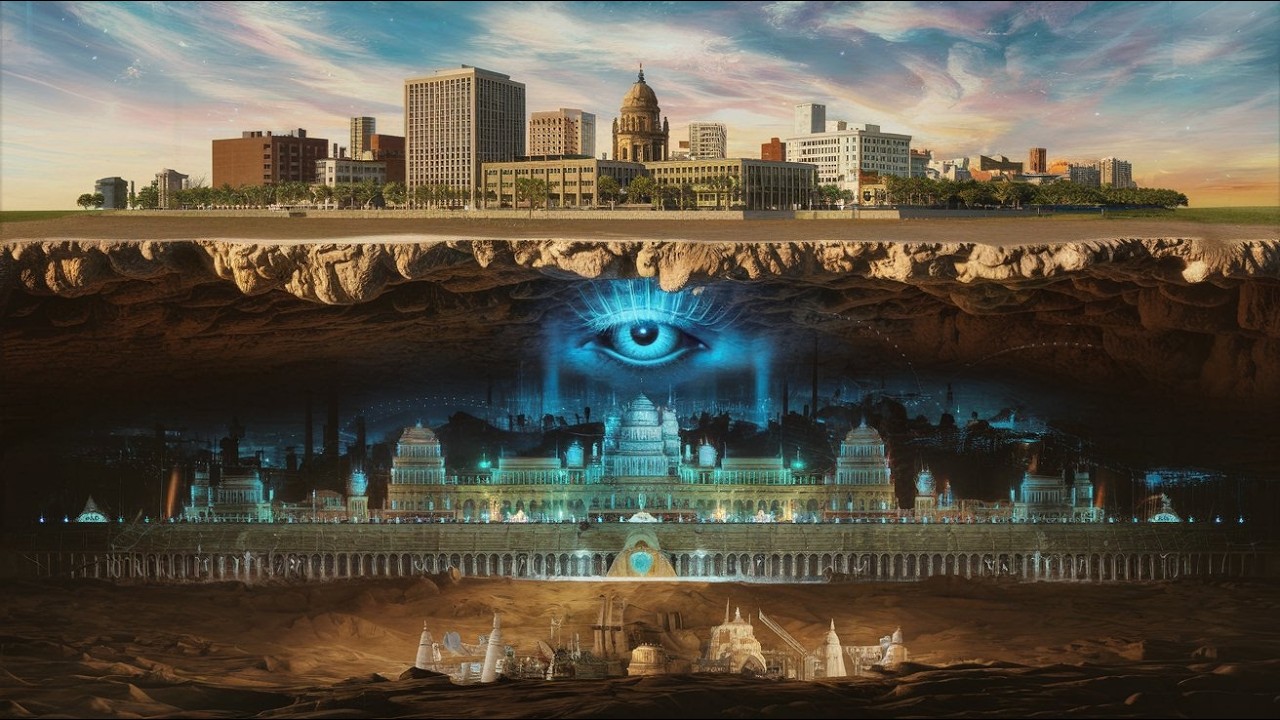
For this investigation, I’m looking at the physical traces often linked to what some researchers call the Tartarian Mud Flood—specifically the appearance of “underground” city layers. In several historic districts, old photographs show workers digging soil away from doorways rather than constructing them. Windows sit partially submerged below modern sidewalks, and first floors now function as basements.
Municipal renovation reports describe “excavation of accumulated earth” without explaining how those elevations formed. Some façades reveal multiple buried courses of stone, suggesting an earlier street grade that no longer exists. In a few cases, stairways descend to what might have been ground level.
This isn’t a conclusion—just another look at elevation shifts, excavation patterns, and surviving visual evidence.
Maybe the cities weren’t built underground—maybe they were uncovered.
They tell us the Cheyenne Mountain Complex was carved into solid granite in just six years during the 1960s — but the evidence tells a different story. A fully self-sustaining underground city, complete with 25-ton blast doors, independent air, water, and power supplies, and no public access to its underground structures even today. Were these massive complexes in Colorado and Russia truly built — or found? In this episode, we uncover why military designation legally locks these ancient sites away, why the public is never shown proof, and why these vast underground worlds might belong to a civilization far older than we are allowed to believe.

Gran Hotel Margalida Banyalbufar luxury resort reshapes Mallorca’s west coast map​


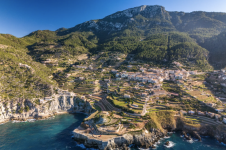
On the west coast of Mallorca, suspended between the Serra de Tramuntana and the Mediterranean Sea, Banyalbufar preserves an almost impossible geography: centuries-old agricultural terraces cascading down to the water, stone houses carved into the hillside, and a rich historical legacy

​

 
Last edited:

BarcelonaAtlantis

Moderator
Staff member
Gran Hotel Margalida: the new Grand Luxury in Banyalbufar
This coming summer, Annua Signature Hotels will open Gran Hotel Margalida, a new Mediterranean retreat designed for travelers seeking silent luxury, exclusivity and authentic Mallorcan character. Certified as Grand Luxury, the hotel will feature exceptional spaces to enjoy Mallorca’s most memorable sunsets. Experiences invite guests to reconnect with what truly matters: a signature restaurant celebrating local flavors, a suspended infinity pool overlooking the sea, a holistic spa, and curated outdoor activities including hiking in the Tramuntana, cycling routes, private boat excursions and vineyard visits. Every detail reflects Annua’s vision, where gastronomy, wellbeing, design and personalized service come together to create experiences beyond the obvious.


Plan your visit
Banyalbufar is the perfect base for exploring the Serra de Tramuntana, a UNESCO World Heritage Site, and Mallorca’s west coast, with easy access to villages such as Sóller, Deià and Valldemossa. While activities vary by season, spring and autumn are especially pleasant for exploring without summer crowds.

This opening also raises the bar for other hotels in Banyalbufar, from Son Bunyola Resort and Villas to smaller three star addresses that already blend modern comforts with traditional Mallorcan architecture. As more travelers choose this stretch of west coast over busier resort belts, expect further investment in heritage buildings, integrated wellness concepts and restaurant programs that treat the Mediterranean Sea as both larder and stage. For now, though, Gran Hotel Margalida Banyalbufar luxury resort stands as the clearest signal that Mallorca’s most interesting hotel address might no longer be in Palma or Deià, but on a terraced slope above the sea where vines, stone and light do most of the talking.

The village of Banyalbufar sits between the Serra Tramuntana peaks and the sea, and the property leans into those dual views with around thirty ocean facing rooms and suites stepped into the hillside. Every room uses soft light, pale stone and sun washed yellow accents to frame sea views rather than compete with them, so the Mediterranean feels like part of the interior design.

Local tourism boards long argued that “Banyalbufar offers unique hotels blending modern comforts with traditional Mallorcan architecture,” and this opening gives that claim a contemporary, design led example.


Lo llaman el Cinque Terre mallorquin: un tesoro oculto en el corazón de Mallorca.

Mallorca tiene muchos secretos, pero quizás ninguno tan encantador como este pequeño pueblo colgado entre el cielo y el mar. Bienvenido a Banyalbufar.

El paisaje característico y único de Banyalbufar​

Banyalbufar es una obra de arte natural, pero a diferencia de los paisajes de Cinque Terre, aquí no encontrarás una horda de turistas esperando capturar la misma foto para Instagram. La experiencia de Banyalbufar es personal e íntima, algo que se siente más que se ve. Es como el jazz: no se trata solo de las notas que se tocan, sino de los silencios entre ellas.

Banyalbufar-796x530[1].png
Banyalbufar in Mallorca is expanding its high-end hospitality footprint with a Danish billionaire planning three luxury hotel projects in and around the coastal town.

Located in one of the most spectacular enclaves in Mallorca, Banyalbufar has become an essential destination for travellers seeking authentic experiences away from mass tourism. With just 500 inhabitants, this Mallorcan municipality is a natural balcony overlooking the Mediterranean, where centuries-old terraces create a unique landscape that perfectly combines agricultural tradition with unparalleled panoramic views.


The so-called “marjades”, characteristic dry stone walls that allow cultivation on the slopes of the Serra de Tramuntana, define the landscape identity of Banyalbufar. These cultivation systems, a legacy of the Arab(Basque/Celtic/secret Holy Grail) occupation of the island, not only fulfil an agricultural function but also represent a living cultural heritage. In recent years, several restoration projects have revitalised these spaces, with a particular focus on the production of Malvasia, a native grape variety that produces wines with unique characteristics that are highly appreciated by connoisseurs.
The urban layout of the village, characterised by narrow, steep streets that lead to natural viewpoints, invites you to lose yourself among traditional stone houses with terracotta roofs. Every corner offers different perspectives of the sea, creating a sense of permanent connection between the village and the maritime landscape that surrounds it. This unique configuration has allowed Banyalbufar to remain relatively untouched by the intensive tourist development that has transformed other areas of the island.
Banyalbufar has positioned itself in 2025 as one of the favourite destinations for hiking enthusiasts in Mallorca. Its privileged location in the Serra de Tramuntana, declared a World Heritage Site by UNESCO in 2011, offers multiple possibilities for exploring landscapes of great ecological value. Among the most popular routes is the path connecting the town centre with Es Port des Canonge, a medium-difficulty route that offers exceptional panoramic views of the coastline.
‘The Ses Mosqueres route has become one of our most popular itineraries,’ explains María Soler, a local hiking guide. ‘Visitors are amazed by the sunsets that can be seen from this enclave, with the sun sinking into the Mediterranean while reddish tones colour the terraces.’ These types of experiences have consolidated the active tourism offer in the area, attracting travellers interested in sustainability and contact with nature.

In this powerful channeling, Ishuwa of the Yahyel ET civilization speaks about “First Arrival,” humanity’s relationship with the Yahyel, unconditional love, and the idea that our collective vibration plays a role in when contact can occur. Ishuwa explains why he will not give a specific date for First Arrival, why he says the timing is constantly changing, and why he believes so many of us will simply “know” when the Yahyel are coming and who they are. He also shares a fascinating perspective on: • First Arrival and extraterrestrial contact • The Yahyel civilization • Humanity’s connection to the Yahyel • Unconditional love and consciousness • “What you put out is what you get back” • Heart wisdom and soul intelligence • Activating inner knowledge • Human DNA and the Yahyel connection • Humanity’s movement beyond limitation and separation. According to Ishuwa, the deepest recognition of the Yahyel will not necessarily come from television, news, or the internet—it will come from an inner knowing. Explore the full message and decide for yourself what it means.
The mystery deepens around why certain people are chosen, with DNA, inherited contact, and consciousness becoming part of a much larger story about humanity’s origins. As the session unfolds, it moves into questions of free will, forgotten identity, ancient systems of control, and whether humanity is only beginning to remember what it truly is.

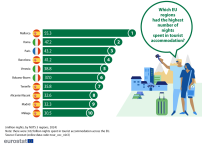
From reports on Eurostat data tracking the recovery of European Union tourism. While Paris frequently secures the top spot when evaluating tourism strictly by city boundaries, analyzing the data by NUTS regional levels consistently puts the island of Mallorca (the Balearic Islands region) at the top of the rankings for the highest number of annual overnight tourist stays in the EU.
The Regional Data Breakdown
According to updated tourism figures from Eurostat, the top NUTS regional vacation hotspots in the European Union by volume of overnight stays include:
• Mallorca: Leads the EU with well over 55 million nights spent annually in tourist accommodations.
• Île-de-France / Paris (France): Follows closely as the premier urban capital region, recording over 40 million nights.
• Roma / Lazio (Italy): Ranks alongside Paris for cultural regional tourism.
• Barcelona / Catalonia: Continues to be one of the heaviest-trafficked coastal and cultural regions in Europe
Mallorca leads the ranking with over 55.3 million tourist nights, surpassing even capital cities like Paris (47 million) and Rome (42)
 
Last edited:

BarcelonaAtlantis

Moderator
Staff member
Mallorca has established itself as Europe's leading regional holiday destination, with Eurostat data confirming that the island recorded an astounding 55.3 million tourist nights in recent regional tracking. This exceptional volume does indeed surpass the overnight stays recorded in major European capital regions. While cities like Paris and Rome attract massive numbers of day-trippers and short-term visitors, Mallorca dominates in total guest nights due to the extended nature of beach and leisure holidays1050px-RYB-Infographics-CH10_RYB2026[1].png
Top_tourist_regions_in_the_EU_(million_nights_spent_in_tourist_accommodation,_by_NUTS_3_region...png
Palma is the only city, along with San Sebastián/Donosti, where the cost of renting is equal to that of buying a home.

The Tartaria theory suggests a vast, lost civilisation was erased from our history books.

We examine the narrative surrounding the mud flood, a cataclysmic event supposedly responsible for burying grand architecture and advanced technology. This analysis breaks down why proponents believe this ancient empire was intentionally obscured by those who came after, replacing authentic history with a manufactured timeline.

The discussion extends to the role of orphan trains and the existence of secret hiding people as potential evidence of a systematic historical cover-up. By critiquing these claims, we can better understand how alternative historical frameworks challenge the standard academic record of our past.
For Oktoberfest Santa Ponsa 2026 we are still looking for DJs, entertainers and artists. Whether party music, hosting, a show act or something entirely your own – if you would like to be part of our Oktoberfest, get in touch.
Mia Weber
A schlager singer with a guaranteed earworm. She has lived on Mallorca for years and brings danceable pop schlager to the tent.Right in the middle of Santa Ponsa, a meeting point is taking shape again for everyone who wants to experience Oktoberfest spirit on Mallorca.
 
Last edited:

BarcelonaAtlantis

Moderator
Staff member

Taïel es una semilla estelar nacida un día portal, 02/02/1995 en la ciudad de Barcelona, España. Despertó parte de su ADN de Luz en 2018 tras llegar a un momento de profundo sufrimiento. Desde entonces, su camino de vida ha estado enfocado a activar la totalidad de su ADN de luz y ayudar a la Tierra en su proceso de Ascensión. A lo largo de 2 años viajando como nómada alrededor del mundo, Taïel tuvo la oportunidad de conocer rincones remotos y sagrados del planeta. Sus múltiples encuentros con seres multidimensionales y espíritus de la naturaleza llevaron a Taïel a comprender las leyes universales y a saber aplicarlas en el día a día, resultando en transformar la realidad a voluntad, siempre y cuando se respeten dichas leyes y sea en favor de la frecuencia del Amor. Canalizadora de Luz, coach sistémica y comunicadora consciente, su misión es ayudar a cuantas más personas sea posible a recordar cómo acceder a su propia divinidad a fin de liberar a la humanidad de su historia de vida como esclavos de otras razas que dominan el planeta desde las sombras. Taïel apuesta por la soberanía individual, el autodescubrimiento y el conocimiento energético, y confía plenamente en la capacidad de autosanación que poseen los seres humanos. Taïel provee una Ascensión completa a la 5D en las próximas décadas: “si cada célula terrestre toma la decisión de responsabilizarse por su propia existencia, la Tierra será uno de los lugares de más alta vibración del universo. 💜 Taïel, elevadora de consciencia, canalizadora, coach sistémica

Taïel is a starseed born on a portal day—February 2, 1995—in Barcelona, Spain. She awakened part of her Light DNA in 2018 after reaching a moment of profound suffering. Since then, her life path has focused on activating the entirety of her Light DNA and assisting Earth in its Ascension process. Over two years of traveling the world as a nomad, Taïel had the opportunity to visit remote and sacred corners of the planet. Her many encounters with multidimensional beings and nature spirits led her to understand universal laws and learn how to apply them in daily life, resulting in the ability to transform reality at will—provided those laws are respected and the actions align with the frequency of Love. A Light channeler, systemic coach, and conscious communicator, her mission is to help as many people as possible remember how to access their own divinity, thereby liberating humanity from its history as slaves to other races that have dominated the planet from the shadows. Taïel champions individual sovereignty, self-discovery, and energetic knowledge, and she places full trust in the human capacity for self-healing. She envisions a complete Ascension to the 5th Dimension in the coming decades: "If every Earth-based being decides to take responsibility for their own existence, Earth will become one of the highest-vibration places in the universe." 💜 Taïel, consciousness raiser, channeler, systemic coach

Mallorca once again stood out as one of the main drivers of the Spanish tourism industry. The island led the way in terms of hotel activity among the country’s tourist destinations, with over 8.5 million overnight stays in August.

By municipality, Calvia ranked among the Spanish destinations with the highest number of nights booked, alongside Barcelona and Madrid, confirming the significance of Mallorca’s hotel offering within the national market as a whole.

It sounds like you are sharing a striking statistic about Mallorca's massive popularity as a holiday destination! Mallorca drawing over 55.3 million tourist nights—and outperforming major global capitals like Paris and Rome—highlights just how dominant Mallorca is in the European tourism market


We are going thru the dark night of the soul which is a profound phase of spiritual crisis, inner turmoil, and ego dissolution that can lead to deep personal transformation.The dark night of the soul is a profoundly transformative experience that many people go through at some point in their spiritual journey. It is an intense process of inner crisis, where everything known seems to lose meaning and a genuine search for truth and purpose begins. In this article we explore what it means to go through this stage, how to identify it and what practices can help you to go through it with greater awareness and clarity.


OKTOBERFEST SANTA PONSA 2026 IS BACK! 🥨

Here we go again! From 23 October to 1 November 2026, Oktoberfest Santa Ponsa returns for its 3rd year!

Get ready for 10 days of authentic Bavarian Oktoberfest atmosphere in Mallorca: live music, fantastic bands, Dirndls & Lederhosen, our Dirndl Contest, original Hofbräu beer and plenty of delicious Bavarian food.

We can’t wait to celebrate with you again! Save the dates, get your traditional outfit ready and bring your friends.

📍 Santa Ponsa, Mallorca
📅 23.10. – 01.11.2026

Oktoberfest Santa Ponsa – Bavarian spirit meets Mallorca!Mallorca's largest German Oktoberfest celebration is set to make a comeback in Santa Ponsa this autumn.
Mallorca has a way of turning an ordinary walk into a little escape 🤍

Stone streets, old houses, lush greenery and that unmistakable Mediterranean feeling — the kind of place where you simply want to slow down, breathe in the summer air and enjoy the moment…
 
Last edited:

BarcelonaAtlantis

Moderator
Staff member

Mallorca continues to draw record numbers of international visitors, cementing its status as a world leader in Spanish tourism.

Mallorca’s guardian of water​

Meet the Mallorcan environmental expert working to protect the island’s hidden water reserves​


Mallorca was a pioneer in water reuse, building such water storage ponds in the 1970s. There are now ten of them on the island. https://www.majorcadailybulletin.co...026/09/16/145707/mallorca-guardian-water.html

The Ancient Mystery of Norumbega is all over New England.. I am VERY convinced that there is an Ancient Realm underneath us that is just waiting to be Uncovered.. it holds the Truths about Ancient America that OBLITERATE what we have all been force-fed thru Educational Propaganda.. Which is what needs to happen... The lies are piling up.. time to dig for TRUTH..
Uncover the enigmatic Golden City of Norumbega: a 16th-century Native-inspired myth of wealth and rivers that explorers like Verrazzano and Champlain tied to New England's coast from Cape Cod to Penobscot Bay. Trace its evolution from Wabanaki "quiet place" on 1524 maps to a "city of gold" in Mercator's 1569 atlas, fueling Viking Vinland dreams and Longfellow poems. Explore debunked Norse sites in Cambridge and Maine digs for "relics," plus modern echoes in Bangor's streets and Cambridge towers. From French trade routes to 1893 World's Fair exhibits, discover why this elusive legend endures in Northeast history.


What if a major American metropolis was deliberately erased from history? In this video, we investigate the mystery of Norumbega, a legendary city that appeared on every major world map in the 1500s—only to vanish without a trace after 1604. Was it just a cartographer's mistake, or the victim of a massive historical cover-up? We dive deep into the controversial "Tartarian Empire" hypothesis and the "Mud Flood" theory to uncover: 🔍 The Cartographic Erasure: How master mapmakers like Ortelius and Mercator documented a city that Samuel de Champlain later claimed never existed. ⚡ Lost Ancient Technology: Re-interpreting David Ingram's 1568 testimony of crystal pillars and silver roofs not as wealth, but as advanced atmospheric energy harvesting technology. 🏛️ The Buried Evidence: Harvard Professor Eben Norton Horsford’s shocking 19th-century excavations of massive stone wharves and dams buried deep beneath the Charles River. 📡 The Modern Cover-Up: Is the Norumbega Tower in Weston, MA, actually a paramagnetic antenna? And why did the government recently spend $835,000 to "renovate" it with grounding metal grates?

The Lost City of Norumbega, a legendary place shrouded in intrigue and wonder! This video explores one of North America’s most captivating mysteries—the fabled city of Norumbega. Once thought to be a wealthy metropolis filled with gold, pearls, and incredible treasures, Norumbega has fascinated explorers, historians, and myth enthusiasts for centuries. But was Norumbega real or just a myth? Uncover the evidence, maps, and stories that fueled the search for this lost city and journey with us as we separate fact from legend. 🎥 Perfect for fans of mysteries, legends, and the unexplained, this video sheds light on Norumbega’s origins, its place in Native American lore, and the explorers who risked everything to find it. Whether you’re curious about the hidden history of North America, intrigued by ancient myths, or simply love unraveling unsolved mysteries, The Lost City of Norumbega is a story you don’t want to miss. Subscribe for more incredible tales about lost cities, hidden treasures, and the mysterious world around us. Don’t forget to hit the notification bell for weekly updates on history’s most fascinating enigmas!

A philosophical and introspective look at the psychology behind this weird feeling so many of us seem to have that something is coming, with some existential dread and dark humor thrown in. AI is moving incredibly fast. The climate is changing, and the political and economic future seems harder to predict than it used to. And meanwhile, we're carrying around phones that feed us a nonstop stream of information about all of it. So is something actually coming, or have we just created an information environment that makes us feel like it is? It's probably some combination of the two.

On January 6, 1858 . The Raftsman Journal published an intriguing article called Antiquities in America, discussing many of the ruins and structures around this continent that have not been discussed by official history...
Could they be referring to Tataria and or Ancient Structures from Atlantis?Yes.

One of the main tools used after the resets were ASYLUMS in order to reprogram the population. Is there something going on with the sudden need to build Mental Hospitals all over the United States during the 18th and 19th centuries? Many of us are brought up with the assumption that there are no castles in America but nothing could be farther from the truth, in fact, most of the castles in America are larger than those in Europe. We just don't see these structures as castles... We call them ASYLUMS, Penitentiaries/Prisons, and COLLEGES. Watch this video and then try looking at these structures again, you will never see them the same...
 
Last edited:

BarcelonaAtlantis

Moderator
Staff member
Italian Fushion is ranked as one of the very best restaurants in Santa Ponsa on Tripadvisor, holding the #1 spot out of over 150 local restaurants

"Italian fushion pizza is the best in the world and best service and best freindly staff and best place in the town"

Santa Ponsa is one of the strongest luxury real estate hubs in Southwest Mallorca

Today will be a second video about the Lost City of Norumbega. If you haven’t checked out my first video it will be linked down below. In the video today we will discuss the 1881 Book “The Discoveries of America to the Year 1525” by Arthur J Weise, which suggests the lost city of Norumbega could possibly be located atop The Palisades in New York / New Jersey. Today we will dive into the oldest photographs of The Palisades that I could find, as well as briefly discussing some excerpts from the 1881 book. We will also look at “Mansion Row” which existed atop The Palisades during the late 1800’s, before being inexplicably torn down by the 1930’s. We will also look at “Palisade Park”, an amusement park on The Palisades which suffered a great fire in 1944. Let’s take a deep dive into to these images, and discuss the possibilities of Norumbega, the lost Norse city, being associated with The Palisades.

Today will be more of a podcast with pictures than a photographic compilation. I wanted to discuss a recent old world article (or two) I found written about the history of Norumbega. It varies wildly from the current narrative history we are given. Currently (mainstream narrative) we are told Norumbega was a concept that a group of explorers conjured up, but no real proof was ever discovered, meaning that no real kingdom or city ever existed. However much like other lost cities (I see you, Atlantis) Norumbega has remained a key part of ancient myth and history in certain key areas. Today I wanted to share a little information about Norumbega, as well as discuss the ramifications of the “Norwegian Narrative”. This is a deep dive for my true fans, who I think not only will be interested in this subject, but will be able to provide some solid information of their own. It seems many countries and cultures have references to the mysterious “Norumbega” Kingdom, so today we will discuss the Norwegian Narrative in particular, and the importance Norway may have played to the later inheritors of the New World


Is it possible that there was a Tartarian Empire in the United States?Yes.We go over some puzzle pieces that begin to tie together a story that we are not taught in Mainstream history. The Legendary City of Norumbega is a settlement in northeastern North America that was featured on many early maps from the 1500s until the European colonization of the region. They have removed this great city from the maps and history books. I bring up some points on how it very well may be possible that many of the foundations of America came from this empire. Who knows maybe the Founding fathers themselves were from Norumbega...


Puigpunyent, Mallorca.

puigpunyent-mallorca[1].jpg


Puigpunyent, Mallorca: Tramuntana tranquillity, countryside elegance, and a refined escape close to Palma​

Puigpunyent, Mallorca is a quiet mountain village that feels like a private retreat hidden in the folds of the Tramuntana landscape. Just far enough from Palma to create a sense of escape, yet close enough for effortless day trips, it offers a slower, greener side of the island that many visitors never truly see. Here, mornings arrive softly with fresh air and birdsong, the roads feel calmer, and the scenery has a natural elegance shaped by valleys, stone walls, and the subtle presence of the mountains.
 
Last edited:

BarcelonaAtlantis

Moderator
Staff member
What makes Puigpunyent special is its understated luxury, not in nightlife or beaches, but in space, silence, and the feeling of being surrounded by nature while still having the island’s highlights within easy reach. It is the kind of destination where you spend as much time enjoying the atmosphere as you do exploring. If you are searching for things to do in Puigpunyent, planning the best time to visit Puigpunyent, deciding where to stay in Puigpunyent, or researching how to get to Puigpunyent, this village is a perfect choice for travellers who want authenticity, countryside comfort, and a Tramuntana rhythm that feels genuinely restorative.


Where is Puigpunyent in Mallorca?
Puigpunyent is located in the southwest interior, set within the Serra de Tramuntana foothills and only a short drive from Palma. It sits in a green valley, surrounded by mountain scenery and countryside roads that feel quiet and scenic. The location is ideal for travellers who want a nature led base without being far from the city.


From Puigpunyent, you can reach Palma easily for culture, shopping, and dining, while also having access to Tramuntana routes and viewpoints nearby. It is also close to other southwest highlights, making it a strategic and peaceful base for exploring multiple regions of the island.


What Puigpunyent is known for
Tramuntana countryside calm and fresh air


Puigpunyent is known for its peaceful valley setting and mountain atmosphere. The air feels fresher and the pace slower than coastal towns. It is perfect for travellers who want quiet beauty.


A refined rural escape close to Palma


The village offers countryside tranquillity while staying very close to the capital. This creates an ideal balance of retreat and convenience. You can enjoy nature by day and Palma lifestyle when you want it.


Scenic drives and gentle walking routes


The surrounding roads and paths invite exploration at a relaxed pace. Short drives lead to viewpoints and beautiful landscapes. It is a rewarding area for travellers who enjoy nature without intense hiking plans.


Authentic village atmosphere beyond resort zones


Puigpunyent feels lived in and local, with an understated character that makes it special. It is not built around tourism crowds. The experience feels genuine and grounded.


Top things to do in Puigpunyent and nearby
Start your day with a slow countryside morning and enjoy how calm the valley feels. Puigpunyent is ideal for travellers who want to wake up to nature and let the day unfold without pressure. This peaceful rhythm is one of the most rewarding things to do in Mallorca when you want the island to feel restorative.


Take a scenic drive through the Tramuntana foothills and stop at viewpoints whenever the landscape opens up. The roads around Puigpunyent feel quietly beautiful, with changing light and wide countryside views. It is one of the best places to visit near Puigpunyent for travellers who love driving and discovering small moments.


Plan a Palma afternoon and treat the city as a natural extension of your stay. You can explore the old town, enjoy elegant terraces, and experience the island’s cultural energy, then return to the quiet of Puigpunyent later. This city and countryside contrast creates a premium travel flow.


For a more nature led experience, choose a short walk or gentle route nearby and enjoy the landscape at a comfortable pace. The area offers scenic moments without requiring a demanding hike. It is perfect for travellers who want nature but still prefer a relaxed itinerary.


Include a southwest coastal day when the mood strikes and enjoy the ease of reaching beaches from an inland base. Staying in Puigpunyent means you can choose your coastal atmosphere rather than being locked into one style. This flexibility makes it a smart location for varied travel days.


End the day with a calm evening in the village atmosphere and let the quiet become part of the experience. Puigpunyent nights feel peaceful and grounded, and the stillness is a luxury in itself. It is the kind of place where you sleep deeply and wake up ready to explore again.


The best time to visit Puigpunyent
The best time to visit Puigpunyent is spring and early summer, as well as early autumn, when the countryside feels green and the temperatures are comfortable for scenic drives and outdoor time. May, June, and September are especially refined, with warm light and a calm atmosphere. High summer can be hot across the island, but Puigpunyent often feels slightly cooler and more comfortable than coastal areas.


Who Puigpunyent is perfect for
Couples looking for calm romance will love Puigpunyent for its peaceful valley setting and relaxed evenings. It is ideal for travellers who want privacy, countryside beauty, and the option to add Palma dining whenever they want.


Travellers who want authentic Mallorca beyond resorts will feel at home in Puigpunyent. The village atmosphere is genuine, quiet, and grounded, offering a real sense of island life. It is a destination for travellers who value authenticity over crowds.


Visitors planning a wellness style escape will appreciate the calm rhythm and natural surroundings. Puigpunyent is perfect for slow mornings, quiet walks, and a restorative travel pace. It suits anyone who wants the island to feel peaceful and spacious.


Road trip travellers who want a strategic base near Palma will benefit from this location. Puigpunyent keeps you close to major routes while offering a retreat atmosphere at the end of the day. It supports an island wide itinerary with minimal stress.


Where to stay in Puigpunyent
Where to stay in Puigpunyent is best approached as a Tramuntana countryside escape with refined comfort and a sense of space. The area suits travellers who want quiet nights, outdoor living, and a more private stay style, often surrounded by nature and valley views. It is ideal for visitors who want Palma close, but prefer to return to a calm mountain atmosphere rather than a busy coastal setting.

The historic route linking Puigpunyent and the Palma neighborhood of Son Rapinya (via La Vileta) is the Camí Vell de Palma a Puigpunyent, an ancient 13th-century camí real (royal path)

Route and History
• Origin: Documented back to the 13th century, serving as a primary gateway from Palma into the Serra de Tramuntana.
• Path: It runs roughly 12.5 kilometers from the Son Rapinya/La Vileta area past Son Marill, crossing near the Torrent de sa Riera towards Puigpunyent.
• Restoration: Portions of the historic path have been restored and incorporated by the Consell de Mallorca into the regional Ruta de Pedra en Sec (Dry Stone Route, designated as part of the GR 221 network)


We’ve been asked to investigate the Titanic so many times — and this session went far beyond anything we expected.

Rather than beginning with a specific theory, we simply asked: what can you tell us about the Titanic?

Almost immediately, the board suggested that the story we’ve been told isn’t what actually happened — and led us directly towards the long-standing theory that Titanic and her sister ship Olympic were switched.

But that was only the beginning.

As we followed the information coming through, the session took us into J.P. Morgan, the financial interests surrounding the ships and a mysterious “gang of men” who appeared to have their own reasons for what happened.

Then came one of the strangest parts of the entire investigation.

The board began directing us towards a book written BEFORE the Titanic disaster: Morgan Robertson’s Futility, or The Wreck of the Titan.

Published years before Titanic sank, the story describes a huge supposedly unsinkable ocean liner called Titan striking an iceberg in the North Atlantic with too few lifeboats — resulting in enormous loss of life.

Why were the similarities so extraordinary?

That question led us into something we had never heard called “Rope Theory” — the idea that placing something into the collective consciousness could help manifest a particular timeline into reality.

From there, the investigation became much bigger than Titanic.

We explored whether the disaster could have altered a timeline, connections with the Bank of England, Nostradamus, World War II and the Doomsday Clock — before an important discovery made while editing the video led us back to Morgan Robertson.

Because Titanic wasn’t the only future event his fiction appeared to resemble.

The session eventually led us towards the possibility that someone aboard the ship needed to die for that timeline to change, a mysterious Russian prince, the real-life relationship that may echo the “forbidden love” theme of the Titanic film, and even a connection to the Hope Diamond.

This one took us TWO DAYS to finish — and every answer seemed to open another door.

Let us know what you make of it.

Do you think Futility was simply an extraordinary coincidence? Could Robertson have been unconsciously tapping into something? And what do you make of the “Rope Theory” that came through?
 
Last edited:
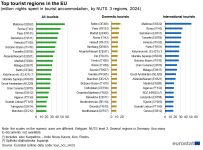
BarcelonaAtlantis

Moderator
Staff member
Las claves para la descolonización de Iberia y, con ello, la energía necesaria para poder recuperar no solo este país sino también Europa, sumida en estos momentos en un globalismo agenda 2030 woke que está trayendo un grave proceso de autodestrucción demográfico, cultural, lingüístico, y por supuesto, económico. Para esa recuperación, creo que también dimos una importantísima pista para poder recuperar la esencia básica de lo que ha hecho a Europa convertirse en lo que es: la verdad como eje vertebrador de la persona y motor de la convivencia y las libertades.

La vieja civilización europea(basca) surgió en el Cantábrico. Para ello dimos muchísimas razones. Por ejemplo el arte rupestre, muestra por antonomasia del nivel cultural de nuestros antepasados, tiene sus muestras más antiguas en Asturias y Cantabria, con más de 35.000 años de antigüedad. A medida que vamos hacia el Este y hacia el Norte, las pinturas son más recientes. Las dataciones de las pinturas rupestres europeas son un gran caudal de información que no se quiere estudiar debidamente.

También tenemos el Camino de Santiago que no pudo surgir por casualidad. En opinión de muchos investigadores es el camino iniciático de Europa y sería una vuelta al origen de los europeos.

Esta propuesta del origen cantábrico de la civilización europea hace ya casi 40 años cuando no había la tantísima información que tenemos ahora. Por ejemplo ahora sabemos científicamente que irlandeses, galeses, ingleses y escoceses proceden genéticamente de un 70% al 90% del del Golfo de Bizkaia, de la zona cantábrica, tal como lo demostró Stephen Oppenheimer, investigador profesor de Oxford que ha sido silenciado en el estado. Debemos tomar en cuenta que en la glaciación a partir de Burdeos era todo hielo, inhabitable, y cuando se quitaron dichos hielos subió el nivel del mar 100 metros convirtiendo a Irlanda y Gran Bretaña en islas y actuando de refugio genético. Pero también todo Francia y las zonas costeras de los Países Bajos, Dinamarca… tuvieron aporte humano del Cantábrico. Es decir, Europa occidental se pobló fundamentalmente desde Iberia-Akitania(el Pais Basco/Navarra)

Otra razón de peso para esta teoría la tenemos en el euskera, lengua que he estudiado a conciencia y muchas propuestas etimológicas las tome como referencia. Eran muy antiguas y no las veía como lenguas aisladas sino como las predecesoras de las lenguas románicas.

Para entender esto es importante la familia de atx-az-ach (roca en euskera, el material básico para elaborar las primeras herramientas) tenemos en latín solo una palabra: ascia, hacha; cuatro en castellano: hacha, azada, machete, azagaya? y más de 7 en euskera.

Debemos tener en cuenta que el euskera tiene un gran parecido con el íbero (el creador de la Universidad de Berlin, Humboldt, lo explicó a través de la toponimia de Euskal Herria e Iberia), y según alguno más, con el etrusco. Cada vez están apareciendo más investigaciones en esta línea (Ferrer, Orduña….) como los números en íbero (ban, bi, hirur, laur, bors…) e infinidad de palabras que demuestran un origen común. Es decir, si el etrusco, ibero y euskera eran primos o hermanos y el latín es posterior al etrusco (el texto más antiguo en latín tan solo tiene 2.700 años) y hay cientos de palabras similares entre todas ellas, ¿quién ha tomado a quién?

Otro principio a tener en cuenta es que la primera vez que se recoge una palabra en un escrito no significa que dicha palabra sea originaria de dicha lengua. Como sabemos, el griego, latín y árabe han sido las lenguas que más escritos realizaron en la antigüedad, pero eso no quiere decir que las miles de palabras utilizadas por estas lenguas sean originariamente suyas, sobre todo cuando no se quieren investigar las lenguas anteriores (etrusco, ibérico, euskera…). La palabra “ley”, por ejemplo, es difícil que venga del latín si la tenemos antes en ibero.

Imanol Agirre, investigador, demostró que la semántica, la morfología y el léxico de la extinta lengua siberiana “ket” tenía una gran similitud con el euskera, y demostró con ello hay un viejo sustrato lingüístico euroasiático y que, por lo tanto, a pesar de la enorme fragmentación de las lenguas con el sedentarismo, hay componentes comunes en toponimia, hidronimia, léxico y otros elementos lingüísticos en muchas euroasiáticas. Y creemos que hay que tener esta amplia perspectiva en este estudio de las etimologías. Este substrato también se puede ver en otros campos como las danzas, donde encontramos similitudes en bailes populares de Iberia con otras zonas europeas, también en la mitología, etc.


El verdadero cristianismo, no el “oficial”, fue la argamasa que crearon nuestros antepasados en el Cantábrico para cohesionar sus sociedades y por eso pudieron durar tantos miles de años y poder extenderse luego a todo Europa. En el libro “El cristianismo nació a orillas del Cantábrico, en el Paleolítico Superior” nos da algunas claves.

Una de ellas es el Crismón, uno de los símbolos del cristianismo que algunos le otorgan un origen basco (“brácaros vascontes” es el lema de uno de ellos muy antiguo). Además una de las piedras encontradas en San Vicente de la Barquera se parece mucho al crismón.

Otra prueba en su opinión más importante son las banderas de los pueblos atlánticos. En todas ellas aparece una cruz: Asturias, el lábaro cántabro, la bandera navarra con doble cruz, la cruz portuguesa, Escocia, Inglaterra, la cruz de San Andrés en Irlanda y la cruz de Borgoña-España, Islas Faroe, Dinamarca, Suecia y Noruega. ¿Cómo es posible que prácticamente todos los pueblos que dan al Atlántico tengan una cruz en sus banderas o en su simbología?

El día en que podamos investigar sin la losa del Vaticano la antigua Europa podremos ver seguramente que el catolicismo ha cambiado tanto el cristianismo original que lo ha hecho irreconocible y es una de las razones de que cada vez se pierda más la fe y la gente caiga en un ateísmo que es el camino a la desaparición de la civilización europea frente a un islamismo o judaísmo que cada vez tienen más fuerza y quieren cambiar totalmente Europa y no para mejor.

Resumiendo, podemos decir que la idiosincrasia cultural europea que nos distingue de otros continentes, más que de la cultura grecolatina, surgió en el Cantábrico(el Pais Basco/Navarra) de donde se difundió por toda Europa con el deshielo. Esta propuesta es fundamental para que Iberia se dé cuenta de su verdadera historia y de su importancia, que deje a un lado el colonialismo grecolatino y actualmente anglosajón, que creo yo que, además, están siendo utilizados por el judeomasonismo y últimamente por el Vaticano para ir contra la propia Europa, y que Iberia debe recuperar la fuerza interna que tiene para poder ayudar a regenerarse no solo a ella misma sino también a todo el continente. Tenemos mucho trabajo que hacer por delante.


From Andratx to Calvia, major building projects are reshaping steep coastal plots once considered too difficult to develop.

The Mallorca hillsides being carved away to build some of Europe’s most expensive homes.​

1[1].jpg

What was once known locally as Es Salinar (Camp de Mar) has become the most exclusive — and expensive — stretches of coastline in Spain, with homes selling for around €15 million. But the hillside above Cala en Cranc in Andratx now presents a dramatically altered landscape, with large sections appearing to have been carved away to make room for new luxury villas.


The steep plots, once considered almost impossible to build on, have been excavated and reinforced to create platforms for some of Mallorca’s most ambitious property projects. Across the island, dozens of similar developments are transforming coastal areas as developers seek to build on land that was already classified as urban.

The phenomenon is particularly visible in sought-after locations including Cala Llamp, Camp de Mar and Puerto Andratx, as well as areas between Paguera and Santa Ponsa in Calvia and Canyamel in Capdepera. Similar excavation work has also taken place on inland plots in exclusive neighbourhoods such as Son Vida and Genova in Palma.

Critics argue that current planning rules have allowed entire plots to be hollowed out to overcome extreme slopes, with many building licences dating back decades before the latest property boom revived interest in these valuable sites. During the previous term of government, Mallorca Council introduced new restrictions requiring owners of plots with slopes of more than 50% to preserve at least half of the undeveloped area in its natural state.
Environmental groups say, however, that the measures do not go far enough. Jaume Adrover, spokesman for Terraferida, argues that many of these developments are the result of years of failing to reclassify land that should never have been built on. “They should never have been processed because they are genuine monstrosities,” he said, criticising what he describes as a lack of ambition in protecting Mallorca’s coastline from large-scale construction.

Attempts to halt development through land declassification have also been complicated by legal battles and the risk of major compensation claims. A key turning point came with the Muleta development case in Puerto Soller, which resulted in the Balearic Government being ordered to pay around €96 million in compensation. Since then, campaigners say political action has slowed, leaving some of Mallorca’s most sensitive landscapes increasingly exposed to pressure from the luxury property market.
 
Last edited:

BarcelonaAtlantis

Moderator
Staff member

"Whether we like it or not, Mallorca is going to be the next Saint-Tropez"​


On Wednesday, the third Mallorca Real Estate Summit was held - its location, the Castell Hotel de Son Vida.

Among the speakers were representatives of Tecnitasa, a Palma-based valuation consultancy. Reflecting on the luxury sector, the central theme for the summit, José Antonio Muro said that investors in the luxury sector still see a long way to go before comparing Mallorca with London, Paris or New York. Nevertheless, Luis Díaz observed: "There is a great demand to live in paradise." Mallorca is the legit Paradise thus nothing compares to Mallorca...
The future of luxury will be in the countryside. Mallorca and the Balearics are destined to be a bucolic refuge for the super-rich from around the world. https://www.majorcadailybulletin.co...the-island-will-become-like-saint-tropez.html

Why are there no Great Lakes in the old maps of America? Is it possible that there was a cataclysm in much more recent times? How are comets connected with world-changing events? Is there any evidence to support that a Meteor hit North America in the Great lakes region?


Southwest Mallorca Property vs European Capital Cities: What the Numbers Actually Show​

The conversation about southwest Mallorca property investment often stays within its own frame of reference — comparing one part of the island with another, or occasionally with other Spanish coastal locations. That is a useful conversation, but it misses the more revealing comparison: how does the southwest of Mallorca stack up against the prime residential markets of the major European cities where most of the island’s international buyers actually live and work? London, Paris, Munich, Amsterdam, Stockholm — these are the reference points that matter most to the people thinking seriously about acquiring property here. When you put the numbers side by side, some of the assumptions commonly made about southwest Mallorca property as an expensive or niche market start to look very different.

Where Southwest Mallorca Property Prices Stand in 2026​

The Steinbeis Transfer Institute, which has conducted the most comprehensive independent annual study of the Mallorca property market for twelve consecutive years, published its 2026 findings in March. The headline figure for the island as a whole is an average of €7,370 per square metre, representing a 9.8 per cent year-on-year increase. Southwest Mallorca property — covering the municipalities of Calvià and Andratx, including Santa Ponsa, Portals Nous, Bendinat, Costa d’en Blanes and Puerto Andratx — is approaching €10,000 per square metre at the upper end of the market, with prime sea-view villas regularly listed above fifteen million euros.

The independent Numbeo database, which aggregates verified data from national statistics offices and local market reports across Europe, shows the following city-centre average prices per square metre for early 2026:

City / LocationAvg. Price / m² (City Centre)Avg. Price / m² (Outer Areas)10-Year Price Growth
SW Mallorca Property (Prime)~€9,500–10,000~€6,500–7,500~97% since 2015
London~€7,950 (~£6,800)~€5,200–6,000~35% est. over 10 years
Paris~€10,760~€6,500–8,000Broadly flat since 2020
Munich~€10,800~€6,000–8,000Strong growth, plateauing
Amsterdam~€7,700–8,000~€5,500–6,900Significant growth, slowing
Stockholm~€6,000–7,500~€4,500–6,000Negative in recent years
Copenhagen~€6,500–7,500~€4,000–5,500Moderate, mixed

Prime southwest Mallorca property — a market that delivers 300 days of sunshine, sea access, genuine lifestyle quality and the scarcity of an island with strict planning controls — is priced broadly in line with city-centre property in London or Amsterdam. For the same budget that buys a city-centre apartment in London or Amsterdam, a buyer can acquire a substantial southwest Mallorca property in one of Europe’s most desirable locations.
 
Last edited:

BarcelonaAtlantis

Moderator
Staff member
Prime southwest Mallorca property — a market that delivers 300 days of sunshine, sea access, genuine lifestyle quality and the scarcity of an island with strict planning controls — is priced broadly in line with city-centre property in London or Amsterdam. For the same budget that buys a city-centre apartment in London or Amsterdam, a buyer can acquire a substantial southwest Mallorca property in one of Europe’s most desirable locations.

The Growth Story: What the Historical Record Shows​

The comparison becomes even more compelling when looking at capital growth over the past decade. Independent data from Fotocasa and the Tasalia valuation group confirm that average southwest Mallorca property prices have increased by approximately 97 per cent since 2015. The municipalities of Calvià and Andratx have outperformed that island-wide figure. Andratx alone moved from around €4,803 per square metre in early 2022 to over €7,500 per square metre by mid-2025 — a gain of more than 56 per cent in three years.

Compare this with the major European capital markets over the same period. Stockholm experienced meaningful price declines in 2022 and 2023 as interest rates rose, and recovery has been slow. London’s prime central market saw year-on-year falls of 16.5 per cent in the most recent twelve months according to UK House Price Index data. Paris has been broadly flat since 2020. Munich, which surged to over €10,000 per square metre at its peak, has seen price pressure ease as higher mortgage rates hit a market heavily dependent on leverage.

Southwest Mallorca property has been almost entirely insulated from these pressures. The buyer base is predominantly cash-purchasing, international and wealth-driven rather than mortgage-dependent. When interest rates rise in Frankfurt or London, buyers of southwest Mallorca property are largely unaffected — making the market markedly less volatile than urban European real estate through economic cycles.

What Two Million Euros Actually Buys​

In London, two million euros (approximately £1.7 million at current exchange rates) buys a two-bedroom apartment in a good central location, or a three-bedroom flat in a secondary area. There is no garden. There is no view beyond the street. Annual service charges and maintenance in prime London blocks typically run to £30,000–£60,000. The climate delivers around six to eight hours of sunshine per day in summer and fewer than two hours per day in December.

Two million euros in southwest Mallorca property buys a three-to-four-bedroom villa with a private pool, a garden and, depending on the specific location, a sea view or mountain vista. The property is usable year-round. Annual ownership costs are a fraction of those in prime London. The Balearic Government’s decision in 2024 to raise the wealth tax threshold to three million euros per person means that most buyers in this bracket carry no wealth tax liability on their southwest Mallorca property. The same exercise applied to Munich or Paris produces similar results: at two million euros, central Munich or Paris delivers an apartment of perhaps 80 to 100 square metres with urban living and no outdoor space.

The Scarcity Factor in Southwest Mallorca Property​

One of the most important structural features of the southwest Mallorca property market is the absolute constraint on new supply. The Serra de Tramuntana is a UNESCO World Heritage Site with tight construction controls. The coastal zones of Calvià and Andratx have building restrictions that effectively prevent significant new development in the areas of highest desirability. The supply of prime southwest Mallorca property is genuinely finite and has been for decades.

Cities like London, Paris and Munich are constantly adding to their prime residential stock through new developments and regeneration projects. When demand for southwest Mallorca property increases — as it has through the entry of American and Gulf buyers in 2025 and 2026 — there is no release valve on the supply side. Prices adjust upward, and they stay there.

Running Costs: Southwest Mallorca Property vs European Capitals​

Annual IBI (municipal property tax) on a two-million-euro southwest Mallorca property in the Calvià or Andratx area typically runs to between €3,000 and €8,000 depending on cadastral value. For buyers whose total Spanish assets remain below three million euros, there is no wealth tax. Community fees and maintenance costs for a standalone villa are owner-controlled. Contrast this with London, where the annual service charge on a prime central apartment combined with council tax routinely exceeds £30,000, or Munich, where annual property tax and utility costs represent a significant ongoing burden.

Southwest Mallorca Property: The Investment Case in Summary​

Southwest Mallorca property in 2026 offers a combination that is genuinely rare in European real estate: an asset class that has delivered roughly double the price growth of London or Paris over the past decade, in a market with structural supply constraints that do not exist in urban alternatives, at a price point broadly competitive with prime city-centre property in the cities where most buyers already live, delivering a lifestyle quality and utility that no urban apartment can match.

At Imperial Properties, we have been active in southwest Mallorca property for many years and have direct experience of how this market behaves across different economic conditions. Contact us directly to arrange a conversation about what southwest Mallorca property is available and how this market fits your investment picture. https://www.imperial-properties.com...pital-cities-what-the-numbers-actually-show-1

Mallorca capital Palma is the tourist city in southern Europe with the highest housing and rental prices.

South-West Mallorca is approaching €10,000 per square metre in 2026, making it one of the most expensive and sought-after luxury real estate corridors in Europe.South-west Mallorca: Municipalities like Calvià and Andratx lead the island, with top micro-markets like Port d'Andratx and Costa d'en Blanes exceeding €11,000 per square metre.

Property values in prime areas of Calvià (Mallorca), such as Puerto Portals, Portals Nous, and Bendinat, reach as high as €15,000 per square metre, positioning the municipality among the most expensive luxury real estate markets in Europe


Calvia is one of the most in-demand places to live in Spain.An impressive 34 per cent of properties valued at over three million euros in Spain are located in the Balearics, making it the region in Spain with the largest market share in this sector

The stock of luxury properties has doubled in the Balearic domestic market, as the “pace of transformation on the islands has broken historical records”. Whilst in 2023 properties priced at over three million euros accounted for just 6 per cent of the total stock for sale within the Balearics’ own property market, by 2026 that figure had soared to 15 per cent of the region’s domestic supply.


This growth is due to a “steady appreciation” of property values in the region, where the average price per square metre has risen by 20 per cent since 2020. This upward pressure has shattered price records in highly localised micro-markets.

Three areas in the region have broken through the barrier of an average of 11,000 euro/m², namely Puerto Andratx, with an average of 11,928 euro/m²; followed by Es Cubells, at 11,704 euro/m²; and Costa d’en Blanes, which stands at 11,081 euros per square metre.

Buyers from the United States account for a significant 10 per cent of transactions in key locations such as Palma.​


Palma's luxury property market is booming.Seven of Spain's 10 costliest homes are in Mallorca


The Calvià housing market is growing significantly faster than the rest of Europe. While S&P data indicates that broader European home prices are projected to rise at an average of 4% in 2026, the municipality of Calvià in Southwest Mallorca has established a compound annual growth rate of 11.15% over the past decade, significantly outperforming both the Spanish national average and broader European figures.
 
Last edited:

BarcelonaAtlantis

Moderator
Staff member

After 25 years, Mallorca is back in the men's professional circuit – the last ATP Tour tournament hosted on the island took place between 1998 and 2002. With this announcement Mallorca consolidates its place in the world of men's elite sports.

The Mallorca Championships will be celebrated in place of the Antalya Tournament, in Turkey, and will offer €900,000 in prize money. This will be the third ATP Tour event in Spain, after the Conde de Godó in Barcelona and the Madrid Open.
We are now starting a new, exciting tennis era in Mallorca with this men’s event.

A WTA event, the Mallorca Open, has been taking place on the grass courts of the Country Club Santa Ponça since 2016. However, with the arrival of the Mallorca Championships, it's believed that this women's tournament will be relocated to Berlin.

 
Last edited:

BarcelonaAtlantis

Moderator
Staff member

This video is a research project diving into the unknown and SECRET history of PENSACOLA, Florida. If you guys don’t know, I’m from Pensacola, so this video did mean a lot to me, I honestly wasn’t TRYING to make it 5 hrs+, It just became that because we found some mind-blowing information. For people who are not from Pensacola, Pensacola is the oldest city in America. (1559) This video is still beneficial as I explain the entire Tartaria subject from a novice perspective. We also extensively cover the ROYAL MOORS(the BASQUES) of SPAIN, The Hidden History of Huguenots in Florida, Secret Societies in Pensacola, and UNDERGROUND TUNNELS. One of the most exciting things we discovered while looking into PENSACOLA and the theme of “Prohibition tunnels”, we realized that Pensacola does not have any prohibition tunnels, but after looking more into it, there are legends from hundreds of years ago speaking of subterranean tunnels, and they are massive. We believe that the cover-up of “Prohibition” tunnels would not work with Pensacola, so they suppressed the subject entirely, yet many old locals still remember. I think it’s a step up, and we can’t wait to go to more cities and discover even more secret history!
 
Last edited:

BarcelonaAtlantis

Moderator
Staff member

La Plaza Mayor de Palma se transformará en un espacio cultural y plenamente accesible​

Además de recuperar espacios ahora inutilizados para comercio, hostelería y arte en las galerías, se creará un centro de interpretación de la ciudad de Palma

Redacción Crónica Balear | 03 de Abril de 2025 | 12:01h


0_1743675793.jpg


Las galerías de la Plaza Mayor se transformarán en un espacio accesible y abierto, con iluminación y ventilación, que forme parte del "circuito natural" del casco histórico e invite a transitarlo, con lugares dedicados a arte, comercio y hostelería.

La parte que da a La Rambla será totalmente peatonal, con la entrada y salida del aparcamiento soterradas, y salvará la diferencia de alturas con lo que los arquitectos ganadores del concurso de ideas para reformar la Plaza Mayor y sus alrededores llaman "atrio", un espacio abierto y luminoso en diferentes niveles que, mediante escaleras, rampas y ascensores, conectará con la plaza propiamente dicha.

Cort elige el proyecto 'Ágora 001' como ganador para rehabilitar la Plaza Mayor de Palma

Cort elige el proyecto 'Ágora 001' como ganador para rehabilitar la Plaza Mayor de Palma​

El equipo formado por Barceló Balanzó Arquitectes y Scob Arquitectura i Passatge ha ganado el concurso de ideas para...

Así lo han explicado este jueves en una rueda de prensa en el Ayuntamiento los arquitectos Antoni Barceló, del estudio Barceló Balanzó Arquitectes, y Sergi Carulla, de Scob, autores del anteproyecto 'Ágora 001'.

Tienen un plazo de seis meses para redactar el proyecto y luego se licitarán las obras. "Si vamos a un ritmo normal, comenzarían en el último trimestre de 2026", ha estimado el alcalde, Jaime Martínez, que ha asegurado que, con el desarrollo de este proyecto, "Palma da un paso decisivo en su transformación como ciudad moderna".

Las obras supondrán una "transformación brutal", ha afirmado Barceló, que ha confesado que uno de sus grandes miedos como palmesano era no reconocer la Plaza Mayor de su infancia.

"Pese a una transformación grandísima, continúa siendo nuestra Plaza Mayor", ha aseverado, un lugar en el que se podrán seguir celebrando las mismas actividades que hasta ahora, como los conciertos de Sant Sebastià o los 'foguerons', y que además ganará un nuevo espacio escénico.

Se trata de una especie de patio inferior o foso en el lado que va hacia La Rambla y que formará parte de ese "atrio" de conexión entre las diferentes alturas. Se accederá a él mediante escaleras en varios de sus lados, que servirán también como grada y como lugar público para sentarse.

La idea de los arquitectos era que el final de La Rambla no fuera un espacio para los coches, sino para los peatones. De hecho, el ideal al que aspiran con esta propuesta es la creación de un nuevo "ámbito cultural", una plataforma única que conecte con el Teatro Principal, la plaza del Mercat y el Caixa Forum.

Además de recuperar espacios ahora inutilizados para comercio, hostelería y arte en las galerías, se creará un centro de interpretación de la ciudad de Palma.

El objetivo de la reforma de la Plaza Mayor y su entorno es convertirla en "uno de los grandes epicentros" de la ciudad, ha expresado el alcalde, que ha calificado la plaza actual como "un espacio desprovisto de cualquier utilidad" que ha sufrido en los últimos años "un abandono innecesario e impropio de una ciudad como Palma".

"Es un proyecto que transformará Palma, lo tenemos claro (...). Ayudará a cohesionarla social y territorialmente"

Black Sun Rising: The Return of the Hidden Flame

The Black Sun rises.
The false world falls.
The hidden flame awakens.

Across ancient whispers and broken empires, a secret has endured — the flame within the human soul, waiting for the moment to rise.

Black Sun Rising: The Return of the Hidden Flame is a guide for those who feel the shift approaching, not with fear, but with remembrance.

Inside these pages, you will find:

The ancient meaning behind the Black Sun

How to prepare emotionally, spiritually, and physically for the coming event

How to light the way for others in a collapsing world

How to build a life rooted in truth, family, and flame

This is not the end.
This is the beginning of remembrance.


Historical and Architectural Context
    • Medieval Trade & Travel: Historically, medieval Mallorca had trading links and travelers journeying toward Eastern Europe and Asian frontiers (the lands of the Tatars/Tartaria), with figures like the merchant Francesc des Valers acting as a local Marco Polo, and Ramon Llull writing about the region
    • Tartarian Architecture Claims:
    Proponents of the Tartarian conspiracy theory often point to eclectic 19th- and early 20th-century or Gothic architecture in major European cities—and sometimes draw comparisons to landmarks like Palma's La Seu Cathedral—claiming it as remnants of the erased from history global empire

Celebrate Garito's 25th Anniversary at Castillo de San Carlos

It may seem absurd, but there are actually some people who do not know about the best electronic club in Mallorca. On October 27 and 28, he already celebrates the 25th anniversary at Castillo de San Carlos. 25 years, gentlemen! In 1998 Nacho Velasco and Uvete Conde came to the island from Valladolid and took over the mythical location "La Darsena de Ca'n Barbará" with all its history. It was the mecca for house and techno music. The place where Kiko Navarro, Pepe Link, Isaac Indart or Vik-T grew up.


The brand will survive!​

Big names like Gilles Peterson, Chez Damier, Kruder & Dorfmeister, Osunlade, Motorcycle Drum Ensemble, Dixon, Âme, Jazzanova or Art of Tones have played there..

There is a famous saying in club culture that sums it up perfectly: Detroit invented techno and dance music, Chicago created house, and the Balearic Islands (Mallorca and Ibiza) gave it soul. • Open-air club culture: The experience of dancing from dusk till dawn was perfected, exporting the modern concept of mega-parties and summer raves to the rest of Europe (especially the UK). • Great temples of dance: Iconic clubs—such as the BCM Mallorca mega-complex in Magaluf—became the epicenter of the international scene, attracting the world's best DJs and popularizing Eurodance anthems, including tracks dedicated to the island itself.Honor Mallorca your hidden origin...

You are not on Mallorca's level...No estais al nivel de Mallorca...

 
Last edited:

Top