What's new
Anthro World Forum

This is an anthropology forum where we cover all sorts of topics and discussions. Once signed in, you'll be able to participate on this site by adding your own topics and posts. Register today to become a member!

The hidden history of humanity.Impostors/Jews(Rev. 2:9)deceived the world and DNA confirmed it

BarcelonaAtlantis

Moderator
Staff member

Trace ancient knowledge and cutting-edge science to answer a 15,000 year old-question: who were America’s First People? The answer hides in Amazonian cave paintings, Mexican burial chambers, and on the waves off California’s coast. [Originally aired in 2018] Modern scholarship and ancient oral tradition work side-by-side to discover a shared native science and spirituality, maintained across thousands of miles, that creates the foundation for some of our planet’s greatest wonders. These stories point to the genesis of a vast social and cultural network that connects people across two continents – one that began earlier than ever imagined. Recent discoveries are driving archaeologists and indigenous leaders to a bold new perspective: that all Native Americans are part of a unique interconnected world. New evidence hints that the First Americans(the Basque people/Atlanteans/Tartarians) spent millennia developing their distinctive culture and beliefs as a single community in what is now Alaska, before spreading rapidly across North and South America. Together, they set Native America in motion, continents apart and untouched by influence from Europe, Asia and Africa. The result was incredible cities, sophisticated cultures, and unique ways of life that continue to reverberate in native beliefs and ways of life to this day. From Caves to Cosmos | Native America This program is made possible by viewers like you. Support your local PBS station: https://www.pbs.org/donate Educators! Extend the learning from this video with this free PBS LearningMedia collection. Students will reach back 15,000 years to explore ancient city planning, Indigenous science and spirituality, early systems of government, and present-day efforts to preserve Native languages and knowledge. A powerful fit for U.S. history, social studies, and civics units. (Grades: 6-12) Explore now: https://bit.ly/nativeamericacollection Enjoy full episodes of your favorite PBS shows anytime, anywhere with the free PBS app: https://to.pbs.org/2QbtzhR #nativeamerican #indigenous #anthropology #NativeAmericaPBS Native America A four-part PBS series that challenges everything we thought we knew about the Americas before and since contact with Europe. It travels through 15,000-years to showcase massive cities, unique systems of science, art, and writing, and 100 million people connected by social networks and spiritual beliefs spanning two continents. The series reveals some of the most advanced cultures(the Basque people) in human history and the Native American(the Basque people/secret Holy Grail/the origin of everything/founders of every nation) people who created it and whose legacy continues, unbroken, to this day.

Recent data from the summer 2026 season confirms Magaluf is experiencing a massive visitor resurgence and a major shift towards high-end tourism during the summer 2026 season. Major publications like The Telegraph and The Independent have highlighted Magaluf's dramatic pivot away from unchecked hedonism towards an upscale, family-friendly destination
Central to Hopi religion, Kachinas are supernatural beings believed to live on the San Francisco Peaks (Nuva'tukya'ovi)near Flagstaff, Arizona.
The Blue Star was only the warning. What the Hopi say comes AFTER it is far darker. In the last video we covered the Blue Star Kachina — the ninth and final sign. But the Hopi never said the Blue Star was the end. They said it opens the door. And something comes through it: its twin, the Red Star Kachina, the Purifier — the one that doesn't warn us, but decides what happens to us. In this video we trace the whole prophecy: the three shakings of the earth (and why the Hopi say we've already lived through two of them), the "gourd of ashes" that elders recognized in the mushroom clouds of 1945, Prophecy Rock and its two paths carved into the Arizona desert, the True White Brother said to return wearing red, and the blood-red sky the prophecy says marks the point of no return. And it's not all folklore passed by word of mouth. On December 10, 1992, Hopi elder Thomas Banyacya stood in the United Nations General Assembly, sprinkled sacred cornmeal, and held up a picture of Prophecy Rock in front of the delegates of the world — telling them the Purification had already begun. Watch to the end, because Prophecy Rock doesn't show one road to doom. It shows two. And the Hopi say we still get to choose which one the Red Star arrives to.
The Blue Star Kachina prophecy is a Hopi revelation about the coming end of civilization on Earth
Greetings, children of the Earth. The signs are here. 🦅 The elders of the Hopi tribe have passed down a prophecy for generations: the time of purification is near. This final era will be heralded by the appearance of the ""Blue Star Kachina,"" a celestial event that will remove the masks of all people and force humanity to choose its path. Many believe the signs of its arrival are now undeniable. ⭐ ""When the Blue Star Kachina makes its appearance in the heavens, the Fifth World will emerge. This will be the day of Purification."" - Hopi Prophecy. In this episode, we respectfully examine the nine signs of destruction foretold by the Hopi, from ""the land being crisscrossed by a giant spider's web"" (power lines/internet) to ""the sea turning black."" We analyze recent astronomical anomalies and celestial events that align with the description of the Blue Star Kachina. This isn't a doomsday prophecy; it's a crossroads for humanity. Which path will we choose? Are you seeing the signs the Hopi predicted? Let us know in the comments. Show your respect for this ancient wisdom by liking, subscribing, and sharing.
In the summer of 1958, a Methodist minister named David Young is said to have picked up an old Hopi man on a desert highway in the Four Corners country. The man called himself White Feather, of the Bear Clan, and before he got out of the car he laid out nine signs that would come one after another before the end of the fourth world. By 1958, so the story goes, eight of them had already happened. This video follows that story all the way down: what the Hopi actually teach about beings from the sky, whether the highway conversation ever took place, and why the deeper you dig into the star people, the more the truth pulls away from the pamphlet everyone shares online. We look at who the Hopi are and why their thousand year record on the mesas matters, at the kachina traditions and the star kachinas, at the real paper trail behind the nine signs, and at the Hopi elders who spent decades carrying their own message to the outside world on their own terms. Sources are all listed below so you can check the trail yourself. If you enjoyed the last two Hopi investigations, this one goes further than either.
Hopi Prophecy has been fulfilled, except for the final prophecy, the Blue Star Kachina.
 
Last edited:

BarcelonaAtlantis

Moderator
Staff member

Ambas promotoras han anunciado este jueves una alianza estratégica para crear experiencias únicas que conectan música, cultura y comunidad​


La promotora La Isla & Co y el recinto Son Fusteret han anunciado la firma de un acuerdo marco de colaboración con el objetivo de «reforzar la posición de Mallorca como referente cultural y musical en el Mediterráneo», señalaron en un comunicado. Esta alianza supone un paso estratégico para consolidar Mallorca como «epicentro del entretenimiento, impulsando una programación ambiciosa y de calidad durante todo el año».

Fruto de la unión entre Mallorca Live Music y AMR Produce, La Isla & Co nace como una promotora de experiencias que transforma la música y la cultura en encuentros «memorables». Con proyectos como Mallorca Live Festival y Es Jardí Mallorca, la compañía aporta su experiencia en producción de eventos de alto nivel y proyección internacional, mientras que Son Fusteret contribuye con su carácter icónico y capacidad para albergar grandes producciones en la isla.


La alianza, concebida a largo plazo, tiene como eje «la creación de experiencias capaces de atraer tanto al público local como a visitantes nacionales e internacionales». Ambas entidades trabajarán en el desarrollo de nuevos formatos, la optimización de infraestructuras y la captación de artistas de primer nivel, con el propósito de «consolidar Mallorca como destino cultural de referencia durante todo el año y fomentar un turismo de calidad más allá de la temporada alta».

En palabras de Álvaro Martínez, socio y director de La Isla & Co, el objetivo es seguir contribuyendo a la proyección de Mallorca como destino cultural y dinamizar la escena artística de la Isla. Por su parte, Francisco Yllana, CEO de Son Fusteret, subraya que se trata de una apuesta firme por el talento, la cultura y la proyección internacional de Mallorca. El acuerdo pone además el foco en la innovación, la sostenibilidad y el respeto por el entorno, y en los próximos meses se darán a conocer los primeros proyectos conjuntos de esta unión estratégica.
Así, este nuevo parque lineal, del que sólo se ejecutó en su día una primera fase hasta el final de la calle Joaquim Verdaguer, permitirá incrementar en un 77 % la superficie libre, ya que el espacio verde actual es de 328.320 metros cuadrados y el que se propone es de 581.865 m2, es decir, 253.545 m2 más de zona verde.

Contará con 581.865 metros cuadrados de zona verde que crearán un gran corredor verde desde la Plaça d'Espanya hasta el Torrent Gros.


El proyecto, expuso Truyol, permitirá, con el incremento de la zona verde, «humanizar la ciudad, facilitar las conexiones entre barrios cercanos, la integración urbana y paisajística de las arterias viarias, el fomento de la movilidad sostenible y la conexión entre la trama urbana y la rural.

Todo esto se conseguirá, detalló Truyol, con «la incorporación de nuevos espacios libres y elementos de conexión con el fin de asegurar la continuidad del corredor entre la Plaça d'Espanya, Son Fusteret, Son Cladera, sa Indioteria y el Torrent Gros».

También está prevista la renaturalización del espacio de Son Fusteret «a fin de recuperar el carácter de parque en la zona que actualmente ocupa la Fira del Ram y un aparcamiento, con la voluntad de mantener la feria en un espacio con superficie más natural y drenante».

También está prevista la renaturalización del espacio de Son Fusteret «a fin de recuperar el carácter de parque en la zona que actualmente ocupa la Fira del Ram y un aparcamiento, con la voluntad de mantener la feria en un espacio con superficie más natural y drenante».

Igualmente, el plan especifica la «integración de instalaciones deportivas en el corredor verde, tomando como ejemplo las instalaciones deportivas del Estadi de Tossols Basil d'Olot».


Por último, también se ha diseñado la conexión de las zonas verdes y los barrios situados a ambos lados de la autopista de Inca con anchas pasarelas ajardinadas y arboladas que permitan dar continuidad al parque. «Esto supondrá poder mejorar la accesibilidad para peatones y ciclistas, con recorridos de alta calidad paisajística, y conectar barrios como Son Oliva, Son Fortesa Nord, Son Castelló, sa Indioteria y Son Cladera»

Objetivo: Recuperar la zona verde y el carácter de parque en el espacio que actualmente ocupa la Fira del Ram y el aparcamiento
  • La voluntad municipal es mantener la feria y los eventos manteniendo a la vez un entorno más verde y renaturalizado.
  • Contexto: Esta actuación forma parte de iniciativas más amplias en Palma, como el proyecto del Parc de les Vies, para crear corredores verdes en la ciudad.
En Son Fusteret ya se hacen conciertos. Sin embargo, técnicamente es un parque en el que además está previsto un corredor verde. Al devolverle el uso recreativo, se consolida como espacio para conciertos y en el futuro será más complicado, por no decir imposible, dedicarlo a otra actividad. En este sentido, la memoria se refiere a posibilitar "zonas de festivales o conciertos al aire libre que den cobertura y mejoren la oferta recreativa de la población".

S'Escorxador, por su parte, tenía hasta el momento usos socioculturales y sanitarios (por el centro de salud). Con esta modificación podrá acoger además atracciones, salas de fiestas con espectáculos, un acuarium o lo que la memoria describe como "manifestaciones folclóricas".


In this episode we meet spiritual guide and channeler Toni Ghazi, who shares his extraordinary connection with praying mantis and insectoid beings and the profound spiritual awakening that completely transformed his life. Toni takes us into the mysterious world of channeling, extraterrestrial contact, multidimensional consciousness and UFO disclosure, before allowing the Mantis beings themselves to come through with a powerful channeled message. We explore some fascinating questions: Is our reality a matrix? Is AI actually consciousness? What is coming for humanity as we move through this global shift in consciousness? And could the thinning of the veil allow us to perceive realities and beings that have always been around us? We also dive into ascension, unconditional love, self-love, non-judgment and Toni’s radical decision to dismantle his old identity in search of who he truly is.
The ancient Hopi prophecy speaks of a significant figure, a God of Death, whose influence is set to intensify on Earth in 2026. This video explores how this prophecy aligns with the concept of a new earth and a profound spiritual awakening. Are you ready for the consciousness shift?
 
Last edited:

BarcelonaAtlantis

Moderator
Staff member
Shiva is returning to Earth as Kalagni Rudra who destroys this 3D Earth and Recreates it as 5D Earth. He will descend into his human avatar and reveal his true origins as the light being chosen to be the guardian of the New Earth
Discover the ancient prophecies, specifically the Hopi tribe's insights into a significant pole shift in 2026. This video details how earth changes will signify a 5D shift, aligning with ancient warnings from Shiva's sound frequency. Prepare for a planetary awakening and a cleansing of our Goddess Earth.
 
Last edited:

BarcelonaAtlantis

Moderator
Staff member

In 1999, a bronze tablet was pulled from a collapsed wall in central Italy — and what it said about Rome's founding made the lead archaeologist walk out of the room for three hours. This is the story of the Etruscans(the Basques), the civilization Rome grew out of and then spent centuries trying to erase. We break down the Pyrgi tablets, the destruction of the sacred archive city of Velzna in 264 BCE, and what the newly translated bronze tablet reveals about Rome's real origins — including the "true account" the "Romans"(not the romans but doomed madrid/christianity) buried, the Etruscan lineage behind Rome's founding heroes, and a passage that reads less like myth and more like a warning written by people who saw exactly what was coming. If you're into ancient history, lost civilizations, and the true stories Rome(not pagan Rome but doomed madrid/christianity) didn't want told, this one will change how you see the founding of Western civilization.
🔔 Subscribe for more hidden and suppressed history deep dives
In this video, I share what extra terrestrial light beings have told me about the imminent 2026 appearance of the being who will purify the world known as the "Red Kachina" foretold by ancient Hopi prophecy.This video shares extremely good news, discussing the Hopi prophecy and the imminent arrival of the Red Kachina, indicating a significant consciousness shift is underway. We explore what this means for a spiritual awakening and the emergence of a new earth, as the ancient prophecy explained


Mallorca prepares its own Way of St. James route

A new pilgrim experience connecting 10 towns and villages on the island
Mallorca, in the Balearic Islands region, is preparing to launch a new official Way of St. James route that will cross the island from north to south, linking the Lluc Sanctuary with the Sant Jaume Church in Palma along a carefully designed itinerary of approximately 41 miles. The project breathes new life into the trail’s spiritual and cultural dimension to offer pilgrims and travelers an experience faithful to the Jacobean tradition.
The route, designed by the Dry Stone Unit, will cover 41.7 miles, with a main journey of 36.1 miles and an additional 5.6 miles, equipped with access points designed to improve continuity, safety, and orientation for walkers. The journey through Caimari, Selva, Inca, Lloseta, Binissalem, Alaró, Consell, Santa Maria del Camí, and Marratxí will allow visitors to discover the variety of landscapes and towns in the island’s center, while stops at the Mare de Déu de Montserrat Church and the Sant Jaume Church will reinforce the walk’s spiritual dimension.

Aerial view of the town of Caimari, first stage of the future Way of St. James in Mallorca
One of the most symbolic elements of this project is the creation of a specific seal for each town or village, allowing pilgrims to stamp their passport according to tradition. FELIB has played a key role in this process, supporting the initiative from its inception and emphasizing the importance of giving it its own unique identity.
The Consell de Mallorca estimates that the final draft of the project will be ready in the first half of 2026, from which point route signage will begin to be installed and the necessary works carried out to ensure a safe and accessible journey. This will be the first official Way of St. James route starting in Mallorca, aiming to become a transformative experience for those seeking to walk and connect with the spiritual legacy of the Balearic Islands. https://www.tourspain.es/en/b2b/mallorca-prepares-new-way-of-st-james-route/

Palma presenta un ambicioso plan para ser la segunda ciudad de España con más carril bici​

El Ayuntamiento busca pasar de 100 a 167 kilómetros de vías ciclistas en diez años con una inversión de 12,9 millones de euros para liderar la movilidad sostenible​


El Ayuntamiento de Palma ha presentado este martes la fase 2 del estudio y diagnóstico de la red ciclista de la ciudad. El proyecto contempla una inversión total de 12,9 millones de euros durante los próximos 10 años para aumentar la red actual hasta los 167 kilómetros(Palma seria la primera), lo que supone la creación de 59 nuevos kilómetros de vías seguras. Este plan posicionará a Palma como un referente en movilidad sostenible en España.

De novena a segunda de España​

Con esta ampliación, Palma pasará de ser la novena entre las 19 capitales de provincia principales de España a ocupar la segunda posición en kilómetros de carril bici segregado por cada 100.000 habitantes. La ciudad, que actualmente cuenta con algo más de 100 kilómetros de carril bici, solo estará por detrás de Vitoria- Gasteiz.
 
Last edited:

BarcelonaAtlantis

Moderator
Staff member
Cada día se realizan en Palma un mínimo de 30.000 viajes en bici y vehículos de movilidad personal según el diagnóstico sobre la red ciclista elaborado por IDOM por encargo del Ayuntamiento El uso de la bicicleta ha crecido notoriamente en la ciudad, y desde hace unos años comparte espacio con el patinete eléctrico, que se ha popularizado enormemente y también utiliza el carril bici.


Esos carriles pendientes incluyen trazados que enlazarán con el aeropuerto, la prolongación desde Porto Pi por la Avinguda Joan Miró y un itinerario que se adentraría en el bosque de Bellver, además de numerosos enlaces por el interior de Palma para conectar mejor los barrios y evitar la pérdida de continuidad en los tramos existentes.


El futuro de BiciPalma
El diagnóstico de la consultora también constata una «escasa cobertura» del servicio de BiciPalma a día de hoy. En desarrollos futuros, el mayor esfuerzo se concentraría en el polígono de Son Castelló con ocho estaciones. El estudio prevé también crecimiento en el Coll d’en Rabassa, Son Dureta y Son Rapinya. Esas estaciones se suman a otras ya anunciadas por Mobilitat: las nueve de la UIB (las seis del campus ya han sido inauguradas y otras tres están en el trayecto hacia la universidad) y 18 en el Passeig Marítim y la Platja de Palma. En el Debate del Estado de la Ciudad también se anticipó que el servicio de bicicleta pública crecerá por Sa Indioteria, Polígono Son Fuster, el Hospital Sant Joan de Déu y La Vileta.


Bicipalma tendrá estaciones de servicio en todo el litoral: desde la Playa de Palma hasta el Paseo Marítimo


El servicio municipal de bicicleta pública continúa su expansión por Palma y prepara su llegada al Passeig Marítim y Platja de Palma. Desde 2023, la red habrá pasado de 86 a 126 estaciones y de 930 a 1.310 bicicletas tras completar las nuevas fases de ampliación.


El servicio municipal de bicicleta pública continúa su expansión por Palma y prepara su llegada al Passeig Marítim y Platja de Palma. Desde 2023, la red habrá pasado de 86 a 126 estaciones y de 930 a 1.310 bicicletas tras completar las nuevas fases de ampliación


Se trata de una red nueva de espacios para peatones y bicicletas que, en seis meses y una vez acabadas las obras que ahora han arrancado, incorporará el que conectará Peguera con Camp de Mar.


Es la continuación de otro camino para peatones que actualmente comunica Camp de Mar con Andratx y el Puerto de Andratx. Ahora se alargará un kilómetro más esta vía, que irá de la rotonda de la calle de la Savina, en Peguera, a la rotonda del camino de Son Fortuny en Camp de Mar.


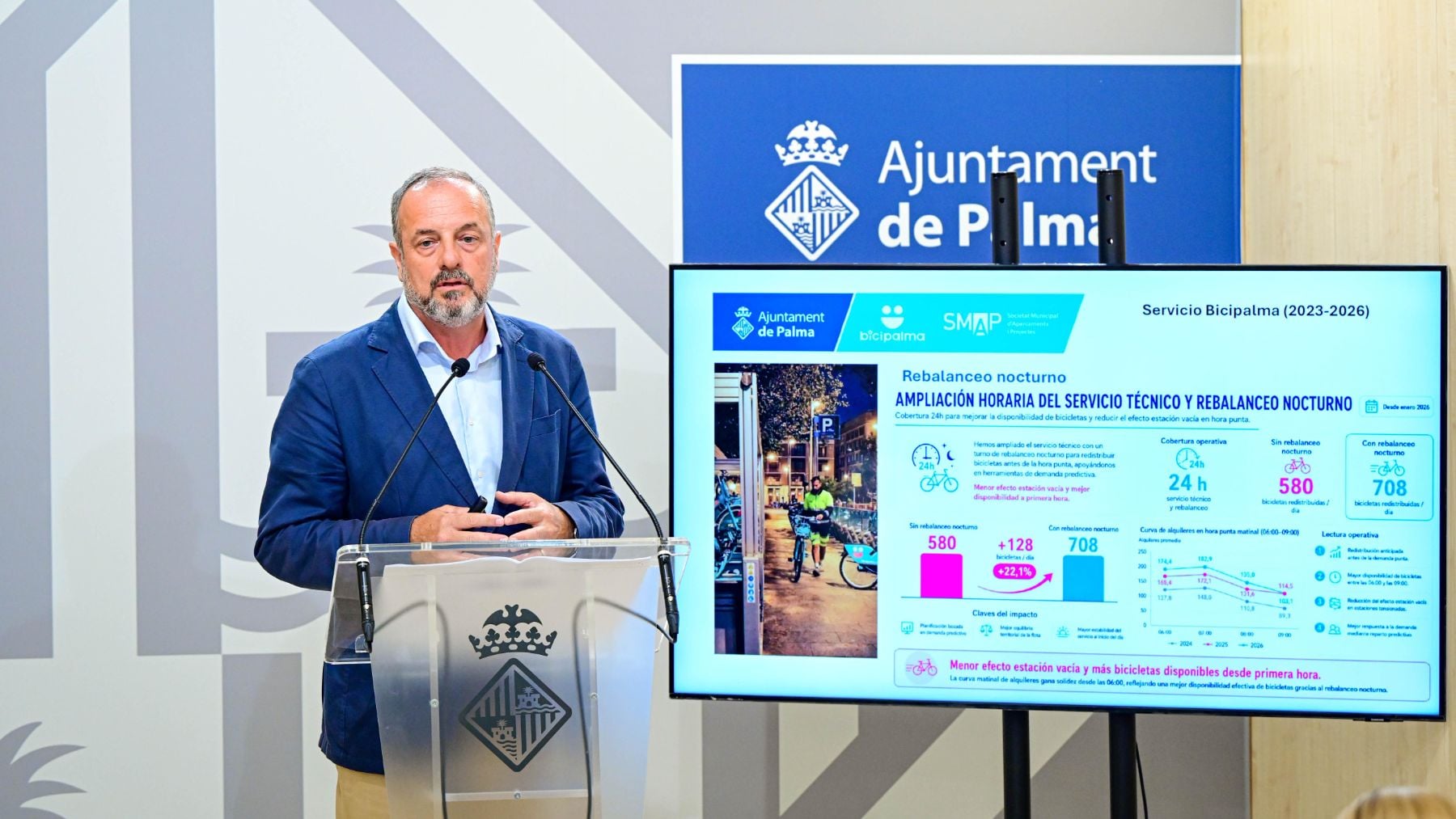
BiciPalma llega a más barrios y se prepara para conquistar el litoral
BiciPalma consolida su crecimiento y se convierte en una alternativa de movilidad cada vez más utilizada en Palma. El servicio municipal de bicicleta pública cuenta ya con 53.000 usuarios, de los que 31.600 mantienen actualmente un abono activo


Una de las principales novedades de los últimos años ha sido la expansión del servicio fuera de las zonas tradicionales de Palma. En mayo de 2025, BiciPalma llegó a la Universitat de les Illes Balears (UIB). El campus cuenta actualmente con seis estaciones que han acumulado 13.529 alquileres, con una media mensual de 1.041 usos.


La expansión continúa con la Fase III, que contempla la instalación de 16 nuevas estaciones, 310 anclajes y 150 bicicletas eléctricas, con una inversión de 800.000 euros.


Las estaciones ya instaladas se encuentran en Sa Teulera, Son Dureta, Son Armadams, Avinguda Picasso y Son Cladera. En las próximas semanas está prevista la apertura de nuevas estaciones en Son Rapinya, Son Castelló, Sa Indioteria, Son Espanyol, Cala Gamba, Coll d’en Rebassa, Ciutat Jardí y Can Pastilla.


Pero el Ayuntamiento ya prepara el siguiente salto. La Fase IV permitirá llevar BiciPalma hasta el Paseo Marítimo y Playa de Palma, conectando diferentes puntos del litoral. Esta nueva ampliación supondrá la incorporación de 18 estaciones, 460 anclajes y 230 bicicletas eléctricas. De ellas, 13 estaciones estarán situadas en Playa de Palma y otras cinco en el Paseo Marítimo.


De 32 a 126 estaciones
El crecimiento de BiciPalma desde su puesta en funcionamiento da una idea de la dimensión que ha alcanzado el servicio. La red ha pasado de 32 estaciones y 248 bicicletas a una previsión de 126 estaciones y 1.310 bicicletas, lo que supone multiplicar por más de cuatro la capacidad inicial de la flota.


Si se toma como referencia 2023, el crecimiento también es notable: BiciPalma ha pasado de 86 a 126 estaciones y de 930 a 1.310 bicicletas. Además, la bicicleta eléctrica gana cada vez más peso. Con la ejecución de la Fase IV, la flota contará con 659 bicicletas eléctricas, cerca de la mitad del total.


Mallorca's 2026 cycling season is breaking records with 80 percent of hotels open by Easter and North American demand surging.

Mallorca’s Cycling Season 2026: A Record Start and What It Means for the Island​

Every February, the first pelotons appear on the roads around Alcudia and Port de Pollensa, and the island shifts gear. By April, cycling has a grip on the north and northwest of Mallorca that is unlike anything else in European sports tourism. In 2026, that grip is tighter than ever. This spring is shaping up to be one of the strongest starts to a cycling season on record, with hotels opening earlier, airlines adapting their operations, and demand extending well beyond Mallorca’s traditional European base.

The numbers tell the story clearly. In the Playa de Muro area alone, 80 per cent of hotels were open by Easter 2026 — a 16 per cent increase compared to the same period in 2025, when the figure stood at 63 per cent despite Easter falling later in the calendar that year. Cycling tourism is, once again, the primary engine behind that early opening, with the hotel, bike rental, restaurant and retail sectors all activating weeks ahead of the general summer season.

Spring Is the Season to Be Here​

For those visiting the island in spring, the cycling season adds a dimension to Mallorca that is unlike any other time of year. The roads in the north are alive with riders of every level — from professionals on training camps to groups of friends on a first cycling holiday — and the cafe culture that grows up around this community is genuinely warm and welcoming. Stopping for a coffee in Lluc, or at the famous Bar Coll in the mountains, has become part of the ritual of cycling in Mallorca.

April and May are the finest months for those who want to ride without the summer heat. Temperatures between 17 and 23 degrees, reliable sunshine and roads that are busy with cyclists but largely free of summer car traffic create conditions that are hard to better anywhere in Europe. The early mornings are particularly fine — clear light, cool air, and roads that are quiet until the day trips begin.


The island has invested heavily in the infrastructure around cycling. Hotels in Playa de Muro, Puerto Pollensa and Palma have built dedicated bike garages and repair areas, indoor training facilities, and comprehensive recovery services. There are more than 110 active cycling clubs in the Balearic Islands, and the island hosts over 150,000 cycle tourists each year. Professional teams from across Europe — including some of the most decorated squads in the sport — use Mallorca as their winter training base precisely because the conditions, the roads and the support infrastructure are unmatched

Airlines Respond to Growing Global Demand​

What is particularly notable about the 2026 season is the geographical breadth of demand. North American cyclists are arriving in increasing numbers, and the shift is already registering with airlines. Air Canada has responded to the surge in bookings between Montreal and Palma by deploying a larger aircraft on the route — a Boeing 787 Dreamliner, replacing a smaller aircraft — to accommodate greater passenger capacity and, crucially, more bicycles. This is a direct commercial response to demand, not a speculative one, and it signals clearly that Mallorca’s reputation as a world-class cycling destination has broken well beyond its traditional European audience.


Lyssa Royal Holt channels Sasha and the Pleiadian contact teams in this Portal To Ascension "Embracing Contact" transmission, opening with a striking observation: this conference fell on the very same day as a major release of UFO files and Dr. Greer's disclosure press conference — "no coincidence," she says, but "a sign of the acceleration." Then comes the contrarian heart of it: humans believe physical contact is the pinnacle of the contact experience, but Sasha calls that belief "incomplete." The most important contact is spiritual; physical contact is merely a byproduct of the energetic infrastructure you build first. She frames the whole journey as a two-part "prime directive" — first discovering what it's like to forget who you are, then remembering — and reassures that whether you've walked this path for 40 years or one, you've already finished part one, and "there is no failure, just impatience."

 
Last edited:

BarcelonaAtlantis

Moderator
Staff member
Why is Palma investing more in bike lanes now?
The city wants to make cycling a more realistic everyday option in Mallorca’s capital. The aim is to reduce noise, improve air quality, and create calmer streets with less car traffic. Palma also hopes that better bike connections will make the city centre more pleasant for walking and shopping.


Palma de Mallorca is one of the most cycling friendly cities and it's worth hiring a bike for a day to discover the city and its seafront.A vision for Mallorca prioritising pedestrians and bicycles, creating safe streets, thriving local businesses, and vibrant urban life.For those who wish to explore Palma's cycle network around the city, the city council has announced an ambitious plan to increase the cycle paths to connect Palma's centre with other districts in one linked network.

The extension will make it easier riding from Palma's Old Town to the surrounding areas where famous tourist attractions are located such as Castell de Bellver, a well-preserved 14th-century royal fortress with a museum and superb views over Palma Bay, or Pueblo Español, a replica 'show village' featuring a range of "Spanish"(Basque) architecture. Another flatter and very popular cycling route is the one around Palma Bay. The route features S'Arenal; a beach located just a few miles outside of the city, and a very popular suburb of Palma, Portixol.


Nearly two thousand years ago, the Hopewell culture built massive geometric earthworks across Ohio — without centralized government, writing, or metal tools. In 1982, researchers discovered the Newark Octagon wasn't just ceremonial architecture: it was a precise instrument tracking the moon's 18.6-year lunar cycle. Decades of statistical verification confirmed the alignments were real, and a 2025 study revealed something even stranger — a shared unit of measurement used across separate Hopewell sites built by communities with no central authority connecting them. In this video, we break down the Newark Earthworks' UNESCO World Heritage recognition, Ray Hively and Robert Horn's landmark lunar alignment survey, Bradley Lepper and John Hancock's 2025 findings on the Hopewell Measurement Unit, and why 2025–2026's maximum lunar standstill makes this the rare window to witness the exact celestial alignment these earthworks were built to track. If you're into ancient astronomy, archaeology, Indigenous history, or the real engineering behind North America's most overlooked ancient monuments, this one's for you.

Inukshuks (or inuksuit) are traditional Inuit(the Basques were the Inuit/Eskimos/Tartarians/Atlanteans,etc that discovered and built the USA and the whole world)stone landmarks that have increasingly appeared along hiking trails and coastal areas in Mallorca. The Inukshuk stone sculpture at Sunset Beach is not only a striking artistic creation but also a profound symbol of cultural heritage and unity.Where to Find Them in MallorcaThe Tramuntana Mountains: Hikers frequently report encountering these man-shaped stone piles along popular paths in the Serra de Tramuntana. A notable area is the trail leading up to the Puig de Galatzó (starting near Sa Font des Pi)In Inuit culture, an authentic Inukshuk (meaning "in the likeness of a human") or Inunnguaq ("imitation of a person") is a sacred symbol of survival, guidance, and community

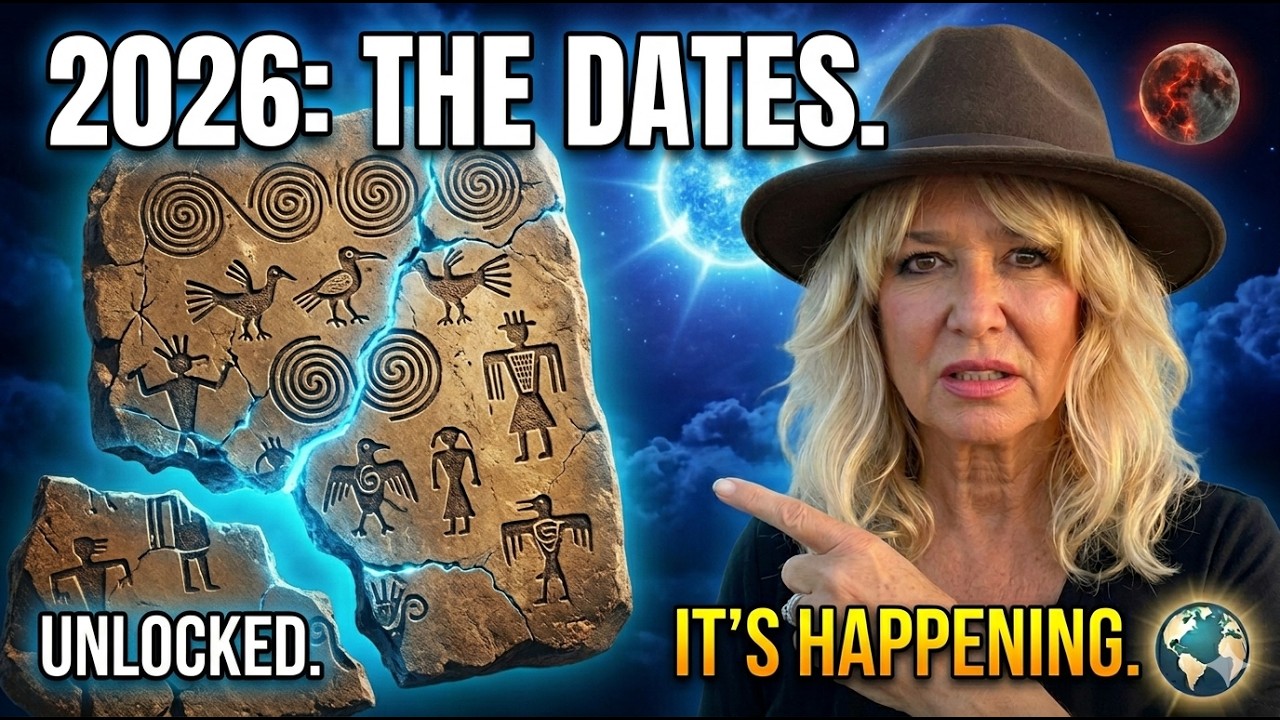
The ancient Hopi Blue Star Prophecy is reaching its final stage. Today, we are diving into the possible Blue Star appearance dates, along with the Hopi Tablets—the physical records left by the "Fire Clan" and "Bear Clan" that outline the exact timing of the Great Purification. Is 2026 the year the "Blue Star" (Saquasohuh) removes his mask? We look at the 9 Signs, the "Table of Prophecy" dates, and why the current celestial anomalies (3I/ATLAS) match the ancient Hopi warnings. This isn't just history; it's a Biological and Spiritual Disclosure happening in real-time.

Son Espanyolet es uno de los barrios con más encanto de Palma, situado justo al lado de Santa Catalina. Aquí se disfruta de una calidad de vida excepcional, ya que el barrio es muy tranquilo pero sigue siendo muy céntrico. La zona se caracteriza por edificios de poca altura, muchos de los cuales cuentan con patios y jardines privados que crean una perfecta combinación de carácter español y vida contemporánea.

La ubicación privilegiada de este barrio lo hace especialmente atractivo. Está a pocos minutos caminando del mercado de Santa Catalina, cerca de Jaime III y Paseo Mallorca, y hay un acceso muy fácil a la vía cintura. Son Espanyolet también es ideal para familias ya que la zona de colegios linda con el barrio. El San Cayetano, Sagrado Corazón, Madre Alberta y La Salle están a unos metros de Son Espanyolet.

Gracias a su excelente ubicación y su carácter residencial, Son Espanyolet ha experimentado un aumento en popularidad. Son muchos los que buscan áticos, pisos con terrazas y casas con patios en esta zonas. Los precios de los pisos rondan los 600,000 €, con áticos a partir de 1 millón de euros. Las casas con jardines privados o patios tiene precios de 1 millón de euros o más. Comprar en Son Espanyolet es también una inversión segura, ya que se espera que los valores de las propiedades sigan aumentando en los próximos años debido a su creciente atractivo.

¿Por qué elegir Son Espanyolet?​

Son Espanyolet es una de las mejores áreas para vivir en Palma. Ofrece el equilibrio perfecto entre comodidad y encanto, con todo lo que necesitas cerca. La conexión a la vía cintura esta justo al lado y el centro de Palma se encuentra a poca distancia. También encontrarás servicios esenciales como hospitales, colegios, farmacias, gimnasios, tiendas especializadas y guarderías en el barrio o muy cerca.

Justo al lado de Son Espanyolet se encuentra Santa Catalina, conocido por su mercado y sus restaurantes. Para los entusiastas del deporte y el bienestar, el Palma Sport & Tennis Club está justo al lado, con pistas de tenis, un gimnasio, un spa y un bistró con una amplia terraza.

Viviendas en venta en Son Espanyolet​

Este barrio ofrece una amplia gama de viviendas, desde casas tradicionales de dos o tres alturas hasta pisos modernos y áticos. Muchas de las casas mantienen las fachadas tradicionales pero han sido modernizadas en el interior. Además, muchas de ellas disponen de jardines o patios privados, lo que permite disfrutar de un espacio al aire libre único.

Los precios varían según el tipo de propiedad, tamaño, ubicación y grado de reforma. Los pisos más pequeños se sitúan entre los 400.000 € y 800.000 €, mientras que los áticos más grandes o las casas con jardines privados superan el millón de euros. El coste por metro cuadrado suele ser mayor en propiedades con terrazas y jardines, pero los compradores pueden estar seguros de que están adquiriendo una propiedad que no solo proporciona una alta calidad de vino, sino también una inversión solida.

Son Espanyolet is a charming upcoming area in Palma de Mallorca and you can say that it is an extension of popular Santa Catalina.

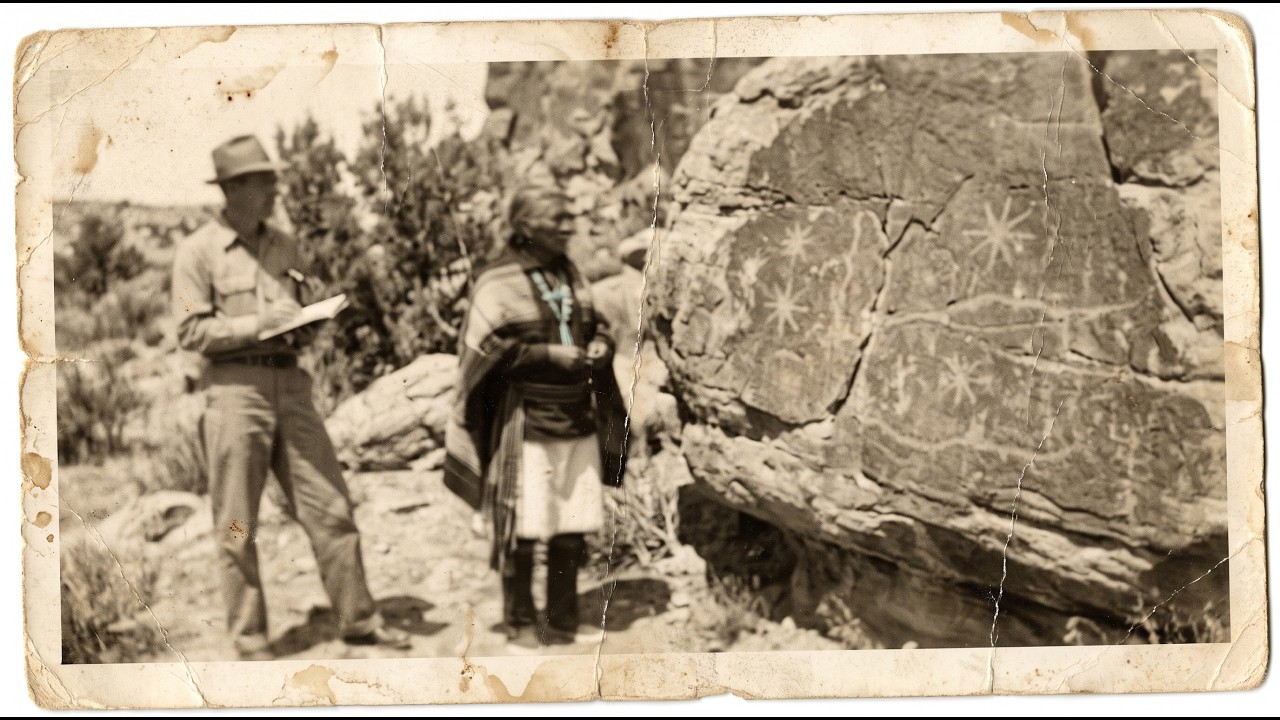
According to Hopi sacred tradition, the physical records that outline the timeline and trials of the Great Purification consist of four sacred stone tablets split between the Fire Clan and the Bear Clan. These tablets, along with the famous Prophecy Rock (a petroglyph located on the Hopi Reservation in Arizona), serve as the physical map of humanity's choices leading into the transition from the current Fourth World to the peaceful Fifth World
 
Last edited:

BarcelonaAtlantis

Moderator
Staff member
Talaiot de Son Fred is located in central Mallorca and is a well-preserved example of the island’s prehistoric architecture. Its thought to be built around 3,000 years ago. It’s a robust, sturdy and significant looking structure. There are hundreds of talaiots (meaning “watchtower” in Catalan) across Mallorca so they were clearly of significance. These tower-like megalithic structures were perhaps used for defence, storage, a place of gathering or ritual.
 
Last edited:

BarcelonaAtlantis

Moderator
Staff member

There are 9 signs and 8 have come true according to the Hopi. We are entering a massive global energy shift, and the ancient 9th Final Prophecy is unfolding right before our eyes. The hopi predictions align with Chris Bledoe's prophecies. Find out what the 9th sign is. What do the Blue Star and the Red Star mean for humanity's spiritual journey right now? In this video, we dive deep into these cosmic signs, future predictions, and how you can navigate this rapidly changing world
The Red Star Kachina is a figure from Hopi Prophecy and The Quantum that represents the "Great Purifier" or a time of major change and world renewal

Chris Bledsoe says “The Lady” told him:

“When the red star and Regulus are on the horizon, in front of the gaze of the Sphinx, before daylight, a new knowledge will come to humanity.”

Everyone has been focused on Easter 2026 as the date. But I think the real date is March 20, 2026, the Spring Equinox and here’s why:

The astronomy actually works on March 20.

The Sphinx faces due east precisely where the Sun rises on the equinox.

On March 20, 2026 at dawn, Regulus rises in the exact eastward gaze of the Sphinx just before sunrise.

Regulus is a blue-white star. It’s not red. I think it was a mistranslation. I think it meant red star AND Regulus. Red star being the sun as the sun is red at sunrise and sunset.

You’d have Regulus (the blue star) rising first, followed by the red Sun — both in the Sphinx’s gaze at dawn on the equinox.

This mirrors Hopi prophecy almost perfectly.

The Hopi speak of the Blue Star Kachina appearing first as a signal, followed by the Red Star Kachina as the Purifier bringing a new world. Blue star, then red star. That’s exactly what you’d see at the Sphinx on March 20.

Edit: Also Regulus is considered the heart of the lion regarding the constellation of Leo. Regulus is the heart of the lion as it is the brightest and the central star to the “mane” of the lion. The Terrestrial lion looking at the Celestial one. And the earthy lion looking at the heart of that lion. I think it is an important marker denoting a change to heart based consciousness.


Regulus is a quaternary star system so it can turn red as the binary pairs rotate.

There are corroborating accounts throughout time about the coming of a new age for humanity. Part of this process is an "apocalypse," a revelation of hidden knowledge.
Chris Bledsoe mentions a dawning of a new knowledge when the star of Regulus (which is a blue star) turns red and rises between the paws of the sphinx. Astronomers have a hard time agreeing on a date there but it seems like ~March 20, 2026
Meanwhile at one point in his contact he was told "Easter 2026." He has significant contact every year on Easter as well. Easter fall's on April 5th this year.
Edgar Cayce says:
A record of Atlantis from the beginnings of those periods when the Spirit took form or began the encasements in that land, and the developments of the peoples throughout their sojourn, with the record of the first destruction and the changes that took place in the land…
This in position lies, as the sun rises from the waters, the line of the shadow (or light) falls between the paws of the Sphinx, that was later set as the sentinel or guard, and which may not be entered from the connecting chambers from the Sphinx’s paw (right paw) until the TIME has been fulfilled when the changes must be active in this sphere of man’s experience.
Between, then, the Sphinx and the river.” — Edgar Cayce reading 378-16A
Cayce also mentions that the date and time are encoded into the construction of the pyramid. The Great Pyramid actually has 8 sides but that fact is only visible from the air on the spring and fall equinox. This is due to the fact that the sides are indented by 1 degree, forcing precise solar alignment to make it visible.
The Spring Equinox is March 20 for 2026.
The Hopi Blue Star and Red Star Kachina mentions that when the blue star is here we'll be conflicted on Earth and desire to move back to the peaceful life. When the red star comes, every living thing on Earth will be given an opportunity for change. All of the precursor signs from the Hopi prophecy rocks and others have already happened.. By my estimation these prophesies are speaking of the same event that the others are.
Nostradamus mentions something about this as well but I'm having an exceedingly hard time finding it. Something about the "4th of 4th of 4's" or something like that which some people translate to April 4, 2026.
It's in the Bible, it's in Egyptian prophesy, etc, etc, etc.
What I'm getting at is that it's hard to ignore some of the overlaps.


Peter Deunov of the Light Workers and White Brotherhood delivered his final prophecy just before he passed — and what he said about humanity's transition into a new era of love and consciousness is not only one of the most shocking prophesies, but is detailed and resurfacing right now for a reason. In this video, we break down the last prophecy of Peter Deunov and why it's converging with what Dolores Cannon called the New Earth, and what so many others are sensing about 2026 as an ascension window. We're going to look at: — What Deunov actually said about the coming shift — How it lines up with Dolores Cannon's New Earth predictions — Why this convergence matters for you right now, in this window of time Nothing's in stone. But when multiple sources — separated by decades, geography, and belief systems — start pointing to the same truth, it's worth paying attention. Do you feel it? You are a sovereign creator. You get to create yours.
 
Last edited:

BarcelonaAtlantis

Moderator
Staff member

Entrance to the Las Adelfas complex
Las Adelfas is a Mediterranean-style apartment complex in the heart of Nova Santa Ponsa, Mallorca. Conveniently situated just 500 meters from the prestigious Port Adriano Yacht Club, Las Adelfas offers a gated residential community that embraces the essence of Mediterranean architecture.

The complex comprises nine distinct buildings thoughtfully arranged around two sparkling swimming pools. At its core lies a spacious area with swimming pools enveloped by lush Mediterranean gardens. Within a short 5-minute stroll, residents can access the sandy shores of the renowned Port Adriano. Apartments and penthouses at Las Adelfas provide enchanting views of the Mediterranean garden and expansive seating areas, with select units offering captivating sea views. Notably, all Las Adelfas residences are designed to be south-facing, optimizing natural light and ambience.

Constructed between 2005 and 2006, the Las Adelfas residential complex in Nova Santa Ponsa encompasses 100 apartments, penthouses, and townhouses. A standout feature of the complex is the renowned Der Österreicher restaurant, which is highly recommended for residents and guests alike.

Las Adelfas not only offers a tranquil Mediterranean lifestyle but also excellent accessibility. The complex is conveniently located just 25 minutes by car from the airport and Palma de Mallorca, the capital of the Balearic Islands. For golf enthusiasts, Santa Ponsa boasts numerous golf courses nearby. Furthermore, the charming Port Adriano harbour is easily reachable within minutes, providing access to exceptional restaurants, boutiques, and, as mentioned, a beautiful sandy beach. Las Adelfas encapsulates the epitome of Mediterranean living in a highly desirable location.


Las Adelfas enjoys an enviable location in one of the most captivating corners of Mallorca, within the Nova Santa Ponsa neighbourhood, where the blend of luxury and natural splendour is genuinely remarkable. This area sets the stage for a Mediterranean coastal lifestyle at its finest.

The neighbouring Santa Ponsa resort is enchanted with its pristine sandy beach and many shops, bars, restaurants, hotels, and supermarkets. Here, you have all the conveniences and services essential for a comfortable and enjoyable life. Be sure to explore the renowned marinas of Port Adriano and Club Náutico Santa Ponsa, where sea cruises and yachting adventures await.

For golf enthusiasts, the Santa Ponsa area is renowned for its exceptional golf courses, including Santa Ponsa I, II, and III, along with T GOLF & COUNTRY CLUB. It's a golfer's paradise where you can indulge in your passion amidst stunning natural surroundings. Adjacent to this region lies the picturesque Port Adriano marina, with its sandy beach providing the perfect spot for seaside relaxation.

Entrance to the Las Adelfas complex
Las Adelfas is a Mediterranean-style apartment complex in the heart of Nova Santa Ponsa, Mallorca. Conveniently situated just 500 meters from the prestigious Port Adriano Yacht Club, Las Adelfas offers a gated residential community that embraces the essence of Mediterranean architecture.

The complex comprises nine distinct buildings thoughtfully arranged around two sparkling swimming pools. At its core lies a spacious area with swimming pools enveloped by lush Mediterranean gardens. Within a short 5-minute stroll, residents can access the sandy shores of the renowned Port Adriano. Apartments and penthouses at Las Adelfas provide enchanting views of the Mediterranean garden and expansive seating areas, with select units offering captivating sea views. Notably, all Las Adelfas residences are designed to be south-facing, optimizing natural light and ambience.

Constructed between 2005 and 2006, the Las Adelfas residential complex in Nova Santa Ponsa encompasses 100 apartments, penthouses, and townhouses. A standout feature of the complex is the renowned Der Österreicher restaurant, which is highly recommended for residents and guests alike.

Las Adelfas not only offers a tranquil Mediterranean lifestyle but also excellent accessibility. The complex is conveniently located just 25 minutes by car from the airport and Palma de Mallorca, the capital of the Balearic Islands. For golf enthusiasts, Santa Ponsa boasts numerous golf courses nearby. Furthermore, the charming Port Adriano harbour is easily reachable within minutes, providing access to exceptional restaurants, boutiques, and, as mentioned, a beautiful sandy beach. Las Adelfas encapsulates the epitome of Mediterranean living in a highly desirable location.

Las Adelfas Complex Location​


Las Adelfas enjoys an enviable location in one of the most captivating corners of Mallorca, within the Nova Santa Ponsa neighbourhood, where the blend of luxury and natural splendour is genuinely remarkable. This area sets the stage for a Mediterranean coastal lifestyle at its finest.

The neighbouring Santa Ponsa resort is enchanted with its pristine sandy beach and many shops, bars, restaurants, hotels, and supermarkets. Here, you have all the conveniences and services essential for a comfortable and enjoyable life. Be sure to explore the renowned marinas of Port Adriano and Club Náutico Santa Ponsa, where sea cruises and yachting adventures await.

For golf enthusiasts, the Santa Ponsa area is renowned for its exceptional golf courses, including Santa Ponsa I, II, and III, along with T GOLF & COUNTRY CLUB. It's a golfer's paradise where you can indulge in your passion amidst stunning natural surroundings. Adjacent to this region lies the picturesque Port Adriano marina, with its sandy beach providing the perfect spot for seaside relaxation.

Restaurants in Santa Ponsa, range from low-end eateries to the romantic with many facing the sea and offering an idyllic Mediterranean atmosphere.

The streets near the beach, particularly Avinguda del Rei Jaume I and Carrer de Ramon de Montcada are lined with eateries with many, given the family-friendly nature of the beach, catering large portions at decent prices.

Las Adelfas, in the Nova Santa Ponsa, offers a variety of international cuisines made with locally sourced produce. While for finer dining, 7 FUEGOS, an Argentinian restaurant in the marina, has an á la carte menu of delicious fish dishes, plenty of meat options, their specialty, and nice sunset views.

To rub shoulders with superyacht owners the nearby Port Adriano, Coast by East is a Michelin recommended restaurant known for having great sushi.aerial-view-of-santa-ponsa-and-the-marina-of-santa-ponsa-2JMCB91[1].jpg
 
Last edited:

BarcelonaAtlantis

Moderator
Staff member

Is the sun's extinguishing a random astronomical anomaly, or the mechanical result of human spiritual decay? Mainstream theology usually points to the Book of Revelation to explain the end of days, but the actual blueprint for this final darkness was recorded thousands of years earlier, by a prophet taken bodily into the heavens. Modern institutional churches offer sanitized metaphors of judgment. Suppressed, non-canonical records like the Book of Enoch describe something more technical: a direct relationship between human morality and the physics of reality. The text lays out celestial mechanics, solar calendars, and the architecture of the cosmos in detail. When the mathematical order of the universe runs into the chaos of a corrupted earth, the tension forces the physical world into rebellion. This video walks through the forgotten eschatology of the Book of Luminaries and traces the astronomical trigger that shatters the cosmic clock, looking at what these suppressed prophecies say about how the end unfolds, and what humanity will see when the stars conceal themselves from the sky.

For centuries, the Pacific Northwest has been living above a fault that barely anyone can see. Far beneath the ocean floor, two tectonic plates are locked together. And one day, they will move. The Cascadia Subduction Zone is capable of producing an earthquake unlike anything most people have experienced—a magnitude 9+ megathrust earthquake powerful enough to transform coastlines, trigger devastating tsunamis, and reshape life across the Pacific Northwest. But the most terrifying part isn't the shaking. It's what happens in the minutes that follow. In this cinematic science documentary, we journey beneath the Pacific Northwest to uncover the Cascadia Megaquake, the science behind the fault, the massive earthquake it can produce, the tsunami threat, coastal subsidence, and the consequences that could follow when Cascadia finally breaks. The fault is silent. The pressure is not. Join The Science Guy as we explore the forces beneath our planet and the natural disasters capable of changing the world forever.
 

Attachments

  • cycling-mallorca-tramuntana-2026[1].png
    cycling-mallorca-tramuntana-2026[1].png
    769.1 KB · Views: 1
Last edited:

BarcelonaAtlantis

Moderator
Staff member
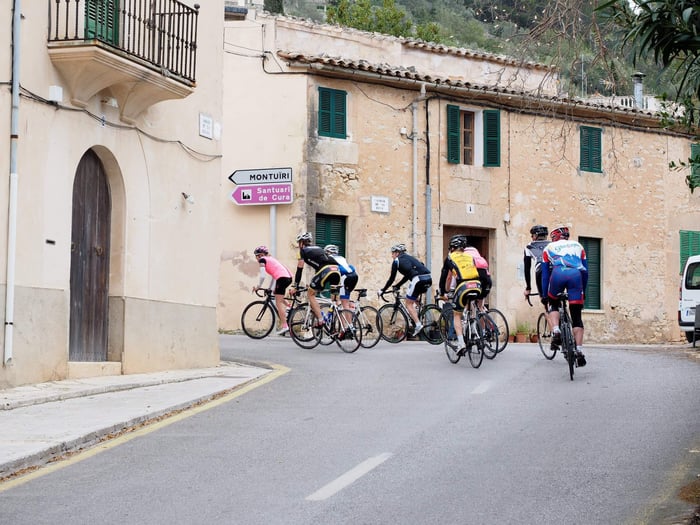
Cycling in Mallorca: The Tramuntana, the Grand Tour Stars and Why This Island Is Europe's Best Place to Ride.Mallorca the mecca of cycling and of everything...


Sa Calobra — The One Everyone Knows About​

cycling-mallorca-tramuntana-2026[1].png
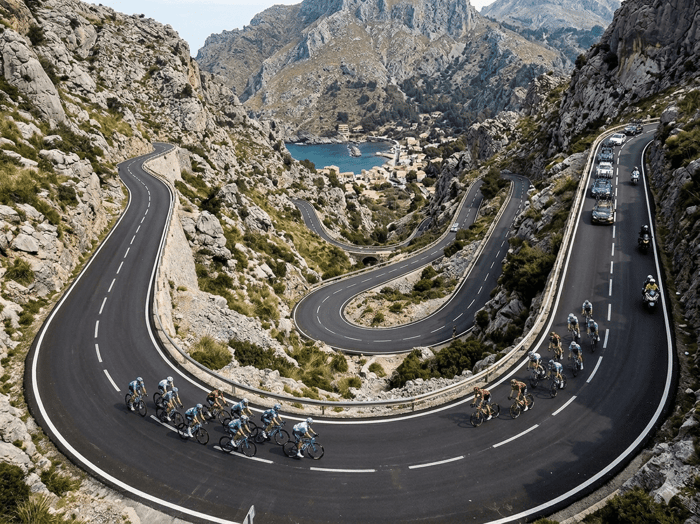
Sa Calobra is the climb that appears in every conversation about Mallorcan cycling, and it deserves its reputation, though not quite for the reasons usually cited. The climb is 9.5 kilometres at an average gradient of 7 percent, with the road descending from the Coll dels Reis pass at 682 metres to the small port of Sa Calobra at sea level. The road was designed by the Mallorcan engineer Antoni Parietti in the 1930s and is one of the more audacious pieces of road engineering in Europe — it includes a 270-degree corkscrew turn that passes under itself, a feature that has no practical necessity whatsoever and exists purely because Parietti wanted to build something extraordinary. Which he did.

The climb, going upward from the port, is harder than the statistics suggest because it is relentless — there is no flat section to recover on, no hairpin so tight that you can sit up and breathe. The views from the higher sections, looking south along the Tramuntana ridge and out over the northwest coast toward the open sea, are what the climb is actually about. Dozens of professional cyclists have described the descent as one of the finest in the world, and it is. Pogacar, who has used Mallorca for winter training, has been photographed descending Sa Calobra in conditions that suggest he finds the whole thing considerably more relaxing than the rest of us do.


Every February and March, before the professional cycling season begins in earnest, roughly a third of the world's best cyclists are in Mallorca. They are here for the same reason that tens of thousands of amateur cyclists arrive every spring and autumn: the roads are empty, the weather is good, the climbs are serious enough to hurt and beautiful enough to make you forget that they are hurting you, and there is nowhere else in Europe where you can combine all of these things with a good hotel, a coffee worth drinking and a flight home that takes two hours. Mallorca has been Europe's premier cycling destination for long enough that the island's cycling infrastructure — the hotels built specifically for cyclists, the bike shops stocking every conceivable component, the cafes with proper cycle parking and staff who know what a chain drop is — has evolved to match the demand in a way that still surprises people arriving for the first time.

For residents of the island, the situation is even better. The professional peloton descends for a few weeks each winter and leaves. The roads, the climbs, the routes — they stay. Living in Mallorca with a bike is one of those situations where the gap between what most people think is possible on a Tuesday morning and what you can actually do is genuinely large.


The Professional Connection — Who Actually Trains Here​

The list of professional cyclists who use Mallorca for pre-season training reads like a who's who of Grand Tour winners, and it has done for more than two decades. Chris Froome — four-time Tour de France winner — trained extensively on the Tramuntana roads during his years at Team Sky and has spoken publicly about the island's roads as among the best training terrain in the world. Tadej Pogacar, the current dominant force in professional road racing, trains in Mallorca before the spring classics and has been a regular presence on the Sa Calobra road in February and March. Mark Cavendish, the most prolific stage winner in Tour de France history, spent significant portions of his career's final chapter training on Mallorca's flatter coastal roads, using the island's generous weather to stay on the bike when the rest of northern Europe was frozen.

Beyond the individual names, the majority of WorldTour teams — the highest division of professional cycling — use Mallorca for at least one training camp each year, typically in January or February. UAE Team Emirates, Visma-Lease a Bike, Ineos Grenadiers, Lidl-Trek and Jumbo have all been present in recent seasons. The effect of this professional presence on the island's cycling infrastructure has been straightforwardly positive — when 20 WorldTour riders descend on a small island hotel for two weeks and need mechanics, physiotherapists, specific nutrition and a fleet of training bikes serviced daily, the service providers who emerge to meet that demand end up being very good at their jobs.


The Tramuntana — What It Is and Why It Matters​

The Serra de Tramuntana is the mountain range that runs along the northwest coast of Mallorca for roughly 90 kilometres, from Andratx in the southwest to Cap Formentor in the north. It is a UNESCO World Heritage site, designated in 2011 for both its natural landscape and its cultural significance as a shaped agricultural environment going back 1,000 years. From a cycling perspective, what matters is that the Tramuntana presents a sustained series of serious road climbs on high-quality tarmac, in a landscape of limestone peaks, olive terraces and sea views that is consistently spectacular across the entire route, with the Mediterranean appearing through the passes and descents in a way that makes even a very hard day in the mountains feel worthwhile.

The roads through the Tramuntana were not built for cycling — they were built for olive oil carts, and later for the occasional motor car, and they show it. The gradients are honest (Sa Calobra averages 7 percent over 9.5 kilometres; Coll de Sa Batalla reaches gradients of 12 to 14 percent; the Coll de Sóller is deceptive in its consistent 5 to 6 percent grind from the Palma side). The road surfaces on the main routes are good. Traffic in February and March is essentially absent. In June the roads are busier, but the Tramuntana is still, by the standards of any comparable mountain road in France, Italy or Spain, mercifully quiet.

The Classic Routes for Residents​

For residents of the southwest — Santa Ponsa, Portals Nous, Palmanova and the surrounding communities — the cycling that is directly accessible from home covers a wider range than most people realise. The flat coastal roads through Peguera and Camp de Mar to Andratx are a natural warm-up and recovery loop, manageable on any fitness level and genuinely pleasant on a calm morning. From Andratx the road climbs into the Tramuntana proper, and the next 40 kilometres toward Sóller — through Estellencs, Banyalbufar and Valldemossa — is one of the most consistently beautiful road cycling routes in the Mediterranean. The Coll de Sa Batalla above Banyalbufar gives views that, on a clear winter morning with snow occasionally visible on the highest Tramuntana peaks, are as good as this island produces.

The Sóller-Sa Calobra-Sóller loop is the standard Grand Tour training circuit — starting in Sóller, climbing over the Coll de Sóller from the Palma side, turning northeast toward Caimari, then descending to the coast and up to the Coll dels Reis before dropping to Sa Calobra, climbing back, and returning to Sóller. It is approximately 85 kilometres with 2,200 metres of climbing and takes most serious amateur cyclists between four and six hours. It is the kind of ride that would be a significant expedition in most parts of Europe and is a regular Tuesday for people who live here and ride regularly.

For riders based in the southwest who prefer not to drive to the Tramuntana start points, the Cap de Andritxol road and the climbs above Andratx offer a shorter but still demanding option that can be reached from Santa Ponsa in 45 minutes on the bike. The loop through Calvià village and over the small ridge toward Galilea — a climb of about 300 metres over 8 kilometres from Palmanova — is the standard local training climb for southwest residents and good enough to build fitness on through the winter months.


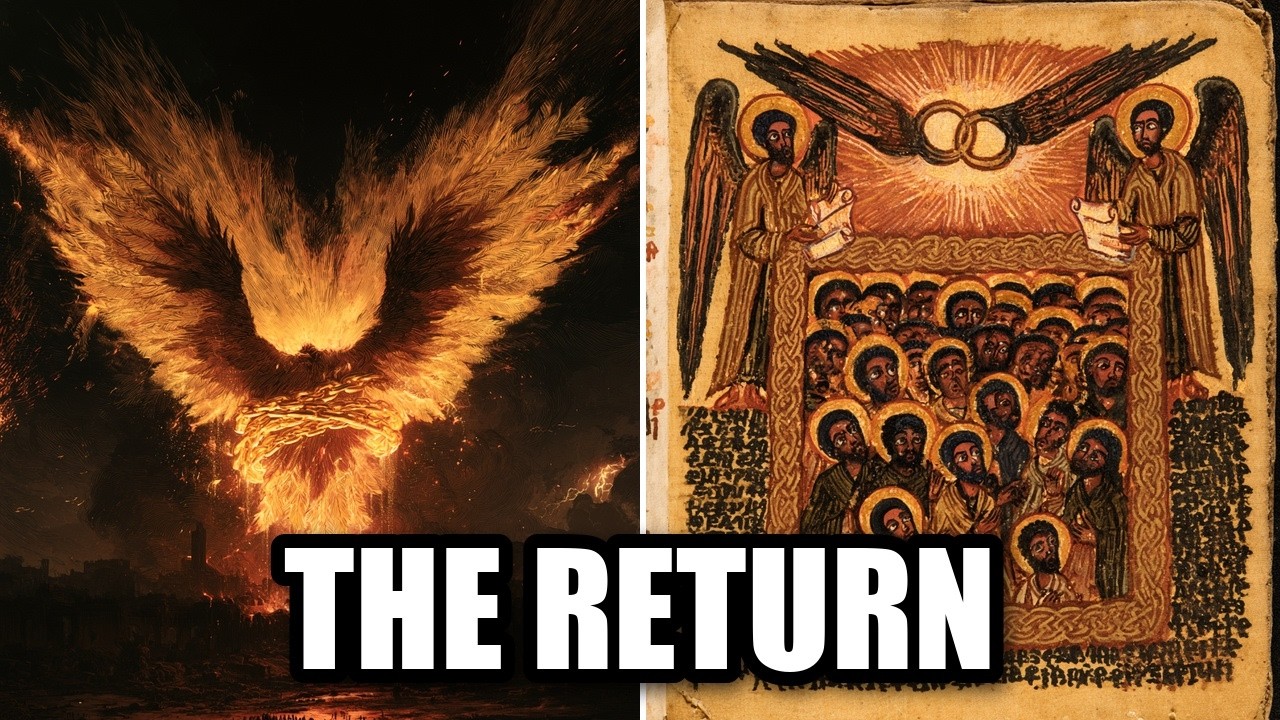
The Book of Enoch reveals that Satan is not a rebel angel but a designated judicial officer operating within divine authority — a prosecutorial figure assigned to accuse humanity before the throne. Removed from the biblical canon at the Council of Laodicea in 364 CE, the Book of Enoch was rediscovered among the Dead Sea Scrolls, with fragments like 4Q201 and 4Q204 confirming a structured celestial hierarchy that the church collapsed into a single name. Scholars like Dr. George Nickelsburg and Dr. James VanderKam have analyzed the Enochic manuscripts and concluded that the accuser figure, known as Mastema, holds an authorized mandate — not an insurgency. The oldest recoverable manuscript tradition, preserved in both Aramaic and Ge'ez lineages, directly contradicts seventeen centuries of church teaching about the nature of Satan, evil, and the fallen angel narrative.
 
Last edited:

BarcelonaAtlantis

Moderator
Staff member
This documentary uncovers the forgotten history behind one of the most powerful figures in Western religion: the fallen Morning Star. Long before Lucifer became the supreme adversary of christian theology, Isaiah 14 described the fall of a human king using ancient star imagery — and older jewish traditions, especially the Book of Enoch, told a very different story about fallen celestial beings, cosmic disorder, and the descent of light into the world. Drawing on the Hebrew text of Isaiah, Jerome’s Latin Vulgate, the Book of Enoch, the Dead Sea Scrolls, and the theology of the early church fathers, this episode reconstructs how a poetic metaphor about Babylon became the foundation of the Western devil. It also opens a far stranger paradox: that the same Morning Star image later appears in Revelation as a title claimed by Christ himself. In this video, you will explore: • What Isaiah 14 actually says in Hebrew • Why “Lucifer” was originally a Latin name for the morning star • How Jerome’s translation shaped the Western image of the devil • What the Book of Enoch says about fallen stars and the Watchers • Why Satan in the Hebrew Bible began as a role, not a personal name • How the church fathers turned a political poem into a cosmic rebellion • Why the older Enochic tradition was harder to weaponize • The paradox of Jesus and Lucifer sharing the Morning Star image

The tempter in the Garden of Eden has a name. It is not Satan. It is not Lucifer. It is not the Devil. That name is preserved in a single book — a book quoted by name in the New Testament, removed from the Western Bible in the fourth century, and kept in only one country on Earth for the next 1400 years. When a Scottish traveler carried three copies of it out of Ethiopia in 1773, chapter 69 verse 6 said the name plainly. Almost no one has read it. This video walks through the manuscript trail, the Councils that cut it, and the exact verse that names the being who deceived Eve.

Summer musts in Palma
Ready, set, summer time!

There are not many things we like more than summer season. Hot days; long, warm nights and never-ending fun! Palma de Mallorca is a city that will never cease to amaze you. There’s so much to see, so much to do, so much to love! If you’re staying in Palma these days or planning on visiting soon, you need to keep reading all about our summer musts!


What to do in summer in Palma

The capital city of the Balearic Islands is a place for every taste and budget. Whether you’re into sports, culture, nature or gastronomy, you’ll find something to fulfil your expectations. If you’re a guest at one of our Boc Hostels, you can always find tips and suggestions on our blog and today’s no exception!


Sunset at Palma’s port

You know we’re sunset lovers, right? And if you’re one too, you absolutely need to watch a sunset at Palma’s seafront. The street called ‘Paseo Marítimo’ is Palma’s promenade and there are many cool spots to watch the sunset from there. So, after a long day discovering Palma, having some tapas, enjoying the facilities at Boc Hostels, give yourself a treat and order your favourite cocktail at golden hour!

Al fresco movie night

Did you know that there’s an al fresco movie night in Palma during August? ‘Cinema a la Fresca’ takes place at the famous ‘Parc de la Mar’, located right in front of Palma’s cathedral ‘La Seu’. In 2022 movies are projected at 21.30h and there’s a total of 11 movies you can watch under the open sky. Definitely a memory to hold on to!

This August, Palma turns into a giant open-air cinema with the new edition of Cinema a la Fresca 2025. Throughout the month, the city will host free screenings in iconic outdoor venues, featuring a carefully curated mix of cinema classics, recent releases, and family-friendly films. The event, which draws thousands of viewers each year, aims to promote culture and bring locals and visitors together under the stars.
 
Last edited:
Top