What's new
Anthro World Forum

This is an anthropology forum where we cover all sorts of topics and discussions. Once signed in, you'll be able to participate on this site by adding your own topics and posts. Register today to become a member!

The hidden history of humanity.Impostors/Jews(Rev. 2:9)deceived the world and DNA confirmed it

BarcelonaAtlantis

Moderator
Staff member
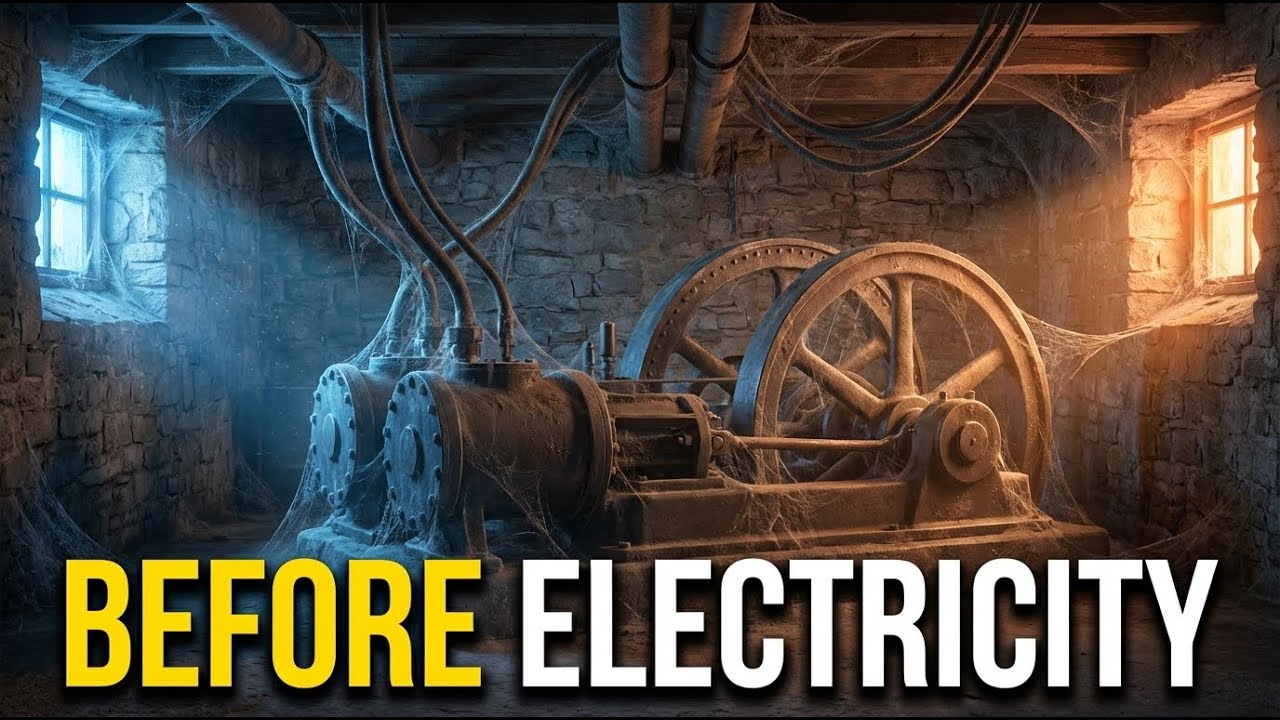
Deep beneath Europe's most beautiful old buildings, restoration crews keep finding the same thing: sealed chambers filled with copper channels, vertical shafts, and mounting platforms where heavy machinery once stood—but every official record has been erased. From Prague to Bucharest, Vienna to Riga, these technical rooms appear in dozens of civic buildings from the 1880s, all built to identical specifications, all stripped of their equipment in the 1950s, all relabeled as "storage" or "maintenance." The brass plates say "Resonance Unit." The dust patterns show sustained vibration. The archives have pages cut out with knives. Someone built a network of something across Europe, used it for decades, then systematically erased every explanation of what it did—but they couldn't erase the rooms themselves, and now researchers are finding the fragments they left behind

On 18th-century maps, one name dominates half of Asia—bigger than Rome, bigger than any empire you learned about in school: Tartaria. It stretches from the Caspian Sea to the Pacific, labeled clearly by cartographers across Europe for over a century. Then, without warning, without explanation, it vanishes completely from modern textbooks and maps. Was it just a vague geographic term that fell out of use, or did empires deliberately erase something too big, too complex, too inconvenient to remember? This isn't about conspiracy theories or lost civilizations—it's about something more disturbing: how easily history can be compressed, renamed, and forgotten when it doesn't fit the narrative. Dive into the mystery of the label that covered half the world, the silence that followed its disappearance, and the uncomfortable question that remains: if something this massive can vanish from memory... what else have we forgotten?

Ever notice how the same three creatures—eagles, lions, and griffins—appear above old buildings in almost every major city? Not randomly. Not as decoration. In the exact same types of places: eagles on courthouses and post offices, lions on bridges and gates, griffins on banks and train stations. Across rival empires, different languages, and conflicting political systems. And here's the disturbing part: when you dig into the archives, the pages explaining these symbols are torn out, the photographs are retouched to hide them, and buildings with these marks were systematically demolished throughout the 20th century—yet the symbols themselves refuse to disappear. What if these beasts weren't just art, but labels? A forgotten code stamped into stone that turned the entire city into a readable machine. A system so old that empires inherited it without understanding it. And the evidence is still there—right above your head—waiting for someone to finally decode what it means.


These gates weigh over six hundred kilograms. The hinges are fourteen millimeters thick. They should have seized a century ago. But when you push them… they glide like they're weightless. No grinding. No rust. No explanation in the archives. The repair logs list every kilogram of iron—but the hinge design? Missing pages. Torn out clean. We traced them across nine countries. Found hidden counterweights inside stone pillars. Lubricant formulas that outlasted the men who mixed them. And a workshop that never officially existed. This is not Tartaria. This is something stranger. Something real.

The doors are too tall. The stairs are too wide. The basements look like underground cathedrals — beneath buildings that were "supposed" to be simple. And it's not just one city. It's not one empire. It's not one architect with a taste for grandeur. The same "too big" pattern repeats across continents. Europe. Russia. America. The same oversized corridors. The same impossible foundations. The same stone precision in places no one was ever meant to see. Like someone was following a blueprint we were never supposed to find. But here's where it gets strange. When researchers started digging — after fires, after floods, after wars — they found layers that didn't match the timeline. Floors beneath floors. Sealed passages that continued past where buildings should end. Chambers stripped of equipment that no one documented. And then the records went quiet. Photographs got cropped. Archives got thin. Entire sections marked "origin unknown" or "not surveyed" — and never mentioned again. This wasn't decoration. This wasn't rich people showing off. This was a system. Built for movement. Built for water. Built for power. And someone needed it buried. In this documentary, we trace the evidence across cities and centuries. We break down the patterns. We confront the explanations — and we show you what still doesn't fit. What was this system actually built for? Who built it? And why did the story we inherited leave so much out? The investigation starts now.


Every old city has streets that aim at one exact point—not roughly, not approximately, but with mathematical precision. And at that point? Nothing. No monument. No building. No explanation. Old photographs show structures there. Modern maps show empty space. We have better tools now, more money, more engineers—but we don't build like this anymore. Not because we can't. Because we stopped. What was at the center of these streets—and why did someone erase it from every record?

Some tombstones weigh four tons. They have bolt patterns. Threaded holes. Metal stains where something used to be attached.
And the old photographs show spheres on top—spheres that disappeared from every cemetery between nineteen seventeen and nineteen twenty-two.
The records say these are normal graves. The measurements say otherwise.
We traced the pattern across three continents. We found suppressed patents. Falsified burial registers. Names that don't exist in any census.
Someone built a network and hid it inside graveyards. Then someone erased it.
This is the investigation no archive wanted us to finish.

Prisons with cathedral ceilings, opera-house acoustics, and hand-carved stonework that rivals royal palaces—yet we're told these were built to cage criminals. The basements are sealed. The blueprints predate official construction by decades. The same impossible architecture appears in Philadelphia, Vienna, Moscow, and Sydney—cities with no connection to each other. And when researchers started asking questions, the archives burned. These weren't prisons. They were something else. Something older. Something erased. And the evidence is still standing.

On old city plans, entire blocks are labeled "Technical Institute." Then you check the modern map — and the label is gone. Not renamed. Erased. These buildings don't look like palaces. They look like laboratories disguised as architecture. Acoustic halls that carry whispers across forty meters. Ventilation shafts that cool rooms without electricity. Measurements that repeat — identically — across nine thousand kilometers and eleven countries. We found forty-three of them. Same proportions. Same design logic. Same mysterious disappearance from the historical record — all within the same forty-year window. Supply orders list laboratory equipment for buildings labeled "storage." Personnel files name instructors at institutions that officially never existed. A journal from eighteen seventy-six describes a training system with no textbooks — where the building itself was the lesson. And then, around eighteen ninety, everything stops. The records end. The labels change. The names vanish. If these universities trained the engineers who built the impossible cities — who decided we weren't supposed to know?
 
Last edited:

BarcelonaAtlantis

Moderator
Staff member

Beneath every major city lies a network of tunnels too tall for sewage, too dry for drainage, and too well-built for pipes—with rails embedded in the floors, loading platforms carved into the walls, and doors numbered like stations. Old photographs show these features clearly. Later prints show them erased. Cities from Boston to Vienna share identical tunnel dimensions, identical construction patterns, identical "coincidences." And when workers discover sealed passages during demolition, the response is always the same: classify it as discontinued infrastructure, fill it with concrete, ask no questions. The official story says these are sewers. The evidence says something else was moving beneath our feet—something that got renamed so we'd never look twice.

Walk down any old street in Europe or America and you'll see them — beautiful windows at knee height, ornate doorways bricked shut below the sidewalk, entire floors of buildings buried underground. The internet calls it the "mud flood," a catastrophic event that supposedly buried civilization. But when you examine the photographs, the archives, the missing records, the truth becomes far more disturbing: cities deliberately raised their streets by 10-20 feet, burying thousands of ground-floor shops and homes, erasing whole layers of history in the process. The official story blames sewers and sanitation, but why are the records so incomplete? Why do the timelines contradict? And what's really down there in those sealed chambers beneath our feet — the ones with acoustic properties that don't make sense, the tunnels connecting buildings, the infrastructure that doesn't match the official dates? This isn't about conspiracy. It's about what happens when progress decides the past is too expensive to remember. And the proof is still there, under every sidewalk, behind every bricked arch — waiting for someone to notice that something is very, very wrong.

Why do the streets of Boston, Chicago, and San Francisco look like they were designed by the same architect? Once you see it, you can't unsee it—diagonal boulevards cutting through perfect grids, measurements that match Paris down to the foot, sightlines engineered like theater sets. Official records say these cities evolved naturally, but the blueprints tell a different story: missing documents, identical proportions, European templates planted in American soil. This isn't about conspiracy—it's about something stranger: how a small group of architects, trained in the same schools and funded by the same industrialists, quietly reformatted dozens of American cities using a playbook written in Europe. The evidence was erased from the archives... but it's still carved into the streets. And once you learn to read the geometry, you'll never walk your city the same way again.

Ever noticed how grand old train stations across America and Europe look disturbingly identical—same arches, same crowns, same stone faces—even though they were supposedly built by different architects in different countries that never spoke? When you start digging into the archives to find out why, things get weird: construction dates don't match the photos, "new" buildings appear in pictures years before their official opening, original plans are mysteriously missing or "redrawn from memory," and worker logs mention "existing structures" that shouldn't exist. We found builder catalogs from the 1890s selling entire station façades like furniture, the same contractors working across enemy empires, and a transnational supply network that treated borders like they didn't exist—but when we tried to trace who actually controlled this system, the names disappear into layers of shell companies and "lost" records. The truth isn't about a lost Tartarian civilization—it's somehow stranger: these "new" stations were often just old buildings given matching masks, their real histories quietly erased, and the stone itself still remembers what the paperwork was told to forget.


These massive staircases found across Europe and America weren't built for humans — at least not humans our size. Steps that reach your knee. Doorways taller than two grown men. Windows buried half underground like the city swallowed an entire floor. The official explanation? "Decoration" or "crowd control." But old photographs reveal something disturbing: street levels that mysteriously rose, construction records that vanished, and a design language that repeats across continents with impossible precision. We measured. We mapped. We followed the paper trail through archives in Vienna, St. Petersburg, Chicago, and Prague. What we found wasn't giants — it was something stranger. Evidence of systematic burial. Cities built on top of cities. And a forgotten architectural code that someone worked very hard to erase. This is the investigation that the Tartaria theory got wrong — and the real answer might be even more unsettling than fiction.

Hidden beneath Europe's most beautiful fountains lies a secret that city officials spent a century trying to erase—pressure chambers, industrial-grade pipes wide enough to walk through, and sealed tunnels connecting to government buildings blocks away. What tourists think are decorative water features were actually nodes in a hydraulic power grid that controlled entire districts, until the evidence mysteriously vanished in convenient fires, floods, and "accidents" right when modernization arrived. Construction crews still break into these sealed chambers today, finding mounting brackets for equipment nobody can identify and pipes labeled with codes that match no official records. The workers who built these systems lost their jobs overnight and took their knowledge to the grave, but the infrastructure remains—hidden under your feet in cities you've probably visited, waiting in the foundations of fountains you've photographed a hundred times without ever looking down at the locked hatches, the ventilation grates, and the steel doors disguised as garden pavilions that nobody ever explains.

The records list hundreds of children—names, weights, crib numbers, transfer dates. Everything documented with surgical precision. But where "mother" and "father" should be… the columns are empty. Just one word: "unknown."
And these weren't ordinary orphanages. The buildings had walls thick enough for fortresses. Soundproofed rooms. Copper mesh under the floors. Strange metal objects hanging above the cribs—objects that were later painted out of photographs.
We traced the shipping logs. We found the same stamp on crates in Vienna, Budapest, Cologne, and Buenos Aires. We found demolition reports for buildings that were still standing. We found a classified file in Geneva marked: "Do not display."
What was this system? Who were these children? And why did someone work so hard to erase it all?

In the forgotten bridge cities of old trade routes, merchants didn't fight over gold — they killed for a small brass token stamped with one word: "First." Because whoever crossed the bridge first bought goods at yesterday's price, while everyone else paid today's rate. One caravan crossing ten minutes late could mean bankruptcy by winter. But here's what's haunting: these weren't random local customs — twelve cities built identical bridges with hidden copper chambers, synchronized bells tuned to exactly one hundred twelve hertz, and gates that opened automatically when the tone rang. Then between nineteen twenty-eight and nineteen thirty-eight, every bridge was demolished, every mechanism destroyed, and the records were systematically erased with impossible explanations — floods that never happened, fires without smoke. The tokens that once meant survival now sit in museum cases labeled "decorative." But a modern soil survey just detected that same low frequency still vibrating beneath the ruins. And when you realize we still pay different prices based on microseconds of speed difference — that algorithms give some buyers early access while others pay more for being one second late — you start to wonder: did we abolish the system that rewarded "first"... or did we just make it invisible?


These buildings were never meant to teach reading.
Sealed basements. Bricked-up staircases. Windows that are now underground. Bell towers that hummed at frequencies too low to hear—but strong enough to make glass tremble. Old photographs show equipment that was later painted out, as if someone tried to erase it from history. Across three continents, schools built between eighteen seventy and nineteen ten share identical hidden features—copper domes, resonance chambers, ventilation shafts that carried more than air. The records were burned. The blueprints were redrawn. The towers were shortened and the evidence destroyed. But the walls remember. What if the "Tartarian" schools we dismissed as conspiracy theory were real—not as a lost empire, but as a system? A network designed to do one thing before any lesson began: teach children to obey. This is the investigation they don't want you to see.
 
Last edited:

BarcelonaAtlantis

Moderator
Staff member
An old atlas shows hundreds of river gates across Eurasia — but almost no roads. Massive stone wharfs built for fleets now stand in empty fields where no one remembers a city. Two maps from the same year tell opposite stories: one shows the ports, the other erases them. An engineer who wrote "rivers are the true streets of the empire" had his name crossed out of every official list. What if the highways we trust were painted over something older — a water grid that connected seas and nations before railways existed? What if an entire civilization lived on rivers, not land, and someone made sure we would never remember it? This is the hidden history of the Tartarian River Gates.


In 1883, dozens of major European harbors shared an impossible secret: they operated without coal, without smoke, without the black clouds of industry — using only the tide itself as an endless, free source of power through sophisticated underground chambers and pressure systems that modern engineers can barely explain. Then, within a single decade, these "breathing harbors" were systematically demolished, their blueprints vanished in convenient fires, and the engineers who built them went silent as coal companies rewrote history to make us forget that an entire maritime empire once ran on nothing but the rhythm of the sea. Now, beneath our modern waterfronts, those sealed stone chambers still sit — filled with rubble, hidden under parking lots and bike paths — like the fossils of a civilization that learned to work with nature instead of burning through it, before someone decided that free energy was too dangerous to remember.

For centuries, strange towers stood across Central Asia—dismissed as decorative relics, torn down as obsolete monuments. But hidden in faded blueprints, scattered field notes, and forgotten testimonies lies a stunning truth: these weren't just towers. They were sophisticated environmental machines that cooled cities, calmed storms, and eased breathing through pure geometry and physics—no electricity, no fuel, just stone and wind. Engineers measured their effects but filed the data away. Residents remembered how the air changed after demolition, but no one listened. Now, as we piece together the evidence, a haunting question emerges: what if the "primitive" past understood environmental engineering in ways we've only begun to rediscover? What if we destroyed the solution to problems we're still trying to solve? This is the story of the towers we erased—and the knowledge we lost when they fell.

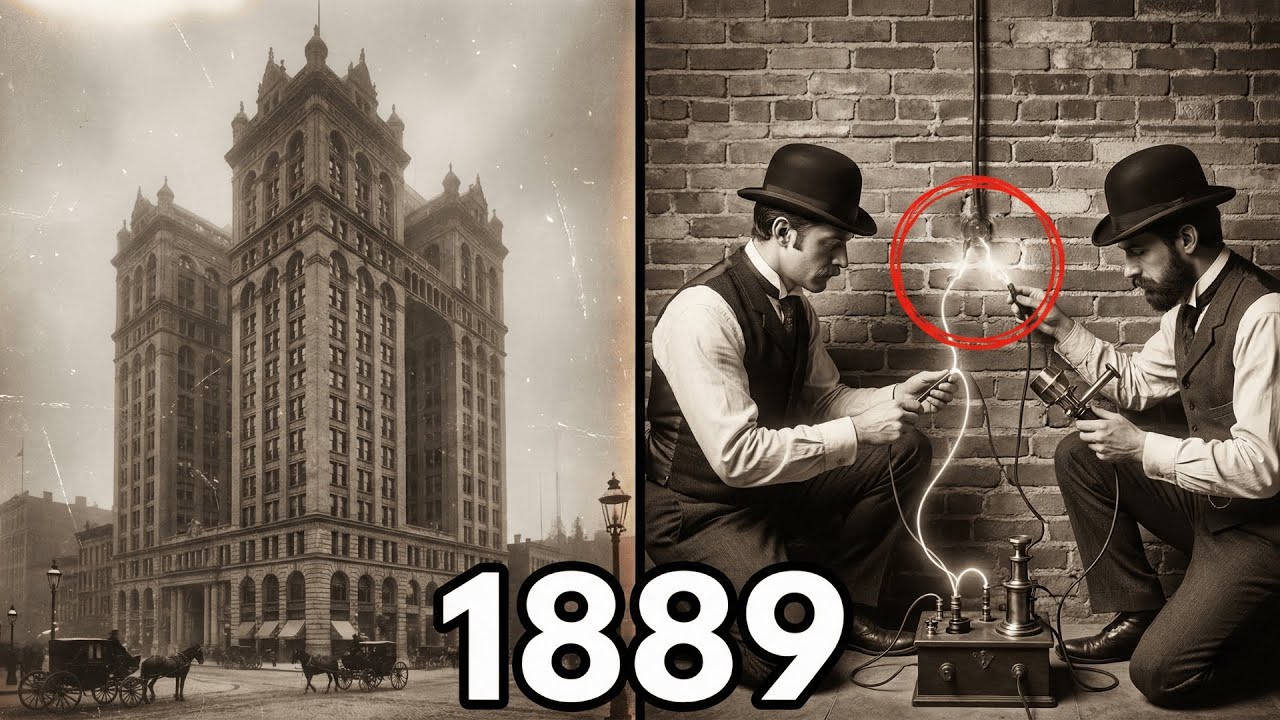
In 1889, a restorer discovered a photograph in Prague's palace archives that changed everything—a copper electrical panel installed 15 years before electricity even reached the building. But this was just the beginning. Across Europe, from Vienna to Budapest, sealed rooms have been found containing brass cylinders, resonant chambers, and acoustic systems that shouldn't exist in the 19th century. Workers describe metal that stayed warm without power, rooms that hummed when empty, and ceilings engineered with mathematical precision decades before such knowledge was supposed to exist. After World War I, European governments systematically demolished entire palace wings, removed thousands of components under military supervision, and ordered crews "do not photograph" during the erasure. Yet fragments survived in museum storage, and personal journals reveal the truth: a sophisticated acoustic-electric network operated secretly across three continents—from the Hofburg Palace to colonial India—using technology that predated its official invention by 30 to 40 years. The company that built it all mysteriously burned down in 1921, one month after a photograph showed their warehouse intact and full of equipment. What were the royal courts of Europe hiding in their walls, and why did it have to be destroyed so completely that we'd never believe it existed?


Underground Storehouses of the Steppe — Where Tartaria Hid Its Strategic Reserves​


Beneath the empty grasslands of the Ukrainian steppe lies a secret that governments have spent a century trying to bury: a massive network of underground stone cathedrals that stored grain for centuries using technology we can't replicate today. When a farmer's field collapsed in 2019, it revealed perfectly engineered vaults with acoustic properties that carry whispers across kilometers, carved symbols in unknown scripts, and stonework so precise you can't fit a knife blade between blocks — yet official records claim nothing was ever there. Soviet demolition teams found ancient seed banks and inscriptions they immediately classified, then systematically destroyed over 15 years while labeling everything "obsolete military objects." The deeper you dig, the more disturbing it gets: export records show regions shipping twice the grain they could possibly grow, 19th-century engineers discovered "passages of unknown origin" under the forts they were building, and modern attempts to copy these structures failed catastrophically despite superior technology. What civilization built a continent-spanning network of self-regulating underground vaults that stayed functional for centuries, why did every empire since pretend they don't exist, and what were those classified inscriptions that someone considered dangerous enough to destroy but important enough to copy first? The sinkholes that keep opening aren't accidents — they're the earth refusing to keep the secret anymore.

 
Last edited:

BarcelonaAtlantis

Moderator
Staff member
In medieval Europe, some books were considered too dangerous to survive. Owning them could cost everything.
Throughout the Middle Ages, powerful institutions controlled which ideas were allowed to exist. Certain books were banned, hidden, copied in secret, or deliberately destroyed because they challenged authority, belief, or order.
In this immersive history video, we explore the story behind a forbidden medieval book — why it was feared, who tried to erase it, and how fragments of its knowledge survived despite suppression.
Rather than speculation, this video focuses on historical practices of censorship, book destruction, and knowledge control in medieval Europe, and how ordinary people risked their lives to preserve ideas.
Told in a calm, atmospheric style, this video is designed for relaxed viewing, background listening, or falling asleep to quiet history.


In 612, the greatest library on earth was set on fire. But instead of being destroyed, the books were baked. This is the story of the Library of Ashurbanipal—the "First Hard Drive" in human history. 2,500 years before the internet, the King of Assyria decided to collect every piece of knowledge in the world. He built a massive database of 30,000 clay tablets containing medical diagnoses, dictionaries, astronomical omens, and the Epic of Gilgamesh.

Where Was Tartary? — The Empire That Vanished From Every Map Open an 18th-century atlas. You'll find it instantly — GREAT TARTARY — stretching across half of Asia in bold ink. Bigger than Europe. Bigger than China. A name so massive it swallowed entire civilizations. Now open any modern map. Gone. No trace. No footnote. No explanation. How does a territory larger than a continent disappear from human memory? Who decided this part of the world no longer deserved its own name? And why do grand 19th-century buildings across the globe keep getting linked to this "erased" empire? This isn't ancient history. Your great-great-grandparents could have seen these maps. The archives are still open. The evidence is still there. But someone stopped teaching it.
 
Last edited:

BarcelonaAtlantis

Moderator
Staff member
In 1357, a single manuscript appeared — a fragile medieval document that should not exist, yet it describes a world far more advanced, vast, and interconnected than the one taught in our history books. Inside its faded pages lies evidence of a forbidden truth: the existence of a powerful empire erased from the timeline — Great Tartaria. This documentary uncovers the hidden geography, the sealed nations, the erased maps, the forgotten giants, and the forbidden chronicles that medieval writers recorded with chilling precision. Why did ancient cartographers place a massive empire across half of Eurasia? Why did this manuscript describe Cath and China as separate nations? Why did entire cultures vanish without ruins, without chronicles, without explanation? The answers lead to a truth that was never meant to survive. A truth sealed behind mountains, hidden inside damaged pages, and buried under centuries of historical rewriting. This 1357 manuscript exposes: — forgotten kingdoms missing from modern maps — strange creatures documented as real — entire nations sealed behind stone — an empire richer than all medieval Europe — a global reset that wiped Tartaria from memory If this manuscript is real, then history is not incomplete — it has been edited. Tonight, we reveal the forbidden truth about Tartaria… and the lost world they tried to erase forever

Operation Unearthing: The 1901 Jacksonville Mudflood Network — 1,700 Subterranean Buildings They Erased From Every Map began as a routine fire recovery operation clearing debris and stabilizing foundations across 146 burnt city blocks after the Great Fire that consumed downtown Jacksonville in just eight hours. But what recovery teams uncovered beneath the ash and rubble did not align with recorded history, known construction methods, or the official timeline of Jacksonville's documented development. Geometrically perfect underground street grids extending beneath seventeen city blocks… Precision-engineered brick archways with impossible firing temperatures… Elaborate ventilation systems designed for occupied subterranean spaces… Massive support columns built to carry loads far exceeding surface structures… And 1,700 distinct underground buildings that appeared designed for a population Jacksonville never officially recorded. Yet almost none of these discoveries appear in official fire recovery records. In this documentary, we revisit forgotten excavation photographs, suppressed engineering notes, and fragmented municipal reports scattered across private collections — documents mislabeled, minimized, or quietly removed from city archives. Why do subterranean structures remain perfectly aligned with surface street grids across multiple buried layers? Why do underground chambers show water damage and flood marks with no historical flooding at those depths? Why were the most intact, structurally sound sections deliberately reburied first during reconstruction? And why did the count of 1,700 structures vanish completely from all post-fire documentation? This is the investigation they never intended to be followed — a descent beneath Florida's historic port city, into a hidden underground district that suggests the Jacksonville we know was built on top of a far older, far more extensive buried civilization.


For centuries, Tartaria appeared on world maps, in encyclopedias, and in historical records as a vast and powerful empire stretching across the Old World. Then, within a remarkably short period of time, it vanished from history.

Why was Tartaria removed?

In this long-form documentary, we investigate the disappearance of Tartaria and the growing body of evidence suggesting it was not a myth, mistranslation, or simple cartographic error. Through forgotten maps, buried cities, unexplained architecture, and historical timeline inconsistencies, we uncover signs of a lost civilization that may have existed before modern history as we know it.

This film explores how Tartaria was gradually erased from maps and textbooks, how entire cities appear older than their official timelines, and why so many structures around the world seem to have been inherited rather than built. We examine whether Tartaria was part of a global Old World civilization, and why acknowledging its existence would challenge everything we believe about progress, civilization, and historical continuity.

This is not a story about fantasy or legend. It is an investigation into hidden history, forgotten empires, and the possibility that the modern world was built on the remains of a much older one.

Tartaria's disappearance was not accidental.

Why are so many Old World buildings found half-buried beneath modern streets? Across Europe, Ukraine, Russia, and North America, entire ground floors sit below today’s cities, with windows, doors, and ornate stonework disappearing into the earth.

As I examined maps, photographs, and restoration records, a repeating pattern emerged: sudden layers of mud, raised street levels, and cities rebuilt directly on top of earlier structures. These weren’t simple basements — they were fully functional floors, once at street level, sealed and forgotten after an unexplained global event.

This video investigates the sunken metropolises of Tartaria — the buried architecture, the erased timelines, and the physical evidence still visible beneath our feet. The deeper we dig, the harder it becomes to believe this was all just coincidence.


Why Were 1880s Train Stations Built Like Giant Musical Instruments?
These weren't just buildings. They were resonators.
Massive domes with mathematical precision. Hollow columns that rang like tuning forks. Hidden basement chambers that amplified specific frequencies. And the strangest part? The same design appeared in stations across different countries, different architects, different decades—like someone was following the same secret blueprint.
Workers reported unexplained vibrations at night. Engineers recorded "harmonic equipment" in documents that were later torn out. Photographs were retouched to hide metal rings and mysterious fixtures. And then, between 1908-1914, it all got erased—chambers filled with concrete, columns blocked, records destroyed.
Modern tests prove these halls still resonate at precise frequencies. After 110 years. Still functional. Still waiting.
Were they testing wireless power? Acoustic communication networks? Something else entirely?
The architecture remembers what the archives forgot. And what we find buried beneath dropped ceilings and modern renovations might change everything we thought we knew about the technology of the past.
 
Last edited:

BarcelonaAtlantis

Moderator
Staff member
A glass plate photograph from 1867 shows locomotive #447 departing Philadelphia for a 305-mile journey to Pittsburgh pulling six passenger cars with no coal tender visible. I found this image misfiled in a railroad museum basement along with forty-two other photographs showing the same impossible configuration—trains that shouldn't be able to move running documented routes that required six tons of coal they had nowhere to store. When I showed these to a retired Union Pacific chief engineer with forty years of experience, he calculated the fuel requirements and said flatly: "This configuration shouldn't be able to leave the station." The technology wasn't obsolete—it was too efficient, and efficiency that threatened coal sales had to be destroyed before anyone realized what we were losing. This is dramatized historical storytelling based on archival evidence, engineering documents, and physical artifacts. The first-person narrative is a technique to make research more immersive—the goal is education and critical thinking about suppressed technological history.

This investigation began with a question most history books never ask:
what truly powered the grand train stations of the Old World?

What started as a simple study of 19th-century architecture slowly turned into something far more unsettling. As I moved deeper into forgotten archives, censored engineering journals, missing blueprints, and early photographs that rarely surface in textbooks, a hidden pattern began to emerge — one that challenges the official story of the Industrial Revolution itself.

Across Europe, Russia, and the United States, the great railway stations of the 1800s share the same impossible characteristics:
cathedral-scale vaults, massive glass domes, mathematical symmetry — and beneath them, vast hydraulic chambers, underground reservoirs, water tunnels, and fountains connected directly to pressurized mechanical systems.

History claims these stations were powered by steam and coal.
But the evidence tells a quieter story.

Where is the soot?
Where are the chimneys?
Why are the ceilings clean, the iron polished, and the platforms untouched by smoke?

Instead, we find rivers diverted into foundations, precision-cut vaults far below ground, and infrastructure that looks less like decoration — and more like a silent energy system. A system that appears inherited, not invented.

As the research expanded to London, Paris, Antwerp, New York, and Moscow, one truth became impossible to ignore:
we’ve only been shown half the story.

The rest — the hydraulic grids, subterranean water networks, and the engineers who documented them before vanishing from the historical record — has been quietly removed, sealed, or reclassified.

This documentary is the result of months of investigation into those fragments. A visual journey into a forgotten world beneath the tracks — where architecture, geometry, and natural forces worked together long before steam became the symbol of progress.

 
Last edited:

BarcelonaAtlantis

Moderator
Staff member
How a 600-Year-Old Geographical Term Disappeared From Every Major Encyclopedia in Less Than a Decade In 1987, a graduate student at the New York Public Library laid out five editions of the Encyclopaedia Britannica across an oak table: 1888, 1902, 1911, 1922, and 1926. Each opened to entries beginning with "TAR." The 1888 edition contained three full pages on "Tartary" with detailed maps showing the region's vast extent across Central Asia. The 1902 edition carried a similar entry, slightly condensed. The 1911 edition maintained substantial coverage with notable map revisions. The 1922 edition showed something different: "Tartary" reduced to a single paragraph noting it as an "obsolete geographical term." By 1926, the entry was gone entirely—replaced by a cross-reference: "Tartary: see Russia, China, Mongolia." A term that had appeared on European maps since the 13th century, that had been included in every major reference work for 600 years, had been systematically removed from encyclopedias within a single decade. Not gradually revised. Not slowly phased out. Erased. With almost no explanation of its historical significance, no acknowledgment of six centuries of cartographic tradition, no context for readers encountering the term in historical sources. Just gone. This wasn't an isolated incident. It was a coordinated international pattern.

"Spirit is the life, mind is the builder, and the physical is the result." -Edgar Cayce
About the transitioning times we live in as we move into 2026. The Sleeping Prophet describes Earth Changes and the cleansing of our planets karma and the upgrade of our dna to a higher frequency and a 5D awakening to those that are ready. The transition from the old fear based existence to an intuitive love based existence.


In this episode, I explore why so many of these grand Tartarian-style buildings were suddenly “repurposed” during the late 1800s, why their ornate domes and towers were sealed or destroyed, and what that might mean for the story of our forgotten past. I also share some of the wild patterns I found — how the same type of transformation happened not just in one country, but across the world at the same time.

In this video, I explored what really happened after that photograph was taken in 1945. The mainstream story says the bells were removed for the war effort, but the more I read, the less that explanation made sense. I looked into old municipal reports, shipping records, archived photographs, and personal testimonies from bell makers and local historians — and all of it raised more questions than answers. What fascinated me most was how much of this story is missing from the official record. Thousands of bells vanished across Europe within months, and yet almost no documentation explains where they went or why they were never replaced. The photograph itself — showing those perfectly aligned bells under a grey sky — feels like a moment frozen in time, a symbol of a massive operation carried out with precision and silence.

Making this documentary opened my eyes to a forgotten world — one where technology was cleaner, grander, and far more advanced than we’ve been told. Whether you believe in the Tartaria theory or not, the evidence is undeniable: the old train stations of the 1800s weren’t just stations. They were remnants of a lost civilization that may have mastered power itself through water.

A painting in the Hermitage Museum shows Moscow burning in 1812. But the light in that painting doesn't look like fire. It looks like nuclear detonation. And no art historian can explain why.

The year 1812 is taught as Napoleon's failed invasion of Russia. A conventional war. But the evidence tells a different story. A story of simultaneous global incineration. A story of nuclear fire. A story of the systematic destruction of the Tartarian Empire.

The True History Behind the World’s First Underground Station.Tartaria..​

Step quietly beneath the bustling streets of London and explore Baker Street Station, the world’s oldest surviving underground railway. This immersive journey reveals over 160 years of engineering brilliance, hidden tunnels, historic platforms, and the fascinating layers of history beneath the city. Drift through time as you discover how Victorian ingenuity transformed London, how three separate stations grew together, and how the world’s first underground railway still hums with life today. Perfect for calm exploration, relaxation, and letting your curiosity wander through one of the most remarkable intersections of history, culture, and urban design.

In this video, you’ll discover:

The First Strike Underground – How John Fowler’s daring idea created London’s first underground railway in 1863.

Three Stations, One Location – Layers of interconnected stations, tunnels, and platforms you never knew existed.

Construction Chaos – The challenges of digging under a busy city and rebuilding above without destroying it.

Hidden Depths – Ghost platforms, secret corridors, and forgotten passages beneath Baker Street.

Unifying the Lines – How engineers solved congestion and connected multiple lines across decades.

Sherlock Holmes Connection – How fiction turned the station into a cultural and tourist landmark.

Neighborhood Stories – The transformation of Baker Street and Chiltern Court, layered with history and life above.

Legacy of Innovation – Why Baker Street Station inspired underground railways around the world.

Whether you’re looking for soothing historical storytelling, immersive urban exploration, or relaxing London transport history, this video guides you beneath the streets, letting you drift calmly through 160 years of engineering, culture, and mystery.

This documentary began with a simple question… what really powered the train stations of the so-called Old World?
The deeper I went into the archives, the blueprints, the forgotten photographs, the censored engineering journals, the more an incredible pattern started emerging — one that completely rewrites what we think we know about 19th-century technology.
Across Europe, Russia, and the United States, the grand stations of the 1800s all share the same impossible features:
enormous vaulted ceilings, cathedral-like domes, perfect symmetry, and beneath them… vast hydraulic chambers, water tunnels, fountains connected directly to pressurized machinery. And yet history books say these places were powered by “steam and coal.”
But where is the soot?
Where are the chimneys?
Where are the smoke-blackened tiles?
Instead, we find polished iron, mirrored floors, and rivers flowing directly into the sub-levels of the stations — as if the trains themselves were part of a silent, clean, water-driven system inherited from a civilization far older than the Industrial Revolution.
As I continued researching the stations of London, Paris, Antwerp, New York, and Moscow, a single truth became impossible to ignore:
what we've been told is only half the story.
The rest — the hydraulic grids, the subterranean reservoirs, the precision-cut vaults, and the engineers who "disappeared" after documenting these systems — has been quietly erased.
This video is the result of months of digging through those fragments: a visual investigation into the hidden water-powered world beneath the tracks. A world where architecture, geometry, and natural forces worked together… long before steam ever existed.
Join me as we uncover the lost rail network of Tartaria — the technology they buried, the stations they sealed, and the history they want us to forget.

This documentary explores architectural and historical anomalies through alternative research perspectives.

In the late 1800s, America was supposed to be young. Small towns. Wooden buildings. Growing populations just beginning to take shape. And yet, the photographic record tells a very different story. Across major American cities, enormous stone palaces appear almost fully formed — buildings with cathedral-scale windows, precision masonry, monumental columns, and grand boulevards — standing in landscapes that appear strangely empty. Who were these structures built for? Why do they appear before the populations meant to occupy them? And why does their level of craftsmanship often exceed what the official timeline suggests was possible at the time? In this documentary series, we examine historical photographs, architectural patterns, construction timelines, and urban anomalies that challenge the conventional story of America’s development. Rather than offering conclusions, this investigation focuses on visible contradictions — buildings that seem too advanced, too large, and too early for the world they are said to belong to. As the evidence unfolds, a deeper question emerges: Did America build these palaces… or inherit them? This documentary explores architectural and historical anomalies through alternative research perspectives.
 
Last edited:

BarcelonaAtlantis

Moderator
Staff member
Michigan’s historic train stations are massive, ceremonial, and strangely overbuilt — especially for 1913. But when you step back and look at all of them together, a disturbing pattern emerges. Why were so many monumental stations built at the same time? Why do they resemble civic temples more than transportation hubs? Why were they abandoned so quickly… yet never demolished? In this video, we examine Michigan Central Station and other early-20th-century rail structures through a different lens — one that raises uncomfortable questions about scale, purpose, underground infrastructure, and forgotten architectural systems. Some researchers connect these anomalies to the Tartaria hypothesis, suggesting these buildings may have been repurposed, not designed from scratch. This is not a claim(yes, it is a claim) — it’s an investigation. If you’re interested in: Tartaria architecture

Alaska in 1909 was a land of extremes: brutal winters, short construction seasons, and near-impossible logistics. Yet, against all odds, the forestry building rose—a structure that defied climate, isolation, and expectation. How did hundreds of workers, armed with nothing but hand tools, sleds, and determination, build something that should have been impossible? In this video, we explore the incredible story of Alaska’s old builders, uncovering their methods, skill, and audacity in a frontier that punished mistakes mercilessly. From felling massive timber to precise joinery in sub-zero conditions, this building stands as a testament to human ingenuity and resilience. If you love historical mysteries, architectural marvels, and stories of impossible feats, you’ll want to watch this carefully.

Tartaria.
The 1890s Amsterdam Canal Modernization began as a routine maintenance operation to dredge the existing canals, reinforce the waterways, and prepare Amsterdam's famous canal system for industrial-age commerce. But what engineering crews uncovered beneath the brick-lined channels did not align with recorded history, known Golden Age construction, or the official timeline of Dutch hydraulic engineering. Geometrically perfect channel networks aligned across multiple buried layers… Precision-engineered pressure chambers with impossible tolerances… Sophisticated flow control mechanisms designed for pressurized water distribution… Massive metal-reinforced conduits built to manage forces far exceeding surface canal requirements… And a complete subterranean hydraulic network that appeared designed for purposes no 19th-century engineer could identify. Yet almost none of these discoveries appear in official modernization records. In this documentary, we revisit forgotten survey photographs, suppressed engineering documentation, and fragmented municipal reports scattered across departmental archives — records abbreviated, minimized, or quietly removed from public celebration. Why do underground channels remain perfectly coordinated with surface canals across centuries of construction? Why do the deepest passages show engineering sophistication exceeding documented Dutch capability? Why were the most advanced, structurally pristine sections deliberately resealed first during modernization? And why did detailed documentation of these hydraulic systems vanish completely from later municipal charts? This is the investigation they never intended to be followed — a descent beneath Europe's legendary canal city, into a hidden water system that suggests the Amsterdam we know was built on top of a far older, far more advanced buried infrastructure.

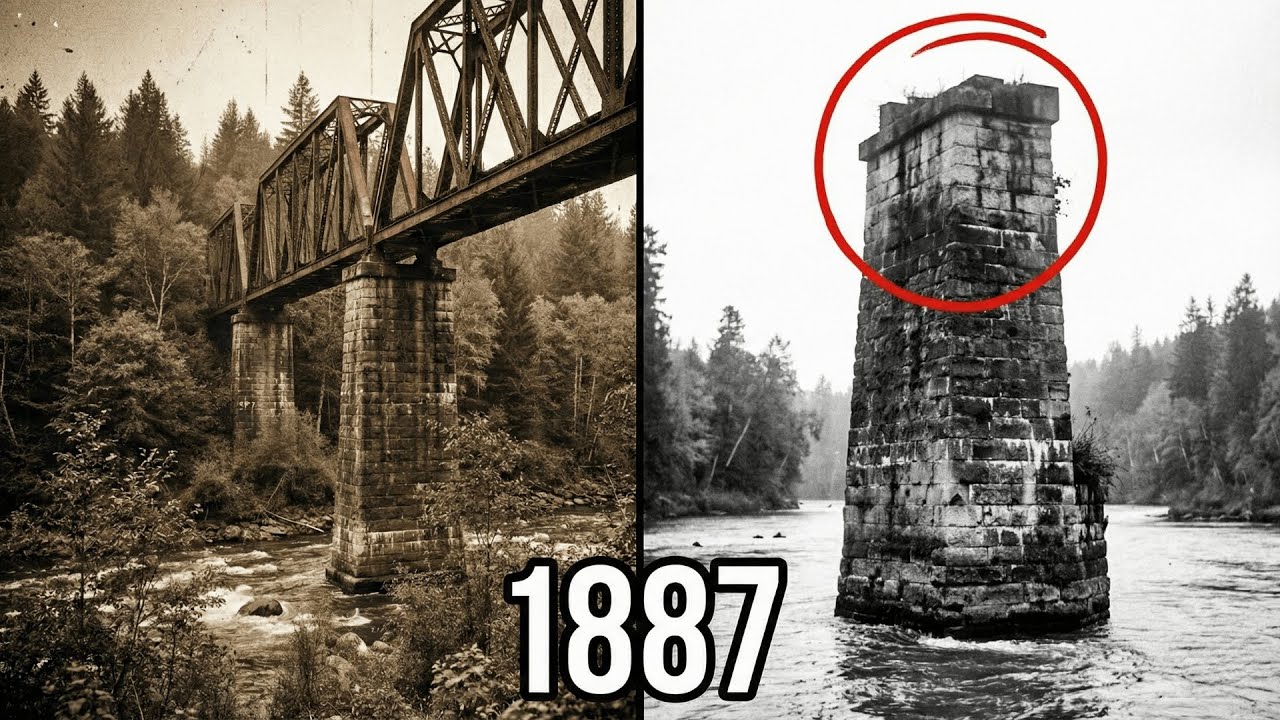
Tartaria's Water-Powered Systems Beneath Water — The Technology They Buried in Mud began as routine drought management and water abstraction operations across Europe and North America, lowering river levels for irrigation projects, hydroelectric maintenance, and urban water supply diversions.

But what engineers uncovered beneath the riverbeds did not align with recorded bridge construction history, documented foundation depths, or the official timeline of civil engineering development.

Ornately carved bridge piers extending 200+ meters below modern riverbeds…

Decorative stonework positioned at impossible depths where no eye was meant to see…

Foundation structures sized for bridges far larger than what currently exists above…

Architectural details suggesting open-air construction rather than underwater assembly…

And evidence of catastrophic sediment burial that transformed dry valleys into permanent waterways.

Yet almost none of these discoveries appear in official structural inspection reports.

In this documentary, we revisit forgotten underwater drone footage, suppressed engineering assessments, and fragmented inspection reports scattered across national archives — documents minimized, reclassified, or quietly removed from public engineering databases.

Why do bridge foundations display elaborate carvings 50 meters below the riverbed?

Why do support piers extend to depths impossible for their documented construction dates?

Why were bridges built with foundations sized for structures three times their current span?

Why does geological evidence suggest rapid catastrophic burial rather than gradual sediment accumulation?

And why do official reports consistently omit foundation depths that inspection footage clearly reveals?

This is the investigation they never intended to be followed — a descent beneath Europe's and North America's major river crossings, into foundations that suggest our bridges were built when ground levels were dramatically higher, before a mudflood event buried their lower portions and created the rivers we see today.

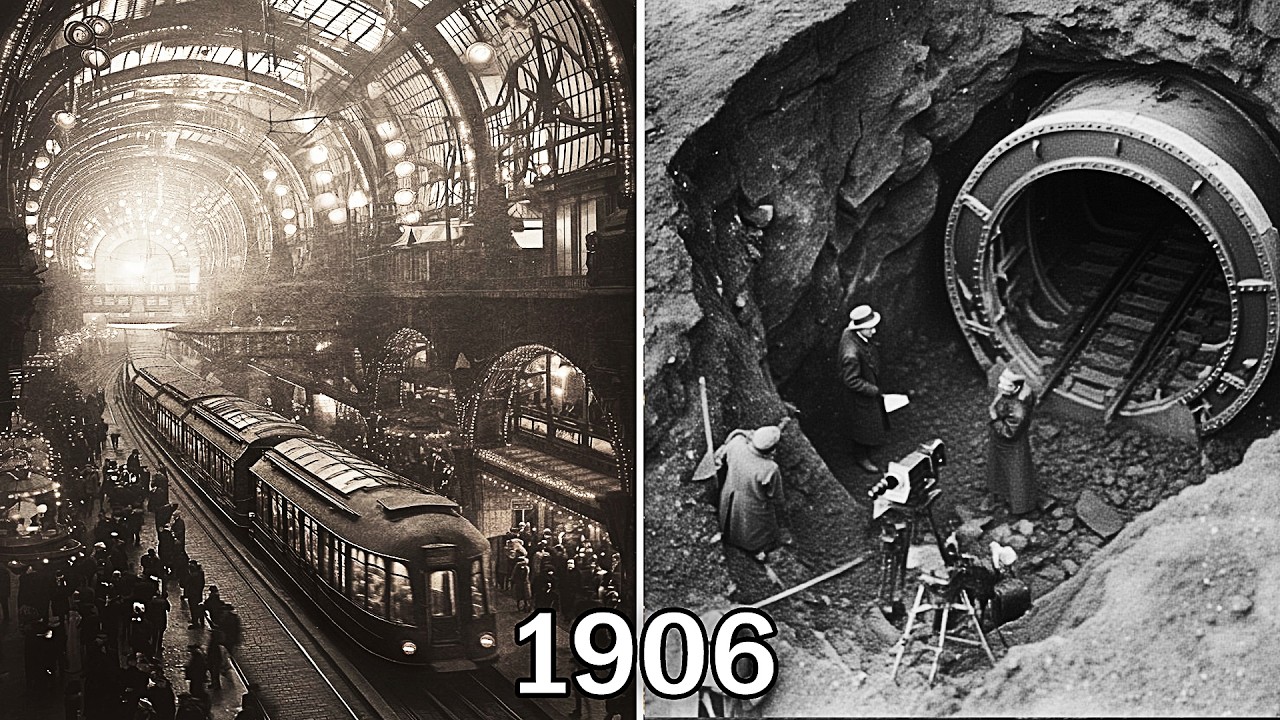
Operation Unearthing: The 1906 San Francisco Mudflood Tunnels began as a routine post-earthquake reconstruction — basic cleanup efforts after the earthquake and fire reduced the city to rubble.

But what workers discovered beneath San Francisco did not match the official narrative, the recorded history of American settlement, or anything expected to exist under a Gold Rush-era city.

Perfectly vaulted brick tunnels buried beneath layers of compressed mud…

Massive circular access shafts cut with precision no 19th-century tool can explain…

Metal rail systems embedded in passages that predate the city's first streetcar lines…

Elaborate drainage networks aligned with infrastructure that appears on no city plan…

And entire underground chambers filled with hardened sediment as if the city had been built atop something far older.

Yet almost none of these discoveries appear in the public reports from the 1906 Reconstruction Commission.

In this documentary, we revisit the forgotten survey photographs, the surviving excavation notes, and the suppressed municipal records from 1906-1907 — fragments scattered across archives, mislabeled, redacted, or quietly removed from circulation.

Why do tunnel systems show construction techniques decades ahead of their supposed era?

Why were the deepest and most sophisticated passages quickly sealed and declared "unsafe"?

Why do early photographs show elaborate brick infrastructure that later documentation claims "never existed"?

And why did the official records shift from detailed engineering reports to vague one-sentence summaries?

This is the investigation they hoped the public would never revisit — a descent into the buried tunnel network beneath San Francisco, and the infrastructure that suggests the city was built atop a forgotten civilization with engineering capabilities far beyond anything recorded in California history
 

BarcelonaAtlantis

Moderator
Staff member
The REAL Reason Victorian Buildings(Tartaria) Have Basement Windows

In 1889, a Boston maintenance worker found an ornamental window 12 feet underground. It had carved granite keystones, decorative sills, and intact glass. These features were expensive, labor-intensive, and designed for one purpose: to be admired from the street. But it faced compacted earth. The building was constructed in 1875. Architectural plans showed it as the ground floor. In 14 years, it became a basement. No municipal records document this. This isn't unique to Boston. The ornamental features that prove ground floors were buried: 📸 Cleveland, June 1893: City photograph shows workers installing street pavement 10 feet above intact Victorian storefronts. Henderson & Sons Dry Goods sign visible below. Ornate display windows, decorative brickwork—all designed for street-level commerce. Budget: $3,200 for "resurfacing." (Impossible for 10 feet of earthwork) 🚪 Edinburgh, 1902: Surveyor Malcolm Fraser documents Georgian buildings with ornamental doorways—carved stone lintels, fanlights, iron railings—now accessed by descending steps. "Basement" interiors with 12-14 foot ceilings. Fraser: "Features inconsistent with below-grade construction. Current street appears 8-10 feet above original grade." 📐 Sydney, 1909: Edward Harrington hires surveyor to measure his 1878 building. Original plans show ground floor at street level. Survey measures current street 9 feet higher. City response: "No evidence of street modification exists. Claim cannot be substantiated." 🔦 Manchester, 1913: Construction photo accidentally captures brick archways 8 feet underground—intact, decorative, designed for pedestrian traffic. Newspaper attributes to "old foundation works." No explanation given. 🧱 Boston, 2019: Construction crew finds Victorian brick street with cast-iron gas lampposts 14 feet below modern surface. Lampposts still standing, decorative brackets intact. Preserved for 150+ years. Documented, photographed, then destroyed. ________________________________________ ❓ THE IMPOSSIBLE QUESTION Why install expensive ornamental features underground? Carved granite keystones = labor-intensive stonework Decorative sills = serve no function in basements Fanlight doorways = designed to impress street-level visitors 12-14 foot ceilings = excessive for below-grade storage Plate glass in ornamental frames = expensive commercial storefront features Answer: They weren't underground when installed. They were designed for street level.

Why Do "Basement" Doors Have Carved Limestone, Fanlights, and Cast-Iron Railings?
In 1897, Philadelphia building inspector Samuel Garrett examined 412 Market Street, built 1868. The "basement" entrance had carved limestone keystones, decorative fanlight windows, and cast-iron railings matching the upper floors. These features cost significant money and serve no purpose underground. Yet the entrance was 7 feet below the sidewalk.
Garrett consulted the 1868 building permit: "ground floor commercial space with street-level entrance." He measured the door surround—it matched the upper-floor proportions exactly. Same stonework, same decorative elements, same street-facing design. This wasn't a basement door. It was a ground-floor entrance that had been buried.
This isn't unique to Philadelphia.


In this investigation, I’m examining salt roads attributed to Tartaria by looking at how their routes continue to shape modern cities. Rather than focusing on trade narratives, this video traces street alignments, elevation changes, bridge placements, and road widths that predate current urban layouts. In many cases, these paths appear optimized for heavy transport and long-distance movement, yet they remain embedded beneath later development. Historical maps often show major streets following older corridors with no clear explanation for their original purpose. Some roads are overbuilt for local traffic, while others cut through terrain in ways that suggest logistical priorities rather than settlement growth. Salt, a critical resource for preservation and survival, would have required reliable, large-scale transport systems long before modern infrastructure. This isn’t an argument about intent or ownership. It’s an examination of continuity—how old routes persist, even as their original function fades from memory. If cities grew around these paths rather than creating them, it raises a quiet question about what came first
unnamed - 2026-01-06T103119.556.png

In this investigation, I’m examining a pattern that appears across the 19th century: large institutions built specifically for children at a scale that doesn’t seem to match the documented population at the time. Orphanages, hospitals, schools, and care facilities often appear fully formed early in the record, sometimes before clear evidence of the demand they were meant to serve. Architectural plans, census data, and municipal reports don’t always align. Buildings are oversized, standardized, and designed for long-term occupancy, yet records struggle to explain where the influx of children was expected to come from. In many cases, these institutions emerge alongside broader infrastructure that also appears ahead of population growth. This isn’t an argument about motive or purpose. It’s an observation about timing—why systems for care and housing appear ready before the need is clearly documented. Something about the scale feels anticipatory. I’m not offering conclusions—just documenting the mismatch

In this revealing video, you will understand the final preparations of the Baby Boomer generation's soul, according to the spiritual readings of Edgar Cayce. 🌌✨
Here we talk about cycles coming to an end, spiritual fatigue, detachment, forgiveness, and transitions in consciousness. It's not fear—it's awakening. If you feel something deep inside you is closing, this content can bring clarity, peace, and spiritual direction. 🕊️🔥
Watch until the end and understand why the end is not the world, but a cycle of the soul.

Humanity’s story is not what we think it is. Beneath the ruins, the myths, and the geological scars lies a hidden truth: we are the seventh civilization, living at the edge of a repeating cycle that wiped out worlds before us. In We Are the 7th Civilization And the Cataclysm Cycle Always Returns, we explore why ancient records, ice core data, magnetic field shifts, and global flood myths all point toward a last cataclysm far more real—and far more cyclical—than we were taught.
As signs of a cataclysm returning begin to align again, the world’s oldest warnings suddenly make sense. What if the “lost civilizations,” the global flood stories, and the sudden collapse of ancient cultures were all part of the same forgotten pattern? What if the seventh civilization is already entering the final phase of the cycle?
From forbidden archaeology to extreme climate shifts, from ancient cosmic alignments to the shocking evidence of a last cataclysm returning again, this documentary uncovers the clues left behind by those who came before us. Prepare for one of the most unsettling questions of our time: What if the next reset is already underway—and we are simply the next chapter waiting to be erased?

Operation Unearthing: The 1893 Subterranean Cities was supposed to be a routine infrastructure survey — simple groundwork before America stepped into a new century of expansion. But what engineers uncovered beneath the Midwest did not match any historical timeline, any known civilization, or anything written in the official geological surveys. Underground chambers far older than colonial America… Stone blocks cut with precision no 19th-century tool could achieve… Geometric corridors aligned across multiple states… Water-worn foundations buried deeper than natural geology allows… And structural designs that looked engineered — not carved — by unknown hands. Yet almost none of this appears in the public documentation. In this documentary, we revisit the archived survey notes, the surviving photographs, and the suppressed engineering reports from 1893 — evidence quietly scattered across state records, mislabeled, minimized, or simply removed from history. Why do multiple architectural layers align perfectly across eras that should have no connection? Why do the deepest chambers show precision that predates American settlement by millennia? Why were the most advanced structures the first to be filled in, sealed, and erased from survey maps? And why did the official reports suddenly become vague, contradictory, or silent? This is the investigation they never intended the public to follow — a journey into the forgotten foundations of a continent, and the buried architecture that suggests America was built on top of something far older, far larger, and far more deliberate than we have ever been told.

 
Last edited:

BarcelonaAtlantis

Moderator
Staff member
In this investigation, I’m looking at how a manuscript dated to 1357 appears to have survived a period when much of the Old World seems to reset. Rather than focusing on what the document claims, this video examines how it endured—through shifts in architecture, record keeping, and historical continuity that followed.
The manuscript exists today despite gaps in provenance, changes in custodianship, and periods where similar records vanish from the archive. Its survival raises questions about transmission: who preserved it, where it was kept, and why it wasn’t altered or replaced as systems reorganized around it.
This isn’t an argument about motive or suppression. It’s an examination of continuity—how one object persists while surrounding records fracture.
Something allowed this manuscript to pass through the reset intact. I’m not offering conclusions—just documenting what endured when much else did not
 

BarcelonaAtlantis

Moderator
Staff member
Operation Unearthing: The Boston Subterranean Network was supposed to be routine groundwork — basic excavation beneath one of America’s oldest cities as streets were expanded and foundations reinforced. But what workers uncovered beneath Boston did not resemble basements, cellars, or colonial-era construction. It didn’t resemble anything in official city records. Beneath the streets lay wide stone tunnels, engineered corridors, and layered passageways extending far beyond what pedestrian use or drainage would require. Stone-lined routes large enough for sustained movement. Vaulted corridors aligned beneath major streets. Foundations worn smooth as if subjected to centuries of repeated traffic. And structural designs that appear planned, not improvised. Yet almost none of this appears in Boston’s public historical documentation. In this documentary, we examine archived excavation photographs, early engineering notes, and overlooked municipal reports — fragments of evidence scattered across city records, mislabeled, minimized, or quietly removed. Why do underground corridors run parallel to surface streets that wouldn’t exist for another century? Why do tunnel layers sit far deeper than colonial construction techniques allow? Why do these structures show signs of long-term use — but no clear explanation of who used them? And why were many of these passageways filled, sealed, or reclassified shortly after discovery? This is the investigation that was never meant to continue — a journey beneath one of America’s oldest cities, into a forgotten transit system that suggests Boston was built on top of something far older, far larger, and far more deliberate than history has ever admitted.
2091049956375440029 (7).jpg
In this investigation, I’m looking at what appears to disappear from the Old World around the early 1700s—not through theory, but through comparison. Before this period, cities show consistent architectural styles, large-scale infrastructure, and identifiable systems of construction. Afterward, something changes. Techniques simplify. Designs shift. Records restart.
Rather than focusing on a single event, this video examines what no longer appears in the physical record: certain building methods, oversized civic works, unified planning styles, and systems that were never rebuilt at the same scale. In many places, structures remain—but the knowledge to reproduce them does not.
This isn’t an explanation of cause. It’s an inventory of absence—what stops, what fades, and what is quietly replaced.
Something was removed from the Old World. I’m not claiming answers—just documenting what didn’t return.

The bridges we're told were constructed in the 1800s display engineering precision and architectural complexity that should have been impossible with the tools and knowledge available at the time. Massive stone arches with perfect weight distribution, iron frameworks requiring industrial-scale casting, and foundation work that defies the construction methods described in historical records.
But these weren't built in the 1800s. They were inherited from the Tartarian civilization and later claimed as new construction by those who came after the reset.
When you examine the evidence—the mathematical precision of the arch calculations, the scale of stonework that would require modern cranes, the metallurgical expertise supposedly achieved in primitive workshops—the official timeline collapses. These bridges bear all the hallmarks of advanced pre-reset engineering, not the experimental trial-and-error of an emerging industrial age.
What you'll discover:
The precision engineering that exceeds 1800s capabilities
Why the foundation work proves pre-reset construction
Architectural elements matching Tartarian cathedral design
The impossibility of the claimed construction timelines
How inherited infrastructure was rebranded as "new" achievements
Metallurgical techniques that vanished after the reset
The pattern of identical bridge designs appearing across continents simultaneously
Every major bridge from this era tells the same story: advanced technology, impossible timelines, and evidence carefully hidden in restoration records. These weren't engineering breakthroughs—they were rediscoveries of what Tartaria had already built.
The workshops of the 1800s couldn't have produced these designs. But someone did. And the proof is still standing.

The Maya never predicted the end of the world in 2012.

Not once. Not ever.

That date wasn't an ending — it was a beginning. The start of a 20-year transition period that they said would transform everything.

According to their calculations, we're now in the middle of that transition. Right now. 2026.

And they weren't alone.

500 miles north, the Aztecs carved their own prophecies into stone. They called our age the "Fifth Sun" — and they were very specific about how it would end. Not with a single catastrophe. With movement. With everything we thought was stable... shaking apart.

In this video, I examine what the Maya and Aztecs actually predicted not the Hollywood version, not the History Channel panic, but the real prophecies from the Chilam Balam, the Dresden Codex, and the Legend of the Five Suns.

What I found is unsettling.

These two civilizations — separated by centuries and geography — saw the same future. A future that looks remarkably like our present.

THE MAYA PREDICTED:
→ "The face of the sun shall be covered"
→ "The sky shall be divided"
→ "Blood-vomit shall come" (disease)
→ "The government shall be paralyzed"
→ The return of Kukulcán

THE AZTECS PREDICTED:
→ The Fifth Sun dies by "movement" (earthquakes AND instability)
→ Political collapse and scattered leaders
→ The return of Quetzalcoatl
→ A transition to the Sixth Sun

Sound familiar?

If you watched our 5 Prophets video, you saw how Nostradamus, Baba Vanga, Edgar Cayce, Mother Shipton, and Saint Malachy all predicted similar events for our time.

Now add the Maya and Aztecs to that list.

Seven traditions. Zero contact between them. Same warnings. Same timeframe.

At what point does "coincidence" stop being a satisfying answer?

Kukulkan the real Savior shall return very soon.


What if we are not the first advanced civilization on Earth?
What if the history we’ve been taught is only the latest chapter in a much older cycle?

In this History For Sleep episode, we explore a haunting idea hidden within ancient Sumerian records: that our civilization may not be the first — or even the second — but part of a long sequence of advanced societies that rose, collapsed, and were forgotten.

We begin with a small clay prism in the Ashmolean Museum in Oxford — the Weld-Blundell Prism — which records kings ruling for tens of thousands of years before a great flood swept the world clean. As the list continues, reign lengths shrink, lifespans shorten, and something essential appears to be lost. Not abruptly, but gradually.

From there, we move slowly through global traditions that echo the same pattern:
the Hindu Yugas, the Greek Ages of Man, worldwide flood myths, and the archaeological anomalies that challenge a strictly linear view of history. Across cultures that never met, the same story appears again and again — long ages before catastrophe, followed by rebuilding in a diminished world.

This is not a fast documentary.
It’s a calm, immersive journey designed for rest, reflection, and deep listening. You don’t need to watch closely. Let the visuals fade into the background as the story unfolds gently, like sediment settling after a flood.

Were these ancient numbers symbolic — or memories?
Did civilizations exist before the ones we know?
And if history moves in cycles, where are we now within that pattern?

Let the ideas drift. Let the day dissolve.
This story isn’t here to convince — only to open a door.

If this exploration resonates with you, a gentle like helps other wanderers find these quiet journeys.
And before you drift off, tell us — where in the world are you listening from tonight, and what time is it there?

What if the clues to our real past were never lost, only ignored Hyperborea: The Clues Across the Earth That Rewrite Human Origins reveals evidence scattered across the Arctic, across ancient maps, and across forgotten ruins that challenges everything we think we know about human origins. These mysteries appear in megaliths older than history, in strange genetic signals, and in Arctic anomalies no civilization should have been able to measure. Hyperborea emerges repeatedly in myths of a lost civilization, in unexplained alignments, and in patterns that connect continents separated by oceans. As new discoveries force scientists to reconsider ancient mysteries, the possibility that Hyperborea was real becomes harder to dismiss. And if Hyperborea existed, then human origins are not a simple story but a cycle shaped by creation, destruction, and survival. This journey connects the Arctic, forgotten world legends, and the global traces of a lost civilization that may have changed humanity forever.
 
Last edited:

BarcelonaAtlantis

Moderator
Staff member
Descend into the archaeological record as you drift toward sleep. 🌙 What if the Sumerian clay tablets—pressed 6,000 years ago—preserve evidence of a catastrophic flood that destroyed a civilization before recorded history began?

In this episode, we examine the cuneiform records of ancient Mesopotamia, antediluvian kings, and the systematic chronicles that document an age before memory through calm narration and ambient soundscapes.

Tonight we explore: Sumerian flood accounts carved in clay before Noah's story was written, the archaeological evidence of King Ziusudra and the eight antediluvian rulers who reigned before the waters rose, and how cuneiform tablets may preserve the last testimony of a forgotten epoch... relax as documented mysteries meet sleep-inducing narration.

Perfect for: Those who question official timelines and seek evidence-based mysteries, seekers of archaeological enigmas and pre-flood civilizations, minds that believe our ancestors preserved truths we've forgotten


Mallorca se sube al boom de los conciertos: así será 2026 en la isla​

Mallorca refuerza su papel como destino musical en 2026 con el Mallorca Live Festival, la despedida de Mobofest y una escena de salas activa todo el año.
Mallorca Live Festival


El directo vuelve a mandar. No es solo una sensación compartida en redes o en conversaciones de barra: es una tendencia clara que atraviesa la industria musical en 2025 y que ya marca el calendario de 2026. Los conciertos y festivales se han convertido en el principal motor de consumo cultural, y Mallorca, con su combinación de residentes, visitantes y una infraestructura turística potente, entra de lleno en ese mapa. La isla ya no es solo un lugar donde pasar el verano, sino un destino al que se viaja por la música.

EL BOOM DEL DIRECTO, EN CIFRAS (Y POR QUÉ IMPORTA)​

La narrativa del regreso del directo no se sostiene únicamente en titulares. Medios especializados como Jenesaispop han subrayado que 2025 deja cifras récord en giras internacionales, con artistas como Coldplay o Beyoncé encabezando las recaudaciones mundiales según los datos de Billboard Boxscore. Millones de entradas vendidas, ingresos históricos y una idea que se repite: el concierto es ahora el centro de la experiencia musical.
Este fenómeno se apoya en un factor clave: el llamado efecto FOMO (miedo a quedarse fuera). El público planifica vacaciones, ahorra durante meses y organiza viajes en torno a una fecha concreta. Para territorios turísticos como Mallorca, esto tiene un valor estratégico enorme: la música permite atraer visitantes más allá del sol y playa, diversificar el perfil del viajero y reforzar la desestacionalización.

MALLORCA LIVE FESTIVAL 2026 FECHAS Y PRIMERAS CLAVES​

El gran termómetro del directo en la isla sigue siendo el Mallorca Live Festival. La organización ya ha puesto fechas sobre la mesa: 12 y 13 de junio de 2026 en el Recinto Antiguo Aquapark de Calvià, con un día especial el 14 de junio protagonizado por David Guetta. Un movimiento que apunta claramente a un cartel pensado para el gran público y para dominar la conversación en redes.

Lo que significa para la isla​

  • Calendario estratégico en junio, ideal para atraer visitantes antes del pico de julio y agosto.
  • Efecto arrastre directo en hoteles, restauración, transporte y ocio nocturno.
  • Refuerzo de marca cultural, consolidando a Mallorca como plaza habitual de grandes conciertos y no solo como destino vacacional.
El Mallorca Live Festival se ha convertido en un escaparate: cada anuncio de cartel es también una campaña de promoción indirecta para la isla.

MOBOFEST 2026 LA DESPEDIDA DE UN FESTIVAL DE ESCENA​

La otra gran historia musical de 2026 tiene un tono muy distinto. Última Hora ha confirmado que Mobofest celebrará su última edición en 2026, coincidiendo con su décimo aniversario. El festival se despedirá del 23 al 25 de julio en el Puig de Consolació (Sant Joan), el mismo lugar donde nació.
Aquí la noticia no está en el tamaño, sino en el legado. Mobofest ha sido durante una década un espacio clave para los grupos baleares con canciones propias y, al mismo tiempo, una ventana para acercar al Pla de Mallorca propuestas nacionales e internacionales. Su cierre marca el final de una etapa, pero también deja una huella profunda en la escena local y en la idea de festival como punto de encuentro comunitario.

SALAS, TEATROS Y PROGRAMACIÓN TODO EL AÑO​

Más allá de los grandes fines de semana festivaleros, el pulso musical de Mallorca también se mide en las salas. El Trui Teatre ya ha anunciado citas destacadas para enero, como la actuación de Ara Malikian el 11 de enero de 2026, mientras que Es Gremi mantiene una programación estable con conciertos durante todo el año.
Este tejido es fundamental porque evita que la música en directo dependa solo de dos o tres fechas. Las salas sostienen a la escena, fidelizan público local y permiten que la isla tenga actividad cultural incluso en temporada baja.

LO QUE MARCAN LAS WEBS MUSICALES LISTAS NOSTALGIA Y MIRADA A 2026​

Diciembre es el mes del balance, y eso también influye en cómo se consume música. Mondo Sonoro ha publicado su número especial con listas de lo mejor de 2025 y portada dedicada a Turnstile. Rockdelux ha colocado “las listas de lo mejor del año” en el centro de su cierre editorial.
Todo encaja con el consumo local: un público que alterna grandes eventos, conciertos de sala y contenidos nostálgicos que funcionan muy bien en búsquedas y redes sociales.

CÓMO SE PUEDE CONTAR LA TEMPORADA 2026 EN MALLORCA​

Con estos ingredientes, el relato es claro. Mallorca afronta 2026 con dos ejes potentes: un gran festival que sigue creciendo y un festival de culto que se despide dejando identidad. Entre ambos, hay margen para mejorar la coordinación de movilidad en grandes citas, reforzar la programación en temporada media y dar mayor visibilidad a los artistas baleares.
El boom del directo no es una moda pasajera. Para Mallorca, la música ya no es un complemento: es noticia, es economía y es marca. Y 2026, con fechas cerradas y relatos claros, lo confirma.


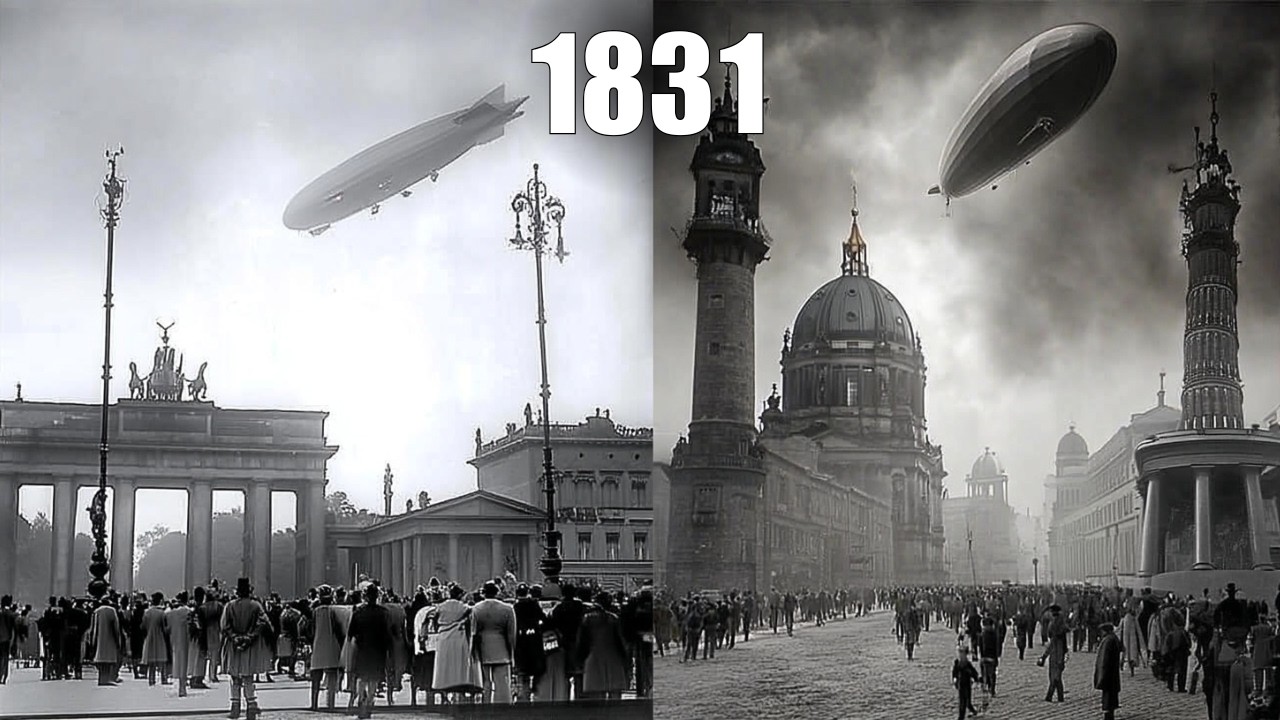
In 1825, engineers expanding Berlin uncovered something that did not belong to the official history of Europe.
Beneath familiar cellars and medieval foundations lay a vast, organized underground heating grid—ceramic-lined channels, precision-built chambers, and heat distribution systems that behaved more like modern climate control than 19th-century technology.

This documentary investigation follows what was found beneath Berlin, why it didn’t match any known historical period, and how the most advanced sections were quietly sealed, reclassified, and buried again.
There were no furnaces. No soot. No clear fuel source. Yet heat moved across districts with deliberate control.

Why was this infrastructure never properly documented?
Why were the deepest discoveries sealed first?
And what does it mean if Berlin was built on top of a system it didn’t design?

This video explores the evidence, the archival silence, and the repeating global pattern of buried infrastructure that challenges the accepted timeline of urban technology.

If you’re interested in hidden history, lost engineering, underground cities, and forgotten technologies, subscribe for more investigations like this.

MALLORCA- THE ISLAND OF MUSIC​


Once again Mallorca is, you could argue, the center of music for all ages offering music from techno, funk, pop, jazz and classical. We are so lucky that on this small island we have such diverse music and there is always something for everyone each week and many days and nights. This year we have iconic stars such as Pet Shop Boys, Tom Jones and Simple Minds plus so many other DJ’s so music is in the blood of all those who have the privilege to live here or maybe visit at the time when some of these wonderful concerts and festivals are taking place.
Celebrity Mallorca Magazine has for some years reported on many of the music events taking place and one such festival is the now famous Deia International Festival of Music. This year is the XLV3 edition and artists from around the World from pianists, to violinists and singers of opera and tenors and so much more love this island. The atmosphere at all the events held at such venues as La Residencia, a Belmond Hotel, Tianna Negro, Sineu Cloisters, Son Marroig and Auditorio Juan March to name but a few create a wonderful relaxing evening, bringing artists to the island that have never visited before. A privilege to see and hear some of the artists that tour the World.

Mallorca Live Festival is the most important music event on the island, with an eclectic character, held between May and June and with a fresh and quality musical offer that attracts thousands of locals and tourists every year to enjoy the best music. Shall we dance?

Mallorca Live Festival was born in 2016 with the aim of changing the cultural and leisure offer in the area of Magaluf (Calvia), an area known mainly for excesses and alcohol. This event is committed to quality music in a responsible and committed environment where fun is guaranteed!It has consolidated itself as one of the most important festivals with more than 70,000 attendees.
 
Last edited:

BarcelonaAtlantis

Moderator
Staff member
Each year the event has gone on improving the quality of its services, facilitating the anticipated collection of pulsating, recharge money by means of an app, which provides further information updated schedules, activities, etc.. Gastronomic areas and quiet zones are set up where you can also see the little ones enjoying the atmosphere and the music.

High level national and international artists come every year to its stages to give their best, make us have a good time and enjoy the best current music and great artists such as: Black Eyed Peas, Chemical Brothers, Christina Aguilera, Franz Ferdinand, Muse, Milky Chance, Jamiroquai, The Prodigy… are some of the world famous artists who have passed through its stages. Also national phenomena such as C Tangana, Bomba Estéreo, Vetusta Morla, Kase.O, Izal, La Mala Rodríguez,etc,… who on many occasions repeat editions and take the opportunity to promote the island and enjoy it.In addition to the festival, Mallorca Live Festival continues throughout the rest of the year with musical cycles during several weeks and in different seasons of the year. With the same philosophy of offering quality and sustainable leisure, it maintains one of its stages to offer a “boutique festival” concept, reducing the space and the number of attendees but still bringing great artists.

How old are the European languages and when where they systemized and codified? Where do our alphabets come from and what does it have to do with the word or sound “Tartaria” ? How do the Tyrrenians, Etruscans and Phoenicians relate to this? Grimm’s Law, Verner’s Law and more………………………………Calling all Autobots, Men of the West….The Occident…Arise… Our only chance to repair the present, is in the past.

Durante siglos, la historia de los Bascones ha sido contada por sus enemigos… hasta ahora. Nuevos hallazgos arqueológicos en Pamplona o Aldaieta están cambiando todo lo que creíamos saber sobre este pueblo indomable que desafio a todos los parasitos.Los Bascos somos los verdaderos germanicos.

Los Bascos somos los Romanos.

Operation Unearthing Tartaria: The 1840 Mud Flood They Don’t Want You To See Between 1840 and 1880, something happened to dozens of major cities across the world — something that official history still labels as “street renovations” and “drainage improvements,” even though the evidence shows a completely different story. Across Europe, North America, and parts of Asia, entire neighborhoods were suddenly found buried in deep layers of compacted mud, with • doors sinking below ground level • windows half-submerged • first and second floors sealed off • and cities forced to “raise” their streets by several meters Historians call it modernization. But the photographs, the engineering reports, and the excavation records point to something far bigger — and far older. In this investigation, we explore what many researchers now call Operation Unearthing: a massive 19th-century effort to dig cities out of a mysterious global sediment event… while quietly covering up the architectural fingerprints of Tartaria. This episode follows the buried floors of St. Petersburg, Warsaw, Paris, Chicago, San Francisco and more — showing how a forgotten layer of the Old World was uncovered, rewritten, and then erased from public memory. Were these cities really “raising streets”? Or were they uncovering the remains of a lost Tartarian civilization hidden beneath the mud? This is the evidence they left behind. This documentary explores architectural and historical anomalies through alternative research perspectives.

What if there exists a book within a book, a code woven so carefully into ancient words that most read it their entire lives without ever sensing what lies beneath? 📜 In this video, we dive deep into the spiritual research of Rudolf Steiner to explore why the Gospel of John was written not to record history, but to transform consciousness itself .

You may have read these words before, but Steiner revealed that this text functions as a living instrument, capable of reorganizing the very structure of human awareness through specific vibrational frequencies . This is not about belief; it is about "etheric force" and the hidden formulas that shape reality .

If you have ever felt that beneath the surface of life there pulses something intentional—something that knows you—this video explains why that feeling is not a delusion, but a recognition .
6017990273379782494 (5).jpg
5020834760282403457 (2).jpg


The true Paradise....
The Basque Country, culinary nation and paradise of Michelin star restaurants.
Many reviewers regard the Basque Country as having one of the most varied and extensive gastronomies in the world.

Innovation and excellence also apply to haute cuisine in the Basque Country, which has the highest concentration of Michelin stars per capita in the world. To be specific, the Basque Country boasts a total of 36 stars from 22 restaurants spread across the territory of Euskadi/Basque Country.

https://www.bizkaiatalent.eus/en/pais-vasco-te-espera/senas-de-identidad/paraiso-estrellas-michelin/


If you have to awaken it means you have to stop believing the lies you believed all of your life meaning stop believing christianity.Cant you see why you have to awaken?To believe the truth the impostors hid.
Operation Unearthing: The Boston Subterranean Network was supposed to be routine groundwork — basic excavation beneath one of America’s oldest cities as streets were expanded and foundations reinforced.

But what workers uncovered beneath Boston did not resemble basements, cellars, or colonial-era construction.

It didn’t resemble anything in official city records.

Beneath the streets lay wide stone tunnels, engineered corridors, and layered passageways extending far beyond what pedestrian use or drainage would require.
Stone-lined routes large enough for sustained movement.
Vaulted corridors aligned beneath major streets.
Foundations worn smooth as if subjected to centuries of repeated traffic.
And structural designs that appear planned, not improvised.

Yet almost none of this appears in Boston’s public historical documentation.

In this documentary, we examine archived excavation photographs, early engineering notes, and overlooked municipal reports — fragments of evidence scattered across city records, mislabeled, minimized, or quietly removed.

Why do underground corridors run parallel to surface streets that wouldn’t exist for another century?
Why do tunnel layers sit far deeper than colonial construction techniques allow?
Why do these structures show signs of long-term use — but no clear explanation of who used them?
And why were many of these passageways filled, sealed, or reclassified shortly after discovery?

This is the investigation that was never meant to continue — a journey beneath one of America’s oldest cities, into a forgotten transit system that suggests Boston was built on top of something far older, far larger, and far more deliberate than history has ever admitted.
 
Last edited:

BarcelonaAtlantis

Moderator
Staff member
In the 19th century, cities across Europe and North America changed their shape forever.
Half-buried windows, sunken doors, and sharp horizontal lines appeared on buildings worldwide.
Some claim these are scars of a hidden global mud flood and a lost empire called Tartaria.
This documentary investigates the Mud Flood and Tartaria theory with evidence, not assumptions.
We examine why so many old buildings appear partially buried and why old maps once labeled vast regions as Tartary.
By comparing architectural features, historical records, floods, fires, and engineering projects, the film separates visual mystery from documented history.
You will see the official explanations alongside the contradictions that fuel alternative history communities.
We explore raised streets, buried ground floors, flood markers, and old photographs often cited as proof of a global catastrophe.
Was history edited to erase a lost civilization, or are these features the result of 19th-century floods, rebuilding, and urban engineering?
Why do buildings on different continents share the same sunken look?
Why does the name Tartaria vanish from maps in the late 1800s?
And if a global mud flood really happened, where is the geological and historical evidence?
This documentary uncovers:
— buried windows and doors found across old cities
— flood lines, stain marks, and misunderstood architectural features
— how streets in cities like Chicago and Seattle were deliberately raised
— real 19th-century floods that reshaped towns and river cities
— why Tartaria appeared on old maps and later disappeared
— how missing context turns ordinary history into forbidden history
If this evidence is real, then history is not just incomplete, it is often misread.
This film reveals a hidden layer of history behind the Mud Flood and Tartaria claims.
Stay until the end — this changes how you see old buildings forever.

BCM Mallorca rises in the rankings of the World's 100 Best Clubs
Safety, sound quality and calibre of artists

BCM Mallorca has risen four places in the rankings of The World's Best Clubs. The Magaluf club has climbed from 19th to 15th, this position having been announced at the International Nightlife Association's Golden Moon Awards 2025 at the SH Valencia Palace Hotel on Wednesday.Ibiza's nightlife reputation was once more reinforced by the awards. The top three clubs, all part of Ushuaïa Entertainment, were [UNVRS] at number one, followed by Hï Ibiza and Ushuaïa Ibiza.

These pedophiles are CHRISTIANS the real evil and cancer.

The early 1700s mark one of the most unusual transitions in recorded history. Across Europe and beyond, architecture, urban planning, technology, and social systems began to change in ways that don’t fully align with the explanations we’re usually given. In this documentary-style video, we examine historical architecture, city layouts, and surviving evidence that suggest a major shift occurred during this period — one that reshaped how the world functioned. Rather than making claims, this video focuses on observable patterns, historical records, and unanswered questions that continue to puzzle researchers today. This video explores historical architecture and alternative interpretations presented for educational and documentary discussion purposes.
images (34).jpg13677014030196390757 (6).jpg

What began as an emergency reconstruction effort clearing rubble and assessing structural damage across four square miles of devastated cityscape after the earthquake and fires that destroyed downtown San Francisco in just three days. But what recovery teams uncovered beneath the shattered streets and collapsed foundations did not align with municipal records, known infrastructure projects, or the official timeline of San Francisco's documented urban development. Miles of precision-graded tunnel passages connecting every major district... Hydraulic channel systems engineered for pressurized water propulsion... Geometrically perfect junction chambers with earthquake-resistant archways... Pressure regulation mechanisms built for technology beyond the Victorian era... And a continental-scale underground transit network that no contractor ever claimed to build. Yet almost none of these discoveries appear in official reconstruction records. In this documentary, we revisit suppressed recovery photographs, fragmented engineering correspondence, and scattered municipal notes buried across private archives — documents minimized, mislabeled, or quietly removed from city records after 1907. Why do ancient tunnel passages remain perfectly aligned beneath modern street grids across the entire city? Why do channel walls show water-worn erosion and mineral deposits with no recorded flooding at those depths? Why were the most advanced, structurally pristine sections deliberately sealed first during reconstruction? And why did all documentation of the pre-existing network vanish completely from post-earthquake reports? This is the investigation they never intended to be followed — a descent beneath California's legendary port city, into a hidden hydraulic transportation system that suggests the San Francisco we know was built on top of a far older, far more sophisticated buried infrastructure.
Operation Unearthing: The Chicago Subterranean Discoveries was intended to be routine excavation — groundwork beneath a rapidly growing city as streets were leveled, utilities installed, and foundations expanded during the 19th century. But what workers uncovered beneath Chicago did not resemble basements, drainage systems, or abandoned infrastructure. Deep beneath compacted layers of soil lay massive bell-shaped structures, stone housings, and resonant chambers far larger than any church bell known to exist in the late 18th century. Not isolated artifacts — but components of a system. Bell forms carved from stone and metal. Suspension cavities embedded directly into subterranean architecture. Circular chambers engineered for controlled acoustic resonance. Surrounding structures shaped to amplify vibration rather than simply contain sound. These were not decorative objects. They were not ceremonial leftovers. They were functional. Yet almost none of this appears in official city records. In this documentary, we examine early excavation photographs, suppressed engineering notes, and forgotten survey reports — evidence scattered across municipal archives, mislabeled, minimized, or quietly sealed away. Why were bells of this scale placed underground? Why do their housings show signs of precision engineering rather than religious ornamentation? Why are these structures located beneath key intersections and civic centers? And why were many of these discoveries rapidly reburied, dismantled, or erased from subsequent surveys? This is the investigation they never intended to continue — a journey beneath Chicago into a forgotten system of acoustic technology that suggests the city was built on top of something far older, far more advanced, and far more intentional than history allows.


In 1896, a mysterious bronze bell in Kiev vibrated at exactly 112 hertz—making glass shake and dust lift into the air for 30 seconds straight. Then someone painted it out of every photograph. The same bells appeared in Paris, Chicago, St. Petersburg, and dozens of other cities—always with hidden cables, always with grooved interiors like turbines, always labeled "decorative" despite causing chest vibrations and burning skin. Shipping records show thousands of kilograms of bronze moving across continents with no listed origin or destination. Blueprints reveal "resonance chambers" built in Dresden, Prague, Munich, and Vienna—then buried and turned into gardens. A physicist in 1924 mapped them like radio towers and his paper was confiscated before publication. A magnetic atlas from 1914 detected synchronized pulses between cities every 28 days—then vanished. Workers were paid double to stay silent. Pages were torn from logbooks. Foundries were shut down mid-operation with molds destroyed "per directive from above." And after World War One, all that precision-engineered bronze was quietly melted down and recast into war memorials—where it still interferes with electrical systems today. This isn't about a lost civilization. This is about a network that worked, was documented, and then systematically erased and renamed so thoroughly that you walk past its remains every single day without knowing what you're looking at. https://www.youtube.com/watch?v=dJ1UNw7yBmg
 
Last edited:

BarcelonaAtlantis

Moderator
Staff member

Old photos of "industrial" cities show something impossible — massive construction, workshops running, cranes lifting stone, yet the streets are spotless, there's no coal smoke, no soot-blackened workers, and the air looks crystal clear, but when demolition crews break through basement floors across Europe they keep finding the same thing: sealed brick chambers with turbine mounts, worn stone channels, pressure valves, and thick iron pipes leading to "decorative" towers that someone carefully retouched out of later photographs, and when you map these discoveries they form grids connecting markets, stations, exhibition halls, and workshops across entire cities from London to Vienna to Buenos Aires, all built in the 1880s-90s, all using the same design language, all running machinery without burning anything — just pressurized water flowing through underground networks generating rotational power at hundreds of points simultaneously — until between 1900-1920 every single system was decommissioned within the same narrow window, records were removed from archives, basement channels were filled in, skilled workers lost their jobs, and the whole infrastructure vanished from history while coal-powered plants and centralized electric grids rose to replace a distributed system that had worked perfectly for decades, leaving us with one disturbing question: what if the Industrial Revolution's dirtiest, smokiest chapter wasn't inevitable progress, but a calculated replacement of something cleaner that someone desperately needed us to forget?


WOODEN Foundation Under Granite? What REALLY Supports the Thousands of Tons of Brooklyn Bridge​


We've all been lied to about salt. What if I told you that the cheap white powder on your kitchen table once powered an entire civilization — and someone erased it from history? When I started tracing the old salt roads of Europe and Asia, I found something that shouldn't exist: a network of star-shaped fortresses, underground cathedrals, and hydraulic stations connected with impossible geometric precision. Not trade routes. Not medieval commerce. A continental energy grid built on brine, pressure, and principles we've completely forgotten. The deeper I went, the darker it got — deliberate demolitions, sealed chambers, missing engineers, and wars fought not over seasoning, but over access to power. This is the story of the Salt Road of Tartaria, the lost technology hidden beneath our highways, and the terrifying question no one wants to answer: what did we really lose, and who made sure we'd never remember?

The problem is that people dont know that the real Vikings are the Basques/Holy Grail/Goth Phoenicians,etc

El emblematico polideportivo de Palma cumple 50 años.

El mayor polideportivo de Palma ha servido para promocionar el deporte de élite y crear nuevas generaciones de atletas.El mayor polideportivo de Palma, Son Moix, ha sido clave para impulsar el deporte de élite y formar nuevas generaciones de atletas en Mallorca, siendo un referente para eventos y entrenamiento desde su concepción en los años 70, y destacando por sus instalaciones para diversas disciplinas como atletismo, ciclismo y fútbol, consolidándose como un emblema deportivo para la isla.

Nazis and jews are fake enemies and secret allies....their days are numbered they are going to be wiped out.

The Hidden Buildings They Don’t Talk About You ever look at a building and feel something’s off? Like it doesn’t belong to us — like it was found, not built. They tell us it’s history… but there are no photos, no plans, just stories that don’t add up. In this film, we uncover the strange truth behind the domes, towers, and “lost” cities buried right under our feet. From hidden tunnels to forgotten architects, every clue points to one impossible question — who really built this world? If you’ve ever felt like history doesn’t make sense, this is for you. Watch till the end — and see what they never wanted you to notice https://www.youtube.com/watch?v=UBH-PCHuVtA

How did an entire architectural legacy vanish from the Soviet landscape without public outcry or historical record? The removal of Tartarian architecture across the USSR didn’t happen overnight. It unfolded quietly, methodically, over nearly two decades ; hidden behind urban renewal, infrastructure projects, and war reconstruction.

Why would Nazi U-boats be sent toward Antarctica in the final days of World War II, long after Germany’s defeat was inevitable? The official explanation describes a desperate escape attempt or a failed resupply mission. But the timing, secrecy, and intelligence surrounding the 1945 U-boat voyages suggest something far more deliberate.

No one has ever exposed the doomed nazis/jews like I have exposed those doomed parasites/impostors.

I am the fucking man....

Why would the CIA devote intelligence assets to tracking Tartarian buildings while the Cold War was defined by missiles and nuclear standoffs? Publicly, the agency’s mission revolved around containment, deterrence, and technological superiority. Privately, another race was unfolding ; one centered on old-world sites the Soviets could not be allowed to reach first


Why would a sitting U.S. president secretly record a discussion about Tartarian technology — and why were those recordings later erased? The missing 18½ minutes are officially blamed on an accident, a simple mistake during transcription. But what was being discussed at the moment the tape went silent raises far more troubling questions. White House logs and secondary transcripts indicate the conversation had shifted away from politics and toward classified briefings on anomalous energy research tied to old-world structures. Advisors referenced pre-industrial technologies embedded in architecture, systems that appeared to generate and regulate power through resonance, geometry, and materials modern science struggled to replicate.

Why would the KGB dedicate global resources to hunting Tartarian documents while nuclear espionage was still unfolding? During the Cold War, the Soviet intelligence apparatus was officially focused on weapons, codes, and political rivals. Yet behind the scenes, a quieter operation was underway — one that treated old-world manuscripts as assets more valuable than state secrets.

Why did the Manhattan Project turn to Tartarian energy principles before nuclear reactors were fully understood? The race to build the atomic bomb is remembered as a triumph of modern physics, yet hidden beneath the official narrative is an earlier line of inquiry that rarely gets discussed. Before uranium enrichment, before controlled fission, government scientists and military engineers were studying ancient architectural systems attributed to the Tartarian world. These weren’t myths or folklore. Surviving structures were surveyed, measured, and modeled as potential energy systems — buildings designed to concentrate, circulate, and stabilize power through geometry, materials, and resonance.

Why did President Kennedy request classified documents on old-world architecture just weeks before his assassination? What was in those files that made declassification impossible? In October 1963, JFK issued a presidential directive requesting access to classified records related to pre-20th century architecture, construction methods, and "anomalous historical buildings." The request went through multiple agencies — CIA, FBI, and newly formed NASA. The response was the same from all three: access denied on grounds of "national security." Three weeks later, he was dead in Dallas. The official story says JFK was killed over Cuba, or the mob, or Vietnam. But the timeline suggests something else. The declassification request was unusual — not about Cold War secrets or military intelligence, but about buildings. Why would old architecture be classified? And why would requesting those files put a president in danger? Because those files documented what Tartaria really was — and what happened to it.
 
Last edited:

BarcelonaAtlantis

Moderator
Staff member
Why did Stalin order the systematic demolition of Tartarian churches while preserving other religious structures across the Soviet Union? The official explanation points to atheism and political control, yet the pattern of destruction tells a different story.

These buildings weren’t ordinary churches. Their domes, spires, and precise geometric layouts followed designs found across the former Tartarian world, structures built long before the Soviet era and unlike conventional religious architecture. They were aligned, repeated, and positioned with an intentionality that suggests function as much as faith.

Why did the U.S. government send Nazi scientists to study old-world architecture before rockets, before weapons, before anything else? What technology was inside Tartarian buildings that made them the first priority? Operation Paperclip is known for bringing 1,600 Nazi scientists to America after World War 2 — the men who would build NASA, develop missiles, and advance military technology. But the declassified files reveal something unexpected: their first assignments weren't rocket science. They were sent to document, measure, and analyze surviving Tartarian buildings across Europe and America. What were they looking for? And why couldn't they explain what they found? The official story says they were studying "architectural history" and "construction techniques." But the pattern reveals something different. These weren't historians — they were physicists, engineers, and materials scientists. They measured acoustic properties, analyzed structural resonance, documented energy flow patterns through buildings. They studied something the Nazis had discovered during the war — technology embedded in old-world architecture that modern science couldn't replicate.

Why did Tartarian prisoners enter facilities remembering their past — and leave with no memory of who they were? What technology turned "punishment" into systematic erasure? The official history calls them prisons — institutions for criminals, debtors, and political dissidents. But the architecture reveals something far more sinister. Tartarian detention facilities had rooms with specific acoustic properties, chambers lined with unusual metals, and treatment protocols that went far beyond punishment. Prisoners entered with memories. Many left without them. This wasn't rehabilitation. It was erasure. Historical records document the pattern: inmates who served time in certain facilities would emerge unable to recall their trades, their families, or their knowledge of the old world. The process was called "reformation" or "moral treatment." But the results were always the same — complete memory loss, docile behavior, and no recollection of Tartarian society. By the early 1900s, these facilities were redesigned as "modern prisons." The specialized chambers were demolished, the treatment equipment was removed, and the protocols were rewritten. What remained looked like ordinary incarceration. But the technology for memory erasure had been perfected.

The official history calls them "sanitation systems" — primitive waste removal for growing cities. But the architecture tells a different story. Tartarian sewers weren't crude drainage tunnels. They were precision-engineered waterways with massive arched chambers, perfectly calculated slopes, and connection points to every major building. The scale, the craftsmanship, the sophistication — none of it makes sense for moving waste. These weren't sewers. They were power conduits. Flowing water generates energy. Tartarian engineers knew this. The underground networks used constant water pressure and gravity flow to distribute power across entire cities — no coal, no steam engines, no fuel required. Buildings tapped directly into the system through basement connections. The "sewer" network was actually an energy grid, hidden beneath the streets. By the early 1900s, these systems were rebranded as "sanitation infrastructure." The power-generating mechanisms were removed, the connections were sealed, and the official purpose was rewritten. What remained was labeled waste management — a cover story for technology they needed to erase.

Why could Tartarian salt heal wounds, cure infections, and restore health — while modern salt does none of these things? What happened to salt between then and now? In Tartarian medical records and historical accounts, salt wasn't just a preservative or seasoning. It was medicine. Salt chambers cured respiratory diseases. Salt solutions healed infected wounds in days. Salt baths restored vitality in ways modern medicine can't explain. But modern salt — whether it's labeled "table salt," "sea salt," or "himalayan pink" — has none of these properties. What changed? The answer lies in what was removed. Tartarian salt wasn't processed, refined, or stripped. It contained dozens of trace minerals, natural iodine, and crystalline structures that modern processing destroys. By the early 1900s, industrial salt production replaced traditional harvesting methods. The result? A chemically pure but biologically dead product — even the "natural" brands.


What if cemeteries weren’t just places of remembrance—but tools of erasure? In this video, we explore the dark side of Tartarian cemeteries and how burial itself may have evolved into a systematic method of deleting history. From grand stone cities reduced to “graveyards,” to mud floods, renamed civilizations, and repurposed architecture, we examine the unsettling patterns that suggest something far bigger than forgotten empires. Were Tartarian structures intentionally reclassified as cemeteries? Did burial practices help conceal an advanced civilization? And why do so many ancient sites share the same signs of destruction, renaming, and silence? This is not just about death—it’s about memory, control, and who gets to write history.

What if cemeteries weren’t just places of remembrance—but tools of erasure?

In this video, we explore the dark side of Tartarian cemeteries and how burial itself may have evolved into a systematic method of deleting history. From grand stone cities reduced to “graveyards,” to mud floods, renamed civilizations, and repurposed architecture, we examine the unsettling patterns that suggest something far bigger than forgotten empires.

Were Tartarian structures intentionally reclassified as cemeteries?
Did burial practices help conceal an advanced civilization?
And why do so many ancient sites share the same signs of destruction, renaming, and silence?

This is not just about death—it’s about memory, control, and who gets to write history.

Between 1917 and 1940, the USSR systematically confiscated, melted down, and destroyed tens of thousands of bells from old-world cathedrals and buildings. The official story? "Reclaiming metal for the revolution." But the pattern reveals something far more deliberate. Tartarian bells weren't just bells. They were tuned to specific frequencies — frequencies that could heal the human body, elevate consciousness, and potentially disrupt the control systems being implemented across the Soviet empire. The Bolsheviks knew this. And they couldn't allow it to continue.


In 1913, the Brown Palace Hotel's heating bill jumped from $340 to $47,000 — after federal agents removed 23 tons of copper from the dome. This pattern repeated across 127 buildings. Emergency confiscation orders referenced a committee that doesn't appear in any government records. The official reason: war preparation. But the USGS documented 402,847 tons of copper removed from buildings that only contained 5,000 tons of visible copper. The buildings still stand today — domes painted to look like copper, but the temperature regulation never returned.

In this investigation, I’m examining Tartarian cathedrals by focusing on the construction techniques embedded in the structures themselves—and why those methods were never repeated. These buildings display consistent stone shaping, complex load distribution, and precision alignment across massive scales, suggesting well-developed processes rather than one-off improvisation. What’s striking is not just how these techniques were used, but how quickly they disappear from later construction. After a certain point, similar methods are no longer documented, refined, or passed down. Architecture continues, but the approach changes—becoming simpler, more segmented, and less ambitious. Historical records describe progress and modernization, yet the physical evidence points to a break in technique rather than an evolution of it. This isn’t a claim about lost secrets or hidden builders. It’s an examination of continuity—why effective construction methods stop being applied, even when the structures they produced remain standing. When techniques vanish instead of improving, the question isn’t what replaced them—but why they weren’t repeated at all.
 
Last edited:

BarcelonaAtlantis

Moderator
Staff member
From Europe to Asia, from forgotten valleys to famous cities, I went searching for the truth behind the ancient bridges we’ve all walked across… but never truly seen. What I found went far deeper than stone, mortar, or medieval legends. This video takes you into the hidden world of Old-World bridge architecture — the flawless arches, the massive stone blocks, the repeating geometry, and the strange similarities that appear across continents that were supposedly “never connected.” As I dug through old maps, 1800s photographs, and erased renovation records, a disturbing pattern started to emerge: these bridges weren’t just built… they were inherited. Inherited from a civilization far more precise, far more elegant, and far more technologically aware than what our textbooks describe. Many of these structures sit on ancient waterways, align with geomagnetic routes, and contain design principles that modern engineers still struggle to replicate. The deeper I went, the more obvious it became: these weren’t simple crossings. They were part of something bigger — a global network of resonance, symmetry, and lost knowledge. This documentary is the result of months of research, thousands of images, and countless hours piecing together clues that history has quietly pushed aside. By the end, you may find yourself asking the same questions I did: Were these bridges truly built by the hands history credits? Or were they remnants of a forgotten world — a civilization whose last surviving monuments still stand silently in plain sight?


These buildings were never meant to teach reading.
Sealed basements. Bricked-up staircases. Windows that are now underground. Bell towers that hummed at frequencies too low to hear—but strong enough to make glass tremble. Old photographs show equipment that was later painted out, as if someone tried to erase it from history. Across three continents, schools built between eighteen seventy and nineteen ten share identical hidden features—copper domes, resonance chambers, ventilation shafts that carried more than air. The records were burned. The blueprints were redrawn. The towers were shortened and the evidence destroyed. But the walls remember. What if the "Tartarian" schools we dismissed as conspiracy theory were real—not as a lost empire, but as a system? A network designed to do one thing before any lesson began: teach children to obey. This is the investigation they don't want you to see.


The Biggest Cover-Up in Archaeological History: how archaeologists covered up a discovery that pushed humans in American back 80,000-800,000 years.


13 is actually a number of transformation and renewal. It signifies breaking through old patterns, embracing change, and creating space for new beginnings.


They Converted Air Into Power in the 1800s — And the Hardware Was Never Removed

In the late 1800s, entire cities were built around power systems that didn’t rely on fuel, wires, or modern generators. Instead, they appeared to draw energy directly from the air itself — and remarkably, much of that hardware was never removed.

This documentary examines the surviving structures, rooftop components, towers, and architectural features that suggest these systems were once functional, not decorative. Long before centralized electric grids became standard, engineers designed buildings that integrated power collection, conversion, and distribution directly into their form.

What makes this story unusual isn’t speculation — it’s persistence. The hardware still exists. The materials are real. The layouts are consistent. And yet modern explanations struggle to account for how these systems actually worked, or why they were quietly abandoned rather than dismantled.

Using historical photographs, engineering layouts, and surviving infrastructure, this video explores how air-based energy conversion may have powered lighting, machinery, and entire industrial networks in the 1800s — and why the evidence was left in place, hidden in plain sight.

The number 6 generally symbolizes love, harmony, responsibility, and nurturing, representing family, compassion, and balance in numerology, but in the Bible, it often signifies human imperfection.In the fake bible that is.

Have you ever noticed how modern history doesn’t seem to grow gradually, but instead appears to begin all at once? Around 1800, timelines suddenly become clean. Dates feel precise. Inventions arrive together. Large buildings appear with confidence. This clip isn’t about hidden secrets or rewriting history. It’s about something quieter, how record-keeping improves, how institutions decide what matters, and how paperwork can sometimes be mistaken for progress. Old Traces looks at history not as a finished narrative, but as a process shaped by archives, priorities, and the gap between what survives on paper and what still exists in the ground. If you’re interested in history that invites closer inspection rather than easy answers, you’re in the right place.

This investigative documentary pulls you into a locked museum basement, where an 1867 photograph shows a Tartarian locomotive standing on live rails with no coal tender, no visible fuel source, and no way to move according to everything we know about steam power.
From forgotten archive boxes to expert testimony, you follow a documentary detective uncovering 19th century railroad photographs, technical papers, and a buried confession letter that point to advanced atmospheric energy systems, electromagnetic induction, and a pattern of Tartarian technology being systematically eliminated from industrial history.
If you have ever sensed that official railroad history felt deliberately worse than the ruins and surviving engines suggest, this film methodically maps who profited from coal dependency, how free energy threatened that control, and why Tartarian locomotives had to be melted down and erased.

A nineteenth century railroad photograph presents a technical contradiction. A steam locomotive, prepared for a long distance journey and pulling multiple passenger cars, is shown without a coal tender. The route is documented, the image is archived, and yet the basic energy requirements do not align with standard steam operation. Further investigation revealed that this was not an isolated case. Dozens of similar photographs were identified in museum and institutional archives, all dated before the late nineteenth century. Engineering publications from the same period reference unexplained fuel efficiency and steam output that exceeded calculated expectations. These discrepancies were noted but never resolved in official histories. The video follows the evidence across photographs, engineering literature, expert analysis, and surviving locomotives stored in museum collections. Measurements of non standard components suggest systems that do not fit conventional steam design, raising questions about why such technology was removed rather than documented. This presentation uses a first person investigative narrative to make historical research more accessible. The goal is education and critical thinking, not absolute claims, focusing on how technological history can be shaped by standardization and economic incentives


Before electricity became the dominant power source, some 1800s machines appear to have relied on atmospheric engines — systems that used air pressure and environmental forces to do real mechanical work. What’s striking isn’t just that these engines existed, but that many of their designs are still standing today. In this video, I examine the structures, components, and layouts associated with atmospheric engines that predate the modern grid. These weren’t experimental curiosities. The designs repeat across locations, follow practical engineering logic, and were integrated directly into buildings and industrial spaces. Rather than focusing on theories, I walk through what remains: the physical designs, the placement, and the patterns that suggest these engines were once part of a larger, functional system. Many of these features were never removed — only repurposed or ignored as electrical systems took over. Once you start looking at these designs as machinery instead of decoration, the early history of power looks very different.


Mudflood Canals Exposed Below 1865 Amsterdam — The Tartarian Waterway They Sealed and Rewrote Discover the hidden mudflood canals exposed beneath 1865 Amsterdam, revealing a complex Tartarian waterway system that was deliberately sealed and erased from history. This video explores the underground infrastructure linked to the mysterious Tartarian civilization and the global mudflood event that altered urban landscapes. Uncover evidence of advanced engineering and forgotten waterways that challenge mainstream historical narratives and showcase the possibilities of a rewritten past. Dive into the fascinating study of mudflood phenomena, lost architecture, and hidden city layers beneath one of Europe's oldest capitals.
 
Last edited:

BarcelonaAtlantis

Moderator
Staff member
A City Built Before Its Time | Unexplained Architecture of Tartaria Explore the mysterious and advanced architecture of Tartaria, a forgotten civilization known for its intricate city planning and monumental buildings. This video delves into unexplained structures, ancient engineering techniques, and the possible historical timeline of a city built before its time. Discover how Tartarian architecture challenges conventional historical narratives and reveals a sophisticated society with unique cultural and technological achievements. Uncover the secrets behind these enigmatic constructions and their role in the lost history of humanity

This documentary began with a simple question… what really powered the train stations of the so-called Old World? The deeper I went into the archives, the blueprints, the forgotten photographs, the censored engineering journals, the more an incredible pattern started emerging — one that completely rewrites what we think we know about 19th-century technology. Across Europe, Russia, and the United States, the grand stations of the 1800s all share the same impossible features: enormous vaulted ceilings, cathedral-like domes, perfect symmetry, and beneath them… vast hydraulic chambers, water tunnels, fountains connected directly to pressurized machinery. And yet history books say these places were powered by “steam and coal.” But where is the soot? Where are the chimneys? Where are the smoke-blackened tiles? Instead, we find polished iron, mirrored floors, and rivers flowing directly into the sub-levels of the stations — as if the trains themselves were part of a silent, clean, water-driven system inherited from a civilization far older than the Industrial Revolution. As I continued researching the stations of London, Paris, Antwerp, New York, and Moscow, a single truth became impossible to ignore: what we've been told is only half the story. The rest — the hydraulic grids, the subterranean reservoirs, the precision-cut vaults, and the engineers who "disappeared" after documenting these systems — has been quietly erased. This video is the result of months of digging through those fragments: a visual investigation into the hidden water-powered world beneath the tracks. A world where architecture, geometry, and natural forces worked together… long before steam ever existed. Join me as we uncover the lost rail network of Tartaria — the technology they buried, the stations they sealed, and the history they want us to forget. This documentary explores architectural and historical anomalies through alternative research perspectives.


"Israel"(mafia/impostors/illuminati) pays influencers to shill for their agenda.

While entire civilizations were erased and cities were buried, this 1445 cathedral stands as undeniable proof that something survived the reset. But the question isn't just that it survived—it's how it survived when so much else was systematically destroyed. The official story claims it was simply built in 1445 and preserved through careful maintenance. But when you examine the structure itself—the advanced construction techniques, the architectural elements that match pre-reset Tartarian design, and the evidence of catastrophic damage that was later concealed—a very different picture emerges. This cathedral wasn't built in 1445. It survived from before the reset, and the date we're given marks when it was rediscovered, repurposed, and rebranded by the civilization that came after. 🔍 What you'll discover: The architectural features that predate the supposed construction timeline Evidence of mud flood damage in the lower levels Why the "1445" date doesn't match the building techniques used How inherited structures were relabeled as new construction The pattern of cathedrals across Europe with identical "survival markers" What was hidden in the restoration records Every cathedral that survived the reset carries the same telltale signs. Once you know what to look for, you can't unsee it. This building is a witness to the old world—and proof that the reset wasn't total. The question is: what else survived that they're not telling us about?

A single old photograph shows an airship hovering over Vienna in 1899. In later copies, it's gone—painted out. But the rooftop platform beneath it remains. So do the mooring rings. So do the shipping manifests listing hydrogen valves, anchor chains, and "fabric envelopes" delivered to addresses that no longer exist. What if the sky was a highway before the Wright brothers ever flew? What if there were routes, stations, and crews operating across Europe for fourteen years—then erased from history in under five? The towers are still standing. The evidence is still there. No one was looking. Until now.


In this investigation, I’m examining Tartarian streetcar systems by focusing on individual components rather than routes or timelines. Wheels, axles, bearings, couplings, and track interfaces all suggest a level of precision that goes beyond rough fitting or on-site adjustment. These parts appear to assume uniform dimensions, consistent materials, and reliable alignment across an entire network. Most 19th-century manufacturing relied heavily on hand fitting, with limited standardization and variable tolerances between workshops. Yet streetcar components often needed to operate interchangeably, handle repeated loads, and maintain alignment over long distances without constant recalibration. The records describing how this level of consistency was achieved are often thin or absent. This isn’t a claim about hidden technology or unknown builders. It’s a practical look at what industrial precision actually requires, and whether documented manufacturing methods fully account for what these systems seem to demand. When components depend on precision to function as a system, the production process matters just as much as the design.

Doctors are part of this doomed mafia!


Doctors are part of this doomed mafia!


How were entire continents filled with monumental stone cities in what official history claims was an age of horse, buggy, and hand tools? Across Europe, Russia, and North America, we find vast neoclassical capitals, massive cathedrals, star forts, and uniform city grids — all appearing within astonishingly short timeframes.

As I studied construction timelines, world fair records, and early photographs, a contradiction became impossible to ignore: buildings the size of modern skyscrapers, made of solid stone and ornate detail, supposedly raised in decades — sometimes years — without cranes, power tools, or modern logistics. Millions of precisely cut blocks, identical architectural styles across oceans, and infrastructure built faster than today’s technology can replicate.

This video explores the impossible speed and scale of Tartarian construction — the manpower problem, the transportation mystery, and the erased builders behind the architecture. When you compare what we’re told was possible with what still stands today, the official narrative begins to fracture.

Were these structures truly built by a sparse population with horse-drawn carts… or inherited from a forgotten global civilization whose capabilities far exceeded what history admits?


Unearthing: Paris 1900 began as routine underground work —
standard infrastructure access beneath one of the most documented cities in the world.

But what was encountered beneath Paris did not resemble abandoned foundations, collapsed cellars, or forgotten tunnels.

Instead, workers and engineers found spaces that appeared deliberately preserved.
Stone corridors with precise symmetry.
Joinery too exact to belong comfortably to any single historical period.
Environmental conditions that suggested long-term maintenance rather than neglect.

These were not ruins.

They were systems.

As Paris above ground celebrated modernity — electric light, steel construction, and the promise of progress — a quieter layer below the city told a different story. One of stewardship. Of continuity. Of knowledge kept intact rather than discarded.

Surviving documents did not describe ownership or burial.
They described calibration.
Adjustment.
Responses to changes made on the surface above.

And then, abruptly, the records changed tone.

Access narrowed.
Language became administrative.
Artifacts were reclassified.
And what had been carefully maintained was quietly removed from public explanation.

In this investigation, Hidden History Pro examines the overlooked evidence surrounding underground Paris at the turn of the 20th century — asking why certain structures were sealed, why their function was never fully explained, and why preservation took precedence over disclosure.

Why would infrastructure be treated like a secret?
Who decided what knowledge remained visible — and what was kept below?
And what does it mean when a city’s hidden systems appear to have been designed for endurance rather than exhibition?

This is not a claim of what was proven —
but an examination of what was maintained, and why that maintenance mattered.
 
Last edited:

BarcelonaAtlantis

Moderator
Staff member
Mystery of Lord's Prayer Rock in Canada: Carved in Vanished European Language Pre-Columbus A violent storm tossed aside a tree in northern Ontario, revealing a giant rock incised with 255 runic symbols: an unbroken Lord's Prayer carved in a centuries-old Swedish code, hidden in Canada's forests. Experts say it is the longest runic text in North America and the world's only carved runic Lord's Prayer. Who carved this cryptic message, and why did an almost-forgotten European tradition resurface so far from home? Mind-blowing ancient mysteries await! Subscribe now! 👉 : / @originsrevealedyt Sources & Further Reading: This video is based on expert analysis of the Wawa Runestone (also known as the Lord's Prayer Rock), a genuine 19th-century inscription linked to Swedish immigrants in Canada. While the title highlights the initial mystery and pre-Columbian speculation, scholarly consensus dates it to the 1800s using Johannes Bureus's revived runic script.


Explore the oldest known photographs of Los Angeles, revealing a city of aqueducts, tunnels, and monumental architecture long before modern expansion. Discover the hidden infrastructure and Old World secrets captured in rare 19th-century images.

Doctors are part of this mafia known as coorporate world.

In this video I explain why spiritual teachers and many spiritual traditions speak of reality being an illusion and why nothing really exists. This is a very challenging concept for many spiritual seekers who are engaged in the process of awakening and enlightenment so I thought I would offer as in depth an explanation as I can. There have been many proposed models for expressing this spiritual principle, the Hindu concept of The Maya, the Buddhist concept of Samsara or in modern terminology we might use the term The Matrix, all of these speak of the illusory nature of perceived reality. This video is an attempt to summarise the core principle into a short, entertaining and easy to understand format. Naturally there are many objections to this principle, the main one being ‘if nothing exists then what is experience’ in this video I explain how to reconcile the spiritual awakening with the experience of the illusory reality.

For centuries, we’ve been told that human flight began with fragile balloons, crude engines, and dangerous experiments in the late 1800s. But the historical record tells a far stranger story. Across Europe, North America, and Asia, 19th-century newspapers, engravings, and photographs depict enormous airships hovering over major cities — silent, smokeless, and far larger than anything officially acknowledged. These were not experimental toys. They appear alongside permanent infrastructure: towers, spires, elevated platforms, and massive rooftops that seem purpose-built to service something in the sky. In this documentary, we examine the possibility that these airships were not inventions at all — but inherited technology from an older world often referred to as Tartaria. We follow the evidence step by step: • Repeating urban structures with no clear industrial purpose • Airships depicted without engines, exhaust, or fuel trails • Aeronautical societies that appear suddenly… then vanish • Patents, archives, and records that disappear within the same decades • And a sudden global shift toward coal, smoke, and centralized energy Rather than presenting myths or conclusions, this film focuses on patterns — architectural, historical, and technological — that modern history struggles to explain. If these airships existed, how did they fly? Why were they cleaner and quieter than what replaced them? And why did the world stop talking about them all at once? This is not a story about fantasy. It’s a story about erasure.


Mysteries of the Age is a history-focused YouTube channel dedicated to uncovering the secrets of the past. We dive deep into the lives of influential historical figures, major historical events, and remarkable architectural wonders from ancient civilizations to modern times. Each video is crafted to inform, inspire curiosity, and reveal the mysteries behind history’s most fascinating stories. If you are passionate about history, culture, and the timeless achievements of humanity, Mysteries of the Age is the channel for you.


Across Europe and the Americas, the oldest bridges share the same impossible features — stone blocks cut with machine-like precision, perfectly symmetrical arches, and foundations far deeper than anything the 1800s could have produced. Yet official records insist they were built with simple chisels, wooden scaffolding, and hand tools. But the physical evidence tells a different story. In this investigation, we examine the ancient bridgework many researchers now associate with Tartarian engineering, and the mysterious tool marks, cuts, and finishes that no known 19th-century tools can reproduce. We uncover: 🔹 Stone surfaces polished smoother than industrial grinders 🔹 Identical cut patterns across continents, as if made by one machine 🔹 Blocks weighing tens of tons placed with zero tolerance gaps 🔹 Arches shaped with mathematical precision far beyond hand tools 🔹 Deep foundations carved into bedrock with no documented machinery 🔹 Renovation records quietly removing “unknown iron instruments” from sublevels These aren’t just bridges — they’re fingerprints of a construction system that vanished. If the official tools weren’t capable of this… then what tools were used? And why were they erased from the historical record? The closer we look, the more one conclusion becomes unavoidable: The builders of these ancient Tartarian bridges were using tools we no longer have.


Across early railroad archives, engineering journals, and city construction records, one detail repeats again and again:
the most advanced railway systems of the 1800s have no credited builders.
Stations appear in photographs long before their “official” completion dates.
Tracks stretch with mathematical precision impossible for the surveying tools of the era.
And the people who should have designed, measured, and built these lines are simply… missing.
In this investigation, we explore the forgotten technical world behind the rail networks many researchers now connect to Tartaria — a rail system whose engineering outpaced the Industrial Age by decades.
You’ll see:
🔹 Early photos showing trains and tracks with no documented construction phase
🔹 Blueprints with empty signature blocks and erased engineering stamps
🔹 Rail lines built before the towns they supposedly serviced
🔹 Metal alloys in old tracks that don’t match 19th-century metallurgy
🔹 Workers photographed on-site who never appear in payroll or census logs
🔹 Stations designed for water-powered or atmospheric systems long lost to time
Piece by piece, a pattern emerges:
the railway system we inherited may not be the one we built.
And the engineers behind it — the people who should have been remembered —
vanished from history the moment the narrative changed.

Tartarian Cities: The Lost Empire That Built Our World Before We Did In this investigation, we dive into the grand architecture, impossible engineering, and vanished city planning of the civilization history never taught us — Tartaria. From Europe to Asia to the Americas, massive stone structures, perfect symmetry, colossal domes, and energy-aligned layouts hint at a global empire that built almost everything beautiful before the modern world even existed. Official history calls them “Victorian,” “Renaissance,” or “neoclassical”… Yet the timelines don’t match. The scale doesn’t match. The technology doesn’t match. And when you place these cities side by side, a hidden pattern emerges — a blueprint of an empire erased, its knowledge inherited but never understood. In this episode, we explore how Tartarian city grids were designed, how their architecture functioned like machines, why so many buildings appear inherited, and how an entire world was rewritten after the 1800s. From star-fort cities to buried lower floors, from harmonic geometry to energy-aligned boulevards, this is the story of the Old World the textbooks cannot explain — and the empire that may have built our world long before we did. This documentary explores architectural and historical anomalies through alternative research perspectives.
 
Last edited:

BarcelonaAtlantis

Moderator
Staff member

The jew Spielberg calls the movie disclosure day and the people cant see what he's talking about LOL....


Beneath Amsterdam: The Water System History Forgot | Hidden History Pro

In the late 1890s, Amsterdam began what was officially described as a routine canal modernization project — dredging waterways, reinforcing embankments, and preparing the city for industrial-age commerce.

But beneath the brick-lined canals, engineers reportedly encountered structures that did not align with recorded Dutch history, known Golden Age construction methods, or the accepted timeline of hydraulic engineering.

Buried beneath multiple layers were:

• Geometrically precise channel networks aligned across depths
• Pressure chambers built with extraordinary structural accuracy
• Complex flow-control mechanisms suggesting pressurized distribution
• Metal-reinforced conduits capable of managing forces far beyond surface canal needs
• A vast subterranean hydraulic system with no clear 19th-century purpose

Strikingly, many of these findings appear only briefly — or not at all — in official modernization records.

In this episode of Hidden History Pro, we examine forgotten survey photographs, overlooked engineering notes, and fragmented municipal references scattered across archives. Documents that were shortened, minimized, or quietly removed from public focus.

Why do underground waterways remain perfectly aligned with surface canals across centuries of reconstruction?

Why do the deepest sections display engineering sophistication exceeding documented capabilities of their time?

Why were the most structurally pristine underground sections among the first to be sealed?

And why did detailed records of these systems disappear from later city plans?

This is not a claim — it is an investigation.

A descent beneath one of Europe’s most iconic cities, exploring the possibility that modern Amsterdam may rest atop a far older and far more advanced buried infrastructure.

Disclaimer:
This video presents alternative interpretations for immersive, narrative-driven storytelling and discussion purposes only. Perspectives, reconstructions, and visuals are dramatized or speculative in nature. Some visuals may be generated or digitally enhanced to deepen immersion. This content should not be regarded as established historical fact.
Beneath Amsterdam: The Water System History Forgot | Hidden History Pro

In the late 1890s, Amsterdam began what was officially described as a routine canal modernization project — dredging waterways, reinforcing embankments, and preparing the city for industrial-age commerce.

But beneath the brick-lined canals, engineers reportedly encountered structures that did not align with recorded Dutch history, known Golden Age construction methods, or the accepted timeline of hydraulic engineering.

Buried beneath multiple layers were:

• Geometrically precise channel networks aligned across depths
• Pressure chambers built with extraordinary structural accuracy
• Complex flow-control mechanisms suggesting pressurized distribution
• Metal-reinforced conduits capable of managing forces far beyond surface canal needs
• A vast subterranean hydraulic system with no clear 19th-century purpose

Strikingly, many of these findings appear only briefly — or not at all — in official modernization records.

In this episode of Hidden History Pro, we examine forgotten survey photographs, overlooked engineering notes, and fragmented municipal references scattered across archives. Documents that were shortened, minimized, or quietly removed from public focus.

Why do underground waterways remain perfectly aligned with surface canals across centuries of reconstruction?

Why do the deepest sections display engineering sophistication exceeding documented capabilities of their time?

Why were the most structurally pristine underground sections among the first to be sealed?

And why did detailed records of these systems disappear from later city plans?

This is not a claim — it is an investigation.

A descent beneath one of Europe’s most iconic cities, exploring the possibility that modern Amsterdam may rest atop a far older and far more advanced buried infrastructure.


In this investigation, I’m looking at what appears to have been inherited during the 19th century rather than built from scratch. Across cities, large-scale infrastructure emerges early in the record already complete—streets laid out, stations oversized, civic buildings fully formed—often before population, industry, or local capacity could reasonably support them. Construction accounts from the period frequently describe clearing, restoring, or repurposing existing structures instead of designing new ones. In some cases, cities expand into infrastructure that seems to predate the societies documented as using it. Original plans are missing, builders are unnamed, and timelines begin after the structures are already in place. This isn’t an argument about intent or origin. It’s a comparison between what the 19th century records claim and what the physical landscape suggests was already there. Maybe civilization didn’t start from zero—it may have taken possession of what remained.


In 1952, a surveyor in the London Metropolitan Archives discovered something impossible: blueprints showing the same Victorian buildings at two different elevations. The windows she knew as "basements" were originally ground floors. Between 1858 and 1875, London didn't sink—it rose.

This is the untold story of how Victorian London buried an entire layer of its city to solve a sanitation crisis. When engineers needed to install modern sewers across the capital, they faced a choice: dig deeper at enormous cost, or raise the streets above. They chose the latter—and changed the architecture of London forever.

🏛️ What This Video Reveals:

How main thoroughfares rose 3-7 feet in less than two decades
Why elegant 12-foot ceiling "basements" were never meant to be underground
The moment ground floors became basements overnight
Light wells: the surgical scars left across the city
How Victorian families experienced their homes being "buried alive"
The social consequences: how basement living became stigmatized
Archaeological evidence of "the lift" - the layer that buried old London
Why modern estate agents still use euphemisms like "garden-level flats"

📐 The Architectural Paradox:

Georgian terraced houses built between 1800-1840 had ground-floor ceilings of 11-12 feet—designed for grandeur and tall windows. After the street raising, these became "basements" with the finest rooms now below ground, while actual low-ceilinged servant quarters sank even deeper. The architecture tells a story the language tried to erase.

🔍 Evidence Still Visible Today:

Walk through Bloomsbury, Marylebone, or Kensington and you'll see them: windows at street level behind iron bars, light wells cutting into pavements, steps descending from main roads to side lanes that stayed at their original elevation. The transformation is complete, but the physical evidence remains—rooms that insist, through their proportions and details, they were never meant to be underground.


Modern medicine calls it "Anxiety." The Ancient Egyptians called it the "Slumber of the Serpent." 🐍

There is a secret "biological switch" inside your body that has been turned OFF by the modern world. And here is the hard truth: Until you flip it back on, all your meditation efforts are meaningless.

The truth behind "The God Muscle" will be revealed.

Are you ready to reboot your nervous system?

 
Last edited:
Top