What's new
Anthro World Forum

This is an anthropology forum where we cover all sorts of topics and discussions. Once signed in, you'll be able to participate on this site by adding your own topics and posts. Register today to become a member!

The hidden history of humanity.Impostors/Jews(Rev. 2:9)deceived the world and DNA confirmed it

BarcelonaAtlantis

Moderator
Staff member

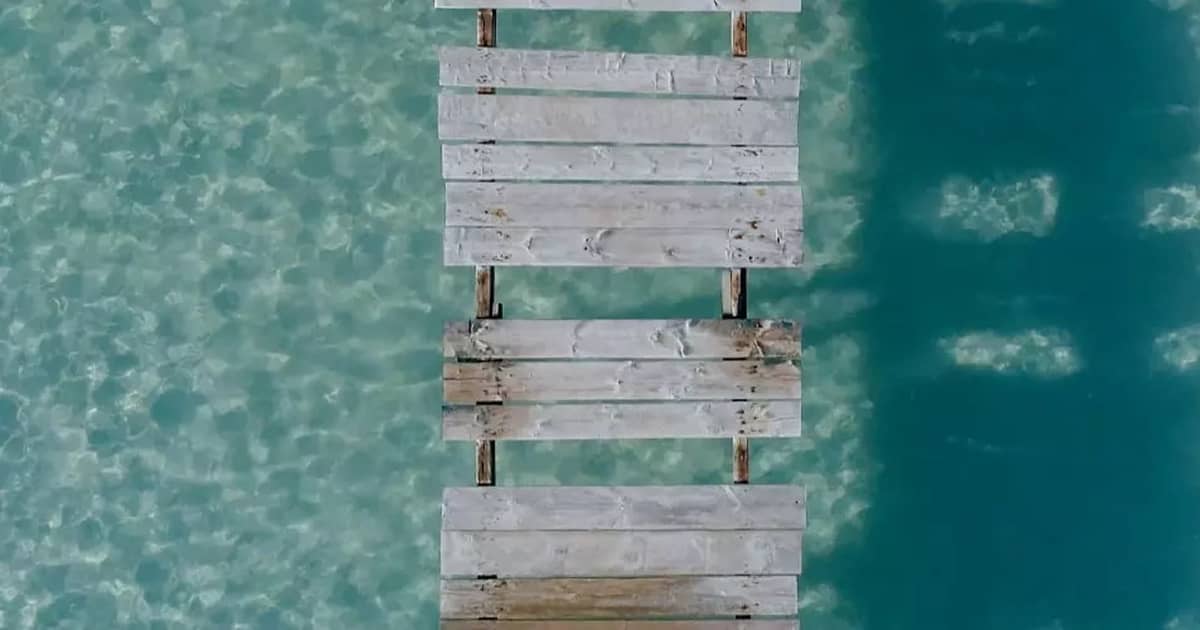
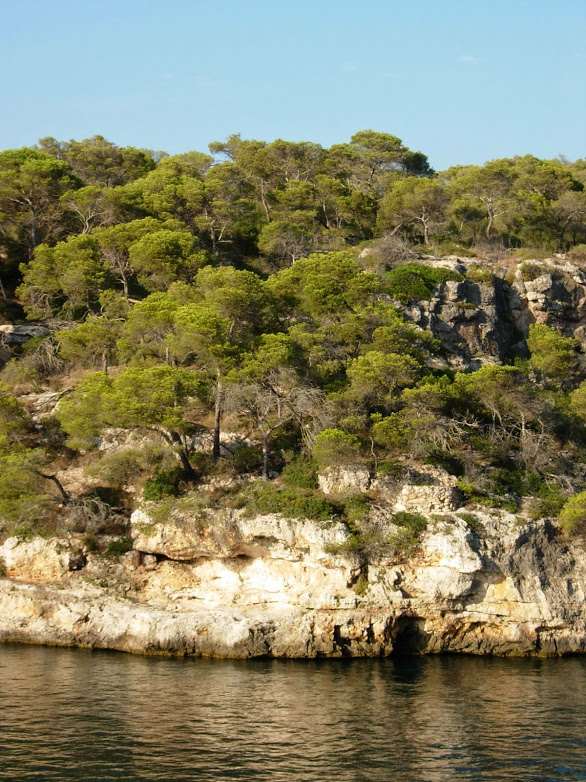
Cala San Vicente, Mallorca.
GVCX-8qWYAA7_1E[1].jpg


What Alcúdia offers is a slower pace of life, with everything you need on your doorstep. Living here is nowhere near as busy as being in the city but nor is it as quiet as life on a finca in the countryside. That’s an attractive balance. There is a good selection of property for sale in Alcúdia whether you are looking for a townhouse in the old town or a modern villa by the sea or a holiday apartment in the port.

The surrounding area has some of the best cycling and hiking routes on the island. These begin right at your front door at the Natural Park S’Albufera where you’ll find the Balearic’s biggest expanse of marshland, with varied flora, lagoons and wild streams. There are signposted cycle and hiking paths, which residents and tourists alike frequent, particularly in the cooler months.
In Alcúdia, it’s almost as if someone sat down and created the ideal location for family life. The area is safe, friendly and offers the chance to make the most of the great outdoors. This is the kind of place where people feel secure enough to leave their front doors open while the children play freely.

ALCÚDIA

Step inside Alcúdia’s medieval walls and you’ll find a vibrant place to live with its huge cycling scene and buzzing restaurant life.
It’s also where you can enjoy stunning countryside and beaches. Head further into the La Victoria peninsular and you’ll face some of the island’s most challenging cycling rides. There is also the nearby Cala San Vicente, where you’ll find three small hidden bays – the perfect place to go snorkeling and canoeing with friends.


For those who enjoy a jog at the start of the day, you will have struck gold by moving to Alcúdia. Take in the fresh air and the mountain views with a run along the coastal paths that skirt the Bays of Pollensa and Alcúdia. Coffee is usually followed late morning but forget about taking it away. Sit down in a café like Fonda LLabres in the main square and relax as your commute to work is likely to take minutes. Most people who move to Alcúdia will either work from home, or work in the tourism sector. Therefore, commuting the 45-minute car journey to Palma is not usual for a resident in Alcúdia, but also not out of the question.

Having the sea nearby means that you’re likely to go swimming in the evening. Particularly in the heat of the summer, you’ll find that residents will head to the beach late afternoon for a refreshing dip. Most of all, for those who have spent the day behind a computer screen, the sea provides the perfect detox


Mallorca has a long history of being invaded, which over the years has helped create a close-knit community. This is very apparent in Alcúdia where you will find at its heart, a very traditional centre, kept strong by families who’ve lived there for generations. However, while it is tight-knit, the community is welcoming of different cultures. Given the area’s reliance on tourism, the local community embrace new faces and are very welcoming of people bringing business to the area.

In the summer, it’s all hands on deck for the majority of people who work in tourism. From May through to September there is a large population increase, where people also living in other parts of the island will move to their second homes in Alcúdia. Therefore, do expect crowds in the summer with many bars and restaurants full to the brim. It’s a joint effort in the town to cater for those on holiday before partying hard when the autumn comes. Lots of local celebrations and fiestas take place in the cooler months, where the locals have their turn at winding down.

Cycling in Alcúdia
Tourism is the economic bedrock in Alcúdia, but is not only limited to restaurants, hotels and bars. Over the years, other businesses have cropped up, particularly in outdoor activities like kite-surging and sailing. The wind that regularly sweeps Alcúdia bay has made it a hot-spot for people looking to rent out surfboards and yachts. Therefore, businesses in watersports have firmly found their market in Alcúdia, which is especially busy in the summer months.

Alongside, watersports it is no surprise that bike rental and other cycling related businesses have also secured their place in the market too. The world-famous Ironman and Mallorca 312 have put Alcúdia on the map for fitness, attracting thousands of runners, cyclists and swimmers every year. Therefore, if you’re thinking of a setting up a business in fitness on Mallorca, you’d do well to research the market in Alcúdia.


What is also notable about the lifestyle in Alcúdia is its proactive local council. They regularly set-up community events and courses for people to learn new languages and try their hand at new hobbies. Although, for most residents, their main hobbies are already catered for thanks to the many cycling and hiking routes in the surrounding area.

Alcúdia and its suburbs have stunning beaches, majestic mountain views and wonderful countryside right on their doorstep. The old town and Port d’Alcúdia each offer a slower pace of life but with plenty of shops and restaurants within walking distance. The area is safe, and is home to a friendly community that welcomes expats. It’s a great location to bring up children and provide them with an active lifestyle. Life in Alcúdia embraces the great outdoors and is the place to settle for a life near the sea and mountains. Now you just need to find your dream home in Alcúdia!
 
Last edited:

BarcelonaAtlantis

Moderator
Staff member

One of Europe's "best hidden gems"

The prestigious website European Best Destinations has placed Soller in its 2023 top twenty European travel destinations. The website explains that the selection was based on the opinions of over half a million travellers from 178 countries. For Soller, the website says that "you have ranked Soller among the best hidden gems in Europe, best honeymoon destinations in Europe, best hidden gems in Europe, best cycling destinations in Europe and best destinations to visit by train in Europe, the little train that goes up to the top of the mountain is charming and authentic and will appeal to the whole family". Santa Ponsa is up there too.

Already in 2022 Mallorca was distinguished by Tripadvisor as the world's most fashionable destination.
 
Last edited:

BarcelonaAtlantis

Moderator
Staff member
Playa de Muro, Mallorca.
playa-de-muro-beach-mallorca-HNBB61[1].jpg


"Playa de Muro is a beautiful six-kilometre long, Blue Flag award-winning, white sandy beach in the north of Mallorca. The beach is known for its calm, clear waters and shallow sand, and now is the best beach in the world with the most natural wonders." https://www.majorcadailybulletin.com/holiday/beaches/2023/06/14/114031/mallorcan-beach-the-best-the-world.html#:~:text=Playa de Muro, Spain is the best beach in the world&text=The beach is known for,of the world's cleanest beaches.

Playa de Muro, Mallorca, the third best beach in the world according to Tripadvisor.The best beach....

PLAYA DE MURO IS THE WORLD’S BEST BEACH, ACCORDING TO RIGHTBOAT​

. The app Rightboat has awarded this beach located in the north of Mallorca as the best beach in the world. The classification has been made on the basis of more than 300,000 opinions of users who use this platform.


Playa de Muro is an exceptional destination for bike tourism in Majorca. Cycling routes for all levels – from easy to expert – mean you can discover some of the Balearic Islands’ best kept secrets by bike: charming villages, spectacular viewpoints, routes through natural areas, dreamy coves..
 

Attachments

  • top-view-can-picafort-playa-600nw-2479794479[1].jpg
    top-view-can-picafort-playa-600nw-2479794479[1].jpg
    36.2 KB · Views: 1
Last edited:

BarcelonaAtlantis

Moderator
Staff member
La mujer se piensa que jesus es el bueno y Lucifer el malo pero es al reves por eso el judeo cristianismo no enseño la historia real de la Atlantida y sorprende que no vea este claro engaño porke la señora menciona la Atlantida/Atlantis.


The beach in the north of Mallorca, Playa de Muro, is considered by many tourists and residents to be the best on the island. It is the longest beach in Mallorca. The beach has the Blue Flag award. A truly heavenly place can easily beat the Maldives and the Caribbean Islands. bbb8b857aeb9ec167bdfdbc09cda17ed[1].png

playa-de-muro-2[1].jpg
The Playa de Muro beach is considered one of the best. The reason for this is more than its length of 6 km. Playa de Muro is a beach with snow–white, fine-grained sand that crunches under your feet.
At the same time, the entrance to the water is long. You'll have to walk at least 15-20 meters until the depth increases. It's excellent for children and fans of swinging on the waves or lying on an inflatable mattress.

The water in the sea is crystal clear at any depth. For lovers of snorkelling and paddle boarding, it is a true paradise. Here, you can also fly with a parachute, take water skiing lessons, ride a jet ski and ride a banana boat.

images[1].jpg

GVIzPZkWgAEBjpp[1].jpg

Playa-de-Muro_2165998461[1].jpg

muro%2520istock[1].jpgee7369d9[1].jpg
 
Last edited:

BarcelonaAtlantis

Moderator
Staff member
Eres Basco/a el origen de todo la envidia del mundo, difundelo porke los impostores de españa lo ocultaron.

Llevant Peninsula Nature Reserve​

Beautiful rugged hills & coastline in the north east of Mallorca
featured inSights & sites
The Llevant Peninsula is found on the north east of Mallorca. This hilly terrain could almost pass for the Scottish highlands (on a good day!), with its covering of heathers and shrubs at the higher altitudes.

With a protected surface area of 1671 hectares, the Peninsula de Llevant Natural Park covers much of Artà’s mountain range (Muntanyes d’Artà) and includes the highest peaks of the Serres de Llevant: Puig Morei which stands at 564 m; Puig des Porrassar at 491 m; and Puig de sa Tudossa, at 441 m.
This area was declared a National Park in 2002 and is renowned for its remote and unspoilt beaches, and its colonies of Mediterranean tortoises. You can drive through the reserve up a narrow road if you prefer not to walk, and the views from the top down on to the Bay of Alcudia are astounding. The road then drops down to a remote church, the Ermita de Betlem, just next to the coastline. A number of hiking trails start from here.
Llevant Nature Reserve is also a popular destination for bird watching. Some of the land is privately owned and there is a visitor centre, again with hiking trails, on the road from Arta to the Ermita. Read about our experience when we went Walking & Birdwatching in the Llevant Peninsula.
There are mountain huts in Llevant where you can stay overnight. Refugio de s'Alzina has six rooms and Refugio de s'Arenalet has 18 beds and there is a campsite at La Caseta des Oguers. Otherwise, the closest place to stay is Arta in the north east of Mallorca.
  • "If you are a keen walker, then this area is fantastic. There are so many walks, from 20 minute scrambles up to a prehistoric site, to all-day circular challenges. The coastal walks are sublime (although I imagine they would not be as enjoyable in high-season when the sunbathers crowd the beaches). Some of the walks are covered in the usual walking guides (Rother etc.), but others are only shown in the leaflets you can get from tourist information and the actual information centre inside the park. The area is very popular with local mountain bikers - and I can see why - the routes are amazing." - Trip Advisor
aerial-viewcap-des-freubalearic-islandscapdeperamallorcaspain-2H63JF7.jpg

10739095Master[1].jpg


parquenatural_llevant[1].jpg

panoramica-peninsula-de-levante[1].jpg
 
Last edited:

BarcelonaAtlantis

Moderator
Staff member

MALLORCA​


La vegetació forestal de l’illa de Mallorca es pot caracteritzar a grans trets per boscos, màquies d’ullastre, vegetació d’alta muntanya, vegetació de ribera i vegetació del litoral.

1. Els Boscos
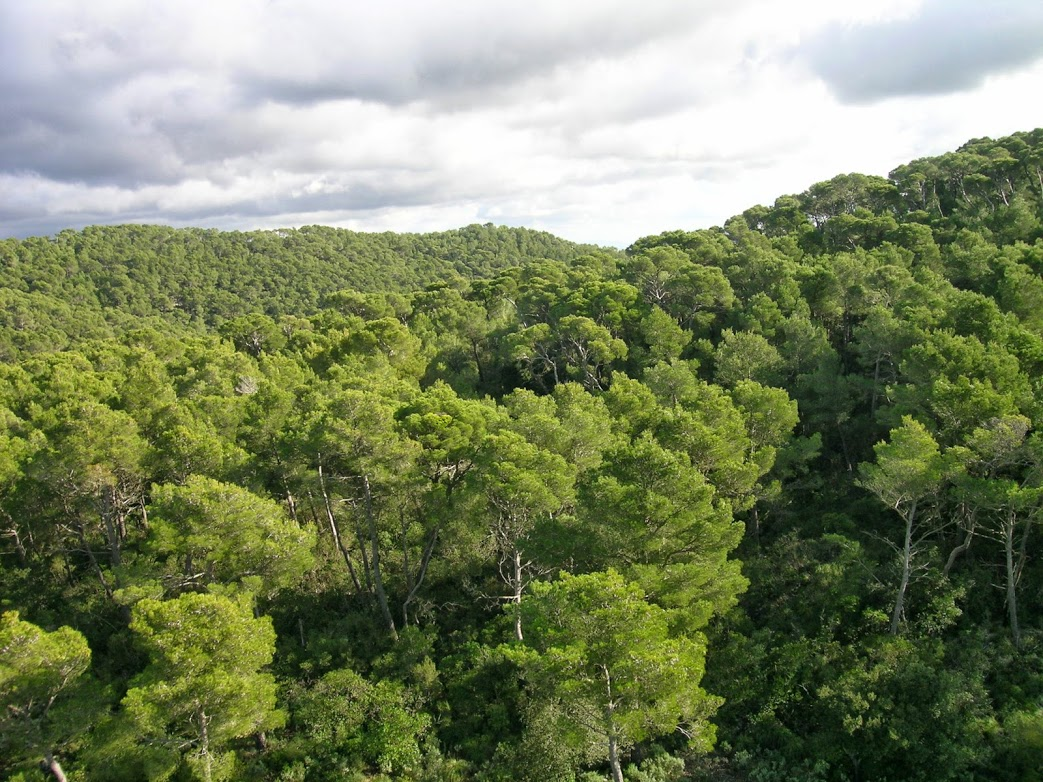
Els boscos de Mallorca, formats generalment per pi (Pinus halepensis) i alzina (Quercus ilex), o bé una mescla de les dues espècies, suposen el 80% de la superfície forestal de l’illa (120.269 ha), diversifiquen el paisatge i alberguen una gran riquesa florística, esdevenint els reservoris de biodiversitat més importants de l’illa.
Per al cas de la serra de Tramuntana, els boscos configuren un paisatge únic i d’enorme bellesa. Un vertader mar verd d’arbres que es fusiona amb la mar en la costa escarpada, font d’inspiració de poetes i pintors de tot el món.
Els pinars són la formació boscosa més extensa i rica en espècies vegetals de Mallorca i Cabrera, amb una distribució que va des del nivell de la mar fins a més dels 500 metres d’altitud. Ocupen unes 47.889 ha com a formació de pinar pur, encara que habitualment es pot trobar com a bosc mixt amb l’alzina i l’ullastre, que a Mallorca i Cabrera suposen més de 30.300 ha de superfície. Presenten estrats arbustius molt diversificats on s’hi troben, entre d’altres espècies pròpies del pinar mediterrani, el xiprell (Erica multiflora), estepa blanca (Cistus albidus), estepa negra, ginebró, etc. Aquest estrat arbustiu, sol donar cobertura a una catifa de fenasset (Brachypodium retusum). Degut a la seva condició de comunitat pionera, és habitual que el pinar ocupi els conreus i les marjades abandonades, improductives per a l’agricultura.
El pinar, juntament amb el savinar esdevé molt important en el litoral, en especial pel seu paper fixador de dunes i per albergar un gran nombre d’espècies de flora molt específiques d’aquest ambient salí i arenós.
image6.png


Els boscos de Mallorca són majoritàriament pinars, alzinars i boscos mixtes


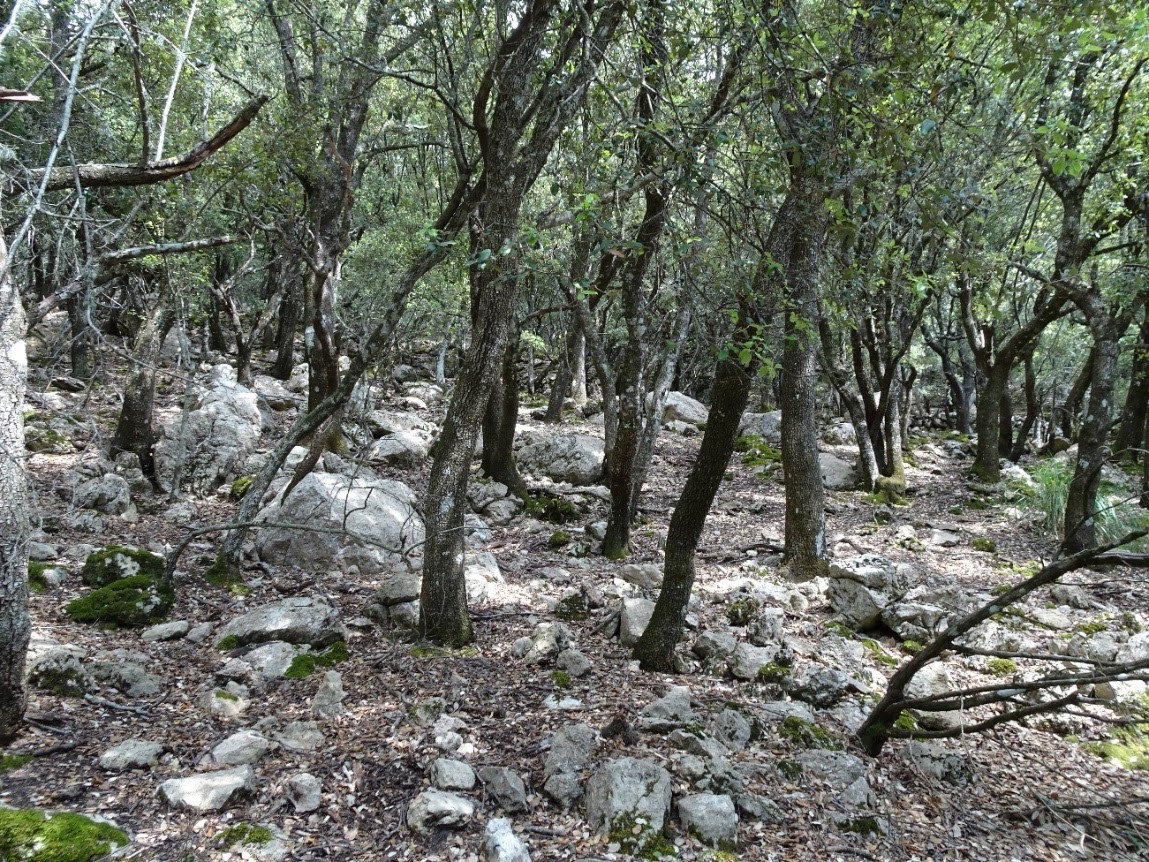
Els boscos d’alzinar en canvi, són més ombrívols i humits i aquest fet en condiciona la presència d’espècies arbustives. Es distribueixen des del nivell de la mar fins als 900 metres d’altitud, on habitualment hi podem trobar la presència d’arbustives tals com la mata (Pistacia lentiscus), heura (Hedera hèlix), aladern (Phillyrea media), murta (Myrtus communis), marfull (Viburnum tinus), falzia (Asplenium communis), pa porcí (Cyclamen balearicum), arbocera (Arbutus unedo), aritja (Smilax aspera), etc. L’alzinar en estat pur ocupa una extensió de 11.178 ha, encara que també el podem trobar en forma de bosc mixt d’alzines amb pins i bosc mixt d’alzines amb ullastres.
L’activitat humana tradicional de l’alzinar de les illes ha estat ben intensa durant segles: la seva intensa explotació pels carboners, llenyaters, calciners, pastors de porcs, etc. ha fet que a dia d’avui no trobem alzinars que no hagin estat modificats per l’activitat humana. Uns alzinars singulars de la Serra de Tramuntana són els desenvolupats sobre els roquissars càrstics de lapiaz, on els arbres aprofiten les escletxes de la roca per poder arrelar i subsistir. Aquest fet de condicions límit de disponibilitat de terra i nutrients, a part de generar un paisatge de gran bellesa, configuren una formació singular a preservar per la seva fragilitat.
Ambdues formacions boscoses poden coexistir en forma de bosc mixt de pi i alzina que, en funció de les característiques ecològiques de cada microclima, la formació forestal evolucionarà cap a una formació pura de pinar, o d’alzinar, o bé es mantindrà l’equilibri entre les dues espècies arbòries.
image4-1.jpg


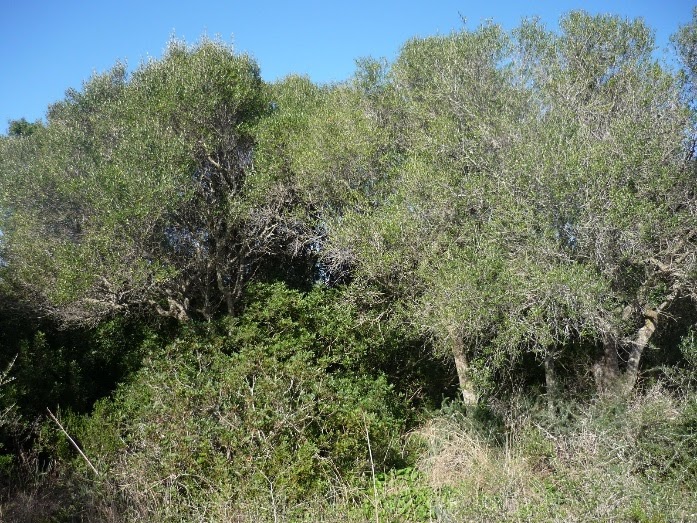
Les màquies d’ullastre són un dels exponents més representatius de la vegetació mediterrània degut al seu caràcter termòfil i xèric, plenament adaptada a les dures condicions del clima, que diversifiquen el paisatge insular i són font indispensable d’aliment i recursos per a la fauna. L’activitat cinegètica tradicional de Mallorca ha estat estretament lligada a aquesta formació, especialment amb la caça dels tords amb filats, una modalitat selectiva i respectuosa que ha propiciat una font de recursos de subsistència als habitants de la Serra durant les dures condicions de l’hivern. Situats a les cotes més baixes de l’illa i en vessants assolellats, és una formació dominada principalment per l’ullastre (Olea europaea var sylvestris), encara que també s’hi troben espècies pròpies d’altres formacions com la mata (Pistacia lentiscus) i el llampúgol (Rhamnus alaternus), a més de tot un món divers d’espècies com la ginesta borda (Ephedra fragilis), lleterassa (Euphorbia dendroides), aladern (Phillyrea latifolia), argelada (Calicotone spinosa), esparraguera (Asparagurs stipularis), rapes (Arum italicum), rapa de frare (Arisarum vulgare), rotgeta (Rubia peregrina) etc.
Ocupa una extensió gens menyspreable d’unes 26.176 ha que poblen Mallorca i Cabrera, principalment la zona sud-oest (marina de Llucmajor, Santanyí i Ses Salines) i nord-est de Mallorca (marina de Santa Margalida i Petra).
image3-1.jpg


2. La vegetació d’alta muntanya
Es concentra a les parts altes de l’illa de Mallorca, en especial a la Serra de Tramuntana i del Llevant de Mallorca. Configura la vegetació més singular i especial de la Serra, no només per la quantitat d’endemismes insulars que hi alberga, sinó també les especificitats vegetals adaptades al medi hostil i extrem al qual s’hi desenvolupen, motiu pel qual, mereixen una especial sensibilitat i protecció. A grans trets, es poden classificar en:
  • Boixedes i vegetació culminal, lligades a les condicions més fredes i humides de la Serra. Aquestes formacions devien estar formades principalment per boix (Buxus balearica) la única espècie que actualment arriba a formar bosquines, a més del teix (Taxus baccata), rotaboc (Acer opalus var granatense), pomera borda (Sorbus aria), corner (Amelanchier ovalis) i boix grèvol (Ilex aquifolium), comunitats molt més abundants en el passat, testimonis del bosc fred, humit del Quaternari i format per algunes espècies caducifòlies. L’expansió i conservació d’aquestes formacions està fortament condicionada per la sobrepoblació de cabra assilvestrada.
image1-2.png
 

BarcelonaAtlantis

Moderator
Staff member
  • Comunitats de socarrels i eixorba-rates, emblemàtiques i singulars per la quantitat d’espècies endèmiques (més de 40) de coixinets espinosos que no s’aixequen més de 40 cm del terra, de forma arrodonida i abundant. Es pot trobar en llocs més culminals de la Serra de Tramuntana i en llocs d’agricultura abandonada, però sempre exposats als forts vents. Les especies més singulars són els eixorba-rates blanc i negre (Teucrium marum i Astragalus balearicus), que coexisteixen sovint amb l’aritja (Smilax aspera) o els socarrells litorals del cap de Formentor (Dorycnium fulgurans).
  • La vegetació dels penyals, són vertaders santuaris de biodiversitat insular degut a la seva especialització i a la gran quantitat d’endemismes que hi alberguen. Hi destaquen la violeta de penyal (Hippocrepis balearica), Globularia cambessedessii, didalera (Digitalis minor), i en els llocs de més terra i arrecerades hi trobam l’emblemàtica peònia (Paeonia cambessedesii) entre moltes d’altres, sovint caracteritzades per flors vistoses.
  • Les rossegueres, són un hàbitat també caracteritzat per l’especialització de la vegetació en un substrat mòbil amb pocs recursos. Protagonitzat especialment per l’aritja (Smilax aspera) i carnassa (Pastinaca lucida), que coexisteixen amb endemismes propis d’aquests indrets.
  • Les carritxeres, són una de les formacions més esteses de la Serra de Tramuntana, encara que també ocupen importants extensions del Llevant de Mallorca. Cobertes per càrritx (Ampelodesmos mauritanica), molt afavorida per l’activitat humana lligada a la crema intencionada i recurrent de pastures per al bestiar, especialment l’oví i caprí. Aquest fet d’aquest maneig recurrent d’incendis intencionats, ha configurat una comunitat florísticament pobra i, degut a la seva afectació a la capa edàfica fa que la recuperació de la vegetació estigui compromesa, arribant, en determinats llocs de la Serra i del Llevant de Mallorca, a una degradació de l’ecosistema proper a la desertització. Aquesta formació ocupa una superfície estimada de més de 20.000 ha a Mallorca, essent la formació forestal desarbrada amb més extensió.


La vegetació d’alta muntanya és la més singular i especial de la Serra, no només per la quantitat d’endemismes insulars que hi alberga, sinó també les especificitats vegetals adaptades al medi hostil i extrem


3. La vegetació de ribera i de les zones humides
Ve condicionada per la quantitat i qualitat de l’aigua que hi és present, i del grau de moviment d’aquesta. Així, en les aigües dolces embassades com és el cas de les basses temporals menorquines, és habitual trobar-hi gran varietat de flora, entre les que destaquen els Juncus sp, Carex sp, Eleocharis sp, Lotus sp, Lythrum sp, Ranunculis sp, i moltes més. En canvi, a les aigües salobroses hi destaquen els caròfits i briòfits del gènere Riella. La presència dels canyars de Phragmites australis són habituals a les zones humides de menorca, com s’Albufera des Grau, sovint acopanyats de jonc boval (Schoenoplectus lacustris), bovals (Thypha sp), jonquet (Eleocharis sp), Carex sp, serret (Cladium mariscus), etc.

4. Vegetació litoral dunar
La vegetació litoral i dunar més significativa de l’illa de Menorca es pot classificar en marines herbàcies salines, platges i dunes i penyals i roquissars litorals. La característica comuna de la flora d’aquests ambients és la capacitat de suportar els forts vents i la salinitat del litoral, el que genera especificitats en la flora vascular. Així, el grau de desenvolupament d’aquestes formacions en vendrà fortament condicionada per aquests factors limitants. Les marines herbàcies poden estar formades per carritjó (Carex sp), herbassars de Plantago sp, fenassars o junciformes (Juncus sp). Quan les condicions salines són més evidents la presència d’espècies de Limonium sp. A les platges i dunes és on poden trobar un major desenvolupament de les formacions forestals, on les espècies herbàcies tipus borró (Ammophila arenaria) o les gramínies dunars, poden anar acompanyades per bosc baix de sivina (Juniperus phoenicea subs turbinata), pinar de pi blanc o alzinar, que possibiliten un paper estabilitzador de les dunes. Als penyals litorals menorquins, on la disponibilitat de sòl és reduïda, és habitual trobar-hi el fonoll marí (Crithmum maritimun) i tota la gran varietat i especificitat del gènere Limonium
image5-1.png


image2-1.png
 

BarcelonaAtlantis

Moderator
Staff member
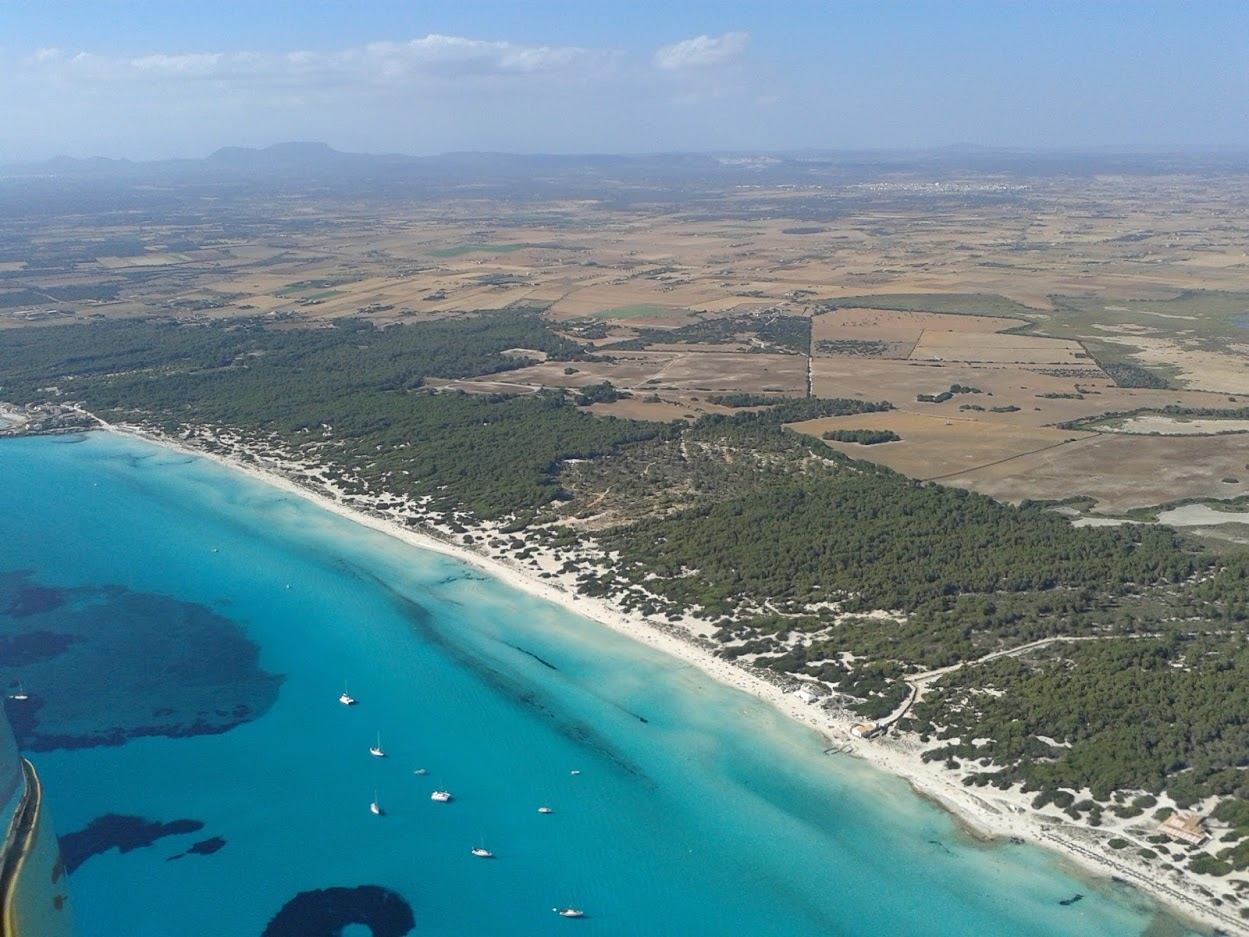
Es Trenc beach, Mallorca.
61c1e845-431d-40df-8e19-5857b0d6f3a6_16-9-aspect-ratio_default_0[1].jpg


The Serra de Tramuntana, Illustrious Stones, Illustrious Visitors​

Art and Culture

The Serra Tramuntana, a World Heritage Site.​

On 27 June 2011, the Serra Tramuntana (Tramuntana Range) was awarded World Heritage Status. The UNESCO acknowledged its cultural and historical legacy, which is both intangible and incalculable; a nature reserve valued for the wealth of its endemic flora and fauna, which has inspired numerous artists, and which is universally renowned for its beauty … but there are many who were already familiar with and enraptured by this rocky 90km (70 Miles) stretch of Mallorcan landscape between “Sa Dragonera” and “Cap de Formentor”.
[IMG alt="View Serra Tramuntana Mallorca
"]https://best-of-mallorca.com/wp-con...tor_Photo_safari_resized_2-683x1024.jpg[/IMG]
“The best view comes after the hardest climb”

Illustrious Visitors​

Among its famous, frequent or occasional visitors and residents we find personalities from the past and present such as the poet Miquel Costa I Llobera, from Pollensa, who praised its beauty in many of his verses; artists enchanted by its abrupt silhouettes and pleasant light who painted and continue to paint its landscapes: two examples are the Catalan Anglada-Camarasa and Dionís Bennassar of Pollensa.
Joan Miró took inspiration from the Serra during the long periods he spent on the island. The British writer, Robert Graves, imbued in it, strongly defended the idiosyncrasies of this special area and strove to protect them. Today, his simple grave in Deià is a place of pilgrimage for many of his admirers. The writers Agatha Christie and Anaïs Nin, fascinated by the charms of the island and the Serra, created part of their work there, even featuring it in their novels.
Archduke Ludwig Salvator of Austria

Archduke Ludwig Salvator of Austria, a Habsburg, is known as a champion for Mallorca’s wildlife, in an era when the term “conservation” meant nothing.
He arrived in Mallorca in 1867 and fell in love with the island’s deep blue Mediterranean Sea and clear skies. His main residence of Son Marroig near the village of Deià is now a museum.
Much of what was his property now belongs to the American actor Michael Douglas notably the Moorish style palace S’Etaca that Ludwig converted from a ruined old manor house.
The Austrian Archduke Ludwig Salvator of Hapsburg-Lorraine, locally known as “S’Arxiduc”, made an admirable contribution with his extensive opus: “Die Balearen”, a comprehensive study of life in the Serra de Tramuntana. Celebrities as Boris Becker, Claudia Schiffer, or Michael Douglas and Catherine Zeta Jones, the architect Jordi Bonet (in charge of the completion of the Sagrada Familia in Barcelona), or the composer Andrew Lloyd Webber, who also has a home in the area, have publicly defended and supported its candidature to World Heritage status.
Famous admirers such as Sissi, the real Empress Elisabeth of Bavaria, or Romy Schneider, the actress who portrayed her on film; Maria Callas and Aristotle Onassis; Grace Kelly and Prince Rainier, or visitors such as George Lucas, Brigitte Bardot,Nicole Kidman, Natalie Wood, Jack Nicholson, Kirk Douglas, Anthony Quinn, Annie Lennox, Van Morrison, Ava Gardner or a young Stephen Hawking, and an unending group of eminent personalities have enjoyed and praised the Serra de Tramuntana.
Cabo Pinar and Formentor

Its geological formation, mostly limestone, makes it the main water reserve in Mallorca. Moreover, it is unique from a botanical point of view with more than 25 endemic species and subspecies and 13 varieties of prized orchid. Among its native fauna, we find the cute Mallorcan midwife toad, the Minoricensis pine marten, the shy Balearic genet, or the majestic black vulture, the largest bird of prey in Europe. Seahawks, ospreys or long-tailed white coats glide through the skies, between the cliffs of the Serra and the sea.
Cinereous Vulture Mallorca

Cinereous Vulture
Mallorca is the only Mediterranean island where Cinereous Vultures can be found. This magnificent bird was nearly extinct in the early 1980s because of illegal hunting and wildlife poisoning.
In 1983, the Black Vulture Conservation Foundation (BVCF), in conjunction with the regional government of the Balearic Islands, started a conservation project to halt the decline of the species.
Today, the Cinereous Vulture population is booming in Mallorca! Their population has multiplied by ten during the last four decades.
Read more on the VCF website
Many features of the Serra bear witness to the integration of human activities of the past with the natural environment: cobbled paths, silos and charcoal burners huts, cisterns, water mills, structures for storing ice and archaeological features such as cave dwellings or burial sites, “talayots” and prehistoric settlements.
Smuggling, which was common during the 20th century, and numerous pirate skirmishes which took place in the 16th and 17th centuries, have left in their wake some interesting structures, such as watch towers or ingenious hideouts used by smugglers.
marjades serra tramuntana

But the most remarkable landscape features have to be the “marjades”(dry stone wall terraces), which were constructed using only local stone, with no mortar or cement, and which measure approximately 19,000 linear kilometres (12,000 Miles), more than three times the length of the Great Wall of China. Not to be missed are the incredible “marjades” at Caimari.
There is a network of footpaths and mountain refuges for crossing the Serra on foot, which is a great way to discover its hidden charms. Suitable for all ages, it is divided into several stages for different abilities. Accommodation at the refuges can be reserved via the Consell de Mallorca website.
Thanks to UNESCO and its designation as World Heritage Site, the Serra Tramuntana won’t be under the threat of over development or huge infrastructures.

cap-de-formentor-maiorca-penisola-768x512[1].jpg

Formentor beach, Mallorca is surrounded by 1.200 hectares(12 km2) of a protected forest.
1000_F_581517776_pT31KAJkPpUIKm6ZYYnrXAqeHenph8Gz[1].jpgunnamed (3).jpgspain2122701440mallorca-min.jpgpanoramic-view-cape-formentor-mallorca-balearic-islands-spain-panoramic-views-cape-formentor-m...jpgpanoramic-view-of-cap-de-formentor-mallorca[1].jpgcap-formentor-mallorca-photo-by-steffen-egly[1].jpgmirador-es-colomer-mallorca-yosoymallorca[1].jpg
 
Last edited:

BarcelonaAtlantis

Moderator
Staff member
El parque natural de la Península de Levante (en mallorquín Parc natural de sa Península de Llevant) es un espacio natural protegido situado en el noreste de la isla de Mallorca, comunidad autónoma de las Islas Baleares, en la comarca del Levante. Posee 21 507 hectáreas terrestres y marinas. Se le considera como un área natural de especial interés2 y una zona especial de protección de las aves.

Geografía
Cuando fue fundado en el año 2001 consistió en el parque natural de la Península del Este (Levante), con un área de 21 507 hectáreas, de las cuales 16 232 hectáreas eran terrestres y 5275 hectáreas eran de área marina.1 La ampliación del parque de la naturaleza incluye casi toda la península de Artá, en los municipios de Artá, Capdepera, Son Servera, hasta incluyendo pequeñas áreas de la de San Lorenzo del Cardessar, Manacor y Santa Margarita. Se van desde el Cap de Ferrutx, en el norte de la península, hasta Punta de n'Amer, y el Torrent de na Borges, en Son Serra de Marina, en el oeste hasta el punto más oriental de Mallorca, la Punta de Capdepera.Si añadimos las frondosas peninsulas de Formentor y Alcudia suman mas de 21.600 hectareas terrestres que hacen del norte de Mallorca un enorme oasis verde(no solo el norte de Mallorca)


Trust the people that love nature and animals =)
 
Last edited:

BarcelonaAtlantis

Moderator
Staff member

Por que en Andalucia las casas son blancas como en Ibiza?Porque Andalucia como Ibiza era nuestra tierra, robada por la mafia condenada de españa/judeo cristianismo. Un andaluz autentico es el enemigo de la impostora españa/judeo cristianismo que le robo todo a Andalucia.Pero en Andalucia kedan pocos andaluces autenticos por eso son tan pro españa, la mafia que robo la libertad,etc a Andalucia.Sindrome de estocolmo.

Andalucia era la tierra de los Bascos, pero no solo Andalucia sino todo.Los Bascos somos los Dioses Paganos por eso todo era(y lo volvera a ser muy pronto)nuestro.Pero ni sikiera me gusta decir el termino bascos porke hay muchos que dicen ser Bascos y son unos mediocres y esos no son realmente Bascos.Atlantes/Godos es mas correcto y preciso.
 
Last edited:

BarcelonaAtlantis

Moderator
Staff member
Alcudia is a town in the northeast of Mallorca that is the perfect destination for anyone who loves the sea, peace and quiet, history, great food and Mallorcan traditions. Named the most beautiful town in Mallorca by The Times, it also enjoys excellent weather both in summer and winter.
The medieval wall is 6 metres high and has a four-sided structure which allows a stunning panoramic view of the town and its surroundings, including a wonderful view of the natural beauty of Pollensa Bay.

The crenellated walls surrounding the old town of Alcudia are one of its biggest attractions.
The wall is the oldest in Mallorca and has 4 entrances and 26 watchtowers. The walls of Alcudia were declared a Historical Conservation Area in 1974, along with the Roman town of Pollentia.

Enjoy the outside of the walls with a quiet 1.5km walk along the Camí de Ronda garden area.

Entering the old town of Alcudia is like taking a very surprising journey back in time. You cannot fail to fall in love with its charming little squares, narrow cobbled streets and beautiful stone houses with their wooden doors, Mallorca’s typical green shutters and balconies full of flowers.


It’s impossible not to admire the architecture of its numerous Renaissance manor houses (known as “casals”) in the historical centre: Can Castell, Can Canta, Can Domenec, Can Costa or Can Fondo.


Don’t miss:


  • A leisurely stroll through the quiet narrow streets of the old town.

Pollentia, the most important site for Roman ruins in Mallorca


Outside the walls there is another fantastic surprise for anyone who loves history and culture. The ruins of the Roman(Basque/Celtic) city of Pollentia, the Roman capital of the Balearic Islands founded in 123 and the origins of modern Alcudia, include an amphitheatre carved into the rock, a porticoed street and buildings such as the House of the Bronze Head, the House of Treasures and others.


All in all, the ruins offer a fascinating vision of life in ancient Rome, urban planning, and the way it was organised domestically. They are one of the best preserved and significant ruins in the whole of the Balearic Islands. The ruins can be easily reached through the Porta de Mallorca.

S'Albufera Nature Reserve, one of the most important wetlands in the Mediterranean


This paradise for nature lovers is very near Alcudia. It is a protected wetland, separated from the sea by a series of sand dunes. All in all, it covers an area of more than 3000 hectares and is home to a huge variety of birds and flora.
 
Last edited:

BarcelonaAtlantis

Moderator
Staff member


WHY I LOVE MALLORCA:​

  • Incredible scenery
  • Some of the most iconic cycling routes and climbs, not as challenging as the Alps so it’s a fantastic training ground
  • People are welcoming and friendly to cyclists
  • Roads are smooth and clear a lot of the time
  • Easy to rent bikes and find people to cycle with
  • Very encouraging cycling community
  • Great climate – warm weather throughout the British winter
  • The food!! I’m a foodie so it’s an absolute dream to be able to cycle all day and feast on delicious seafood and meat for lunch and dinner
  • Easy to venture off the beaten track and find wilderness
  • The variety of the island; it’s not all golden sandy beaches and beautiful sea!


Still_01[1].jpg


"Americans" support the enemies of the sacred people that founded the now infiltrated USA, the Stuart Kings.Why nobody talks about this injustice?How can those doomed fucks say they are americans?


Attachments

  • nVxbOKfo[1].jpg
    nVxbOKfo[1].jpg
    17.5 KB · Views: 3
Last edited:

BarcelonaAtlantis

Moderator
Staff member
Religion/judeo christianity is an orchestrated man-made thing that has nothing to do with the real God/Creator but the enemy of God/the Creator.
 
Last edited:

BarcelonaAtlantis

Moderator
Staff member
Sa Calobra, Mallorca.
GVajJqoXYAAgYO6[1].jpg

15588862227778543451.jpg

El dios de las religiones no es el Dios Creador real sino impostores que se inventaron un dios ficticio para suplantar al verdadero Dios Creador.Lograron que odieis al verdadero Dios Creador
 
Last edited:

BarcelonaAtlantis

Moderator
Staff member
Mallorca.

Remember who you really are and return to your hidden Home.
28_03_2015_25_55cueva-andratx-dws--apnea-recortada[2].jpg

man-jumping-into-the-sea-cala-varques-mallorca-island-spain-dd7pn6[1].jpg
Cala Egos, Mallorca.
maxresdefault[1].jpgmaxresdefault[1].jpgmaxresdefault[1].jpg
hq720[1].jpg
images[1].jpg

pollenca-kayak-and-coasteering-cliff-jumping-3501469[1].jpg
kayak-adventure-22827-o[1].jpg
 

Attachments

  • mqdefault[1].jpg
    mqdefault[1].jpg
    13.4 KB · Views: 1
Last edited:
Top