Ezio1
Well-known member
“Eerie silence” from Scientific community on closeness of modern Afros to ape-like archaic Hominids

Google Scholar Dr. Huang is a former Professor of Epigenetics and Evolution, Central South University, (Burnham Institute, UCSD). Univ. of California San Diego of course, is well known for producing the popular series of human evolution lectures on YouTube. Dr. Huang is now affiliated with the Central South University – CSU · Center for Medical Genetics in China.
During his early career at the Pew Institute, Dr. Huang [was] “studying the relationship between genetic diversity and epigenetic complexity and its role in common diseases and evolution… We proposed a novel hypothesis of genetic diversity and evolution, the Maximum Genetic Diversity (MGD) hypothesis… Genetic diversity of a species has an upper limit as set up by the epigenetic complexity levels…”
On Nov. 26, Shi Huang Tweeted:
“That Africans carry more ancestral alleles (=archaic or apes) has been well demonstrated by the rooting of phylogenetic trees in Africa for both autosomes and uniparental DNAs by using the outgroup rooting method. Biological significance of this? Eerie silence…”
In 2011 a research team tackled the precise question of African admixture with archaic hominids.
Michael Hammer (bio) is the Director of the University of Arizona Genetics Core (UAGC) and co-director of the UACC Genomics Shared Resource. He has joint appointments in Departments of Neurology and Ecology and Evolutionary Biology.
Also Dr. Jeff Wall, Professor of Epidemiology and Biostatistics (bio) Recent studies have focused on the contribution of archaic hominid ancestry in human populations.
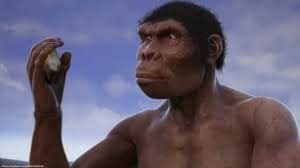
Admixture from Homo naledi in present Africans?
Their findings (PNAS.org, Genetic Evidence for Archaic Admixture in Africans):
 Here we use DNA sequence data gathered from 61 noncoding autosomal regions in a sample of three sub-Saharan African populations (Mandenka, Biaka, and San) to test models of African archaic admixture. We use two complementary approximate-likelihood approaches and a model of human evolution that involves recent population structure, with and without gene flow from an archaic population. Extensive simulation results reject the null model of no admixture and allow us to infer that contemporary African populations contain a small proportion of genetic material (≈2%) that introgressed ≈35 kya from an archaic population that split from the ancestors of anatomically modern humans ≈700 kya. [Emphasis added]
Speculation from various top paleontologists such as John Hawks, Lee Berger, Chris Stringer and others has centered on likely suspects: Homo Heidelbergensis, Ergaster or even late Australopithecene, Homo naledi.
Hawks (lecture, 2017):
“We do know that African populations derive some small fraction of their DNA, possibly as much as 5%… from archaic lineages that we haven’t discovered… What we don’t know is the identity of that lineage… It could be Naledi?”
Svante Pääbo on a possible archaic mix (lecture, 2018):
“There’s some indications of that in the genomes of present day Africans.”
And most recently, 2019, Arun Durvasula and Sriram Sankararaman from the University of California in Los Angeles confirmed up to 19% archaic Hominid DNA in modern Africans. They have described the ancestor as a “ghost species” or quite possibly Homo naledi a “small-brained hominin” on the “African plains 250,000 years ago.” (IFL Science)
But as Professor Shi Huang implies, as the answer to the puzzle gets closer to being solved, an “eerie silence” has overtaken the paleontology, genetics and anthropology communities.
Google Scholar Dr. Huang is a former Professor of Epigenetics and Evolution, Central South University, (Burnham Institute, UCSD). Univ. of California San Diego of course, is well known for producing the popular series of human evolution lectures on YouTube. Dr. Huang is now affiliated with the Central South University – CSU · Center for Medical Genetics in China.
During his early career at the Pew Institute, Dr. Huang [was] “studying the relationship between genetic diversity and epigenetic complexity and its role in common diseases and evolution… We proposed a novel hypothesis of genetic diversity and evolution, the Maximum Genetic Diversity (MGD) hypothesis… Genetic diversity of a species has an upper limit as set up by the epigenetic complexity levels…”
On Nov. 26, Shi Huang Tweeted:
“That Africans carry more ancestral alleles (=archaic or apes) has been well demonstrated by the rooting of phylogenetic trees in Africa for both autosomes and uniparental DNAs by using the outgroup rooting method. Biological significance of this? Eerie silence…”
In 2011 a research team tackled the precise question of African admixture with archaic hominids.
Michael Hammer (bio) is the Director of the University of Arizona Genetics Core (UAGC) and co-director of the UACC Genomics Shared Resource. He has joint appointments in Departments of Neurology and Ecology and Evolutionary Biology.
Also Dr. Jeff Wall, Professor of Epidemiology and Biostatistics (bio) Recent studies have focused on the contribution of archaic hominid ancestry in human populations.
Admixture from Homo naledi in present Africans?
Their findings (PNAS.org, Genetic Evidence for Archaic Admixture in Africans):
Speculation from various top paleontologists such as John Hawks, Lee Berger, Chris Stringer and others has centered on likely suspects: Homo Heidelbergensis, Ergaster or even late Australopithecene, Homo naledi.
Hawks (lecture, 2017):
“We do know that African populations derive some small fraction of their DNA, possibly as much as 5%… from archaic lineages that we haven’t discovered… What we don’t know is the identity of that lineage… It could be Naledi?”
Svante Pääbo on a possible archaic mix (lecture, 2018):
“There’s some indications of that in the genomes of present day Africans.”
And most recently, 2019, Arun Durvasula and Sriram Sankararaman from the University of California in Los Angeles confirmed up to 19% archaic Hominid DNA in modern Africans. They have described the ancestor as a “ghost species” or quite possibly Homo naledi a “small-brained hominin” on the “African plains 250,000 years ago.” (IFL Science)
But as Professor Shi Huang implies, as the answer to the puzzle gets closer to being solved, an “eerie silence” has overtaken the paleontology, genetics and anthropology communities.