idklolimo
Well-known member
Veddoid Race
Description:
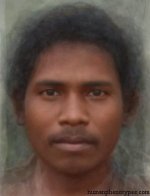
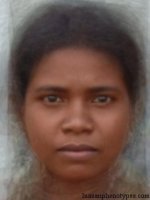
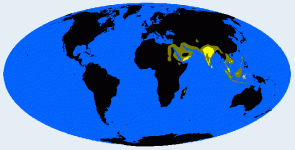
Ancient South Asian type that probably split off early and long dominated large parts of South Asia from Arabia to the Sunda Islands. Was pushed back by later migrations and became restricted to hunter-gatherers and forest populations. The skin is medium to dark brown, the hair wavy to curly. Skulls are often long and small, stature rather short, the face low, brow ridges significant, forehead and chin receding, mild prognathy common. The most typical variety is the Vedda type that survives in small numbers in Sri Lankan forests. More common are the Gondids in tribal populations of India (North Gondid, South Gondid). Malids of South India show some Negritoid traits. Toalids of Indonesia are shorter-skulled. Other varieties include Senoids of Indochina and Arabian Veddoids.
Names:
Weddid (Eickstedt, 1952; Lundman, 1967, Vogel, 1974, Knussmann, 1996), Veddid (Lundman, 1988), Veddoid (Cole, 1965; Debets, 1974), Vedda (Vallois, 1968), Veddidi (Biasutti, 1967), Ceylonesian-Sundanesian (Cheboksarov, 1951, ) Australoid (Hooton, 1946), Homo veddalis (Haeckel, 1898).
Description:
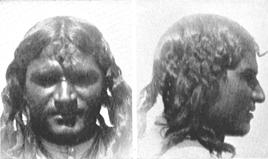
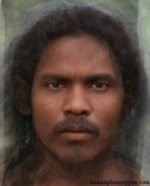
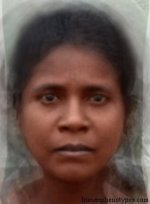
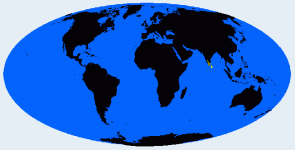
Veddid proper type, typified by aboriginals of Sri Lanka - the Vedda people. Relatively ancient with a long history in the region. Relict groups today mostly live in the eastern parts of the island, a few hundred unmixed remain. The Vedda culture and phenotype might vanish soon, although admixture with the type seems relatively common in different parts of the island.
Physical Traits:
Dark brown skin, but on average lighter than in the Tamil cohabitants. Wavy hair, short, hyperbrachyskelic, ectomorph. Dolichocephalic, mildly hypsicranic, small-headed. Mesorrhine and low nose. Round occiput. Face and body infantile. The face is relatively low and roundish, zygomatic arches protruding, the chin often receding, forehead steep, eyes are wide and often sunken. Prognathy mild.
Literature:
Described much earlier than other Veddoid varieties (e.g. Virchow, 1881 and Sarasin, 1893). Following Sarasin, Eickstedt (1927, 1934, 1952b) defined it as Veddid proper. Cole (1965) , Lundman (1967), Biasutti (1967), Knussmann (1996) and many others kept the type.
Description:
Ancient South Asian type that probably split off early and long dominated large parts of South Asia from Arabia to the Sunda Islands. Was pushed back by later migrations and became restricted to hunter-gatherers and forest populations. The skin is medium to dark brown, the hair wavy to curly. Skulls are often long and small, stature rather short, the face low, brow ridges significant, forehead and chin receding, mild prognathy common. The most typical variety is the Vedda type that survives in small numbers in Sri Lankan forests. More common are the Gondids in tribal populations of India (North Gondid, South Gondid). Malids of South India show some Negritoid traits. Toalids of Indonesia are shorter-skulled. Other varieties include Senoids of Indochina and Arabian Veddoids.
Names:
Weddid (Eickstedt, 1952; Lundman, 1967, Vogel, 1974, Knussmann, 1996), Veddid (Lundman, 1988), Veddoid (Cole, 1965; Debets, 1974), Vedda (Vallois, 1968), Veddidi (Biasutti, 1967), Ceylonesian-Sundanesian (Cheboksarov, 1951, ) Australoid (Hooton, 1946), Homo veddalis (Haeckel, 1898).
Veddoid(propper)
Description:
Veddid proper type, typified by aboriginals of Sri Lanka - the Vedda people. Relatively ancient with a long history in the region. Relict groups today mostly live in the eastern parts of the island, a few hundred unmixed remain. The Vedda culture and phenotype might vanish soon, although admixture with the type seems relatively common in different parts of the island.
Physical Traits:
Dark brown skin, but on average lighter than in the Tamil cohabitants. Wavy hair, short, hyperbrachyskelic, ectomorph. Dolichocephalic, mildly hypsicranic, small-headed. Mesorrhine and low nose. Round occiput. Face and body infantile. The face is relatively low and roundish, zygomatic arches protruding, the chin often receding, forehead steep, eyes are wide and often sunken. Prognathy mild.
Literature:
Described much earlier than other Veddoid varieties (e.g. Virchow, 1881 and Sarasin, 1893). Following Sarasin, Eickstedt (1927, 1934, 1952b) defined it as Veddid proper. Cole (1965) , Lundman (1967), Biasutti (1967), Knussmann (1996) and many others kept the type.