Ezio1
Well-known member
South American group, native to the Andean mountains. The most populous Native American type today with several million representatives, constitutes an important population element in Peru and Bolivia. Prior to contact with Europeans, frequent in the Inca civilisation. Like other Native Americans, the type developed through various Stone Age migrations across the Bering Strait. Bodies short and thick-set with a large thorax, an adaption to the high altitude, skull high and medium-wide to broad, forehead sloping, significant cheekbones, mild Mongoloid eye features. Prominent and long, often hooked noses, rather wide mouth, sturdy chin, straight hair, medium to dark olive-brown skin. The North Andids can be regarded as the most typical variety. Central Andids are more robust, fairer-skinned and flatter-faced. In the Chilean Andes a special South Andid variety with Patagonid influence is found.
Example of the North Andids in pure and indiomestizo/mestizo form (the typical Andids)
Peruvians:
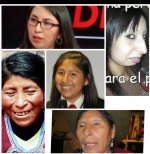
And the South Andid influence variety from Chile with Patagonid mestizo form:

The North andids are darker and less mixed, usually unmixed to Cholo/indiomestizo range. The Chilean more fairer-skinned, Patagonid admix mestizos.
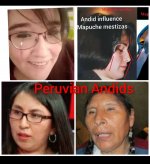
One last picture example, side by side. The top are mestizo form South Andids with Patagonid and the bottom North Andids (left bottom chola aka Indiomestiza form and right a purer form Andid with little or no Euro)
Example of the North Andids in pure and indiomestizo/mestizo form (the typical Andids)
Peruvians:
And the South Andid influence variety from Chile with Patagonid mestizo form:
The North andids are darker and less mixed, usually unmixed to Cholo/indiomestizo range. The Chilean more fairer-skinned, Patagonid admix mestizos.
One last picture example, side by side. The top are mestizo form South Andids with Patagonid and the bottom North Andids (left bottom chola aka Indiomestiza form and right a purer form Andid with little or no Euro)