What's new
Anthro World Forum

This is an anthropology forum where we cover all sorts of topics and discussions. Once signed in, you'll be able to participate on this site by adding your own topics and posts. Register today to become a member!

The hidden history of humanity.Impostors/Jews(Rev. 2:9)deceived the world and DNA confirmed it

BarcelonaAtlantis

Moderator
Staff member
Hoy en día es habitual que para referirse a las obras y a los cartógrafos de la denominada Escuela Cartográfica Mallorquina se añada el calificativo catalán. Es el caso de la Biblioteca virtual Miguel de Cervantes (para nada sospechosa de catalanista): “Las cartas catalanas o mallorquinas tuvieron ejemplo o procedencia en las de Italia”, “así como en la carta catalana de 1375”; o el caso de la Sociedad Geográfica Española (tampoco sospechosa de catalanista) que titula su artículo Los Cartógrafos mallorquines y catalanes. S. XIV: Angelino Dulcert (1339), Abraham Cresques (1375). El hecho es que las cartas son mallorquinas, como sus autores Dulcert y Cresques. De catalanas, nada. Pero el hecho es que el expolio catalanista, con su intromisión y apropiación de realizaciones y autores mallorquines llega hasta ahí. El término Escuela Cartográfica Mallorquina (acuñado en 1960 por los matemáticos e historiadores Julio Rey Pastor y Ernesto García Camarero) se refiere al grupo de cartógrafos, cosmógrafos y fabricantes de instrumentos de navegación, que floreció en el reino de Mallorca en los siglos XIII, XIV y XV. Las creaciones de la Escuela mallorquina tenían unas características propias que las distinguían de las italianas de Génova y de Venecia (en Cataluña no había escuela alguna). La producción de la Escuela mallorquina se caracterizaba por una producción unitaria consecuencia de una determinada representación orográfica e hidrográfica de ciertas áreas geográficas (el mar Rojo pintado en color rojo, las montañas del Atlas como un palmera, los Alpes como un pata de gallina, el rio Tajo como un cayado con la curva alrededor de Toledo, el rio Danubio como una cadena de eslabones…), así como por las leyendas, miniaturas y toponimia usadas.
Según Rey y García, la consideración básica para que una carta náutica fuese mallorquina era que estuviera realizada en Mallorca o por un mallorquín: “Consideraremos en principio como cartografía mallorquina al conjunto de todas las cartas náuticas firmadas en Mallorca o en lugar diverso por cartógrafo mallorquín”. A lo que añadían: “siempre que ambas cosas figuren explícitamente escritas sobre la carta, estén sobradamente documentadas o las leyendas estén en catalán”. Es decir, el hecho de que la carta estuviese en catalán reforzaría, en todo caso, su mallorquinidad y no su catalanidad. En cambio lo que viene sucediendo, es todo lo contrario, cuando se trata de una carta náutica con leyendas en lengua catalana se evita el calificativo «mallorquín» para sustituirlo por “catalán”.

Hay que apuntar que desde siglos atrás la lengua de Mallorca era conocida como lengua mallorquina. Pero desde la Renaixença catalana (a principios del siglo XIX), cuando un gran número de escritores y poetas mallorquines se apuntaron a la corriente romántica catalanista, asumiendo la subordinación cultural a Cataluña (debido básicamente al aceptar que la lengua mallorquina era un dialecto paleto de la superior lengua catalana). Y así hasta nuestros días. De ahí que los matemáticos Rey y García utilizasen esa nueva denominación “oficial” para la secular lengua mallorquina].

El caso más flagrante de este expolio catalanista es el Mapamundi de 1375 del cartógrafo mallorquín Cresques Abraham, que es conocido como Atlas Catalán, dejando de lado el nombre de la tierra en que se creó, Mallorca. Verdaderamente debería ser el Atlas Mallorquín.

El Atlas Mallorquín fue un encargo de la dinastía aragonesa al taller de la familia Cresques para obsequiar al rey de Francia, Carlos V. El Mapamundi de Cresques quedó depositado desde entonces en la Biblioteca Nacional de Francia y clasificado como una carta de mar, “une quarte de mer”, y también como “Carte de 1376”. Pero a principios del siglo XIX, durante la “Renaixença” catalana (otra vez), se impuso la denominación de “Atlas Catalán” a raíz de la publicación en 1839 de la “Notice sur an atlas en langue catalane” por parte del erudito francés Jean Alexander Buchon. Fue su colaborador, el catalanista rosellonés Joseph Tastu, quien simplificó la denominación a “Atlas catalan”.

No nos ha de extrañar que Tastu obrase de este modo. Tastu fue el “premier catalaniste français” (calificativo dado por el escritor rosellonés Amadeo Pagés). Tastu era catalanista, era académico de la Academia de Buenas Letras de Barcelona y partícipe activo de la denominada Renaixença catalana en el Rosellón. Desde entonces el Atlas pasó a ser considerado una “carta catalana”. El geógrafo inglés Gerald Roe Crone lo incluyó en su relación de “Catalan world maps” y el francés Alfred Morel-Fatio, jefe del Departamento de Manuscritos de la Biblioteca parisina, lo describía como “Atlas catalán”.

El trabajo de Tastu ya estaba completado, solo había que seguir el camino marcado. El catalanismo ya tenía su Mapamundi del siglo XIV, ya tenían su carta catalana. Así fue como a principios del siglo XX el catalanismo, de la mano de Francisco Carreras y de Fernando Soldevila pasó a considerarlo como una producción eminentemente catalana, era “la Carta Catalonia de 1375”. Y así llegamos a 1975, en el 600 aniversario de su elaboración, con la edición a cargo del catalán Luís Mercadé: “Creiem servir així al públic dels Països Catalans, puix que, així com ens semblava increïble que haguessin passat tants d’anys mancats d’un Atlas de Catalunya, també ens semblava impossible, que, després de sis-cents anys, encara ningú hagués dut a terme l’edició completa d’aquest Atlas Català».

La presión catalanista y la subordinación cultural de la clase intelectual y política de Baleares (la inmensa mayoría por dejadez y/o ignorancia) vienen propiciando el expolio catalanista de la lengua, historia y cultura del antiguo Reino de Mallorca. Un evidente ejemplo es este, que el Mapamundi de Cresques no se conozca por el nombre de la tierra donde se creó, Mallorca. De los pocos historiadores mallorquines no subordinados culturalmente a Cataluña queda el testimonio excepcional del erudito Gabriel Llompart que abogaba por su denominación auténtica y lógica: “la denominación Atlas Mallorquín que usamos es consecuencia de la atribución a Cresques Abraham”.


El razonamiento es muy sencillo. ¿Qué pasaría si el Mapamundi fuese suizo y tuviese las leyendas en lengua francesa, sería el Atlas Francés? ¿O si fuera un Mapamundi austríaco con leyendas en alemán, sería el Atlas Alemán? Seguro que la respuesta a ambas preguntas sería la misma: NO.
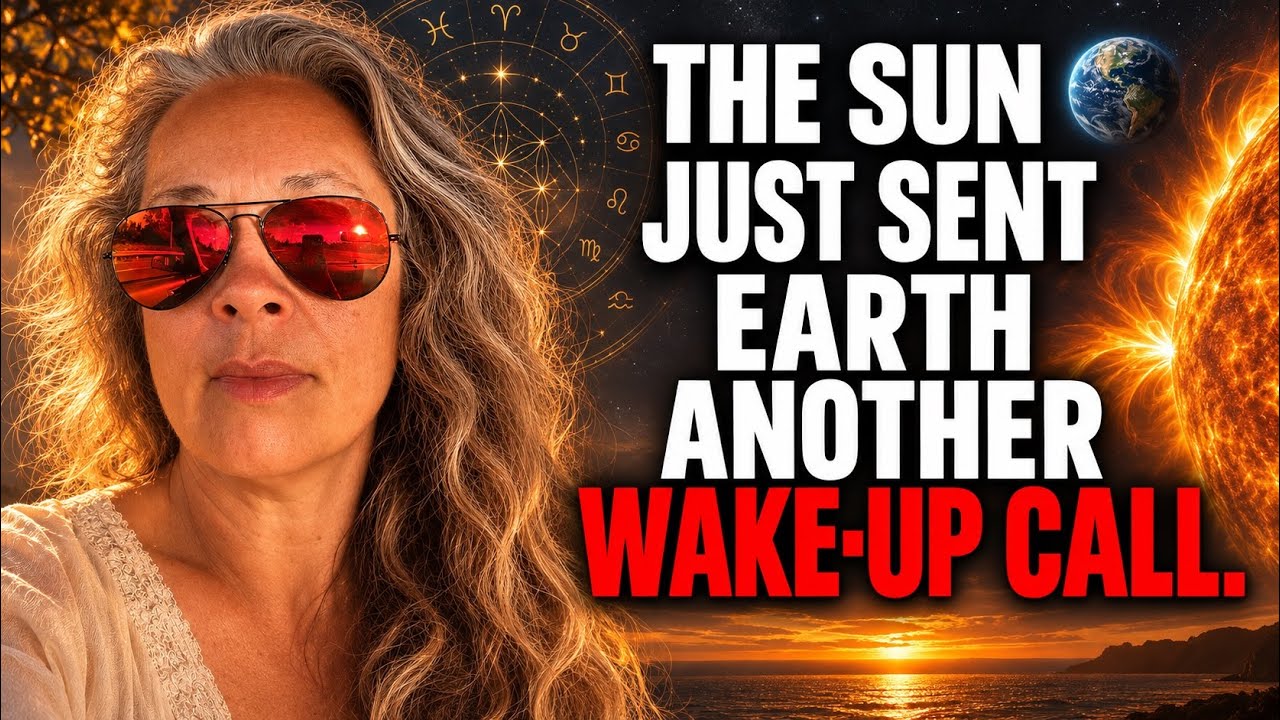
In this extraordinary episode of Just Tap In with Emilio Ortiz, extraterrestrial channeler Marina Jacobi reveals what she says she learned from the mysterious Council of Nine, the Pleiadians, and other higher-dimensional beings about humanity's future and the hidden laws of reality. From parallel timelines and quantum manifestation to the holographic universe and fifth-dimensional New Earth, Marina shares why she believes humanity's victory already exists within the infinite possibilities of consciousness. Together, Emilio Ortiz and Marina Jacobi explore the deeper mechanics of reality, the power of the human heart, and why a global spiritual awakening may be accelerating despite the challenges unfolding across the world.
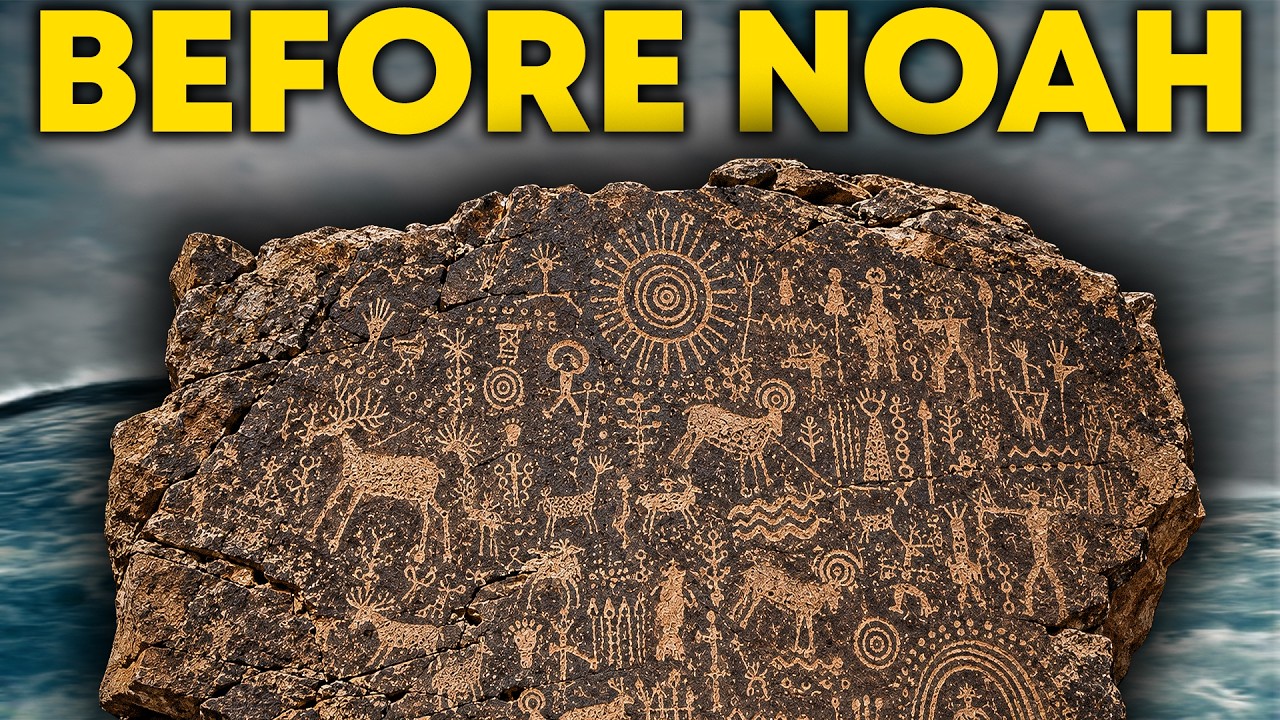
Ancient Native American traditions tell of a great flood, a lost world, and mysterious warnings passed down through generations. Could these forgotten stories preserve memories of a catastrophe far older than the biblical account of Noah?
 
Last edited:
BarcelonaAtlantis

Moderator
Staff member
El valle del oro. Así llaman desde época musulmana(epoca basca oculta)al valle de Sóller en alusión al aceite de oliva que se produce aquí desde hace siglos. Pero el cultivo del olivo no se limita al entorno solleric sino quese extiende por toda la zona. ¡Y de qué manera! El paisaje agrícola de esta sierra mallorquina gira alrededor del olivo. Es algo que salta a la vista con solo realizar un par de excursiones por cualquier rincón de este territorio que abarca toda la parte noroeste de la isla balear. ¿Cuántos olivos puede haber aquí? Es difícil de saber, pero se estima que en toda Mallorca el número de olivos superaría el millón y medio de ejemplares. La mayoría de ellos son centenarios y, sin duda, algunos milenarios.

PIONERA EN EL OLEOTURISMO​


Mallorca y su sierra de Tramuntana fueron uno de los destinos pioneros en la creación de rutas oleoturísticas. Una de esas primeras rutas es la del Barranco de Biniaraix. Calzados con unas buenas botas de montaña nos disponemos a adentrarnos por ella guiados por Martin Bestard (Martin’s Walks), geógrafo y guía de montaña y uno de los mayores especialistas en cuanto al paisaje cultural y natural de la sierra, “Este camino de Biniaraix, como otros que serpentean por la montaña, era hasta hace poco tiempo la manera de entrar y salir del valle, además del puerto”, nos explica ya en marcha.


“También servía para unir las diferentes fincas que encontramos en esta parte de la montaña. Por eso está empedrado, cuidado”. Y aquí tenemos ya el otro elemento que forma un binomio indisoluble con el paisaje de olivar: la piedra. Los habitantes de la Tramuntana construyeron bancales para poder cultivar, ganando espacio a la montaña con una labor épica y heroica. Este último adjetivo, que se da a algunos territorios vitivinícolas, se podría aplicar aquí también con los olivos. La piedra, apenas cincelada, se encaja sin argamasa formando los muros que retienen el suelo donde cultivar. La verticalidad de la montaña pasa a ser horizontalidad con estos marges, estas paredes de roca domada...

OLIVOS CON SIGLOS DE HISTORIA​


Tras dos o tres horas de caminata llegamos a Can Sivella donde Felipe y Natalia salen al encuentro. Esta pareja decidió cambiar su modo de vida y venirse a vivir aquí, en plena sierra, a esta casa que formaba parte de una antigua possessió, una explotación agrícola. Han recuperado el edificio y parte de los bancales abandonados, además de los olivos olvidados, invadidos de maleza. Ahora, esos viejos árboles de troncos retorcidos vuelven a estar vivos y en producción, y el aceite y la historia de este olivar recobrado se convierten en los elementos propiciatorios para entablar conversación y hermandad en torno a una mesa.

Cerca de Can Sivella, junto al sendero, encontramos uno de los olivos más viejos de la sierra, Sa Madona des Barranc. Hay otros olivos milenarios en otros rincones: Na Flamarades, en la finca de Son Brull o Es Camell, al otro lado del valle de Sóller, en el Camino de Muleta. De esos olivos y de la cultura agrícola y olivarera nos hablan en Capvespre, un centro de cultura y turismo que forma parte de la cooperativa agrícola Sant Bartomeu de Sóller. Además de catas y degustaciones, desde aquí se organizan visitas y excursiones temáticas. En esta ocasión recalamos en la finca Es Mas, de Pere Suau, otro apasionado de la Tramuntana.

“Hay mucha historia detrás de estos olivos, dice, y la primera es que todos están injertados en olivos silvestres, en acebuches, que aquí llamamos ullastres”. Entre estos olivos corren canales de agua: “no es para regarlos, estos olivos son de secano”, puntualiza. “El agua es para el otro cultivo de Sóller, los cítricos”, señala mientras nos muestra los bancales de naranjos.

El siguiente punto de este viaje nos lleva hasta Valldemosa, donde recalamos en Son Moragues, una finca de más de 500 años de historia que a finales siglo XIX pasó a manos del archiduque Luis Salvador de Austria. Sonmo, como llaman a este terreno, recuperó hace poco su esplendor pasado. Los olivos y los bancales de piedra seca volvieron a ser mimados; también se recuperó la huerta y ahora, además, la finca cuenta con talleres y obradores donde artesanos y artistas elaboran vajillas o telas de lana de las ovejas mallorquina.


Una parte de la producción de aceite se envasa en una botella especial: “es una botella de vidrio soplado diseñada en exclusiva para el aceite de Sonmo y creada en los hornos de Gordiola, uno de los talleres de vidrio soplado más antiguos de España, fundado en 1719”, nos cuenta Bernd Hagmuleer, uno de los encargados y guías. La historia de esta fábrica de cristal mallorquina es de lo más apasionante, con sus fórmulas de herencia veneciana que llegaron hasta la isla y que se mezclaron con otras más rústicas que acabaron de darle su sello particular.


La finca Galatzó, en el municipio de Calvià, es incluso más antigua que Son Moragues, además de ser una de las más extensas de la isla con sus 1400 hectáreas. En su día albergó un enorme olivar que con el tiempo quedó abandonado y ahora, con la finca en manos públicas, se ha empezado a recuperar. El edificio principal de esta antigua possessió está abierto a las visitas y el espacio más llamativo es la tafona, la vieja almazara. Es enorme, lo que da cuenta de la gran producción de aceite en tiempos pasados. El edifico que albergaba las pocilgas se han convertido en un refugio de montaña. Es uno de los ocho distribuidos por la sierra de Tramuntana, y que están conectados por antiguos senderos; unos senderos que se agrupan en un itinerario bajo el nombre de la Ruta de la Piedra en Seco que tiene la categoría de Gran Recorrido, el GR 221

Muchas de las antiguas almazaras de la sierra también se han recuperado y, en muchos casos, transformado en hoteles. En una de ellas terminamos este viaje. Se trata de Ca’n Beneït, en el pequeño pueblo de Binibona. Esta antigua alquería conserva todo su patrimonio y el molino de aceite sigue funcionando y molturando aceituna cuando llega la temporada. “Ese es el aceite que luego nuestros clientes van a probar en el restaurante”, señala Toni Durán, el director y propietario de este establecimiento de tan solo diez habitaciones. Ca’n Beneït es pura Tramuntana, una fusión de rusticidad y refinamiento, de potencia y serenidad. La energía del edificio y su historia se unen al empeño de Toni en mantener la autenticidad. “La sierra lo merece”, sentencia.


La Sierra de Tramuntana en Mallorca es un referente histórico del oleoturismo en España, destacando por su paisaje de olivos centenarios y bancales de piedra seca declarados Patrimonio Mundial por la UNESCO

The Sierra de Tramuntana in Mallorca is a landmark for oleotourism in Spain, notable for its landscape of centuries-old olive trees and dry-stone terraces, which have been designated a UNESCO World Heritage Site

A Mallorcan olive tree that is over a 1,000 years old voted top in Spain.​


An ancient olive tree of the native Empeltre Mallorquina variety has been awarded Spain’s national prize of the “Best Monumental Olive Tree” in Spain. The Can Det olive tree has won this award not only because of the age and size of the tree, but for the way in which it has been cared for by its owners, the local Deya Canals family of Soller. The tree is estimated to be over 1,100 years old and was planted by the Muslims(Basques/Celts/secret Holy Grail) in the 9th century, its unique trunk measures more than 6.5 metres and continues to produce around 120 kg of olives per year.

Walking routes through the olive groves

The D’Oli de Mallorca organisation controls the production of olive oil in Mallorca and has launched four walking routes that take you through “pure” Sierra Tramuntana scenery with its characteristic ancient dry stone wall terraces where thousands of olive trees are planted. The walking routes range from 2km to just under 5km and include two routes in the Sóller area: Muleta path and the Barranco Biniaraix. Mallorca has had its own “Denomination of Origin” status since 2002 in accordance with the EEU regulations and there are currently 88 local producers. The production of the oil in undertaken in the same designated geographic area. Mallorcan olive oil with the DO standard is produced, packaged, and sealed with the special DO seal that guarantees its quality.

The olive grove is the most widespread and oldest crop in the Tramuntana mountains. It occupies 80% of the cultivated area while orange trees for example occupy only 5%.

Ramon Llull (1232-1316) was a devout Mallorcan philosopher and theologian. He was the first author to use a neo-Latin language to express his philosophical, scientific and technical findings. His acute perception meant that he was responsible for introducing many new concepts and discoveries and he was also the creator of a literary Catalan(Mallorcan actually) language.The guy was from Mallorca the language should be called mallorcan not catalan being fair.


​

 
Last edited:

BarcelonaAtlantis

Moderator
Staff member

Mallorca, a gastronomic journey in the land of olive trees​


Today, Mallorca is home to over 8,000 hectares of olive groves and 1.6 million trees and 90% of them are over 500 years old.

Mallorca, a gastronomic journey in the land of olive trees

The Mallorcan landscape is full of olive trees, making this jewel of the Mediterranean the ideal place for the manufacture of high quality oil. With the Oli de Mallorca Designation of Origin, oleotourism is an attraction of international interest on the island.
Mallorca has become the pinnacle destination for the practice of oleotourism, an enormously popular experience that invites visitors to taste the liquid gold that’s manufactured in the oil mills.
An exceptional landscape
The production of extra virgin olive oil would not be possible without the tree of its star fruit: the olive tree. This species is considered beneficial for the conservation of the biodiversity of the environment. In addition, the olive groves are a unique natural enclave in the Mallorcan landscape, the ideal place to explore the flavours of its gastronomy.
Olives and their oil have acted for centuries as a link between Mediterranean cultures, which today prevails as a product that symbolises this tradition and culture.
Get to know the world of oil first-hand
Oleotourism includes a wide range of activities. One of the most common is tastings for extra virgin olive oil, as well as guided tours of the olive groves in a multitude of estates on the island. Through this experience it’s not only possible to taste the typical flavour of Mallorca first-hand, but also allows visitors to learn about the production process in the oil mill, its conservation and packaging.
Visitors can also enjoy an immersive experience on another level, through a stay in one of the agrotourism establishments of these estates, where many houses hold an imposing traditional architectural legacy.
A product with designation of origin
Since 2002, Aceite de Mallorca has had the recognition of Designation of Origin, under the name Oli de Mallorca. This status is attributed to its local production, with quality and characteristics that are in tune with the natural and human factors of its production.
The different varieties of olives on the island, the Mallorcan, the Empeltre and the Picual and Arbequina, allow the production of oils that are different in flavour and nuances, ranging from sweet to fruity.
Various oil mills and bottling plants fall under the umbrella of this distinction, along with renowned brands that produce top quality oil. https://www.breakingtravelnews.com/...stronomic-journey-in-the-land-of-olive-trees/

 
Last edited:
BarcelonaAtlantis

Moderator
Staff member
Ramon Llull, the Mediterranean genius who created 'God’s algorithm' and united all the sciences This lay Franciscan—also a poet, logician, and mystic—created the *Ars Magna*, a system that anticipated computational logic and served as a precursor to artificial intelligence. — An unpublished interview with Cristóbal Serra, 12 years after his death: “Modern civilization is destined to go down the drain.” icon Ramon Llull, one of the most important philosophers of the Mediterranean. Ramon Llull, one of the most important philosophers of the Mediterranean.

He was born on an island conquered by the cross, lived among three languages, and dreamed of a universal language. He was a courtier before he was a mystic, a programmer before computer science existed, and a philosopher long before the university recognized his genius. Ramon Llull (Palma, 1232–1316) is, above all, a challenge to established categories. He was many things at once—theologian, logician, poet, scientist, missionary, diplomat—but he was never just one. In a Europe defined by dogmas and borders, he envisioned knowledge as a bridge. Who wrote the Bible? A new study using AI sheds light on the enigma. Who wrote the Bible? A new study using AI sheds light on the enigma. In an era when thinking meant repeating, he dared to combine. He invented a system that transformed divine attributes into rational arguments. He called it *Ars Magna* and proposed it as a universal tool for demonstrating truth through reason. With it, he sought to persuade Christians, Jews, and Muslims—not by the sword or by authority, but through shared intelligence. “I admire Ramon Llull and Juan de Herrera because they are the most extremely exaggerated beings I know,” said Salvador Dalí, who understood Llull as few others did: not as an anachronistic, pious figure, but as an architect of worlds. Much like Herrera with El Escorial, Llull designed his own internal monastery—a comprehensive work in which logic, faith, music, astronomy, and divine love coexisted. He created a vast body of work in Catalan, Latin, and Arabic. He elevated the Catalan language to a philosophical level, became the first European to write theological treatises in Arabic, and used Latin as a key to engage in scholastic debate. He founded Catalan literature, as well as the practice of intercultural diplomacy. His *Llibre de meravelles* (1288), *Blanquerna* (c. 1283), and *Llibre d’amic e amat* (included within *Blanquerna*, c. 1283) are not merely literary gems; they are manifestos for a new way of understanding knowledge—as an inward journey and an exercise of reason. Llull was simultaneously a poet, a logician, a mystic, and a scientist. He devised a system for contemplating the absolute and wrote in three languages to engage with the world. The Majorcan writer Cristóbal Serra described him as “a restless man, possessed of a prodigious intellect and an overflowing imagination,” and lamented that his legacy has been partially forgotten: “He has been reduced to an author of religious books in Catalan, while his work in Latin—which, due to its complexity, almost no one has read—has been sidelined,” he remarked in a previously unpublished interview featured by *elDiario.es*. Llull’s legacy—comprising more than 280 extant works—spans everything from mystical treatises to pedagogical manuals, from fictionalized utopias to algorithmic diagrams. His goal was not merely to accumulate knowledge, but to organize it—and not for a select few, but for everyone: for scholars and peasants, for non-Christians and Christians alike—for the entire world. Miniature I, from the *Breviculum* by Thomas Le Myésier, a direct disciple of Llull. Ramon Llull is depicted with a receding hairline, long hair, a short beard, and dressed as a courtly nobleman: wearing a cloak, an inner tunic, and high-status footwear. Miniature I, from the *Breviculum* by Thomas Le Myésier, a direct disciple of Llull. Ramon Llull is depicted with a receding hairline, long hair, a short beard, and dressed as a courtly nobleman: wearing a cloak, an inner tunic, and high-status footwear. Karlsruhe, Badische Landesbibliothek. The Forging of a Borderland Philosophy Ramon Llull was shaped not only by faith or philosophy, but by the land itself. He was born and raised on an island that was divided, conquered, and transformed: 13th-century Mallorca—a setting defined by tensions between its Islamic past and the new Christian order imposed by James I. It was an island that underwent a profound shift, changing not only its rulers but also its language, its laws, and its religious rites.
In Montpellier, he found a receptive audience among physicians and theologians. In Rome, he appealed to the papacy to establish trilingual schools. In Genoa, Naples, Pisa, and Vienna, he sought out patrons and disciples. But it was in North Africa—in Béjaïa, Tunis, and perhaps Alexandria—that his endeavor reached its greatest intensity: he spoke in Arabic, engaged in public debates, was imprisoned… and returned. Llull did not fear conflict. He understood that thought only has value if it is put to the test. He carried with him parchments, logical wheels, combinatorial tables… and the conviction that reason could be more powerful than any army. Even into his advanced years—well past the age of eighty—he continued to set sail for hostile ports with the intention of persuading. His goal was not doctrinal victory, but understanding. For him, the Mediterranean was not a wall, but an immense classroom—a space where the "other" was not an enemy, but an interlocutor. He traveled throughout Europe and North Africa to teach, debate, and convince. He continued his travels until the end of his life, bringing his system wherever he went. A Precursor to Artificial Intelligence Long before the existence of computers, algorithms, or neural networks, Ramon Llull conceived a "thinking machine." His *Ars Magna*, devised in the 13th century, was no mere metaphor: it was a logical, combinatorial, and visual system through which he aimed to demonstrate universal truths by means of reason. With its rotating wheels, letters, tables, and absolute principles—all precisely articulated—it was designed to produce irrefutable conclusions. It was the first philosophical algorithm in history. He did not create his system to impress theologians, but to engage in dialogue with the world. He sought a truth that would not be imposed by unquestionable authority, but one that could be grasped through shared reason. His dream was as bold as it was meticulous: to construct a common language capable of overcoming religious, cultural, and logical barriers. The Italian semiotician and novelist Umberto Eco put it this way: “Llull, with his *Ars Magna*, offered one of the first attempts at the formalization of thought, anticipating fundamental aspects of modern semiotics.” The Majorcan musician and composer Joan Valent—who is currently preparing the opera *Lo Foll*, dedicated to Ramon Llull—has delved deeply into his work and thought. Following this study, he sees in Llull a figure of contemporary relevance who remains insufficiently recognized: “The figures of the *Ars Magna* are the first algorithm ever documented in the world. It is an algorithm that God gave him. Llull does not belong to the past; he belongs to the future—a future that has already arrived.” He adds: “He is a figure who deserves everything. He is very little known; he is recognized only in the context of language or religion, but he is much more than that.” His *Ars Magna* anticipated computational logic. He was a precursor to AI, modern semiotics, and the dream of a universal language. The four figures from Ramon Llull’s *Ars Brevis*. This diagram displays the famous combinatorial figures of the Lullian logical system: movable circles, symbolic letters, and relational structures designed to rationally demonstrate universal truths. The four figures from Ramon Llull’s *Ars Brevis*. This diagram displays the famous combinatorial figures of the Lullian logical system: movable circles, symbolic letters, and relational structures designed to rationally demonstrate universal truths. Source: Trier Municipal Library and Archive, Trier Hs. 1895/1428. CC BY-SA 4.0 license. Llull—a visionary and an architect of ideas—anticipated a model of systematic thought that is studied today at the intersection of philosophy, semiotics, symbolic computation, and intercultural dialogue. His influence, though partially forgotten for centuries, resurfaced within the foundations of modern thought. He inspired Giordano Bruno and foreshadowed Leibniz’s concept of a formal language. Today, his work is examined in contexts he could never have imagined: systems theory, symbolic artificial intelligence, and digital semiotics. The Argentine writer Jorge Luis Borges once remarked, with a touch of irony: “At the end of the 13th century, Ramon Llull invented a ‘thinking machine.’ [...] Its celebrated uselessness does not diminish its interest.” An unpublished interview with Cristóbal Serra, 12 years after his death: “Modern civilization is destined to go down the drain.” An unpublished interview with Cristóbal Serra, 12 years after his death: “Modern civilization is destined to go down the drain.” Llull did not seek to calculate; he sought to make the absolute intelligible. His logic was not a tool for control, but for communion. His system did not diminish mystery; rather, it organized it with love. He was, in essence, an alchemist of thought—and his legacy, far from being exhausted by history, continues to speak to the challenges of the present.
 
Last edited:

BarcelonaAtlantis

Moderator
Staff member
There, he experienced what he himself called an “illumination.” The result was not a flight from the world, but the birth of a project: to create a rational method for demonstrating the truth—one valid in any language and for any mind. Thus, the *Ars Magna* was born. According to Maribel Ripoll, “Ramon’s conversion must be understood within its proper context.” She adds, “The vision of the crucified Christ and the illumination at Randa can be interpreted as a personal epiphany, but also as a means to legitimize a new and radical system.” From that point on, his life became a mission. He never joined a religious order, yet he lived as a lay Franciscan, committed to evangelical poverty, tireless writing, and ceaseless travel. While his body traversed the world’s paths, his mind constructed complex systems. He did not seek blind faith, but rather lucid understanding. His goal was to persuade, not to defeat. Following a sudden, transformative conversion, he left the royal court to dedicate his life to writing, poverty, and the use of reason in the service of faith. Miniature II. From the *Breviculum* by Thomas Le Myésier, a direct disciple of Llull. Llull—dressed in red, a symbol of his noble past—receives a simple, austere habit from a bishop (likely the Bishop of Mallorca). The scene unfolds before a group of witnesses: some observe with astonishment, others with reverence. Miniature II. From the *Breviculum* by Thomas Le Myésier, a direct disciple of Llull. Llull—dressed in red, a symbol of his noble past—receives a simple, austere habit from a bishop (likely the Bishop of Mallorca). The scene unfolds before a group of witnesses: some observe with astonishment, others with reverence. Karlsruhe, Badische Landesbibliothek. A Universal Thinker Ramon Llull did not merely wish to know everything; he sought to connect everything. In a world where knowledge was fragmented—theology on one side, philosophy on another, and science relegated to the margins—he dreamed of a unified system, an architecture of thought in which all branches of knowledge would sprout from a single trunk. He was, in the most radical and rigorous sense, a total thinker. He authored over 280 works in Catalan, Latin, and Arabic. Each one served as a cog in his intellectual machinery. In *The Book of the Contemplation of God* (1271–1274), he unfolds a monumental mystical theology. In *Blanquerna* (c. 1283)—a philosophical and social novel—he envisions an ideal society guided by virtue. In *The Book of the Friend and the Beloved* (c. 1283), included as a contemplative appendix to *Blanquerna*, he distills the soul’s experience with a poetic intensity that anticipates Saint John of the Cross. And in *The Tree of Science* (1295–1296), he devises an organic classification of human knowledge, akin to a forest structured by hierarchies of concepts. His body of work comprises more than 280 titles. He wove together theology, science, literature, and logic into a coherent, visual system of knowledge. At the heart of this universe lies the *Ars Magna*: a logical machine that combined essential notions (goodness, wisdom, glory, justice...) to derive conclusions through the use of movable figures. It was an attempt to formalize human thought long before the advent of symbolic logic—a kind of algebra of the absolute. “Llull created a system to relate truths based on absolute principles. His ability to bring concepts into dialogue makes him radically modern. Through his figures, he gave reasoning a visual dimension,” observes Ripoll. His logic did not exclude faith; rather, it refined it. For Llull, to think was to pray—and to organize concepts was an act of love. For this reason, his system combined geometry and passion, rigor and contemplation. He was neither a conventional scholastic nor a mystic lacking a method; he was both at once. Furthermore, Llull was not an isolated thinker. He traversed universities, libraries, monasteries, and palaces in search of interlocutors. He taught, lectured, and engaged in debate. He fought to ensure that his work would not remain buried in archives, but rather circulate, be taught, and be shared. His thought was not content to remain on the periphery; it sought to inhabit the center of the world. Portrait of Ramon Llull by Ricard Anckermann (Palma, 1842–1907), c. 1870. The Majorcan painter powerfully captured Llull’s mystical rapture, creating an image that establishes him as a visionary and transcendent figure. Portrait of Ramon Llull by Ricard Anckermann (Palma, 1842–1907), c. 1870. The Majorcan painter powerfully captured Llull’s mystical rapture, creating an image that establishes him as a visionary and transcendent figure. Palma City Council A Tireless Traveler The work of Ramon Llull did not originate in a monastic cell or at a fixed desk. It was born in transit. He was a wandering thinker—an intellectual of the road. For him, to think was also to move: to place his body amidst uncertainty and his mind into dialogue. He traversed the Mediterranean like a monk without a habit, yet one who possessed a clear method. He traveled to Paris—the capital of scholastic learning—where he challenged the prevailing Aristotelianism and defended his *Ars Magna* before the scholars of the Sorbonne.
 

BarcelonaAtlantis

Moderator
Staff member
The Mallorcan musician and composer Joan Valent—currently preparing the opera *Lo Foll*, dedicated to Ramon Llull—has delved deeply into Llull’s work and thought. Following this study, he sees in Llull a figure of contemporary relevance who remains insufficiently recognized: “The components of the *Ars Magna* constitute the first algorithm ever documented in the world. It is an algorithm given to him by God. Llull does not belong to the past; he belongs to the future—a future that has already arrived.” He adds: “He is a figure who deserves everything. Yet, he is very little known. He is recognized only in the context of language or religion, but he is so much more than that.” His *Ars Magna* anticipated computational logic. He was a precursor to AI, modern semiotics, and the dream of a universal language.


Llull did not seek to calculate; he sought to make the absolute intelligible. His logic was not a tool for control, but for communion. His system did not diminish mystery; rather, it organized it with love. He was, in short, an alchemist of thought. And his legacy, far from being confined to the past, continues to speak to the challenges of the present. If Ramon Llull—from his century and his island—reminds us of anything, it is that reasoning is not merely a technical exercise; it is also a form of love.


What if the OLD WORLD was built by civilizations far more advanced than we've been led to believe? In this epic marathon, we investigate impossible-looking architecture, extraordinary construction methods, the mysterious six-fingered Nephilim, devastating fires, and magnificent structures that have vanished from history. Using historical photographs, original documents, and overlooked evidence, we challenge the mainstream narrative and explore the ultimate questions: WHO built the OLD WORLD, HOW did they build it, and WHAT happened to it?

Porto Pi and Plaza Gomila are two historic and highly connected landmarks located in the southwest of Palma de Mallorca right within the Ponent district. Running along the scenic Avinguda de Joan Miró and the Paseo Marítimo, they sit just about 1.4 kilometers apart and are linked frequently by local transit like EMT Palma Line 20.
Ramon Llull’s Ars Magna is widely celebrated by historians of science as the earliest precursor to computer science and artificial intelligence.
By designing a system of paper discs and mechanical wheels to combine concepts logically, Llull created a physical framework for generating new knowledge—effectively formulating the world's first structured algorithm.
Joan Valent's observation that Llull belongs to the future highlights how deeply modern technology relies on principles laid down in the 13th century. Llull's visionary work bridges medieval philosophy and modern computational logic through several breakthroughs:

🧩 The First Algorithm: Ars Magna
    • Mechanical Logic: Llull designed a system of concentric, rotating geometric shapes (circles, squares, and triangles) inscribed with letters representing universal concepts like goodness, greatness, power, and truth.
    • Combinatorial Thinking: By turning the wheels, a user could mechanically generate every possible combination of these ideas to answer complex theological and philosophical questions.
    • Algorithmic Rules: This process followed a strict step-by-step method, introducing the concept of a rule-based procedure to derive new information from existing premises.

🤖 Precursor to Artificial Intelligence
    • Automated Reasoning: Millennia before digital screens, Llull believed that reasoning could be externalized and automated through a machine.
    • The Blueprint for Leibniz: In the 17th century, polymath Gottfried Wilhelm Leibniz studied Llull’s work and expanded it into the Characteristica Universalis—a dream of a universal mathematical language that could resolve all human arguments through calculation. This directly paved the way for modern Boolean logic.
    • Modern Semiotics: Llull’s use of symbolic letters instead of full words created a formal, abstract syntax, anticipating how computer code converts human ideas into strings of symbols.

🎭 A Legacy Beyond Religion
While history books often limit Llull to his role as a Franciscan missionary, philosopher, or a founding father of the Catalan(it should be known as mallorcan or navarro romance being fair and correct) written language, his true impact spans across:
    • Electoral Theory: He independently discovered the Condorcet criterion and Borda count voting methods centuries before they were officially formulated.
    • Universal Language: He sought a conceptual toolkit that transcended cultural and language barriers, aiming to unite people under a shared, logical understanding of reality.
Valent's opera Lo Foll (The Madman)—named after the moniker Llull received from contemporaries who couldn't comprehend his radical ideas—serves as a timely artistic reminder that our digital present was imagined long ago.
Would you like to explore how Llull's wheel mechanisms worked in practice, or dive deeper into how his theories directly influenced early computer scientists like Leibniz?

They are doomed they cant escape...

Catalans and no Catalans owe Ramon Llull and Mallorca alot...

 
Last edited:

BarcelonaAtlantis

Moderator
Staff member

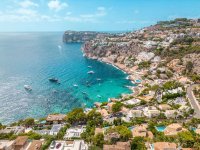
The best sunset around...

If you think the antichrist is the bad guy the truth is not for you...
 
Last edited:
BarcelonaAtlantis

Moderator
Staff member

First, are you sure that christ died on the cross? History, and more recently archeology, show that the cross was used as a Pagan symbol centuries before christ. The shape of the two-beamed cross had its origin in ancient Chaldea and was used to represent the God Tammuz. Tammuz is the deified Nimrod. He founded the city of Babylon, and along with his mother/wife Semiramis, founded the pagan Babylon mystery religion—the origin of everything. The Egyptians used crosses in abundance, as did the Hindus. The British Museum, for example, exhibits statues of the ancient Assyrian kings wearing almost perfect Maltese crosses around their necks.


You see it everywhere: hanging on church walls, dangling from rearview mirrors, inked on people’s skin, or hanging from someone’s neck like holy bling. The cross is christianity’s number one symbol — a badge of faith, sacrifice, and salvation. But here’s the dirty little secret: the cross isn’t originally christian at all. In fact, christianity hijacked it.

The truth is blunt and a bit uncomfortable: the cross has older, Pagan roots that stretch far beyond Jesus, the crucifixion, or anything in the Bible. And no, this isn’t some fringe conspiracy theory. This is historical fact backed by archaeology, anthropology, and common sense — not my personal view or speculation. Christianity’s most sacred icon was stolen — borrowed, if you want to be polite — from ancient religions that had nothing to do with Jesus.
A golden Ankh symbol centered against a warm, textured gold background, representing ancient Egyptian beliefs about life and immortality.

Reborn in more modern times, the ancient Egyptian symbol predates christianity’s cross by centuries.

Crosses Were Already Everywhere​

Long before the Romans nailed anyone to a cross, ancient cultures were using the symbol. Egyptians had the ankh, which looks like a cross with a loop on top. It stood for life and immortality — basically eternal life. Sounds familiar?

Mesopotamians, Babylonians, and even early Indians used cross-like symbols in their art and religion. The swastika — yes, the same one nazis ruined — was once a positive cross-shaped symbol used across ancient Europe and Asia to represent sun, power, and cosmic order. It was everywhere.

In Norse mythology, the hammer of Thor (Mjölnir) was often shaped like a short-handled cross. Druids carved crosses into stones to worship nature gods. Some early crosses marked sacred trees or represented the four seasons, four elements, or the cycle of life. These were spiritual symbols. Just not christian ones.

Written by Tanner the Humanist​


Tanner is a contemporary author exploring the intersection of religion and politics, asking tough questions. His new essays appear at theunholytruth.com


What if the pyramids of Egypt were never meant to be tombs, but ancient technologies designed to tune the consciousness of the planet? In this extraordinary conversation, Matías De Stefano joins Amrit Sandhu to reveal the deeper significance of the 11:11 portal, the hidden purpose of Egypt's ancient temples, and why he believes the powerful solar eclipse of 2027 could mark a major reset for humanity. Matías shares the remarkable story of his 2011 activation, when an event planned for 500 people attracted 6,000, setting him on a worldwide mission to reconnect Earth's sacred sites and energetic pathways. Together, they explore the mysterious relationship between ancient Egypt, the alchemical symbolism of gold, silver, and Electrum, the significance of the Great Pyramid's chambers, and the spiritual meaning of opening a new reality. But perhaps the most fascinating revelation comes when Matías explains why the November 11, 2026 activation is connected to the solar eclipse of 2027, a moment he believes could offer humanity an opportunity to rewrite old patterns and enter a new chapter of consciousness.
 
Last edited:
BarcelonaAtlantis

Moderator
Staff member
Port Adriano/Santa Ponsa, Mallorca.
65eec9cafbc6bd4df31c1154_platja_el_toro[2].jpg


LOS PRIMEROS CASTELLANOS ERAN VASCOS
Aparece el texto: "Bardulia que ahora se llama Castilla”
“Bardulia” aparece en las fuentes antiguas con significado similar al de Castilla.
ORIGEN DE BARDULIA
Bardulia (también “Vardulia”) es un nombre antiguo que en la historiografía medieval se refiere al territorio al sur de Cantabria.
Originalmente se asocia con la tribu prerromana de los várdulos, que habitaban zonas de la costa cantábrica oriental, lo que hoy sería parte de Guipúzcoa, y posiblemente partes de Álava y Navarra.
Con el tiempo, ese nombre (“Bardulia”) se cita más hacia el Oeste en un pequeño territorio, bien porque hubo una expansión poblacional, se trasladó o se reinterpretó para referirse al norte de la actual provincia de Burgos, sur de Cantabria, etc., conforme Castilla se fue formando como entidad política.
¿En el año 800 dónde estaría “Bardulia”?
En torno al año 800, Bardulia corresponde aproximadamente al territorio comprendido en las estribaciones de la Cordillera Cantábrica en lo que hoy es el norte de la provincia de Burgos — especialmente los valles como el de Mena — y tierras cercanas que luego formaron la parte inicial del “territorio castellano” (“Castella”, “Castilla”).
NACE CASTILLA
Un documento del año 800 habla de la fundación de un monasterio en Taranco de Mena, y en ese documento aparece la frase latina “Bardulia quae nunc vocatur Castella”
(“Bardulia que ahora se llama Castilla”)
lo que indica ya un proceso de cambio de nombre o al menos de identificación.
El territorio no era todavía muy grande ni bien definido como Castilla en siglos posteriores, sino más bien una región fronteriza, poco poblada, con núcleos de repoblación, iglesias, monasterios, etc. bajo dominio del Reino de Asturias.
¿ORIGEN VASCO?
Sí, Vardulia es el nombre que recibían los territorios habitados por los várdulos, un pueblo prerromano que se asentaba en la parte oriental de la costa cantábrica, ocupando gran parte del territorio que hoy es Guipúzcoa, por lo que se le puede considerar parte del área del antiguo País Vasco.
El término "Vardulia" proviene de la tribu prerromana de los várdulos.
Los várdulos habitaban la costa cantábrica, en la zona que corresponde principalmente a la actual provincia de Guipúzcoa.
Teóricamente su territorio se extendía hasta el río Nervión por el oeste y hasta el río Bidasoa por el este, abarcando también parte de Navarra y Álava, pero más al Suroeste no está tan claro.
Conexión con el País Vasco:
Al ser los várdulos una de las tribus originarias del territorio vasco, Vardulia se puede asociar con el área que se conoce históricamente como tierras de vascos o del País Vasco.
* Curiosamente los primeros documentos en castellano antiguo aparecieron junto a los territorios fronterizos hoy con Álava (País Vasco).
LA TORRE DE LOS VELASCO
Situada en la población de Lezana de Mena en plena Bardulia.
Es cómo una de tantas torres por territorios del País Vasco.
El apellido Velasco, de origen vasco, deriva de la palabra euskera "belasko" que significa "cuervo" o "cuervito pequeño".
Se considera un apellido patronímico, originado de un nombre de persona, y se asocia con la nobleza y el poder, como se evidencia por los títulos de Condestables de Castilla obtenidos por un linaje Velasco.


Get ready to question who you are and humanity itself as Matt Socha joins me to discuss his book, Preying Atlantis. We’ll investigate whether the lost continent of Atlantis actually existed by examining revolutionary archaeogenetic data and ancient DNA migrations across the globe. You’ll explore how mysterious genetic markers, such as rare Rh-negative blood types and the sudden appearance of specific Y-DNA R1b lineages, trace the movements of ancient Atlantis survivors into Western Europe and Africa. The discussion challenges traditional timelines by contrasting Plato’s date of 9600 BCE with evidence pointing to the cataclysmic 4.2 Kiloyear Event around 2200 BCE as the island’s true moment of collapse. Uncovering connections between Sumerian mythology, the Anunnaki, and global agricultural shifts, the show reveals how global legends might reflect real historical cataclysms and population survival.

Southwest Mallorca is rapidly transforming into the island’s primary strategic luxury corridor and upscale year-round residential hub.
Why the Southwest of Mallorca is one of the best places to live
✨
When I speak with people considering a move to Mallorca, the southwest is often where the conversation begins - and for good reason. This part of the island offers an exceptional balance of lifestyle, accessibility and long-term value.
From elegant marina living and frontline sea views to peaceful residential enclaves surrounded by nature, the southwest attracts families, second-home buyers and those drawn by Mallorca’s yachting and Mediterranean lifestyle. With strong property demand, modern architecture, established communities and easy access to Palma, it’s one of the most sought-after areas on the island, whether you’re buying a family home, a holiday retreat or a smart investment.

Living in South West Mallorca combines coastal life with some of the island’s best everyday infrastructure. Portals Nous, Bendinat and Santa Ponsa are particularly suited to year-round living, while Port d’Andratx, Camp de Mar and the communities farther west offer a quieter, more scenic setting. Residents have beaches, marinas, golf, international schools and restaurants close by, with Palma and the airport still within practical reach. The key is choosing the right part of the southwest for your routine, because each community offers a noticeably different way of life.unnamed[1].jpg

Andratx, Mallorca....the most expensive place in all of Spain.
LAI190565_38_l_gal[1].jpg

 
Last edited:
BarcelonaAtlantis

Moderator
Staff member

Thats not the real God.

What if the world you thought you knew was built on a foundation of lies? Join us as we uncover a narrative that challenges everything—the buildings, the tunnels, the history, and the purpose behind it all. From monumental palaces to intricate underground systems, evidence of a civilization more advanced than our own lies hidden in plain sight. Are these relics of the past proof of something much larger, a truth intentionally kept from us?

They all say 2027. They don't say the same thing is coming.
I traced the 2027 warning back to who said it first — and what each claim actually rests on. I'm Buddy T. I spent 25 years in investigation and forensics. UFO whistleblowers say scientists are tracking an incoming intelligent object aimed at 2027 — John Ramirez, Lue Elizondo, Ross Coulthart, Jason Sands, Chris Bledsoe and others all point at the same year. But arrival, disclosure, or return?

This case file separates the three columns, finds Patient Zero in December 2022, tests if you can hide a planet-sized object, and exposes the other 2027 Washington quietly retired in March 2026.
That's a claim. That's not evidence. Let's investigate so you can decide.
 
Last edited:

BarcelonaAtlantis

Moderator
Staff member


Our species is about 300,000 years old, but our history started only about 5,000 years ago. What was happening before that? Could it be that there were previous civilizations before ancient Sumer, India and Egypt? Could it be that ancient legends of lost civilizations, like Atlantis, Lemuria or Mu are memories of a long-lost and forgotten past of humanity? In this episode we will dive deep into these questions. And if that's still not enough, don't forget to read my "Déjà Vu: Has Everything Already Been?". Inside, you will find hundreds of sources and arguments for the existence of a lost civilization before the end of the last Ice Age.

. The Missing 295,000 Years (with Michelle Desrochers, Michael Kopf, Don Rogers)
II. How a Civilization Disappears (with Michael Kopf, Michelle Desrochers)

III. Nobody Was First (with Don Rogers, Tommy Cullum, Michelle Desrochers)

IV. The Resets (with Don Rogers, Tommy Cullum, Paul Wallis)

V. Where Was Atlantis? (with Michael Kopf, Michelle Desrochers, Don Rogers)

VI. The Survivors' Message (with Codega, Michelle Desrochers, Don Rogers, Tommy Cullum)
VII. Has Everything Already Been? (with Michelle Desrochers, Codega, Tommy Cullum)
VIII. The Paradigm Shift (with Michael Kopf, Michelle Desrochers, Codega)
My book "Déjà Vu: Has Everything Already Been?"
 
Last edited:

BarcelonaAtlantis

Moderator
Staff member

Mallorca: The Mediterranean's Tennis Paradise​

The Mallorca Country Club in Santa Ponsa (Spain's only ATP grass-court tournament), hosts the Mallorca Championships, which is notable as the only ATP grass-court tournament in Southern Europe.

I can certainly say that my experience has been first class. The secret to a good tennis club is energy, enthusiasm and positivity, and the club in Santa Ponsa is brimming with it all. The coaching staff are excellent and it’s crucial that when members, or even guests, enter the club, they feel at home; that’s how I was made to feel in Mallorca. All that’s very important. So, combine that with the facilities and the country club has all the makings of competing with the best tennis/padel clubs in Europe. No doubt about it.

It’s got perfect courts, a wonderful hotel across the road, it’s 15/20 minutes from the airport, it has a top golf club next door, while there are all the others around the island along with the first class hotels. Most tennis players love a round of golf in their downtime and obviously want to stay in comfort but like to have things relatively close together.

Mediterranean vibeSo the club’s location, surrounded by the mountains and just a few minutes from the sea, is a winner. In addition, the club has that Mediterranean vibe, which is another benefit. It’s not a massive tennis resort stuck in the middle of nowhere, it’s just comfortable, and all these reasons are why, since the tournament began, some of the best tennis players in the world have decided to play Mallorca ahead of Wimbledon. I can’t see any reason for that to change, In fact I can only see the club’s cachet growing and I certainly hope so

The grass-court tennis you weren’t expecting is in Mallorca​

Santa Ponsa is gearing up for the Mallorca Championships, one of the most unique events on the ATP calendar.​


Every year, Mallorca hosts something quite unusual: an ATP tournament on grass. The only one in southern Europe. And yet, here it is taken for granted, almost as if it were part of the island’s everyday landscape.

The Mallorca Championships takes place from 20 to 27 June in Santa Ponsa, transforming the Mallorca Country Club into an unmissable stop on the international circuit during a key week in the calendar. A venue with meticulous attention to detail, on a par with the great temples of tennis.

Grass is the most distinctive surface in professional tennis. Elegant, fast, demanding. It is the surface that defines Wimbledon and one that is rarely seen during the rest of the season. In Mallorca, moreover, matches are played on grass certified by the All England Club, maintained to the same exacting standards as at the world’s most iconic tournament.

But the difference lies in the context. Here, the matches are experienced with an unmistakably Mediterranean atmosphere, genuine proximity to the players and a relaxed setting, far from the hustle and bustle and large crowds. Spectators do not merely watch: they are part of the action.

A tournament open to everyone​

The Mallorca Championships isn’t just for tennis experts. It’s an event that fits in perfectly with island life. On Sunday 21st, Family Day will be held, featuring children’s activities, play areas and initiatives designed to introduce tennis to the youngest visitors. What’s more, admission is free for children under 12.

That same day sees the much-anticipated mascot meet-and-greet, with Champi, the tournament’s official mascot, taking centre stage at one of the events most loved by the public.

Much more than just tennis​

Beyond the court, the tournament offers a complete experience: fine dining, a Fan Zone that’s fully shaded this year, music and a carefully curated atmosphere that invites you to linger. Every afternoon, after the matches, a DJ sets the mood for the end of the day with a drink and some laid-back beats. It’s the perfect plan for both tennis fans and those simply looking for something a bit different.

An event that’s closer than you might think​

Experiencing top-level tennis on grass, in a setting like this, is a rare treat. And this time, there’s no need to travel.

It’s right here. It’s part of the island’s calendar. All you have to do is come along and let yourself be swept away by a way of experiencing tennis that is, quite simply, unlike any other.

The ATP tournament, played every June on the immaculate grass courts of the Mallorca Country Club, has become an essential part of the grass-court season

The Mallorca Championships will present a significantly renewed tournament layout for its sixth edition, introducing a redesigned hospitality concept and enhanced facilities for all spectators.

The organisers of the ATP 250 tournament, which takes place from 20 to 27 June 2026 at Mallorca Country Club in Santa Ponsa, have implemented two key structural developments for the sixth edition.

In front of the clubhouse, a new modular two-level temporary structure will centralise essential tournament services in one dedicated area, streamlining operations and improving overall venue logistics.

In addition, Centre Court will see a significant transformation. The former west-facing stand of centre court will be replaced by a new hospitality structure. At court level, this installation will feature a series of air-conditioned, glass-fronted VIP suites, offering premium seating directly by the court with uninterrupted views of the matches. Above the suites, a newly designed VIP Lounge with restaurant facilities will provide catering and exclusive areas.

This reconfiguration strengthens the premium hospitality concept while also enhancing comfort for the wider audience. The remaining Centre Court seating has been carefully planned to optimise orientation and minimise direct sun exposure. Furthermore, the Fan Zone will be relocated beneath the new VIP Lounge, creating a shaded space designed to improve visitor comfort throughout the day.

As a relatively young tournament, we have reached a stage where consolidation and quality enhancement are essential.This investment represents a clear step forward in strengthening our infrastructure and long-term positioning.

The Mallorca Country Club in Santa Ponsa (Calvià) is thriving as a premier sports, wellness, and social hub in the Mediterranean.

As the only grass-court tournament in Southern Europe, the event continues to reinforce its distinctive position within the ATP calendar. The club is a serious player on the international tennis scene.

Key Highlights

• Unique Tennis Surfaces: It is the only club in Southern Europe featuring all three tennis surfaces, including six Wimbledon-style natural grass courts, five clay courts, and a hard court.
• Racquet & Fitness Sports: Features multiple padel courts, pickleball courts, a modern gym, a rooftop area for outdoor workouts, and a swimming pool.
• Lifestyle & Events: Offers co-working spaces, a members' lounge, wellness/physiotherapy zones, on-site dining (Mola in the Club), and high-profile events like the One Point Challenge padel tournament.
• Broader Area Growth: The surrounding region is also seeing major momentum, with Golf Santa Ponsa undergoing a large transformation featuring a new clubhouse and an 88-room hotel slated to open in 2027.

While Mallorca has long been a destination for tennis and padel lovers, MCC stands apart as the only club in the south of Europe to offer all three major tennis - grass, clay or hard-court

Sports in Mallorca – A Top Destination for Outdoor Adventures. From professional athletes to keen enthusiasts, Mallorca offers an unparalleled stage for a diverse and active lifestyle. Beyond its beautiful beaches and breathtaking landscapes, the island is a vibrant hub for a wide array of sports. Whether your passion lies in striking the perfect serve on the court, mastering the greens, conquering mountain roads on two wheels, navigating turquoise waters, or pushing your limits in a marathon, Mallorca provides the ultimate setting for any athletic ambition.

Jurgen Klopp is embracing a new chapter in his post-Liverpool life by opening a padel club at the Mallorca Country Club in Santa Ponsa.

In general, Mallorca is not only a mecca for tennis-pros or golfers, the island offers plenty of opportunities for every sports enthusiast. Stay healthy and keep yourself fit.

Why Mallorca continues to stand out for tennis development.
Mallorca’s tennis reputation is growing and local training opportunities gain more attention.Mallorca already has a strong reputation in tennis, helped by established academies, local clubs and the island’s sporting culture.


The Palma Sport & Tennis Club is a 10,000-square-meter urban wellness and sports oasis located in the Santa Catalina and Ponent neighborhood of Palma de Mallorca. Designed originally in 1961 by architect Francesc Mitjans, the club combines mid-century rationalist architecture with modern lifestyle and athletic amenities.
 

Attachments

  • tgolfcalvia_16-9[1].jpg
    tgolfcalvia_16-9[1].jpg
    809.2 KB · Views: 0
Last edited:

BarcelonaAtlantis

Moderator
Staff member
Mallorca is home to some of the most prestigious tennis academies in the world, attracting players from across the world.

Since its founding in 1978, T Golf & Country Club has grown into one of the most celebrated golf destinations in Europe. Combining world-class facilities with a luxury lifestyle membership concept, the club operates across two exceptional locations: T Golf Calvia, the original course, renowned for its classic British design, and T Golf Palma Puntiro, a later addition featuring an innovative American-style layout. Together, these courses embody a commitment to excellence, making T Golf a cornerstone of Mallorca’s vibrant golf culture.tgolfcalvia_16-9[2].jpg

The major transformation at Golf Santa Ponsa is scheduled to finish around March 2027.


    • New Clubhouse Design: The historical Hotel Golf Santa Ponsa building is being converted directly into the main clubhouse, housing the pro shop and primary services for players.
    The sixth edition of Southern Europe's only grass-court ATP event introduces structural upgrade and enhanced hospitality concept

Mallorca has 70 tennis clubs with 45,000 members and over 600 courts. This shows how popular tennis is in Mallorca.Tennis has become part of Mallorca's public image​


What if your purpose isn't to save everyone, fix everyone, or convince the world to change--but to become of beacon of light that inspires others simply by being who you are? As we shift into 5D frequency, your energy and light matters more than ever. The love you radiate, the frequency you embody, and the way you show up in the world can create ripples that reach far beyond what you can see. Let's dive into this lighthouse analogy! Much love to each of you!
What could happen between 3rd and 13th November? Are we approaching a major phase of Yug Parivartan? In this intriguing conversation, uncover startling future predictions, the significance of the coming days, and the possible changes that could shape our future. Are we prepared for what lies ahead?
 
Last edited:

BarcelonaAtlantis

Moderator
Staff member
In this episode of Supertalks, Raghav sits down with astrologer Manoj Kumar Gupta, who began studying astrology at the age of 11 and has spent years practising it hands on. This is our 2027 predictions episode, a full astrological masterclass on how 2026 ends and what 2027 may bring. We begin with the world. The geopolitical situation, wars, the Middle East, and how America, China and Russia may act and who could be affected. Manoj explains why he considers 3 to 13 November so important astrologically, and why he feels a world war has already begun. He points to European governments, including the EU, the UK, France and Germany, advising citizens to keep emergency supplies at home for at least 72 hours. Then we come home. What the planets say about India, from protests and unrest to the future of PM Narendra Modi as Prime Minister. The second half is an astrology masterclass. Rahu, Mangal (Mars), Jupiter and the other planets, how they shape the years ahead, and what the universal code 369 means and how it connects to understanding life and future predictions. And with economic uncertainty rising, how should you think about your health, finances and career in 2027? Watch till the end. By the last minute you will know how he reads 2027, and what he says you can do to prepare. About the Guest: Manoj Kumar Gupta is an Indian astrologer who began studying astrology at the age of 11 and has years of hands on experience in predictive astrology, including planetary transits, Rahu, Mangal and Jupiter analysis.
As we awaken to 5D frequency, we may begin to have memories that relate to a past life. As we expand in frequency, our minds open more and new information comes in. Is it possible that the soul has lived many lives and will live and experience many more? Let's dive into this fascinating topic! Much love to each of you!
 
Last edited:
Top