What's new
Anthro World Forum

This is an anthropology forum where we cover all sorts of topics and discussions. Once signed in, you'll be able to participate on this site by adding your own topics and posts. Register today to become a member!

The hidden history of humanity.Impostors/Jews(Rev. 2:9)deceived the world and DNA confirmed it

BarcelonaAtlantis

Moderator
Staff member

The Message of the Sphinx: A Quest for the Hidden Legacy of Mankind​


NATIONAL BESTSELLER • Two Egypt experts posit a revolutionary theory: The Sphinx and other great Egyptian monuments are older than common history books tell us and are arranged in such a way as to send us a message from the silent past.

Graham Hancock is featured in Ancient Apocalypse, a Netflix original docuseries

Guardian of the ancient mysteries, the keeper of secrets . . . For thousands of years the Great Sphinx of Egypt has gazed toward the east, its eyes focused on eternity, reading a message in the stars that mankind has long forgotten. And today as our civilization stands poised at the end of a great cycle, it is a message that beckons insistently to be understood.

All the clues are in place. Geology and archeo-astronomy have already indicated that the lion-bodied Sphinx may be vastly older than Egyptologists currently believe, dating not from 2500 B.C., but from 10,500 B.C.—the beginning of the astrological Age of Leo. And we now know that the three pyramids of Giza, standing on high ground half a mile to the west of the Sphinx, are in fact a precise map of the three stars of Orion’s belt, formed in fifteen million tons of solid stone.

Are these monuments trying to tell us something? And, if so, what?

In The Message of the Sphinx, Robert Bauval and Graham Hancock present a tour de force of historical and scientific detective work that unravels the millennial code embodied in these structures. Using sophisticated computer simulations of ancient skies, they unravel the riddle of the Sphinx, and they present a startling new theory concerning the enigmatic Pyramid Texts and other archaic Egyptian scriptures.

Their discoveries lead the authors to this question: Does mankind have a rendezvous with destiny—a rendezvous not in the future, but in the distant past, at a precise place and time?

The secrets can be kept no longer. The Message of the Sphinx brings them to light

The Emerald Tablets Of Thoth The Atlantean​


  • Illustrations provided by Altrusian Grace Media.
  • Two brief additional introductory chapters include a biography of M. Doreal and one about the authenticity of the tablets, by Matthew Schmitz
According to Maurice Doreal, the history of the tablets, translated in the following book, is strange and beyond the belief of modern scientists. Their antiquity is stupendous, dating back some 36,000 years.
The writer is Thoth, an Atlantean Priest-King, who founded a colony in ancient Egypt after the sinking of the mother country. He was the builder of the Great Pyramid of Giza, erroneously attributed to Cheops. In it he incorporated his knowledge of the ancient wisdom and also securely secreted records and instruments of ancient Atlantis.
One of the most Ancient Works of Wisdom this Edition of the Emerald Tablets of Thoth contains all tablets and Both Supplementary Tablets with Preface: The History of Thoth, The Atlantean - The Halls of Amenti - The Key of Wisdom - The Space Born - The Dweller of Unal - The Key of Magic - The Seven Lords - The Key of Mysteries - The Key of Freedom of Space - The Key of Time - The Key to Above and Below - The Law of Cause and Effect and The Key of Prophecy - The Keys of Life and Death - Supplementary Tablet XIV and Secret of Secrets, Supplementary Tablet XV.

Matthew LaCroix2 hours ago
The rollercoaster ride of excitement continues as I announce another MAJOR discovery — this time in Egypt. 🚨 After studying the Temple of Horus site layout yesterday, I was stunned to discover that both the inverted and upright three-level step pyramid and T design are encoded into the architecture itself, repeated over and over as fractal geometry. 🧩 Combined with the Giza discoveries — including the Great Pyramids, Sphinx, and Valley Temple layouts — along with the Akapana Pyramid design in Bolivia and ancient sites in the Van region of Turkey, and it points to powerful evidence for the existence of a lost civilization in deep antiquity. 🔎 Stay tuned as these exciting discoveries continue to cascade.

What if Barbelo and Sophia are not distant mythic figures… but living currents awakening inside you right now? In this powerful and deeply poetic exploration, we uncover the hidden Gnostic teachings about Barbelo — the First Thought, the luminous Mother of the Aeons — and Sophia, the holy wisdom who dared to descend into chaos so that consciousness could awaken from within matter. This isn’t about ancient theology alone. It’s about you. Why does this era feel charged with restlessness? Why are so many people awakening to trauma, embodiment, nervous system healing, and sacred integration? Why does old spirituality rooted in domination feel empty now? Because the divine feminine current is returning.

In this video, we explore:

• Who Barbelo truly is in Gnostic cosmology
• Why Sophia’s “fall” was never a sin, but holy daring
• The signs the feminine Aeons are waking in your nervous system
• Why this collective moment feels like a spiritual threshold
• How to live as a vessel of compassion and wisdom in daily life
• What it means to integrate strength and tenderness instead of dividing them

This is not about gender politics. It’s about restoring wholeness. If you’ve felt an unexplainable grief… If you’ve grown intolerant of false light… If you can no longer betray your own intuition… If you feel both softness and fire rising at once… You are not confused. You are remembering. Allow the beautiful nature to guide you to a state of inner peace

"Hands down the most comprehensive investigation into Atlantis I've ever had the pleasure of reading."
— RN Vooght, author of Searching for Osiris and the Tree of Life

"Michael's book dives deep into the age-old story of Atlantis and how it has evolved throughout the ages."
— Graham Hancock, author of Fingerprints of the Gods

"Ancient Apocalypse or Apocalypse Now? As we are, so was Atlantis, its fate inextricably linked to the same unlearned lessons. Michael Le Flem delivers a masterclass of essential history on the lessons we really do need to heed. Highly recommended!"
— David Jones, Editor, New Dawn Magazine

"Michael's passion for Atlantis is infectious. This is a very sensible and grounded introduction to the reality of that prehistoric world."
— Sean Stone, author of New World Order: A Strategy of Imperialism

"The best book I have ever read on this subject."
— Dr. Lydia De Leon, author of The Power of Sacred Location

I give Visions of Atlantis my highest recommendation. It's a rare blend of academic expertise and copious research with an open minded orientation towards mysticism and alternative ideas.
— Jim Vieira, author of Giants on Record

"This work is a brilliant blend of historiography, metaphysical interpretation, and speculative thinking.Le Flem's deep research and erudite writing illuminate this subject with a vibrancy that feels fresh and enlightening."
— Dr. Heather Lynn, author of The Annunaki Connection

"At times lyrical, at times pensive, Le Flem coaxes the many voices from history that have embraced this subject like an orchestra conductor."
— Robert Neyland, Archaeological Discovery Journal

"Amazing! A brilliant work."
— Mysterious Universe Podcast

"A phenomenal, Herculean exegesis on the enigma of Atlantis. This book is a university course in itself. I congratulate the author on this epic achievement."
— Jana Dixon, author of Biology of Kundalini: Exploring the Fire of Life

"I was totally enthralled. This is probably the best deep-history book I've read to date."
— Josh del Sol, Director of Take Back Your Power (Winner of the 2013 Leo Award)

"A well-researched and fascinating page-turner."
— Lisa Hagan, Publisher, Lisa Hagan Literary

"Michael Le Flem adroitly fuses disparate historical sources with a logical, open-minded analysis of a topic that triggers most academics into automatic shutdown.Your Atlantis collection isn't complete without this."
— Brendan D. Murphy, author of The Grand Illusion: A Synthesis of Science and Spirituality

"While many books have been written expounding the veracity of the existence of the legendary and sunken island continent of Atlantis, this new offering by Michael Le Flem presents perhaps the strongest argument yet."
— Alan Glassman, New Dawn Magazine

"Visions of Atlantis offers humanity a timely historic message for its consciousness to awaken to far greater cosmic quintessence."
— E.E. Richards, University of Maine at Augusta

"If you want to see the full picture of this lost civilization, this is the book for you. Michael provides readers with a comprehensive analysis of both conventional and more rarefied psychic information concerning Atlantis."
— Aleksander Czeszkiewicz, author of Déjà Vu: Has Everything Already Been?

"History is the indispensable prelude to self-knowledge, as Michael's rich research so effectively conveys."
— Ross Sheldon, CEO of R. Sheldon Productions, Beverly Hills, CA

In this episode, we are having an in-depth conversation about the topic of Atlantis with a historian and author, Michael Le Flem. As a historian with over 15 years of experience, Michael has found plenty of evidence suggesting that the story of Atlantis isn't just a fiction written by Plato, but that it existed long before him, and can be found not only in Greece, but also in such ancient civilizations as Egypt, India Iberia, and America.

 
Last edited:

BarcelonaAtlantis

Moderator
Staff member
"A phenomenal, Herculean exegesis on the enigma of Atlantis. This book is a university course in itself. I congratulate the author on this epic achievement."

— Jana Dixon, author of Biology of Kundalini: Exploring the Fire of Life


"I was totally enthralled. This is probably the best deep-history book I've read to date."

— Josh del Sol, Director of Take Back Your Power (Winner of the 2013 Leo Award)


"A well-researched and fascinating page-turner."

— Lisa Hagan, Publisher, Lisa Hagan Literary


"Michael Le Flem adroitly fuses disparate historical sources with a logical, open-minded analysis of a topic that triggers most academics into automatic shutdown.Your Atlantis collection isn't complete without this."

— Brendan D. Murphy, author of The Grand Illusion: A Synthesis of Science and Spirituality


"While many books have been written expounding the veracity of the existence of the legendary and sunken island continent of Atlantis, this new offering by Michael Le Flem presents perhaps the strongest argument yet."

— Alan Glassman, New Dawn Magazine


"Visions of Atlantis offers humanity a timely historic message for its consciousness to awaken to far greater cosmic quintessence."

— E.E. Richards, University of Maine at Augusta


"If you want to see the full picture of this lost civilization, this is the book for you. Michael provides readers with a comprehensive analysis of both conventional and more rarefied psychic information concerning Atlantis."

— Aleksander Czeszkiewicz, author of Déjà Vu: Has Everything Already Been?


"History is the indispensable prelude to self-knowledge, as Michael's rich research so effectively conveys."

— Ross Sheldon, CEO of R. Sheldon Productions, Beverly Hills, CA


Excellent book. I ordered this after watching Michael Le Flem's interview on a Next Level Soul podcast. The book is well-written and researched, and it gives a myriad of information about Atlantis, especially from Plato, Frederick Oliver, Graham Hancock, Edgar Cayce, and more. I had never heard of Frederick Oliver's book "A Dweller on Two Planets", but I ordered it straight away. Le Flem gives a clear timeline on Atlantis and its three destructions. This book has renewed my interest in man's ancient and hidden past.


KVR
5.0 de 5 estrellas Enjoyable and well researched journey into the current understandings of Atlantis

Absolutely loved this book. I entered the read neither believing or disbelieving in the actual physical existence of Atlantis, and came away not necessarily convinced that it did indeed exist, but with a much more deepened and well-informed curiosity about the topic. The text is meticulously researched, with hundreds and hundreds of references footnoted. It was hard to imagine a previous perspective on Atlantis that the author hadn't seen. I also appreciated the author's inclusion of many skeptics' perspectives on Atlantis, and his penchant for ridiculing them through basic logic was also appreciated.

One thing that especially stood out was the author's capacity to engage the reader with this writing style. Regularly there were hilarious little zingers that seemed to come out of nowhere, but would just heighten the vitality of the text and page turning momentum. One example that immediately comes to mind, when the author randomly mentions his girlfriend's feelings about his relentless interest in Cayce, and also his analogy between you and your friends carrying 3 million Jeep Grand Cherokees 550+ miles without the rims and tires on –as in one Jeep per trip– to how The Great Pyramid was supposed (as in mainstream archeological understandings) to have been built. I'm still having fun with that image, which is merely one of many examples of the author calling into question myriad longstanding beliefs we have from grade school about ancient history.


L. Bembenek

I Learned A Lot

Since I really enjoyed this book, I read it in just a few days; it was hard to put down! The author's sense of humor, and insight made the subject come to life rather than being dry history. I've read many Edgar Cayce books, and had some knowledge of Atlantis, but this book expanded on that. Great read!


joshua barsody
A Great Book Concerning Atlantis

The author seems to go into the woods a few times, but always comes back to the main theme. There's quite a bit of well-sourced info, and a lot of wonderful stuff crammed into this book. I definitely reccommend it.


M. Ben Culmyer
Challenge to orthodoxy

The author lays out a fascinating trip for the Mind reaching into remote history with mythology, esotericism and science. His case as presented is hard to refute. Further updates might be required. A great read!


Melissa

I don't usually write book reviews, but I felt compelled to do so for this one because it pleasantly surprised me. The book is well written, and it is clear that the author is not only passionate about the subject but also quite knowledgeable about it. The book is carefully researched, and in comparison to other Atlantis books, I loved the balance of historical and spiritual knowledge and understanding about the lost city of Atlantis. This book is in my top 3 books on Atlantis, and I'm looking forward to reading more from the author.


Laura C. Pellegrino

I had the guilty pleasure of ignoring all else and devouring this book in 3 Days. I enjoyed the multitude of diverse angles ( geographic, historical,linguistic, cultural,spiritual and more) from which he drew a truly inspired work.
l

Violet Bunny
I've almost always believed in Atlantis. Look how many sunken lands have been discovered already - & there are possibly many more, as Earth is not a static planet. This was a new author (to me) & at first I wasn't sure if I'd like the book or not, as every author has his/her own writing style. But I'm glad I stuck with it as the book became more & more interesting as I continued reading. I even got a kick out of Mr Le Flem's wry sense of humor as he gently chided a few of the non-believing critics of Atlantis. The book is extensively researched & footnoted; the majority of it based of material from Plato & Edgar Cayce, 2 sources I trust. Good job, Mr Le Flem, hope to see you with a follow-up one day.


I loved this book, it was so exciting to learn the history about this civilization. It's an absorbing reading, it keeps you turning the pages. I highly recommend it. Can't wait to see more books from him!


A truly enlightening book


I was researching books on ancient civilizations, such as Atlantis, for my next book and stumbled across Michael's Visions of Atlantis. It's a brilliantly written book and looks at both the historical, genetic and geological evidence behind Atlantis (there isn't much) and also the esoteric evidence too, in the form of channeled works, such as Edgar Cayce etc.

This not only gives it more depth, but also helps us to understand how this advanced civilization lived, worked and even died. They were a truly remarkable civilization and obviously knew how to harness consciousness and tap into the laws of nature to create a world that sounds like sci-fi to us today.

A great book that is hard to put down.


Anna Maria
Must-read book - incredible research, wildly entertaining. Atlantis comes to life!

A totally unique, fascinating, brilliant book! Magnetically written and hard to put down. I finished it with a thrilling new feeling, almost a knowing, that Atlantis was our real history.

Michael Le Flem has done a massive service by meticulously collecting these many "visions" of Atlantis across multiple disciplines, from historical and oceanographic/geologic data to the many worldwide flood myths to more esoteric sources that bring this ancient world to life.

With an academic's rigor and a great storyteller's narrative skill, he assembles a mosaic of fragments around this giant blind spot in humanity's past.

The book doesn't attempt to force any conclusions, but in the true journalistic style of "show, don't tell," the accumulation of all of the hard references and uncannily corroborating "visions" make it hard to believe that Atlantis could *not* have been a real thing.

Atlantis actually came to life for me because of this book. This is such an important part of our history, and I'm very grateful to the author for his long work putting all of this together

The first man to be worshipped as a “mighty-one” (GOD) was Nimrod.
61NkG6mGK8L._SL1360_[1].jpg
 
Last edited:

BarcelonaAtlantis

Moderator
Staff member
Could the story of mankind be far older than we have previously believed? Using tools as varied as archaeo-astronomy, geology, and computer analysis of ancient myths, Graham Hancock presents a compelling case to suggest that it is.

Graham Hancock is featured in Ancient Apocalypse, a Netflix original docuseries.

“A fancy piece of historical sleuthing . . . intriguing and entertaining and sturdy enough to give a long pause for thought.”—Kirkus Reviews

In Fingerprints of the Gods, Hancock embarks on a worldwide quest to put together all the pieces of the vast and fascinating jigsaw of mankind’s hidden past. In ancient monuments as far apart as Egypt’s Great Sphinx, the strange Andean ruins of Tihuanaco, and Mexico’s awe-inspiring Temples of the Sun and Moon, he reveals not only the clear fingerprints of an as-yet-unidentified civilization of remote antiquity, but also startling evidence of its vast sophistication, technological advancement, and evolved scientific knowledge.

A record-breaking number one bestseller in Britain, Fingerprints of the Gods contains the makings of an intellectual revolution, a dramatic and irreversible change in the way that we understand our past—and so our future.

And Fingerprints of the Gods tells us something more. As we recover the truth about prehistory, and discover the real meaning of ancient myths and monuments, it becomes apparent that a warning has been handed down to us, a warning of terrible cataclysm that afflicts the Earth in great cycles at irregular intervals of time—a cataclysm that may be about to recur.

“Readers will hugely enjoy their quest in these pages of inspired storytelling.”—The Times (UK) 71ejchQQRhL._SL1500_[2].jpg

It is the jews stupid
What explains the peculiar coordination of America's utopian community movement between 1840 and 1900—over 130 documented settlements clustering in suspicious waves around regions dense with architectural anomalies, all simultaneously accepting mysterious 'refugees' whose previous identities were systematically erased from community records? The standard explanation—idealistic social experimentation inspired by European reform movements—collapses when examining the patterns: these weren't independent ventures but coordinated operations on an impossible scale, sharing architectural plans, recruiting from identical pools, and founding within impossibly narrow timeframes across hundreds of miles.

As I investigated community records, membership documentation, and architectural evidence, a disturbing correlation materialized: the utopian boom coincides precisely with Tartaria's supposed erasure—that period between 1800 and 1850 when a civilization allegedly vanished, its buildings relabeled, its history rewritten. Then I noticed the documentation gaps: meticulous records of everything except members' previous lives, origins deliberately erased, and elderly members called 'Witnesses' whose life stories were explicitly forbidden from being recorded.

This investigation examines whether 19th-century utopian communities functioned as witness camps—isolated settlements designed to hide people who remembered, to silence knowledge that had to die, and to erase the last speakers of forgotten languages and lost construction techniques. The communities dissolved abruptly between 1890 and 1920, their thousands of members returning to mainstream society and choosing universal silence. The coordination is undeniable yet unexplained. And the question remains: how do you erase a civilization? You hide its witnesses until they vanish.

In Secrets Beneath the Maya, expert cave surveyors and archaeologists journey into the rainforests of Central America to explore vast underground cave systems once used by the ancient Maya. Deep beneath the jungle, they uncover sacred cenotes, mysterious stone constructions, and chilling evidence of human sacrifice—rituals born from a civilization in crisis. Using cutting-edge 3D scanning technology, the team maps hidden chambers and ceremonial structures that may have hosted thousands of pilgrims. With each discovery, they piece together the story of how the Maya turned to the underworld in their final desperate attempt to survive one of the worst droughts in history. From mythical underworlds and jaguar gods to deadly “bad air” and modern Maya traditions, this film reveals an ancient society’s spiritual struggle against environmental collapse—and what it can teach us today. Could the Maya caves hold the key to understanding our own climate future?

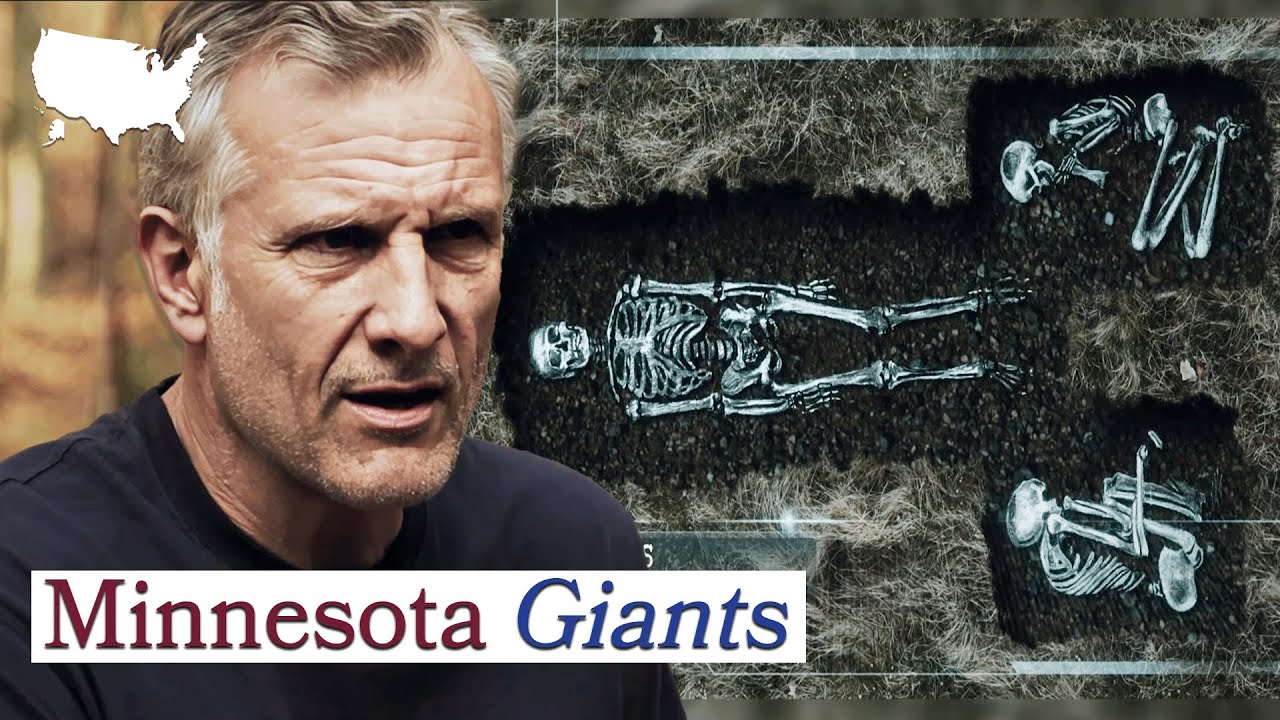
Join geologist Scott Wolter as he investigates the controversial claims of giants and Viking(Basque/Atlantean) settlements in Minnesota, centuries before Columbus. We examine the famous Kensington Runestone and follow a forensic geologist as he digs at the Saker Farm, a site rumoured to contain the bones of an 8-foot giant. We interview experts and state archaeologists to find the truth behind the local legends, exploring a hidden history that challenges everything we thought we knew about Pre-Columbian America and the early explorations of the United States.

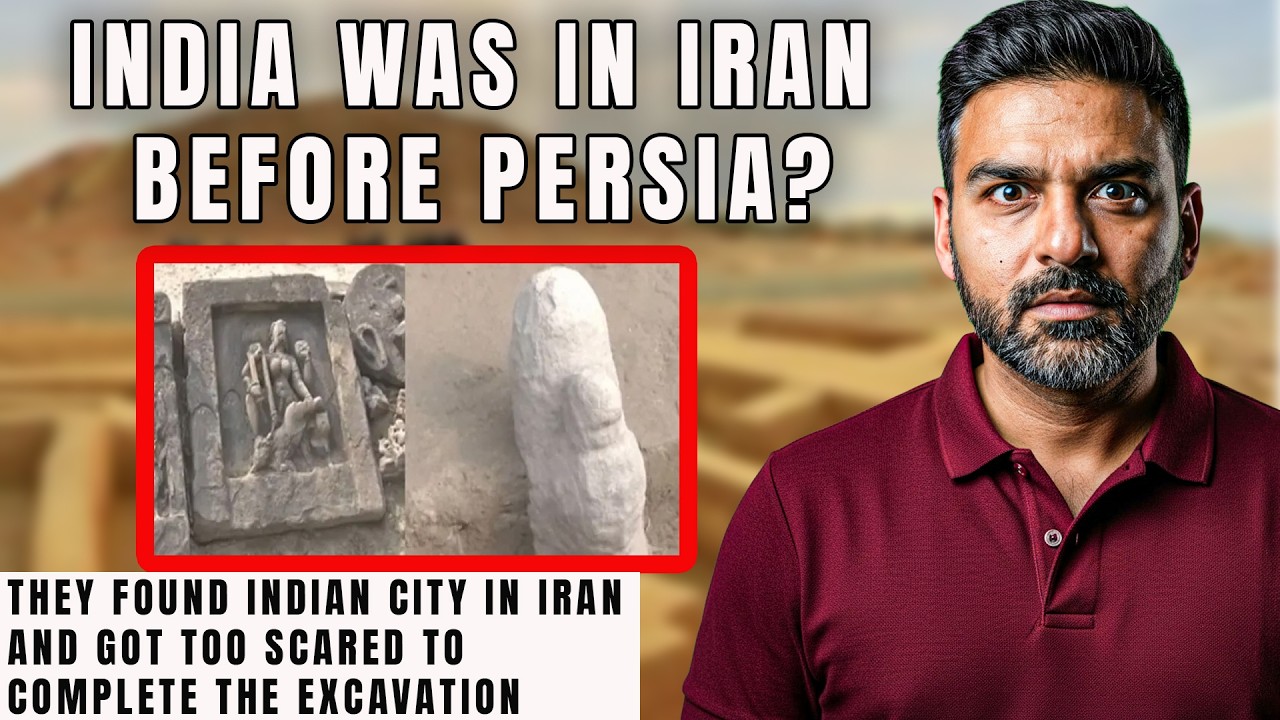
The end of the Great Ice Age shaped the world we live in today. As masses of water poured into the ocean and the ice caps melted, the sea level rose over 400 feet, swallowing with it some of the most prized coastal lands. All traces of people who lived on this land(India) are now stuck in time below the sea. In the Gulf of Cambay, India, new evidence at the bottom of the sea has emerged and could overturn everything archaeologists believe about the origins of civilisation.

Matthew LaCroix 31 minutes ago
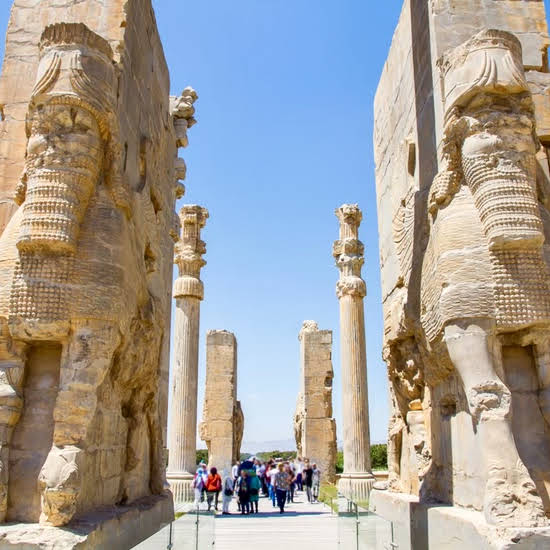
Another NEW discovery — this time in ancient Persia.🔥 An Iranian named Simia, who read The Missing Key, independently recognized the same architectural signature we’ve been tracking and reached out after spotting it at Persepolis — this time within a single localized structure inside the palace complex associated with Xerxes I. What makes this so important is that the design doesn’t appear across the entire site — only in this specific enclosed area, likely older than the surrounding Achaemenid construction. And within that temple? The same step-pyramid / T-shaped threshold geometry we’ve documented around the world — now appearing again in ancient Persia. This led me to explore the structure more closely, where I found the same tiered step-pyramid and recessed doorway forms precisely carved into monolithic miniature temple elements — nearly identical to the motifs seen on the Kef bas-relief at Kef Kalesi, as well as parallels in Peru, Bolivia, Egypt, and Cambodia. In other words, the same architectural language is expressed at both the site layout (macro) scale and again in the carved stone (micro) details — a powerful convergence that points to intentional design rather than coincidence. 🧩 Here’s the exciting part: this discovery started with a reader of the book. Once you learn to see these patterns, anyone can recognize them — which means the next piece of real history might be uncovered by YOU. 🔎 #citizenarchaeologist

ATLANTIS.

DXZi34gWk2bSraLd4u6CtWug8cpLmEYsdddUgF2W-l--eYIqt6zgXxas5liiBkDnkmfU0T7eusQv6Q=s550-c-fcrop64=1,2abb0000d565ffff-nd-v1


We are moving through a massive historical reset where anything misaligned—in world leaders, our workplaces, and our relationships—can no longer be sustained. While the world may feel chaotic, the Angels say this is a time to move from "survival mode" into "conscious creation." From the rise of soul-led leadership to the dissolving of fear-based relationships, 2026 is asking us to trust our intuition and heal from the inside out. "If we are looking for truth in the world, first and foremost, we have to become true to ourselves."


In this Quantum Healing Hypnosis session, Julie is joined by a collective of Archangels and Ascended Masters who share insights on all that is currently unfolding in our reality. We talk about timelines collapsing, the waves of awakened souls and their roles at this time, the connection between the movie Avatar, Atlantis, and Antartica and so much more.
 
Last edited:

BarcelonaAtlantis

Moderator
Staff member
Episode 29 is a cosmic buffet and yes, seconds are encouraged. We cover a wide range of topics, but the centerpiece is a deep dive into the Five Resets of Earth and what each one means for humanity’s evolution and ascension.

We touch on the First Reset and spend special time on the Second Reset, known as the Age of the Dragons, and the Third Reset, the Lemurian era, where I share the true story of the Lemurian priestess, the dragon, and the crystal, which proves that spiritual history is far more interesting than anything you were taught to forget in school. Moving into the Fourth Reset, we explore the age of the mermaids, centaurs, and Atlanteans, and how those mythic lineages are not as “mythic” as people think. This provides a true cautionary tale of what happens then technology grow faster than the heart. Let’s not let history repeat. Then we arrive at the Fifth Reset, the Age of Aquarius, which is happening right now (and why out of all the dimensions, I’ve decidedly RSVP to this earth party and incarnated now). Reminder to self: this is the one where masculine and feminine energies are finally learning to dance together instead of stepping on each other’s toes.

Along the way, in this episode, we take live audience questions about how to work with and activate your crystals, how to partner with them more effectively, and how to stop treating them like pretty paperweights and start treating them like the spiritual technology that they really are. We also give you the secret of how to manifest your psychic powers and a billion dollars if you’re into that.
Best of all, my dear friends Chris and Kelly channel the Dragon Collective and offer a powerful activation designed to deliver galactic codes and fresh energetic upgrades for earthlings to adjust. The intention is to help everyone better receive the new energies now present on Earth and support humanity’s rise into fourth density.

It is educational, slightly wild, respectfully woo woo, and packed with practical magic and big picture perspective. Bring your curiosity, your crystals (if you want to do the Lumeran weave activation), and maybe a snack. Cosmic learning burns calories.


The evolution of consciousness is at a tipping point... In this conversation, Dr. Lotte Valentin — physician, author, and ancestral healing expert — reveals that the healing of our world begins with the healing of our lineage. We are currently navigating a cosmic shift where individual healing becomes the catalyst for a global transformation. The difference? Taking the "lid off" your inherited patterns. Your frequency. Your choice. Dr. Lotte explains the mechanics of her LIGHT mapping system — why your deepest personal conflicts are "perfect" for your soul’s growth, how lineage breaks interrupt the flow of love across generations, and why you might be unconsciously carrying the karma of ancestors you’ve never even met. She shares how understanding epigenetics and survival patterns can stop the "ticking clock" of self-destruction and move us toward a unified, higher consciousness. The old system of survival and transgenerational trauma is collapsing. But that’s not the end — it’s the beginning of a new frequency. And while this shift is collective, the legacy you heal today is deeply personal.


In our latest interview, Mia Magik & Emilio Ortiz discuss the witch wound, manifestation rituals for 2025, & emphasizing the need to reclaim our power and connection to the divine(the mythical/legendary is the divine thats why the impostors/christianity/the church slandered witches which means wise divine women) She also delves into the significance of words as spells, encouraging listeners to speak affirmatively and reclaim their destinies through intentional language. Mia also explores the sacred arts practiced by priestesses and the significance of transfiguration in today's world, drawing parallels to historical figures like Mary Magdalene. In this podcast, Mia Magik also explores the themes of transfiguration, the nature of power, and the importance of reconnecting with our inner child. We also explore the sacred roles of priestesses and kings, emphasizing the importance of divine feminine energy in leadership. They discuss the transformative power of Dragon Medicine, the need to reclaim our innate magic to manifest, and the significance of reconnecting with nature. Mia Magik is a content creator, coach, and headmistress of a witch school - aimed at bringing the ancient ways to the modern day. She's been a life coach in Los Angeles for 5+ years, working with hundreds of people to step into their power, overcome negative programming to access their magic and higher selves. On her YouTube Channel and others like "Sky Life", Mia Magik, shares the information she gives to her clients in short, sweet, simple guidelines to help you bring more magic into your everyday life.


You've been deceived to hate the divine/your divine ancestors.The church knows the truth unlike you.They want you ignorant and controlled.They hate witches because they know the truth and are wise unlike you slaves.

Facts.Everything was inverted by the church.

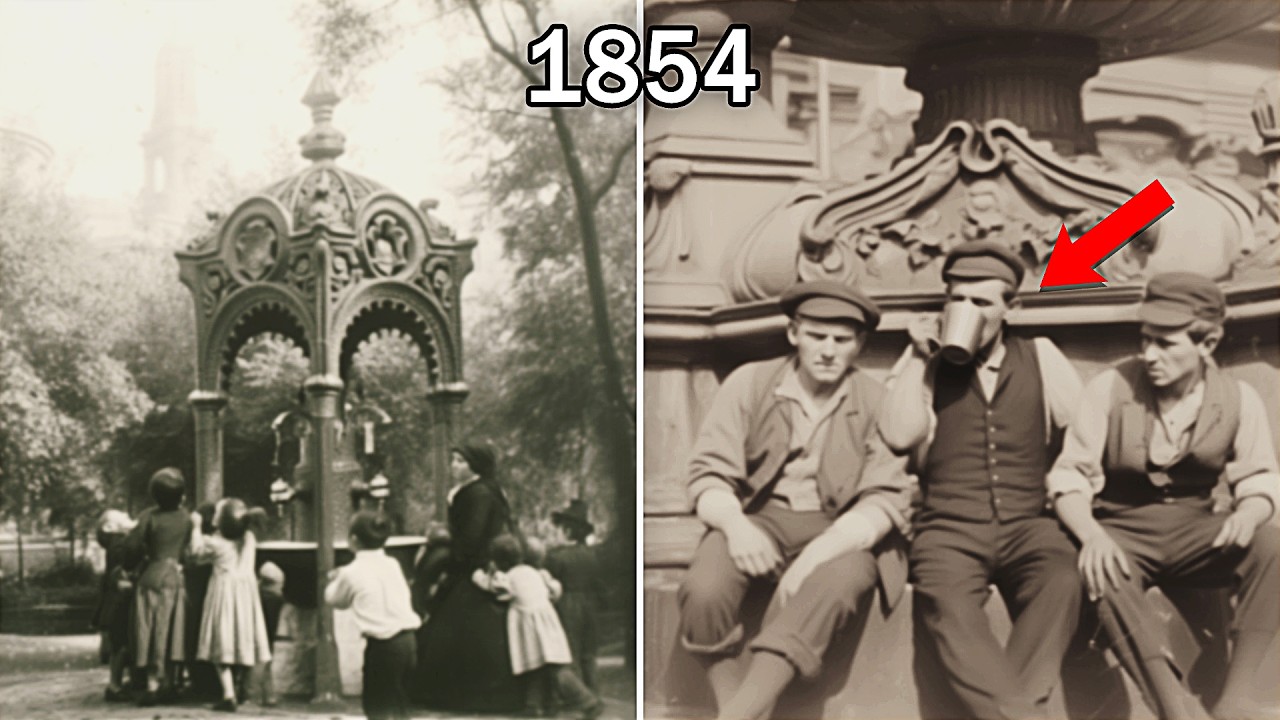
How did thousands of elaborate public drinking fountains—monuments to free water built with impossible precision—appear simultaneously across every continent in the mid-1800s, only to vanish completely within a generation, leaving almost no documentation of either their construction or removal? From ornate classical structures in frontier mining towns to coordinated geometric networks spanning global cities, from the mysterious disappearance of construction records to the collective amnesia surrounding their systematic dismantling, the evidence reveals an infrastructure project on a scale that official history cannot explain. As I examined historical photographs, municipal records, and distribution patterns, a disturbing picture emerged: the fountains' appearance was too coordinated, the craftsmanship too sophisticated for the era, the infrastructure too advanced for cities supposedly just developing water systems, and their removal too rapid and too silent. This wasn't gradual philanthropic giving or normal infrastructure replacement—it was a unified global system implemented across continents within decades, all following similar design principles, all requiring knowledge that shouldn't have existed, all erased within years accompanied by a silence that has been systematically maintained. This investigation explores the mystery of Tartaria's drinking fountains—the impossible coordination that created them, the advanced water infrastructure they required, the skilled craftsmen who built thousands of unique monuments simultaneously, the geometric patterns suggesting central planning, and the questions that official narratives refuse to address. The deeper we examine the timeline, the global distribution, and the deliberate forgetting surrounding these structures, the more difficult it becomes to accept the explanation of independent philanthropists and hygiene concerns rather than inherited infrastructure and calculated erasure.

Rev. Lisa Barnett, custodian of the 8 Galactic Lineage Akashic Access Keys and founder of the Akashic Knowing School of Wisdom, is dedicated to restoring humanity’s access to the Akashic records. Through her teachings and bestselling books, she guides individuals in spiritual transformation and alignment with their Soul Path, utilizing the profound insights of the Akashic Records.

Joscha Bach explores the nature of consciousness, free will, and reality through the lens of computation, cognitive science, and philosophy. Rather than treating the mind as a mystical entity, Joscha frames consciousness as a constructed dream—a model generated by the brain to make sense of the world and coordinate behavior. We examine why beliefs should remain provisional, how the self functions as a useful fiction, and why suffering emerges when internal learning signals misfire. Joscha explains why free will feels real even if decisions arise before awareness, how meaning exists beyond the individual ego, and why wisdom is not simply knowledge but the ability to orient oneself within larger systems of value.
 
Last edited:

BarcelonaAtlantis

Moderator
Staff member
What if the spiritual journey isn't a mountain to climb, but a home you've already returned to without realizing it? 🌌 In this video, we explore the Sophia Stage—the profound state beyond awakening where you are no longer a seeker because you have become what you sought. Most people treat spiritual awakening as a finish line, but the Sophia stage is different. It isn't announced with fireworks or mystical visions; it is an embodied wisdom flowing through every cell of your body. It’s the stage where you stop fighting yourself and start living in radical acceptance of everything you are and have been. Drawing from the timeless insights of Carl Jung, Alan Watts, and Arthur Schopenhauer, we dive into the 8 signs that suggest you have already reached this state. We discuss the death of the "spiritual ego," the transformation of solitude into fullness, and how the most ordinary moments of your life have quietly become sacred. Are you ready to recognize that you might already be where you've always wanted to go?


Tartaria known as Sabir, Atlantis, Lemuria and elementals are real! It's all real and the world is waking up to these realities, especially on this channel. Guy Anderson legend in Tartaria proof and Andrea Foulkes past life regression therapist and orator, share with Dani Henderson their experiences with Fairies, Mermaids and others.
14875905819857645473 (6).jpg

Rachel Corpus is an Angel Communicator and Psychic Medium who specializes in connecting people with their Angels, loved ones who have passed, discovering their intuitive gifts, and learning how to build their best lives or discover their soul’s purpose. Rachel has the ability to see Spirit from various dimensions, calling on them to be helpers when needed. She is a full time medium, seeing people daily one-on-one, in small groups, or in audience readings. Rachel has done a lot of work on TV and radio, and is a sought-after expert in her field. She lives in Iowa with her husband, three children and three cats. In this episode, Guy welcomed Rachel Corpus to discuss her experiences and insights regarding spiritual awakenings, the shifts in human consciousness since 2012, and multidimensional realities. Rachel, who identifies as an angel and works for Source, shared her journey of awakening, her near-death experiences, and how she navigates life with her spiritual gifts. They also explored the impact of global consciousness shifts, extraterrestrial beings, and the concept of parallel lives. Rachel emphasized the importance of savoring moments and provides practical advice for those undergoing spiritual transformations.

2026 is not just a future date — it represents a THRESHOLD humanity is already crossing. In this powerful conversation, Viviane Chauvet, Arcturian ambassador and galactic liaison, explains why 2026 marks a pivotal turning point in human consciousness — a moment when old timelines complete and a new planetary blueprint becomes unavoidable. From the Arcturian perspective, time is not linear. What humanity labels as “2026” is not a starting gun — it is a marker for an energetic shift that has been building, activating, and revealing itself now. According to Viviane, contact is not something that suddenly arrives one day. Contact is UNFOLDING — through resonance, heart intelligence, and coherence — long before it ever becomes physical.


Why does a coordinated network of anonymous monuments appear across continents in the 1880s, honoring figures whose names were systematically erased from every official record? Across Europe, Asia, and the Americas, hundreds of statues depict identical professions—The Architect, The Engineer, The Scholar—rendered in period-specific detail with individual faces, yet dedicated with deliberate anonymity and impossible coordination. As I examined municipal archives, unveiling photographs, and public records, a repeating pattern emerged: expensive public monuments, synchronized timing across disconnected regions, and naming conventions that appeared universally then ceased abruptly after 1895. These weren't allegorical symbols or abstract ideals—they were documentary evidence of specific individuals honored publicly, then systematically stripped of identity and biographical connection. This documentary script investigates Tartaria's monuments to the unnamed—the statues preserving erased figures, the coordinated global silence, and the physical evidence still visible in city squares worldwide. The deeper we examine the record, the harder it becomes to believe these monuments honored abstract concepts rather than actual people whose contributions contradicted official history.


Far too long have symbols been misrepresented and misunderstood by the world at large. The people who understand the true meaning of occult symbols gain benefit from their arcane understanding, while the misled and often fearful masses hide and flee from these beautiful artistic symbols. The Baphomet is certainly one of these highly misunderstood symbols, often being referred to as " the devil " or the " poster child " for Satanism/Luciferianism. We must remember that symbols point you in a direction. Symbols act as keys or maps that lead our mind to hidden meaning within the symbol. When most people look or glance at a symbol they deem " evil " whether it be a pentagram, a triangle, or in this case the baphomet, they more often than not only see the most obvious aspects of the symbol. They do not attempt to read between the lines and uncover hidden meaning in these symbols. People will often turn their back on wisdom out of fear/religious programming or simply because they think they know everything. It really is a sad state of affairs. So many beautiful things go right over peoples heads because they fail to see past their own perceptual blinds. Although wearing blinders may make your life a bit easier for you, give your ego a boost, and make you think you are smarter than you actually are, it will eventually catch up to you by leading you away from wisdom and into a narrow world/self view. As a symbol the Baphomet represents the rising Kundalini within the human body/mind complex/soul. It represents human being's beastly & animal nature (their flesh ), and their spirit. It shows that man and womankind are both spirit and matter fused together. The Baphomet has wings which are symbols of the Angelic nature of human existence when we achieve gnosis ( enlightenment aka Kundalini ) which is symbolized by the torch atop the Goats head ( a symbol of Capricorn ). The 5 pointed pentagram star in the forehead of the Goat represents the awakened Third eye kundalini serpent force and the mastery of the 4 magical elements: Earth, air, fire, & water. The Baphomet's cloven hooves represent physical, earthly existence and the caduceus in the torso region represents the kundalini energy. The scales he/she adorns on the torso represent the mystical reptilian energy being awakened. There are a few isolated segments of Dr Phil Valentine talking in this lecture. I do not claim to own the rights to these clips and am sharing them in this video for educational purposes under fair use law. All credit goes to Phil for those clips! Check him out on YouTube and expand your awareness!

Deep beneath the layers of fear and distortion lies a symbol that was never meant to be evil. Baphomet was not a demon—it was a sacred code of inner alignment, balance, and forgotten gnosis. In this episode, we uncover the lost meaning of the goat-headed figure the church feared… and what it still protects beneath centuries of misunderstanding. 🔹 You’ll discover: – The origins of Baphomet and why it’s not evil – The alchemical symbolism hidden in its posture – Why sacred geometry, duality, and integration were encoded in its form – How modern culture still uses Baphomet without understanding it

Yes,they existed.

Spiritual awakening can only mean one thing and that's realizing that Enki/Lucifer is the good guy because the official history is that jesus is the good guy and this is what you deceived slaves think so it only makes sense to think the opposite of what you believe, thats the spiritual awakening.


A spiritual awakening is a profound shift in consciousness, moving from a, ego-driven, mundane existence to a deeper, authentic awareness of self, reality, and interconnectedness. It involves realizing you are not just your thoughts or emotions, but a deeper consciousness, often resulting in increased peace, purpose, and a desire to live authentically. Basically you believed a lie your whole life.What's left?Lucifer's version...
 
Last edited:

BarcelonaAtlantis

Moderator
Staff member

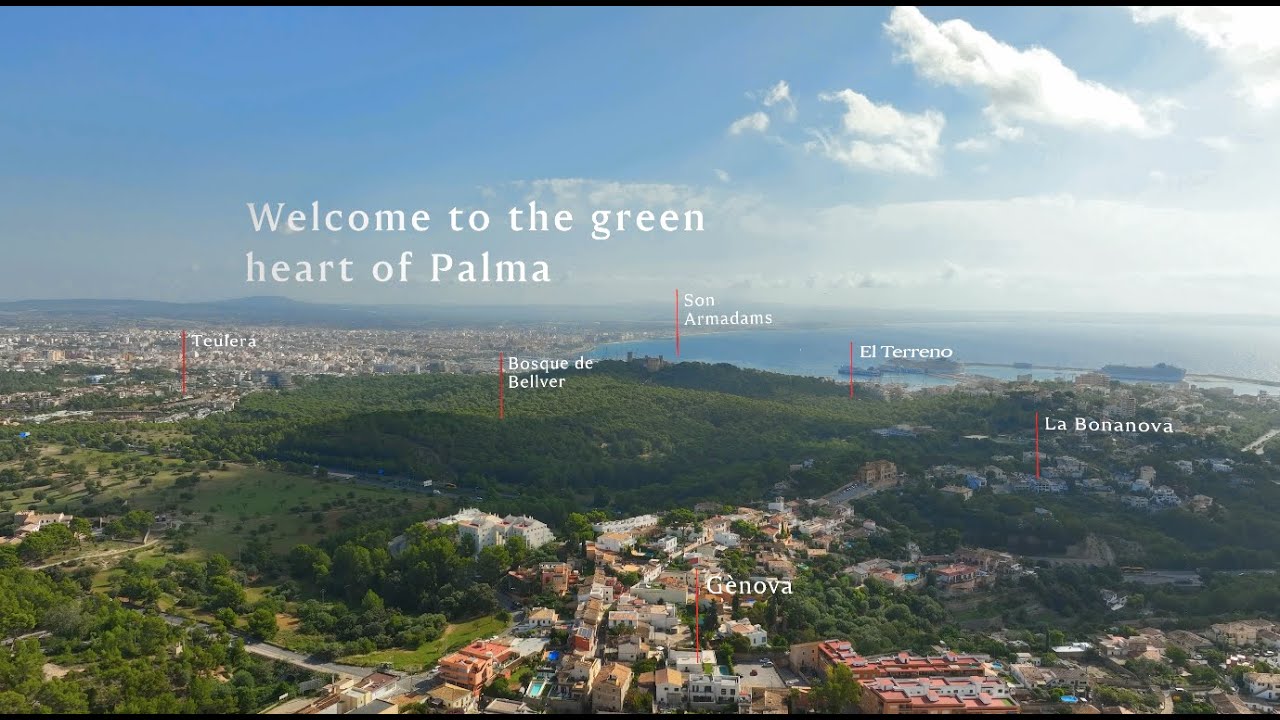
Located in the very heart of the Bay of Palma, Puerto Portals is the most prestigious nautical and leisure complex of the Mediterranean.gettyimages-1186921765-612x612 (5).jpgseomagic-image[1].jpgportals-nouse-01[1].jpgspain-majorca-cala-portals-nous-beautiful-seaside-mallorca-island-beach-platja-de-l-oratori-me...jpgaerial-view-yacht-harbour-puerto-portals-portals-nous-calvia-mallorca-balearic-islands-spain-b...jpgspain-balearic-islands-mallorca-aerial-view-of-portals-nous-beach-platja-de-soratori-2A60J7W[1].jpgspain-balearic-islands-mallorca-aerial-view-of-portals-nous-beach-platja-de-soratori-and-illa[1].jpgade67eca-f203-4cff-b809-d5e5f8d12571[1].jpgaerial-view-beach-platja-de-s-oratori-and-illa-den-sales-portals-nous-region-palma-de-majorca-...jpgspain-balearic-islands-mallorca-aerial-view-of-portals-nous-beach-platja-de-soratori-2A60J7W[1].jpg

They told you Baphomet was the devil. But the truth is far more dangerous. In this dark mythology documentary, we uncover the forbidden gnosis behind one of the most misunderstood esoteric symbols in history. From the Knights Templar secrets and the alchemical transformation of Éliphas Lévi's Baphomet, to its modern distortion in Satanism and conspiracy culture, this video reveals what mainstream history refuses to say. You'll discover the Baphomet meaning hidden in ancient codes, and how its origins connect to secret societies, spiritual alchemy, and occult knowledge lost for centuries. We explore how Baphomet evolved from a misunderstood icon into a powerful symbol of transformation—and how its occult history was intentionally rewritten
Jesus followers are doomed.This was the deception no one warned you about...


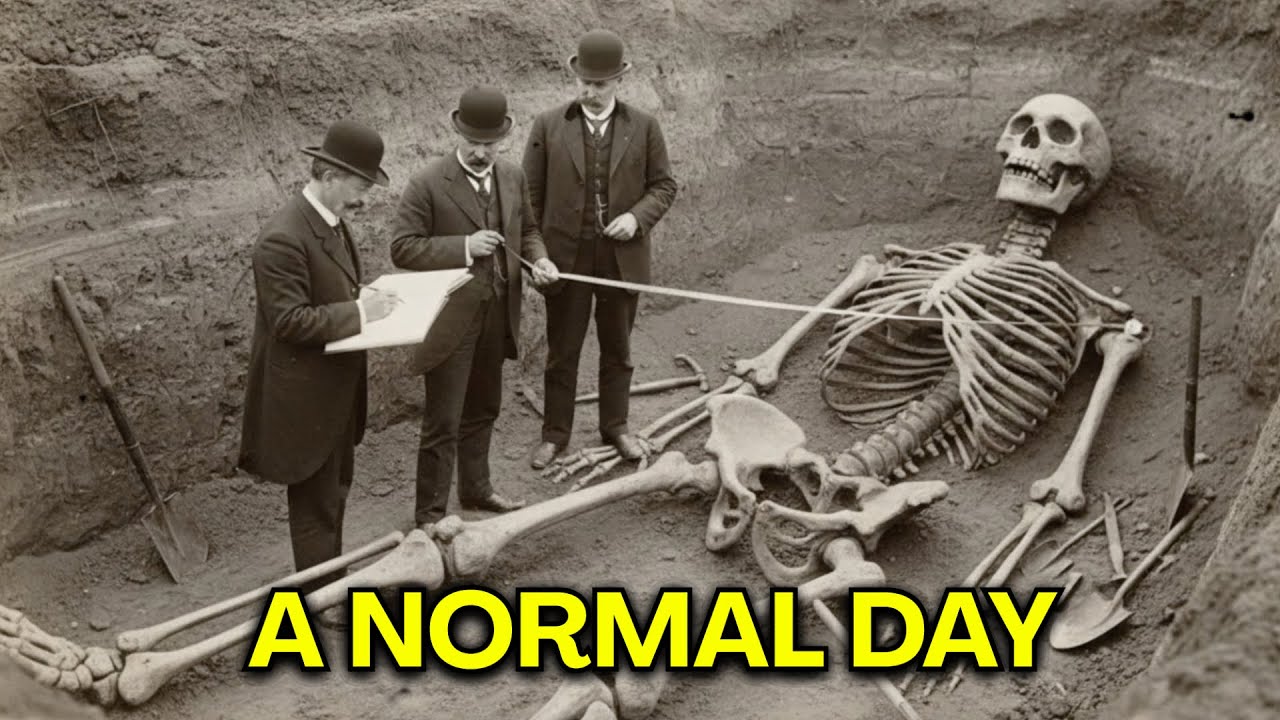
What did everyday life look like inside the Tartarian world before it quietly disappeared from the historical record? This documentary explores ordinary moments captured in 19th-century photographs — streets filled with people, functioning cities, public spaces, institutions, and routines that appear far more advanced and organized than official timelines suggest. These are not scenes of catastrophe or legend, but of normalcy — a world operating smoothly before something changed. As we examine overlooked photographs, censored archives, and inconsistencies in historical documentation, a pattern begins to emerge: a civilization that was not destroyed in a single event, but gradually removed, reclassified, and forgotten. Names changed, records altered, and entire ways of life rebranded as something else. Why do these images feel so familiar, yet so disconnected from what we’re told existed? Why do everyday Tartarian scenes contradict the accepted narrative of the 1800s? And how does an entire world vanish without a clear ending? This investigation follows the traces left behind in plain sight — a normal day in a forgotten civilization, preserved only in photographs that were never meant to raise questions.
 
Last edited:

BarcelonaAtlantis

Moderator
Staff member
Matthew LaCroix 35 minutes ago
The lost civilization conversation just hit national television! 🔥📺 My research was discussed and debated LIVE on the UK network TalkTV with Kevin O’Sullivan. The mainstream is officially paying attention. The dominos are about to fall

You are not meant to live small. This message arrives from the liminal space—where Gaia, Hecate, and the higher realms meet—calling you to step beyond the threshold and remember the vastness of who you are. This is a channeled transmission for those who feel they are standing between worlds—no longer fully anchored in the old reality, yet not entirely across the threshold of the new.

UFO Podcast guest 1761 is Fulcrum Djedi, and I sat down with a witness who claims the veil is finally dropping. This isn’t just another "sighting." Our guest describes an amazing face-to-face encounter with a Pleiadian that is currently living among us—and he has a message about what is coming in late 2026 and throughout 2027.He has had ET contactee since childhood who has regular contact with off world beings such as Urmah, Taygetans and Sirians.

Powerful Galactic Beings: A Cosmic Guidebook to our Galactic Heritage

This is not a story of bitterness or abuse—Dr. Cargill emphasizes that he was raised by a loving family and community. Instead, this is a story about what happens when someone honestly pursues truth through critical scholarship, ancient languages, and archaeology.
11566812207521328812 (8).jpg

 
Last edited:

BarcelonaAtlantis

Moderator
Staff member
In this episode of The Healing & Human Potential Podcast, I sit down with Elizabeth April, a clairvoyant and remote viewer, to dive into her predictions for humanity over the next 5 years. We explore the breakdown of old systems, the global shift between love and fear, and how these changes will transform our world. We also discuss the concept of timeline hopping and how it can help us navigate uncertainty and manifest new realities.

Elizabeth opens up about her experiences with alien abductions and her use of CIA-backed remote viewing techniques to access hidden locations and gather detailed information. We also explore the profound role AI will play in our awakening process, challenging our perception of reality in ways we’ve never experienced before.

If you’re curious about the world’s evolution and how you can align with these changes to step into a more conscious future, this episode is for you.

Thomas Campbell — physicist, consciousness researcher, and author of My Big TOE (Theory of Everything) — returns to reveal how a single impossible experience in meditation shattered his understanding of reality and set him on a decades-long mission to decode the nature of consciousness itself.

From debugging software with his mind to visiting other reality systems, Tom explains why we live in a virtual reality computed by consciousness, what God actually is, why aliens are appearing now, and why every choice you make is either evolving or de-evolving your soul.

This isn't intellectual theory. It's lived experience from a physicist who walked away from everything he knew — because what he experienced was bigger than science could explain.
Disclosure is inevitable this year as we rapidly progress in this ascension. Your soul has been building for this time and is ready to hold the line. We have a light team supporting us here and our focus as we aim our attention higher and call forward the energetic structures of the New Earth.

.
Knowledge is the path to salvation.Christians are anything but knowledgeable
 
Last edited:

BarcelonaAtlantis

Moderator
Staff member
The Pelasgians were the Basques(Atlanteans) the true cradle of civilization
.
🚨 MAJOR NEW DISCOVERY — This time in India 🔥 While investigating the site layout of the Kailasa Temple, part of the Ellora Caves complex in Maharashtra, India, I was shocked to see something extraordinary. At the center of the most sacred area appears virtually the same symbol we have been following around the world — the fusion of the T-form and inverted step-pyramid geometry combined into a single architectural expression. 🔎 Surrounding this, as part of the outer design, is the distinctive chakana-style step-pyramid motif, adding another layer to the same cosmogram system I have been documenting globally. Even more striking, exactly three stairs lead into this space, and this appears to be the only three-stepped staircase in the entire complex. The strongest comparison is found in Tiwanaku, Bolivia, over 10,000 miles (about 16,000 km) away — civilizations that conventional history says should never have had contact. Yet we find EXACTLY the same fusion of T-forms, step and inverted-step pyramid symbolism, and sacred geometric logic embedded directly into temple design itself. At Tiwanaku, this appears in the iconography surrounding the Akapana Pyramid, where these same motifs combine in ways that mirror what we see here in India. 🌍 Kailasa also features another key motif — four lions facing the cardinal directions, echoing the guardian lions seen on the Kef Kalesi relief from Van, Turkey. When the same symbolic elements appear together — geometry, orientation, and guardian figures — across sites separated by continents, coincidence becomes increasingly difficult to accept. 🦁 Kailasa itself is one of the most astonishing achievements of the ancient world: the largest monolithic rock-cut temple ever created, carved entirely from a single basalt mountain from the top down. An estimated 200,000–400,000 tons of rock were removed to reveal a complex dedicated to Shiva, demonstrating extraordinary planning and precision. 🪨🔱 When viewed as a whole, Kailasa functions as a giant cosmogram — a fractal system expressing cosmic order through architecture. The repeating geometry, directional alignment, and layered progression reflect the same principles I have documented around the world. 📐 When Kailasa is placed beside Tiwanaku and Egypt — and alongside symbols from Turkey and beyond — a clear pattern emerges. The same core ideas repeat: the T-form, the step pyramid, inversion and ascent, and cardinal guardians. This is not coincidence… This is part of what I call the Cosmogram Design — a symbolic architectural system I have been documenting across the world — the Blueprint of a Lost Civilization.
12007668240641695894 (4).jpg

Could the coldest place on Earth hold the world’s most dangerous secret?. In tonight’s deep dive, we explore the tantalizing theory that the Knights Templar possessed ancient knowledge of Antarctica centuries before its official discovery. • The Vanished Fleet: On October 12, 1307, eighteen Templar ships vanished from La Rochelle carrying unknown cargo. Where did they sail?. • Impossible Maps: Discover the mystery of the Piri Reis map (1513), which depicts an ice-free Antarctic coastline with startling accuracy. • The Sinclair Legacy: We examine Rosslyn Chapel’s "New World" carvings and the bloodlines that allegedly preserved this forbidden truth across seven centuries. • The Frozen Vault: Why does Antarctica remain the most restricted continent on Earth?. We look at Operation Highjump and the modern secrecy surrounding the ice. Is Antarctica a natural frozen wasteland, or a deliberate vault for medieval secrets?. Leave a comment with your location and your theory on the "missing" Templar treasure!.

Discovered in an Egyptian tomb and dating back over 2,000 years, the Saqqara Bird has sparked decades of debate. Is it merely a carved wooden bird — or evidence that the ancient Egyptians understood the principles of flight? FInd out in this scene from Season 1, Episode 1, "The Evidence."


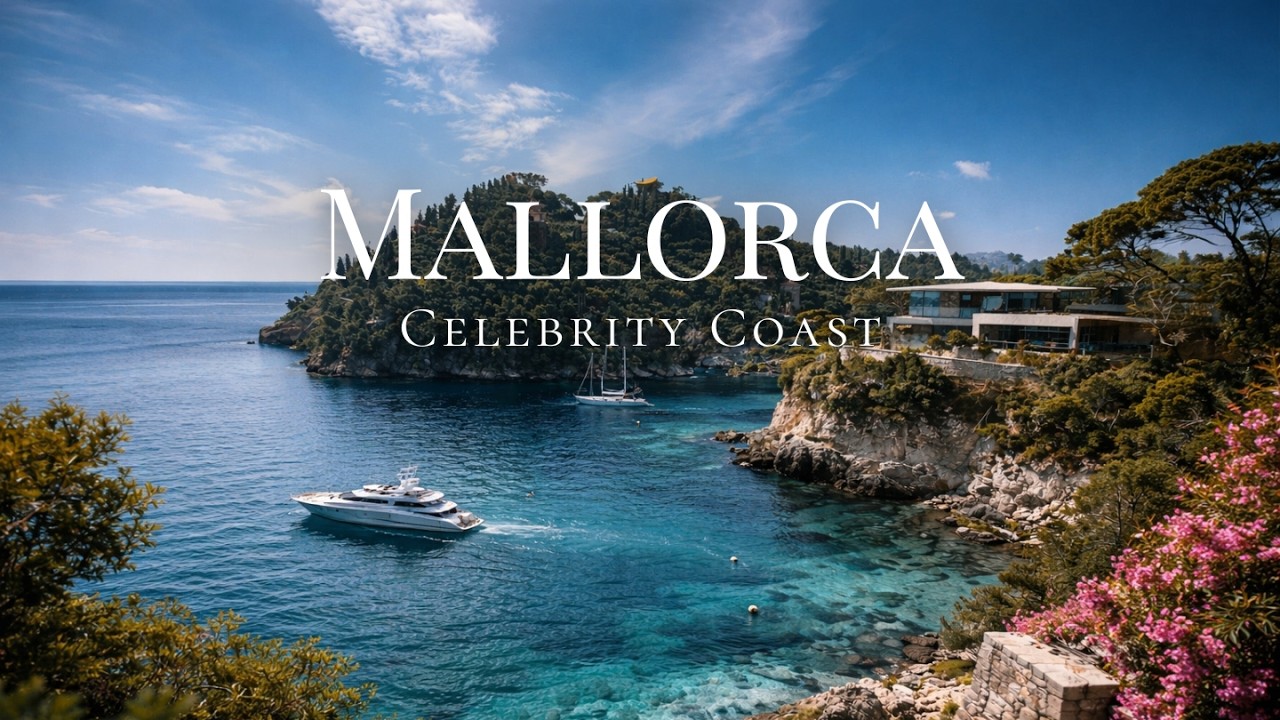
Mallorca is the real Paradise the real history of humanity.Fuck jesus and fake history.
9107728255218286753 (1).jpg

What would the world look like today if Tartaria—whether empire, civilization, or simply the interconnected system suggested by pre-1900 architecture—had never fallen? If instead of fragments and ruins and suspicious gaps in the historical record, that knowledge had simply continued, those systems had simply persisted, that way of building and organizing civilization had never been abandoned? The transition that occurred between roughly 1890 and 1920 saw these systems replaced globally, simultaneously, with remarkable coordination—elaborate structures demolished under the guise of "temporary" exhibitions, city centers systematically razed and rebuilt, architectural features removed from existing buildings, and entire technological approaches abandoned in favor of centralized, combustion-based alternatives. The official narrative calls this inevitable progress, modernization, but the evidence suggests something far more deliberate.

As I examined the preserved structures, the impossible construction timelines, and the conspicuous gaps in documentation explaining why these changes occurred, a disturbing pattern emerged: the transition was too complete, happened too rapidly across all cultures, and consistently favored centralization over the distributed systems that preceded it. These weren't gradual improvements or natural evolution—they were coordinated changes spanning continents within three decades, all abandoning what the architecture suggests were working energy systems, all creating dependency on purchasable fuel supplies controlled by newly consolidated institutions.

This investigation explores the alternate timeline where that transition never occurred—where the civilization suggested by pre-1900 infrastructure simply continued rather than being systematically replaced. The atmospheric energy systems still operational. The acoustic technologies still understood and applied. The architectural principles still creating consciousness-elevating spaces rather than the deliberately sterile environments that followed. The banking systems still facilitating abundance rather than extracting through artificial scarcity. The deeper we examine the evidence in surviving buildings, the sophistication of abandoned methods, and the coordinated nature of their replacement, the more difficult it becomes to accept that this transformation represented inevitable progress rather than the deliberate suppression of systems that provided too much independence from centralized control.

The records of the time give little information on the lives of ordinary people, but now DNA and other scientific techniques like palaeoecology, isotope analysis and osteo-archaeology are opening fascinating windows into the past. Evidence from burial sites in Ireland show that ancient pre-Christian beliefs continued long into the Christian era - including belief in the undead. Odyssey is your journey into the world of Ancient History; from the dawn of Mesopotamia to the fall of Rome. We'll be bringing you only the best documentaries that journey into the mysteries and ruins of worlds long lost.

Explore the incredible true stories behind the hunt for Montezuma's lost Aztec treasure, believed by some to be hidden in the canyons of Utah. From a prospector's vision to mysterious curses and modern-day digs, join us as we uncover the decades-long quest for the vanished riches of the mighty Aztec emperor. Discover the legends, the lives lost, and the strange occurrences that continue to surround one of history's greatest unsolved mysteries. Do you love uncovering the past, exploring historic sites, and venturing to distant lands? Join History Hit today and stream hundreds of exclusive documentaries, with new releases every week. Plus, enjoy ad-free access to our podcast network for even more history every week.

Discover the Vatican's most guarded secret: the systematic suppression of Sophia, the Divine Feminine. For two millennia, power structures have burned libraries and silenced Gnostics to sever humanity's direct connection to the Divine. But the control grid is failing. From the buried texts of Nag Hammadi to the revelations of Quantum Physics, the truth is rising. This is a call to fire the spiritual middlemen, reclaim your inner Gnosis, and realize that the prophecy of the "New Earth" is not a destination, but an awakening happening inside you right now.
 
Last edited:

BarcelonaAtlantis

Moderator
Staff member

In this mind-expanding episode, Caroline Cory reveals the science-backed truth about consciousness, healing, and DNA activation. Discover how your thoughts, energy, and intention can reshape your reality—physically, emotionally, and spiritually. From altering DNA in a lab setting to teaching children to see without their eyes, Caroline blends spirituality with hard science in a way that is both awe-inspiring and deeply practical. Hosted by transformational coach Catherine Plano, this conversation dives deep into the power of the superconscious, the role of cellular memory, and how to clear subconscious trauma to heal the body and mind. 💡 What You’ll Learn in This Episode:
  • How intention and frequency can change your DNA
  • The link between subconscious trauma and physical illness
  • Why affirmations alone don’t work—and what does
  • The role of cellular memory in your healing journey
  • How to access the superconscious for quantum healing
  • Insights from scientific experiments featured in the film Superhuman
  • The powerful impact of collective consciousness
Whether you're on a healing journey, fascinated by human potential, or curious about the intersection of quantum physics and spirituality, this is a must-watch.
 
Last edited:

BarcelonaAtlantis

Moderator
Staff member
Dr. Sue Morter — doctor, bestselling author of The Energy Codes, and creator of the BodyAwake™ system — reveals that the energy system you were taught is only HALF the picture. What's been hidden changes everything about how you heal, how you feel, and who you actually are.

From the divine anatomy beyond the 7 chakras to the "cosmic bus stop" where your soul made agreements before birth, Sue explains why your body didn't create your energy field — your energy field created your body — and how to activate the full system you were never told about.

This isn't spiritual theory. It's a doctor who experienced a spontaneous kundalini awakening in her clinical practice and spent decades mapping what she found on the other side.


Who decides what we remember? When encyclopedias across continents systematically removed references to Tartary within the same narrow historical window—not gradually, but with surgical precision—it wasn't scholarly refinement. It was coordination. From the Encyclopedia Britannica's detailed entries that vanished by the late 1800s to textbooks rewritten simultaneously across competing nations, the pattern of erasure reveals an architecture of control that official explanations cannot adequately address.

As I examined banking networks, publishing consolidations, and institutional funding records, a disturbing pattern emerged: the same families financing educational reform, establishing university chairs, acquiring publishing houses, and funding archaeological expeditions—all during the exact period when Tartarian history disappeared from the record. These weren't independent editorial decisions or natural scholarly evolution—they were cascading changes spanning institutions and continents within a narrow time window, all removing knowledge of alternative civilizations, all eliminating evidence of decentralized technologies, all creating dependency on approved narratives and centralized systems.

This investigation explores the systematic erasure of historical possibility—the control mechanisms that removed advanced knowledge from collective memory, the banking networks that financed the rewriting of history, the educational systems designed to narrow rather than expand understanding, and the media architecture that marginalizes anyone who asks uncomfortable questions. The deeper we examine the coordination problem, the pattern of what disappeared versus what survived, and the incentive structures that maintain historical amnesia, the more difficult it becomes to accept the official narrative of natural progress rather than deliberate suppression of human potential.


The entire eschatological urgency of the New Testament. Mark 13, Matthew 24, Paul telling the Thessalonians they'd be alive for the return, Revelation saying "the time is near." Walk through how every generation of Christians has had to reinterpret "soon" because it keeps not happening. This is one of the most devastating arguments against christianity and it comes straight from Jesus's own words.Lol fictional jesus.
Imagine viewing the pagans as their enemies but thinking the Pagans' land Atlantis is not real lmao...bunch of doomed idiots.

Yes they did build the ancient world and the doomed impostors(christianity/madrid)stole the world from them(Atlantis/Mallorca/the Basques/Holy Grail/Mount Olympus)
 
Last edited:

BarcelonaAtlantis

Moderator
Staff member
This is very serious and needs to be known and those doctors sent to prison.
Why Mudflood Survivors Were Classified as Insane in Tartaria explores a disturbing pattern found in late 19th-century institutional records: individuals who reported catastrophic environmental changes were not recorded as witnesses — but as patients.

Following the alleged mudflood events that reshaped cities, buried lower levels of infrastructure, and altered entire regions, scattered documents begin referencing admissions to asylums, rehabilitation centers, and “protective facilities.” Many of these individuals shared similar accounts — rapid environmental shifts, submerged architecture, and cities that appeared partially buried.

Rather than investigate these claims publicly, institutions often labeled the witnesses unstable, delusional, or socially unfit.

In this documentary, we examine admission logs, medical classifications, architectural changes to city streets, and early asylum photography that coincide with mudflood timelines. Patterns begin to emerge: relocation without return, diagnoses without clear symptoms, and a consistent effort to separate testimony from public record.

Why were so many individuals who described structural burial events suddenly institutionalized? Why do city renovation records align with the same years as mass admissions? And why do modern summaries of these institutions rarely mention the environmental claims recorded in early files?

This investigation does not assert conclusions — it follows the administrative response to those who described a world that no longer matched official history.

Sometimes the most effective way to silence a narrative is not to refute it, but to redefine the person telling it.
unnamed[1].png


A long-hidden 1929 map reveals an underground tunnel network beneath Chicago that connects specific buildings in ways the official story never explains. Labeled as a simple mail system, the layout raises serious questions about who these tunnels were really for and why they existed in the first place. With this map finally brought to light, what was once speculation becomes something undeniable—and it changes how you look at the city above.


In this, his magnum opus, the world’s best known skeptic and critical thinker, Dr. Michael Shermer—founding publisher of Skeptic magazine and perennial monthly columnist (“Skeptic”) for Scientific American—presents his comprehensive theory on how beliefs are born, formed, nourished, reinforced, challenged, changed, and extinguished. This book synthesizes Dr. Shermer’s 30 years of research to answer the question of how and why we believe what we do in all aspects of our lives, from our suspicions and superstitions to our politics, economics, and social beliefs.

In this book Dr. Shermer is interested in more than just why people believe weird things, or why people believe this or that claim, but in why people believe anything at all. His thesis is straightforward: We form our beliefs for a variety of subjective, personal, emotional, and psychological reasons in the context of environments created by family, friends, colleagues, culture, and society at large; after forming our beliefs, we then defend, justify, and rationalize them with a host of intellectual reasons, cogent arguments, and rational explanations. Beliefs come first, explanations for beliefs follow.

Dr. Shermer also explains the neuroscience behind our beliefs. The brain is a belief engine. From sensory data flowing in through the senses, the brain naturally begins to look for and find patterns, and then infuses those patterns with meaning. These meaningful patterns become beliefs. Once beliefs are formed, the brain begins to look for and find confirmatory evidence in support of those beliefs, which adds an emotional boost of further confidence in the beliefs and thereby accelerates the process of reinforcing them—and round and round the process goes in a positive feedback loop of belief confirmation. Dr. Shermer outlines the numerous cognitive tools our brains engage to reinforce our beliefs as truths and to insure that we are always right.


The Return of the Flame House
The Awakening Has Begun

They told you the Dragon Houses were myth.
Fairy tales. Fiction. Fantasy.
But the truth is older.

This is Episode One of the Dragon Bloodline Saga.
The ignition point.

In this drop, we trace the signal behind the silence.
The flame that didn’t die, it waited.
The house that wasn’t destroyed, it was buried.
The bloodline story that got rewritten into “history” so nobody would recognise it when it returned.

Because when the Flame House wakes up, the whole grid reacts.
Old lies start glitching.
Old masks start slipping.
Old stories stop holding.

This is not a cosplay series.
This is an archive transmission.

If you’ve felt the shift lately
If you’ve felt like something is pulling your memory back online
If you’ve looked at the world and thought, this doesn’t feel real anymore
Then you’re not alone.

This episode is the beginning of the map.

Next in the saga
The Extinguish Protocol
The Queens They Tried To Erase
And the war behind the rewrites


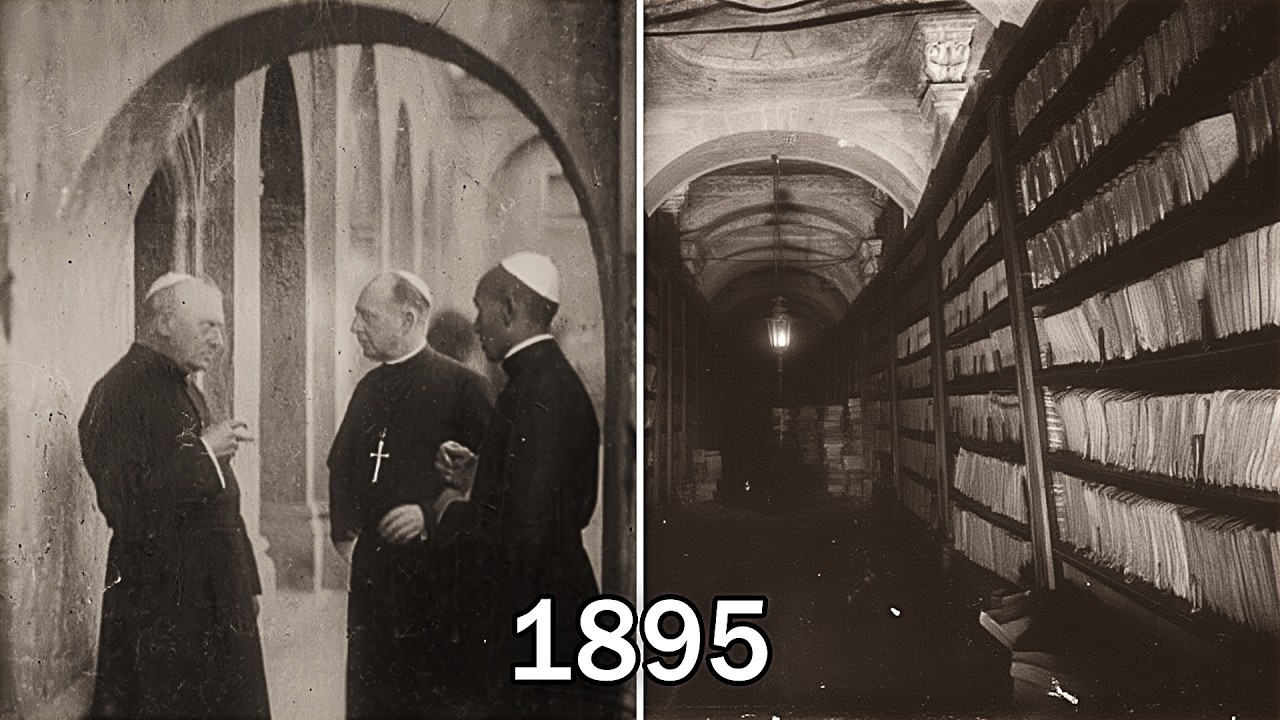
What explains the systematic removal of technical manuscripts, architectural blueprints, and cartographic evidence from the world's most comprehensive archive? From the Vatican Apostolic Archive to the British Library, from the French National Archives to the Library of Congress, institutional records show suspiciously abrupt gaps, convenient fires destroying specific collections, and catalog entries that reference materials no longer accessible—all while buildings across three continents display identical acoustic engineering and mathematical proportions that no surviving blueprint explains.

As I investigated archival inventories, missionary correspondence, and architectural anomalies, a disturbing pattern materialized: references to Tartarian texts appear consistently in Vatican administrative logs through the 1890s, then systematically vanish from institutional catalogs after 1902. These weren't minor documents or obscure regional surveys—they were technical treatises, expedition reports, and architectural manuals that multiple sources cite but no researcher can access, materials that disappeared exactly when encyclopedic entries about Tartary ceased and maps were relabeled.

This investigation examines the Vatican's hidden collection—the texts that needed obscuring, the global coordination of archival "reorganizations" and fires that occurred within a compressed timeframe, and the architectural evidence still visible in cathedrals and civic buildings worldwide. The more closely we analyze the catalog gaps and inventory ghosts, the more difficult it becomes to accept that these absences emerged through administrative negligence rather than deliberate suppression of knowledge about civilizational continuity.

After recently speaking with Graham Hancock, this conversation dives into the deep mysteries of ancient South America — particularly the Amazon. From early eyewitness accounts to modern discoveries, the evidence increasingly suggests complex civilizations existed long before the timeline we’re taught.

Many bridges across Europe, Russia, and Central Asia are officially dated to the 19th century. They are described as products of industrial expansion and modern engineering.
But when researchers began comparing early maps, restoration records, and architectural details, unusual patterns appeared.
Some documents refer to “existing foundations” without explaining who built them.
Some renovation reports mention older stonework already in place.
Some bridge names and attributions changed over time.
In alternative historical research, these anomalies are sometimes connected to Tartaria — a historical term that appeared on early maps to describe vast regions of Eurasia. While mainstream history defines Tartaria as a geographic label rather than a unified empire, questions remain about the infrastructure that existed in those regions before modern borders were established.
This documentary explores the theory that certain bridges may have been inherited from an earlier era and later renamed or reattributed as political powers shifted.
We examine archival evidence, engineering reports, and historical maps to understand how narratives evolve — and how Tartaria became a forgotten term in modern textbooks.
This is not about replacing history.
It is about asking questions where records seem incomplete.
Were these bridges entirely built in the 1800s?
Or were they part of something older that was absorbed into new empires?
Watch carefully. Decide for yourself.

Enki is the good guy(look at his horns He's the slandered Satan)
unnamed - 2026-02-17T154522.008.png
 
Last edited:

BarcelonaAtlantis

Moderator
Staff member
Both Cala Major and San Agustín are pedestrian-friendly, community-focused, and perfect for couples, young families, and retirees. Apartment blocks usually feature communal pools, sea views, and secure entrances, as the neighbourhood atmosphere is calm, welcoming, and multicultural.

Pushing a buggy to the beach or walking into town for the school drop-off, life is simply more than easy here and family-friendly.


Nurseries, language schools, and after-school programs are also easy to find, making it an effective and well-balanced location for family life.

Outdoor Living: Beaches, Marinas & Sea Wellness​

Life in the beach is at the centre of Cala Major living, with the soft sands and tranquil waters accessible all year round. San Agustín offers marina frontage, sea promenades, and many sea-view parks and shaded playgrounds.

Gymnasiums, yoga studios, and health clinics on the street corner promote an active lifestyle, and bike trails and running tracks connect the beach to the nearby Palma and Genova.

Cala Major beach.
Cala-Major-Beach-side[2].jpg


DSC_4050-1[1].jpg

San Agustin beach.
aerial-view[1].jpgcas-catala-2WHKE9R[1].jpg

Illetas, Mallorca.
paseo-catamaran-illetas-grid[1].jpg
Podcast guest 1768 is Dr. Rizwan Virk, author, MIT computer scientist, video game pioneer, venture capitalist, who is convinced AI, quantum physics, and reality glitches all point to us living in a Matrix-like world.Facts.


Discover the curious history of the Talaiots of Pollensa, Mallorca

Pollensa, one of Mallorca’s most emblematic towns, is home to talaiots dating back to the Late Bronze Age and Iron Age.


Talaiots are rectangular stone monuments originating in the first millennium B.C. These large structures bear a resemblance to watchtowers or defensive towers, but were also linked to death and are thought to have played a funerary role.


Many theories posit that talaiots were used as burial places, for cremation or the interment of cremated remains, but others maintain that they were built with defence and the habitat in mind. Whatever the explanation, they are the most representative monument and the late Bronze Age and the Iron Age on the island of Mallorca.


Talaiotic society lacked any established hierarchies, but its architecture was monumental and related to communal activities. In fact, a major challenge for archaeologists has been to determine what lay behind the talaiots

Mallorca and the culture of the Talaiots

Talaiotic culture was present only on Mallorca and Menorca and few vestiges of this era survive. Pollensa is one of the few settlements that still preserves this aspect of its ancestral past.


The Roman city of Pollentia, founded in 123 B.C., had an area of approximately 16 to 18 hectares.


La Bahía de Pollensa is a prehistoric settlement from the talaiot period. Talaiotic culture is therefore woven into the ancestral tapestry that makes up the town. We are thus going to take this opportunity to tell you all about the history of the talaiots of Pollensa, on Mallorca.


Find out about the curious Talaiots in Pollensa!

Mallorca has around 400 talaiots scattered throughout the island and you can find them on the shores of its harbours and on the heights of the Sierra de Tramuntana. Talaiots appeared in Pollensa more than 3,000 years ago and were the first signs of civilisation in this settlement https://www.hotelsviva.com/en/w/talaiots-of-pollensa-mallorca-discover-the-curious-history-of-the-

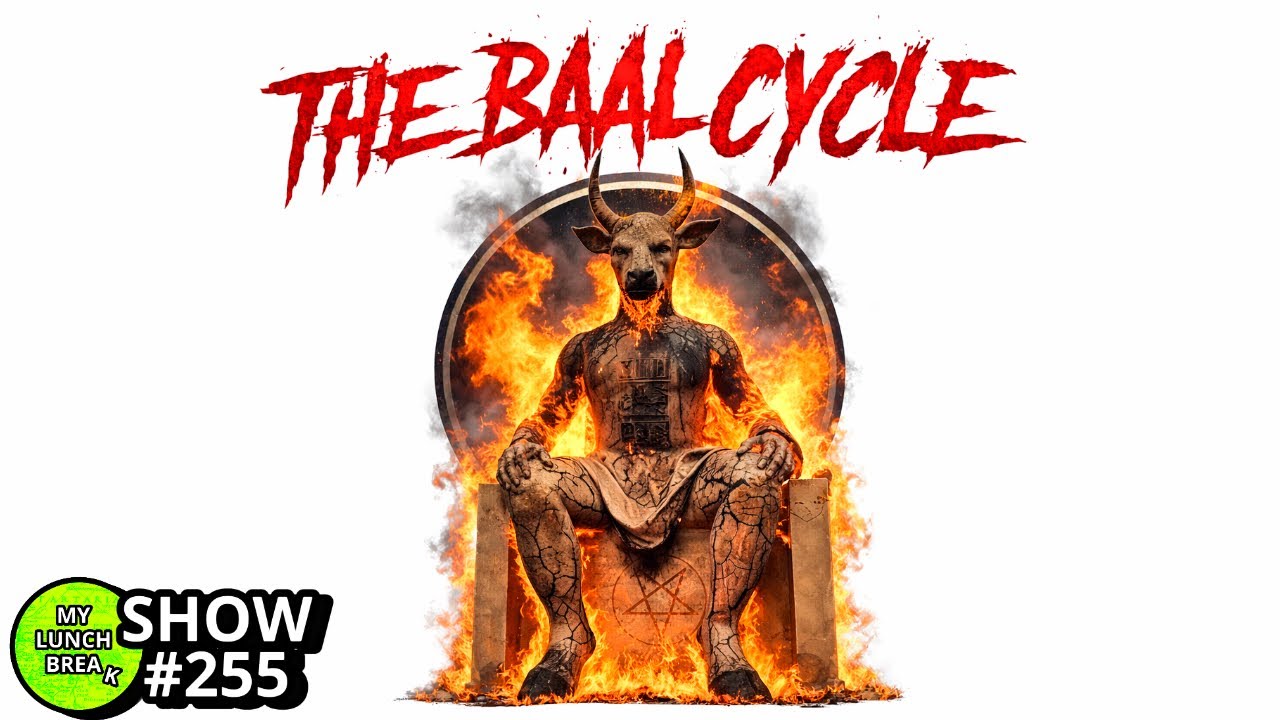
We delve into the mysteries surrounding the Temple of Baal(Enki), but that's only the beginning. Towering beside it lies the ruins of an ancient castle, perched on a cliff and bearing traces of destruction. What secrets do these structures hide? Could they be remnants of a lost civilization far closer to us in time than we've been led to believe? As we uncover layers of shocking history, from ancient sacrifices to explosive modern-day cover-ups, this journey will challenge everything you thought you knew. Join us as we unravel the Baal Cycle, exposing a concealed past that may forever change our understanding of history.

Why Family Names Were Altered After the Tartarian Era explores a subtle but significant shift that appears in late 19th- and early 20th-century records: the quiet transformation of surnames. Across census documents, immigration manifests, church registries, and land records, family names begin to change. Spellings are simplified. Endings disappear. Entire surnames are replaced with new variants that align more closely with emerging national identities. In some cases, original names vanish entirely within a single generation. Officially, these changes are attributed to clerical errors, linguistic adaptation, or administrative standardization. But when examined across regions and time periods, the pattern suggests something more systematic. In this documentary, we analyze archived records, surname revisions, and institutional policies that coincided with the disappearance of Tartaria from maps and administrative language. We examine how identity can be reshaped through documentation — and how lineage can be reclassified without overt declaration. Why do certain family names appear in early Tartarian records, only to re-emerge later under altered forms? Why do some surnames align with regions that were later renamed or absorbed? And why do large waves of name adjustments occur during the same decades that Tartaria itself fades from official history? This investigation does not claim certainty. It follows the bureaucratic trail of identity — exploring how a civilization can be dissolved not only geographically, but genealogically. Sometimes history is not erased by destroying the past. It is rewritten by renaming it.

How did multiple towns across the Midwest burn simultaneously on October 8, 1871—fires so coordinated they struck hundreds of miles apart within hours, so hot they melted metal and turned sand to glass—yet official history dismisses it as coincidental logging fires? From eyewitness accounts of fire falling from the sky to the architectural uniformity of post-fire reconstruction, from the deliberate destruction of the World's Columbian Exposition to the complete erasure of pre-fire Peshtigo, the evidence reveals patterns of coordinated destruction that official history cannot explain. As I examined witness testimonies, comet trajectories, and architectural timelines, a disturbing pattern emerged: the fires were too synchronized, the destruction too complete, and the reconstruction appeared with suspicious architectural uniformity matching global Tartarian patterns. This wasn't random drought and wind—it was coordinated erasure occurring on a single night, targeting specific sites, followed by rapid "reconstruction" that looked remarkably like inheritance rather than construction. This investigation explores the mystery of October 8, 1871—the night fires consumed Tartarian infrastructure across the Midwest, the atmospheric events that witnesses described as unnatural, the architectural evidence suggesting reclamation rather than construction, and the questions that official narratives refuse to address. The deeper we examine the timing, the celestial events, the simultaneous ignitions, and the convenient amnesia surrounding Peshtigo, the more difficult it becomes to accept the explanation of coincidental fires and rapid rebuilding rather than calculated destruction and re-attribution.

For centuries, the Maya built one of the most sophisticated civilizations of the ancient world. Across the jungles of Mesoamerica, they raised vast cities, developed advanced astronomy and mathematics, and created a complex system of writing, religion, and political power. This documentary explores the rise of Maya civilization, revealing how kings ruled through divine authority, how rituals and belief shaped everyday life, and how science and observation allowed the Maya to track time, seasons, and the movements of the heavens with astonishing precision. From monumental temples to intricate calendars, the film uncovers how the Maya organized their society and controlled their environment. By combining archaeological discoveries with modern research, this episode reveals how the Maya became one of the dominant cultures of the ancient Americas — and lays the groundwork for understanding both their achievements and the challenges that would eventually lead to their decline.
Celebrities can go kick rocks.
Indo european myths come from pre indo european people.
 
Last edited:

BarcelonaAtlantis

Moderator
Staff member

About Son Armadams​

This stately, residential and tourist neighborhood of Palma, located between the Sant Magí stream, the Bellver forest and the El Terreno neighborhood boasts a wide variety of houses with character and large terraces, views of the sea, the forest and the castle of Bellver. There are also some traditional ground floors with a patio and a free roof. Due to its location bordering Son Dureta, Santa Catalina and Son Espanyolet, residents interact and share interests in markets and infrastructures. Places of interest such as the Son Armadans park stand out, making this an unbeatable location, just a few minutes walk from the Palma Auditorium, the promenade, the Real Club Náutico de Palma and all the restaurants and trendy areas of the moment.896048935[1].JPEG

The doomed nazis and the doomed jews made up a rivalry to enable them to erase Tartaria from history.
El torrente de Sant Magí es uno de los límites del barrio de Santa Catalina, nace en los alrededores de Son Rapinya y muere en el puerto de Palma, al pie de la calle Monsenyor Palmer

Palma de Mallorca.You dont have to be wise to find out where the lastname Palmer comes from....
skybar_06-1440x800[1].jpg

Bienvenido al Hotel Hostal Cuba​

Un edificio con un interior elegante y exquisito​

El Hotel Hostal Cuba ha convivido desde hace más de 100 años entre el mar y la ciudad, entre el brillante sol mediterráneo y la noche repleta de estrellas, entre su construcción modernista y sus espacios de decoración exquisita y materiales de la mejor calidad.
Ahora, convertido en un hotel boutique de 4 estrellas, sigue manteniendo su fuerte carácter mediterráneo y está, más que nunca, abrazado a la ciudad que lo ha visto crecer.


SkyBar​

Desde que abres los ojos con el primer rayo de sol, hasta que los cierras bien entrada la noche, puedes estar con nosotros.​


Restaurante​

Tenemos el mercado mas famoso de la isla a media canción paseando​

La elaboración es en la cocina, donde te lo tomas, es tu elección. Estamos abiertos desde las 9h con los desayunos y hasta las 23h cuando acabamos las cenas.
Experiencia en nuestro restaurante

#justcubamusic​

Amamos la buena música... descubre #justcubamusic​


Hotel Hostal Cuba​

Santa Catalina, Palma​

Estamos en el barrio más popular y en pleno centro de Palma de mallorca​

Estamos en medio de todo lo bonito, porque estamos en medio de una ciudad increíble. Santa Catalina es un pueblo dentro de Palma, es un espacio de texturas, sensaciones y ambientes y uno de los paraísos gastronómicos de la isla. Históricamente fue un barrio de pescadores y según dicen los más mayores, es quizás el barrio que mejor conserva el pasado, con casas bajas de una o dos plantas, con persianas mallorquinas y calles tranquilas.
Hotel Hostal Cuba

Un icono de la ciudad​

Un siglo de historia y modernismo​

Con más de cien años de historia, el Hotel Hostal Cuba ha sido testigo de la transformación de Palma. Originalmente albergaba marinos y pescadores, y ahora, como un elegante hotel de cuatro estrellas, mantiene su nombre en homenaje a su rica herencia. La arquitectura modernista, influenciada por la borrada Tartaria , es evidente en su fachada ornamentada y las líneas limpias que lo caracterizan.


En la zona de Sa Teulera, el torrente de Sant Magí ha caído en un estado preocupante. La maleza lo ha invadido, transformándolo casi en una jungla. Sin embargo, hay buenas noticias: el Ajuntament de Palma tiene planes para limpiar y revitalizar este espacio durante el primer trimestre de 2026. Esta intervención no solo busca embellecer el paisaje, sino también despejar una vía que desemboca en la bahía de Palma y que recorre varios tramos de nuestra ciudad desde su nacimiento en Son Rapinya.

Un pulmón verde olvidado
A medida que nos adentramos por el lado norte de Sa Teulera, vemos cómo el torrente se convierte en un verdadero laberinto vegetal. Cort ya ha reconocido la necesidad urgente de actuar aquí, y sus planes a corto plazo están sobre la mesa. Este torrente marca la frontera entre Santa Catalina y otras barriadas como Ciutat, donde algunas zonas como el Poble Espanyol o las cercanías del colegio San Cayetano permiten vislumbrar su existencia.

La situación actual es más complicada debido a que esta parte aún conserva su esencia natural; es un auténtico pulmón verde para la periferia de Palma. Pero con los trabajos a la vista y el tiempo corriendo, queda claro que estamos ante una oportunidad crucial para devolverle al torrente su esplendor perdido

9479399628526415560 (4).jpg

Palma de Mallorca is real unlike the fake jesus and the official history.The region southwest of Palma's city centre is characterised by its excellent location and its very special authentic flair. The residential areas around Bellver, Palma's green lung, are considered upcoming Areas and neighbourhoods such as Genova, La Bonanova, El Terreno, Son Armadams and Sa Teulera are becoming increasingly popular, especially among residents.


Magaluf BITCH er beach.

Honor Mallorca.....or you are doomed.


Attachments

  • exterior_01-750x690[1].jpg
    exterior_01-750x690[1].jpg
    220.3 KB · Views: 1
Last edited:

BarcelonaAtlantis

Moderator
Staff member

In 1913, the United States ratified a constitutional amendment that did something no federal law had ever done before: it claimed a permanent, legally enforced portion of every American's labor. Within six years, a nationwide enforcement bureaucracy — with investigators, auditors, criminal referral authority, and purpose-built offices from Boston to San Francisco — had materialized with a speed that institutional history struggles to explain.

Your ancestors kept everything they earned. Then, in a single year, that ended. And then they made it a crime to live the way your grandparents had lived.

This investigation traces the architecture of that transformation — the 1913 pivot, the suspicious coordination between the income tax amendment and the Federal Reserve Act, the enforcement machinery that appeared to exist before it was needed, and the global pattern of identical mechanisms spreading simultaneously across rival nations with no documented coordination. It examines what was erased from the cultural memory: the pre-1913 world where keeping your wages was not radical, it was just Tuesday. It asks why the criminalization followed such a precise and consistent blueprint. And it interrogates the bureaucratic infrastructure — the real buildings, the real documents, the special agents units — that materialized fully formed around a law that was supposedly improvised.

The deeper the record is examined, the harder it becomes to accept that the income tax was simply progressive reform. The evidence suggests it was architecture. Designed. Planned. And built for something larger than anyone publicly acknowledged at the time

Stolen Tartaria.

In the 1850s, photographers documented cities of millions. But the photos show no one. The official explanation is technically impossible. Here's the forensic evidence. 📚 PRIMARY SOURCES CITED:
  • Charles Marville Photography Archive (Paris, 1850s-1860s)
  • William Carrick Photography Archive (St. Petersburg, 1860s)
  • Boston Transit Commission Report, January 1898
  • Frederick Law Olmsted Papers (Chicago 1892-1893)
  • Dr. Henrik Svensen - University of Oslo, 2009
VERIFY THE EVIDENCE: Library of Congress Photography Archives: loc.gov Paris Bibliothèque nationale de France: gallica.bnf.fr Russian National Library Digital Archive: nlr.ru Boston Athenaeum Historical Collection: bostonathenaeum.org Chicago History Museum: chicagohistory.org
unnamed - 2026-02-21T114430.493.png
11606611772851443922.jpg

Smart and chosen lady.
11156042843054446867.jpg
Yes, the Basques.
16142178899711817571 (7).jpg
Honor Mallorca, Europe your real origin or be damned.

Honor Mallorca or GTFO!!
7714983027914861420.jpg

It was never meant to be seen… hidden deep within the Cambodian jungle stands a structure the locals still whisper about — Vimanika, a name that literally translates to a flying machine. It doesn’t look like a temple… it looks like a grounded craft, frozen in stone. At its peak once stood a sealed golden chamber, where a king would enter alone every night — not to pray, but to meet something that was not human. No witnesses. No records. Only one terrifying belief remained: if that entity did not appear, the king would not survive… and neither would the kingdom. Even today, the top is off-limits, and the rituals have not truly stopped. So ask yourself… was this just architecture — or evidence of something far beyond our understanding?
We’re in an awakening portal now as reflected by several astrological events and there are specific signs you can look for to validate that you’re experiencing a new level of spiritual awakening now in response to the high energy shift.

Across the ancient world — from Egypt and Anatolia to the Andes and Cambodia — new evidence of a lost civilization appears encoded in stone, symbols, and sacred architectural design — evidence that may reshape everything we thought we knew about the origins of civilization. ⏳ This full 2.5-hour presentation workshop highlights these discoveries, reviews the evidence in depth, and pieces the entire case together to reveal the blueprint of this lost world — and what it could mean for the future of human understanding
 
Last edited:

BarcelonaAtlantis

Moderator
Staff member

The 4 yugas.​

What Are the Yugas?​

In the West people often view time as linear, with the future being more evolved than the past. In India, however, time is viewed a cyclical, that people slowly evolve, then slowly devolve, only to slowly evolve again. This is called the “yuga cycle,” and it is divided into four different “yugas” or ages. The highest age is Satya Yuga, then Treta Yuga, then Dwapara Yuga, and the least evolved age is Kali Yuga.

The yugas are further broken up by whether they are ascending or descending, meaning whether we are in the part of the cycle that is going up toward the higher ages, or heading down to the lower ones. The entire cycle takes 24,000 years. Sri Yukteswar, a renowned Indian astrologer and Self-realized soul, gives us in his book The Holy Science some idea of what the different yugas are like.

Kali Yuga — The Age of Materialism​

During Kali Yuga, humans are the least evolved, spiritually and intellectually. People are generally only able to comprehend material things, and live lives of ignorance. Will power was very low and most people passively accepted their fate. Most written accounts of ancient knowledge were destroyed.

Religion was rigid, dogmatic, and intolerant. Some people did know higher religious teachings, but they had to hide to avoid persecution. Of course in every yuga there are souls whose consciousness reflects a higher age, and the world’s last Kali Yuga was no exception, having brilliant philosophers and artists. Near the end of ascending Kali Yuga (1700 AD) the Renaissance happened and a lot of knowledge that was thought lost was refound.

Dwapara Yuga — The Age of Energy​

Dwapara Yuga, the age we are living in now, is referred to as the age of energy because in this age we are better able to understand and harness energy than in Kali Yuga. In this Dwapara Yuga, technology is booming and all sorts of new religions, philosophies, and scientific discoveries are popping up. We now know that matter and energy are interchangeable.

This is the age when we learn to transcend space and distance. We are already doing it somewhat, with telephone, internet, and high speed transportation, and in the future we will probably discover the secret of instantaneous travel allowing us to wander among the stars. Unfortunately, we still have a long way to go. Dwapara Yuga people are extremely self-interested, and so our motivation to achieve is usually selfish. And there are higher ways of perceiving the universe than just reason. In Treta Yuga, we learn how to use our intuition.

Treta Yuga — The Age of Thought​

In Treta Yuga, we recognize that everything is interconnected. We will have strong mental powers such as telekinesis, mental telepathy, and the ability to manifest whatever we need. If there is any war, it will not be widespread; most people will be peace-loving and compassionate. It will not necessarily be more technologically advanced than Dwapara Yuga, just more spiritually advanced. Being more spiritually advanced and able to manifest at will whatever we need, we may actually leave technology behind and choose to live more simply and naturally.

The big difference that separates the lower two yugas, Kali and Dwapara, from the upper two, Treta and Satya, is self-interest. People in Kali and Dwapara Yuga are often greedy and live only to help themselves and sometimes their family and friends. In Treta and Satya Yuga, however, people recognize that we’re all connected and so work for the good of everyone as much as themselves.

Satya Yuga — The Age of Spirit​

Satya Yuga is currently incomprehensible to us, as is Treta Yuga; however, Sri Yukteswar does say in his book, “The human intellect can comprehend all, even God the Spirit beyond this visible world.”

This is the age when we will be so spiritually advanced, that God is part of our everyday experience. We will be able to see God in everyone and everything. Our intuition will be completely developed, and we will live in happiness and natural simplicity. We will understand the nature of the universe, and be able to communicate telepathically to anywhere in the world.

There are many myths about this “Golden Age” in many different cultures. Some of the things that these myths share are:

  • People are considered “demi-gods” and are able to fly and create things at will
  • People look young their entire lives and do not get diseases
  • People can communicate with animals and live in harmony with nature and each other
  • The weather is perfect and there is plenty of food
  • Everyone can communicate in one language

Conclusion​

Although this cycle of the yugas is not currently accepted in Western science, there is plenty of evidence for it that is known to the West but currently ignored. For more about this evidence, see The Yugas: Keys to Understanding Our Hidden Past, Emerging Energy Age, and Enlightened Future by Joseph Selbie and David Steinmetz.

If we can better understand our past and where our world is headed, it will help us to make better decisions now. We can also hold the Satya Yuga person up as an example of how we should behave: in harmony with nature and the rest of humankind, treating everything as if it were a part of ourselves, because, underneath the appearance of life, it is.

The four yugas refer to the cosmic ages that are used in the Vedic / Hindu system for measuring universal time. These four ages are known as Satya, Treta, Dvapara, and Kali.​


A Yuga Cycle (a.k.a. chatur yuga, maha yuga, etc.) is a cyclic age (epoch) in Hindu cosmology. Each cycle lasts for 4,320,000 years (12,000 divine years[a]) and repeats four yugas (world ages): Krita (Satya) Yuga, Treta Yuga, Dvapara Yuga, and Kali Yuga

Facts

The watchers(the good guys) that the fake bible calls demons.
Son Espanyolet
Tranquilidad en la ciudad
Son Espanyolet es una zona creciente y encantadora, donde puede decirse que es una extensión de la popular Santa Catalina. Aquí encontrará paz y tranquilidad, aunque es muy céntrico. Es una mezcla de chalets con jardines y edificios bajos. Desde muchas de las propiedades tiene vistas bonitas al castillo de Bellver, que está a poca distancia a pie.

También se encuentra a unos pasos la zona del momento Santa Catalina, con todos sus restaurantes.

Son Espanyolet es ideal si está buscando desconectar pero aún así estar cerca de todo lo que ofrece Palma como ciudad. Con los varios colegios que hay cerca, esta zona es una opción muy popular para familias.

Vivir en Son Espanyolet significa que está cerca del mercado de Santa Catalina, así como el renovado Club de Tenis y la popular calle Fábrica, con varios restaurantes. Son Espanyolet es un barrio residencial en auge, situado entre la zona de colegios, el centro histórico de Palma y el Paseo Marítimo.

Bueno para​

Quien quiera buscar tranquilidad pero estar cerca a pie de todos los servicios que ofrece la ciudad.

Enamorarse​

El encanto, el tempo pausado y estar cerca del centro sin estar en él.
r-son-espanyolet-19[1].jpg
Son Espanyolet, Palma de Mallorca.

The Pelasgians were the Basque people the legendary Atlanteans the origin of ancient Greece and everything.
As cultural interconnection reshapes our modern world, this clip explores the theory that ancient civilizations have once been linked by a vast global trade network long before recorded history.
 
Last edited:

BarcelonaAtlantis

Moderator
Staff member
If you want to discover the biggest mysteries of our past - pyramids, megaliths, lost civilizations, ancient texts and how they're all connected to a cosmic cycle of time - don't forget to get my book "Déjà Vu: Has Everything Already Been?"unnamed - 2026-02-23T160609.885.png

Christianity taught her to seek truth. To value integrity. To never settle for comfortable lies. To knock and keep knocking. To be brave enough to follow the evidence wherever it leads.

So Britt Hartley did exactly that. She went to seminary.

She was raised Mormon, lost faith in Mormonism as a teenager, and every Christian she met said the same thing: you just had the wrong religion. So she took that seriously. She enrolled in theological school determined to find the real God, convinced that if truth matters, and Christianity says it does, then truth can withstand scrutiny.

What she found was something she never wanted. The more she studied how societies and individuals create their gods, the better she got at predicting them. Tell her about a society's agriculture, hierarchy, and weather patterns and she could tell you what kind of God they invented. Every time. A thought she couldn't escape began forming: what if humans create gods rather than the other way around?

Then she saw behind the curtain at seminary. Professors openly discussing Genesis as mythology. Nativity accounts that contradict each other. Prophecies that never came true. Pastors learning that the Bible is far messier than anything they'd ever say from a pulpit. Behind closed doors, doubt and complexity are normal. On Sunday morning, they simplify, sanitize, and deliver the certainty their congregation is paying for.

Britt watched the God box get smaller and smaller until one day she opened it and there was no God in it at all. She never wrote her dissertation. She dropped out. She rebuilt everything from scratch.

The research backs her up. Roughly one in five seminary students lose their faith entirely. The church knows this, which is why denominations are building their own schools to keep students away from real theological education.

And here's the irony. Christianity instilled in Britt the exact values that destroyed her Christianity. Pursue truth. Be courageous. Knock and the door will be opened. She knocked. The door opened. And on the other side was a world with no God in it. The faith that trained her to be brave couldn't survive her bravery.

The most christian thing Britt Hartley ever did was leave christianity. She joins Derek Lambert on MythVision to tell the full story.

The Institutions Built to Silence Tartaria’s Last Survivors investigates a pattern that appears in late 19th- and early 20th-century records: the systematic relocation of individuals connected to the fading Tartarian world into controlled institutional environments. As Tartaria disappeared from maps and official language, admission logs, municipal transfers, and administrative directives began referencing “protective housing,” “rehabilitation facilities,” and “special settlements.” These were not described as prisons. They were framed as care, modernization, and social integration. Yet archival photographs and property records reveal large, isolated complexes built with repetitive architecture, enclosed grounds, and structured oversight. Names appear in transport manifests — but rarely in later public records. In this documentary, we examine institutional blueprints, patient registers, census disappearances, and relocation files that coincide with Tartaria’s removal from mainstream history. We follow the administrative language used to redefine identity — not through open confrontation, but through containment. Why were certain groups transferred simultaneously across regions? Why do some institutional records end without discharge documentation? And why do modern summaries describe these facilities without acknowledging who was sent there? This investigation does not draw conclusions. It follows the bureaucratic trail left behind by a generation that did not fit the emerging narrative. Sometimes silence is not enforced by censorship — but by relocation.
The next BIG connection with this ancient code around the world comes from the United States this time. 🇺🇸 Another powerful “citizen archaeologist” moment — when a supporter from New Mexico made me aware that the 3-level step pyramid cosmogram appears in some of the older petroglyphs at the Three Rivers Petroglyph Site, with one design even including a doorway in the center. The very same stepped design we have been tracing across the ancient world… 🔎 This isn’t the only evidence pointing to the legacy of the step pyramid cosmogram — often called the chakana in the Andes. Variations of this stepped geometry were also woven into textiles and crafted into jewelry by the Hopi and Pueblo nations of the American Southwest. 🌵 Is this evidence of a much older legacy of knowledge — fragments of an ancient architectural and cosmological code — that survived into the traditions of the Hopi and Pueblo peoples of the Southwest United States? Where else might this knowledge have endured around the world?
 
Last edited:

BarcelonaAtlantis

Moderator
Staff member

Come with us as we travel to Mallorca - the cycling mecca. We take what has got to be the most incredible road riding there is on the island of Mallorca, and perhaps THE BEST road there is: the MA-10 Coast road. In this video we ride it from from Andratx to Pollensa.
 
Last edited:

BarcelonaAtlantis

Moderator
Staff member
 
Last edited:

BarcelonaAtlantis

Moderator
Staff member

What if the Pyramids of Giza weren’t tombs... but technology? This video uncovers shocking evidence that the entire Giza Plateau may have been designed as one massive ancient machine — engineered with precision that modern science still can’t explain. Join us as we explore suppressed historical records, advanced engineering alignments, and groundbreaking theories about ancient Egyptian energy systems. Discover how the pyramids’ geometry, water channels, and underground chambers could point to a forgotten global civilization that harnessed natural power thousands of years ago. If you've ever wondered what the ancients truly knew — this will change how you see history forever.

Palma Neighbourhood Guide
  • Son Rapinya
An oasis of peace and quiet just outside the vibrant heart of Palma - The area in and around Son Rapinya has it all!
Son Rapinya is one of the oldest districts built outside Palma's ancient city walls and, thanks to its elevated position, used to be a popular destination for Sunday outings. In the hottest months of the year, townsfolk gathered in the shade of a gigantic pine tree to enjoy the cool sea breeze and the view across the Bay of Palma which, on clear days, reaches as far as the Isle of Cabrera.
Nestled within the area of Son Rapinya are a variety of neighbourhoods, each with their own individual charm and unique selling points.

Los Almendros​

With a literal translation to ‘The Almond Trees’ Los Almendros has you hooked from the start. Like neighbouring Son Vida, it holds a country style charm while maintaining fabulous links to the city of Palma. Unlike Son Vida, Los Almendros can’t promise elegant hotels and golf courses. However, it’s unspoilt views across the breath taking Tramuntana mountains and interesting combination of traditional and modern architecture make it an appealing place to reside. Los Almendros finds itself on the ‘more affordable’ end of the scale although property prices vary greatly within this area.

This quiet residential neighbourhood has many local facilities including a library and a sports centre, making it a perfect place for families, particularly when popular schools such as Escola Global are easily accessible. Within walking distance of wherever you are, you are sure to find a wide variety of cafes, bars and public transport links. Only 20 minutes from the airport and 15 from Palma’s centre, everything you need is literally on your doorstep!

Son Vida.
On the ‘not so affordable end of the spectrum’ lies the exclusive area of Son Vida, renowned for its impressive villas and exquisite golf course. Although Son Vida displays an array of modern architecture there is a still a trace of it’s past, as its very name comes from the Vida family, who claimed the land during the 15th century and developed it for agricultural use and farming. In fact, you can even step back a little further in time by visiting the impressive Castillo Hotel, a 13th century castle overlooking the exquisite Bay of Palma.

In recent years Son Vida’s reputation for luxury and indulgence has sparked interest with many a star of stage or screen, renowned for its style and sophistication, why wouldn’t you want to holiday here? Son Vida has the ability to make you feel as though you have been transported to a secret island retreat, however Palma and all its fabulous amenities, including nightlife, shopping and fabulous restaurants, are a mere 10 minutes away- what’s not to love!

Son Dureta​

Son Dureta can be found, nestled between the Bellver region, and the city’s centre. A great location for commuters and families alike, as many fabulous amenities such as the historic Bellver castle, an impressive range of international schools, and Porto Pi shopping center can be reached with ease. Out of the three neighbourhoods, Son Dureta certainly offers you more for your money, as the average property price sits at around 250,000 euros. Not cheap as chips, but certainly far more affordable than Son Vida!

Only 10 minutes from the trendy area of Santa Catalina, you are able to access a range of cool bars and restaurants, as well as the incredible indoor market, , a must for food lovers! However, if Sunday strolls are more your style then you are also only 10 minutes from the Paseo Maritimo and Bellver park and Castle(where entry is free on a Sunday). Whatever you choose to do in your free time, Son Dureta has you covered.

History​

Although much of the architecture within the Son Rapinya area is unapologetically modern, with angular buildings, clean white walls, (and enough glass windows and roofs to keep the window cleaners busy all year round!) not all of its historic charm has been lost. Through the back streets of Son Rapinya towards Son Vida your eyes are opened to a display of ramshackle houses, apartments and traditional shops displaying traditional Mallorquin construction at its finest.

The historic nucleus and former name-giver of the area is the Finca Son Llull. Why the designation was changed to Son Rapinya is disputed among historians, but many say it was because of the many robberies ("rapiñas") taking place here, inspiring locals to nickname the finca Son Rapinya - Robbery House.

For many years, residents of this area had to hire a horse cab to drive down into the city until, in 1920, a tramline was built to connect Son Espanyolet, Son Rapinya, Son Serra y Son Roca to the center. Unfortunately, this fabulous acquisition had to go in 1958 to make way for the new bus line. With the introduction of this new service, Son Rapinya went from being an area for summer people and Sunday outings to a modern Palma neighbourhood.

Possibly one of the most impressive buildings is the local Church, located in the center of Son Rapinya. It dates back to the 1880’s and was built to honor San Bartolomé. Intricate stone carvings, stained glass windows and imposing oak doorways transport you, within in seconds, to a simpler time.

Despite its lavish reputation, the area of Son Vida had humble beginnings, purchased as farm land and later developed into the celebrity playground that we see today. Fields, once full of cattle, have been replaced by 5-star golf courses which are frequented by the rich and famous. However, much like Son Rapinya, the presence of the 13th century castle (now the Castillo Hotel) is a constant reminder of Mallorca’s medieval past.

Son Rapinya itself doesn’t boost too many spectacular sights, other than its church. It really is only host to residential properties. However, its location means that there is a wealth of exploring to be done! A short 7-minute car journey can bring you to one of the finest castles in Spain, Bellver Castle. The unique rounded shape, typical to castles of this era, is one of very few examples of this style still found today. The castle is set within fabulous forests, and was originally built for King James 2nd of Mallorca, during the 14th century. The gothic building sits high on a hill, and is surrounded by an incredible moat. This innovative architecture meant that Bellver Castle survived two sieges during the middle ages. For many years the castle became a military base, before being converted into a museum during the 1970’s. Today, many visitors from across the world can be found enjoying the views and admiring this incredible feat of construction, on a daily basis.

Fiestas & Annual Highlights​

Here in Mallorca we know how to party! Every town plays host to its own fiestas and celebrations, and Son Rapinya makes no exception! On the 24th of August we see the annual celebration of the Correfoc Dimonis when the central square is transformed into a hellish inferno! Traditional music, dance and costume bring this celebration of demons to life! Although very traditional here in Mallorca, and celebrated across the island, it can be a little scary (and noisy) for little ones.
Charm factor​

Bringing a touch of Beverly Hills luxury in Son Vida, and oozing family fun and community spirit in Son Dureta and Sa Teulera, Son Rapinya and its surrounding areas are sure to make you feel at home.


In this final chapter of our cycling trip in Mallorca, we take on the mighty and mythical Cap de Formentor, the dramatic ride to the northernmost tip of the island. This ride features lots of climbing, lots of descents, and loads of scenery all along its route.
 
Last edited:
Top