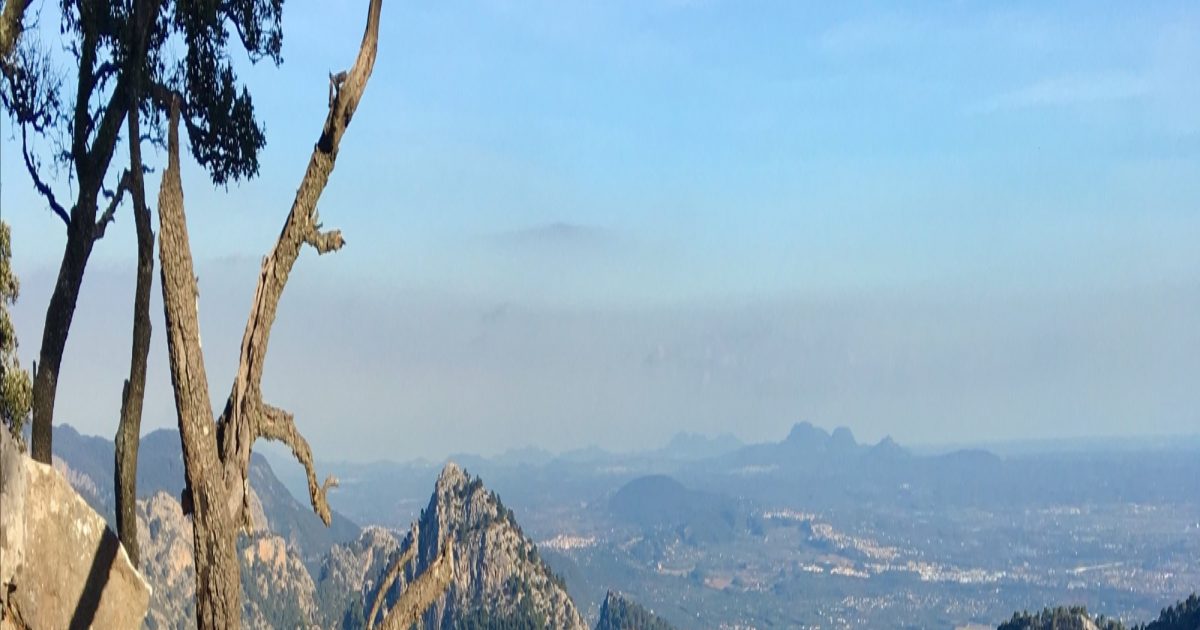
Hike the spine of the island of
Mallorca along the glorious Serra de Tramuntana, the GR221. It is a truly beautiful route through this UNESCO
World Heritage Site that ranks among the top treks in Europe. Imagine wild limestone mountains rising up above a jade green sea, with pine trees sculpting the horizons. Quaint little villages, fruit orchards, olive groves, and farmers working in the fields as you stroll along the trail pretty much sums up this experience. This is the 'hidden' Mallorca, and most certainly not the Mallorca of busy beach holidays! We get well away from the crowds as we head for the hills.https://www.tracks-and-trails.com/holidays/mallorca-serra-de-tramuntana
But for a birder like me, the ornithological highlight was the black vulture. These huge birds of prey are found only in a few places in Europe, mainly Mallorca. They have been driven to extinction on other Mediterranean islands, but a breeding program and strict protection measures stopped this from happening on Mallorca. Ever since their comeback their stronghold has been the northern part of the Serra, north of Sóller, where they breed mostly in pines growing on coastal cliffs. However, they have also returned to the mountains south of Sóller. Already on my first day on the GR, several of them were posing on ridges along the trail. The black vulture is the only vulture on the island and unmistakable because of its size
Keen for a hike before winter, Joakim Steinsvåg spent a week under blue skies hiking the GR221 through Mallorca’s Tramuntana range.

www.cicerone.co.uk
Mallorcan Black Vultures no longer endangered.
Mallorca's most iconic bird lives in the Tramuntana mountains.
Black Vultures are a rare but impressive sight in Mallorca. With a wingspan that can reach over two and a half metres and weighing up to eight kilograms, these giant animals established a breeding colony in the Serra de Tramuntana centuries ago, nowadays the only of its kind found on an island.
Nearly extinct in the 1980s, the regional government together with the Black Vulture Conservation Foundation created a plan to preserve its presence on the island when only 19 individuals lived in Mallorca, including a single breeding couple. The reasons for this sad situation were hunting and the fact that some of the herbivorous animals they ate had been poisoned to protect crops.
Their number has been slowly but steadily increasing since then and, more than 30 years after, it has been announced that the Black Vulture is no longer endangered in Mallorca, although its situation is still very fragile. There are now over 200 birds on the island, including 35 breeding couples with an issue of around 25 chicks per year.
This auspicious news was announced last Saturday, September 1st, on the International Day of the Vulture when special activities were organised at the Vulture Rehabilitation Centre in Campanet. You can visit their facilities and learn more about these majestic creatures as well as about their projects regarding the preservation of the vulture population in Mallorca.
Black Vultures are not easy to see in the wild but your best bet is to head to the Serra de Tramuntana mountains, especially the area near Escorca. Try hiking to Lluc Monastery or the Cuber Reservoir and keep looking up! Just remember to avoid getting too close to them and their nests to avoid disturbing them.https://www.seemallorca.com/news/black-vultures-no-longer-endangered-in-island-719848
![black-vultures-no-longer-endangered-in-mallorca-mallorca-island[1].jpg](https://www.anthroworldforum.com/data/attachments/3/3353-3b4d8807b59d72d986afff1ee12cb2ad.jpg "black-vultures-no-longer-endangered-in-mallorca-mallorca-island[1].jpg")
Black Vulture in Mallorca
In Mallorca, the Black Vulture seeks its nest in the tops of white pines, on cliffs. Around March, they lay their eggs, one per year. During the incubation period, which lasts around two months, the male and female will alternate and by May, if they are lucky, the new offspring will hatch. If we are lucky, because they are elusive birds that need quiet, and if they hear any noise, they will leave the nest.
Their nests are located on the coastal cliffs of the Serra de Tramontana, between Sóller and Pollença. For this reason, in the information campaign now underway, they remind all hikers of the importance of calling 112 if you find any injured chicks, as they are now beginning to fly.
Thanks to The Vulture Conservation Foundation (BVCF) and the Mediterranean Wildlife Foundation (FVSM), the collaboration with the local administration, volunteers and others makes us more and more aware of the importance of maintaining our habitat.
Thanks to them, and all their collaborators, the population of Black Vultures (Aegypius Monachus) in Mallorca has increased considerably. Although in the early eighties the last insular population of black vultures was on the verge of disappearing, today, thanks to the efforts to protect them, the population in Mallorca has managed to increase to more than 46 pairs of black vultures and 33 new chicks according to the last 2021 campaign of FVSM and environmental agents
In the world there are some 23 species of vultures, of which only four are seen in Europe: in addition to the Black Vulture (with a distribution area in southern Europe and Asia), the Griffon Vulture, the Egyptian Vulture and the Bearded Vulture. 90% of this population lives in Mallorca.
El Buitre negro, en con una envergadura que ronda los tres metros, lo vemos planear con sus alas en la Serra de Tramontana, Mallorca.
showingyoumallorca.com


 productesdemallorca.es
 hive.blog
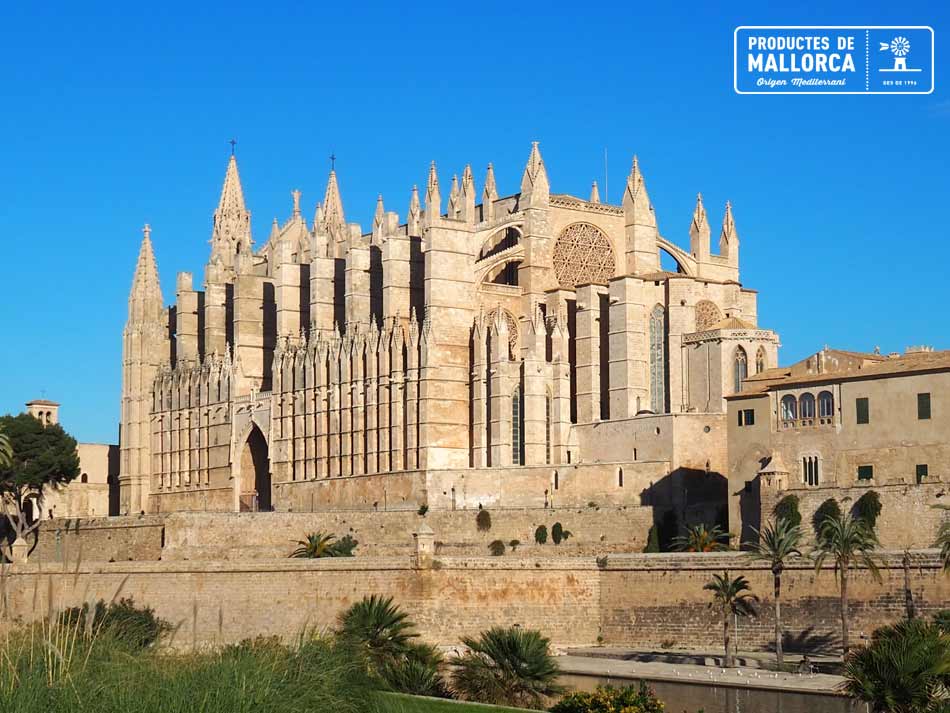
The Bellver Castle is also made out of limestone so when you see a castle or a cathedral you are seeing "Mallorca" because Mallorca is made up of limestone-
hive.blog
The Bellver Castle is also made out of limestone so when you see a castle or a cathedral you are seeing "Mallorca" because Mallorca is made up of limestone-