
Anthro World Forum
You are using an out of date browser. It may not display this or other websites correctly.
You should upgrade or use an alternative browser.
You should upgrade or use an alternative browser.
Classify her and where can she pass. Scottish + Italian
- Thread starter Ezio1
- Start date






Ezio1
Well-known member

Ezio1
Well-known member
Maybe but she doesn’t stand out in Spain, for example.Doesn’t look southern European. Looks more British/Irish.

Maj313
Well-known member
Yeah maybe like basque area? Idk too much about Spanish phenos. Most Spanish I know are from Latin American.Maybe but she doesn’t stand out in Spain, for example.

Beowulf
Well-known member
- Country
-

Iberia is homogenous there's barely any difference genetically or phenotypically Basques are just a bit more isolated genetically they stop recieving any foreigner ancestry since Iron AgeYeah maybe like basque area? Idk too much about Spanish phenos. Most Spanish I know are from Latin American.
Maj313
Well-known member
I’ve heard Basque and Galician look kinda different from regular Spanish because they have colder climate and mountains so they more northern from what I’ve heardIberia is homogenous there's barely any difference genetically or phenotypically Basques are just a bit more isolated genetically they stop recieving any foreigner ancestry since Iron Age
Beowulf
Well-known member
- Country
-
Not really i was in Galicia and people is the same as andalusians, mallorcans and Catalans, Basques may look a bit tanned and with big noses but is just a stereotype from here.I’ve heard Basque and Galician look kinda different from regular Spanish because they have colder climate and mountains so they more northern from what I’ve heard
Maj313
Well-known member
Idk man Galicians and Basque tell me there’s big differences between different regions of Spain esp with andalucia. I respect your opinion but it differs from what actual people from Galicia and north Iberia have told meNot really i was in Galicia and people is the same as andalusians, mallorcans and Catalans, Basques may look a bit tanned and with big noses but is just a stereotype from here.


Beowulf
Well-known member
- Country
-
You mean cultural or phenotypically and genetically? Everyone can search for it i just give my opinion based on my own observations andalusians can have a different cultural things than Galicians? yes i saw it myself. Are there any genetic and phenotypical difference? No Iberia is homogenous mostly bcs andalusians are descendants of thos castillians, Galicians, Asturians, cantabrians... etcIdk man Galicians and Basque tell me there’s big differences between different regions of Spain esp with andalucia. I respect your opinion but it differs from what actual people from Galicia and north Iberia have told me
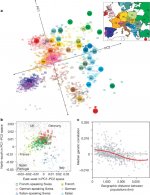
^^^^^as u can see spaniards and portuguese are less diverse genetically than Frenchs or Italians
Maj313
Well-known member
Idk man I’ve heard andalusia aka al andalus has strong historical connections to Morocco/North Africa because of 700+ years of Islamic rule. And I do think there are phenotypical differences at least that’s what Galicians and Basque have told me, they think they look different and are distinct from Spaniards/Castilians, genetics may not be that different but genotype =\= phenotype , their climate and topography is quite different from the rest of Spain so that’s why they believe that has an influence on how what they look like and their distinct culture.You mean cultural or phenotypically and genetically? Everyone can search for it i just give my opinion based on my own observations andalusians can have a different cultural things than Galicians? yes i saw it myself. Are there any genetic and phenotypical difference? No Iberia is homogenous mostly bcs andalusians are descendants of thos castillians, Galicians, Asturians, cantabrians... etc
View attachment 9529
^^^^^as u can see spaniards and portuguese are less diverse genetically than Frenchs or Italians
Beowulf
Well-known member
- Country
-
Idk man I’ve heard andalusia aka al andalus has strong historical connections to Morocco/North Africa because of 700+ years of Islamic rule. And I do think there are phenotypical differences at least that’s what Galicians and Basque have told me, they think they look different and are distinct from Spaniards/Castilians, genetics may not be that different but genotype =\= phenotype , their climate and topography is quite different from the rest of Spain so that’s why they believe that has an influence on how what they look like and their distinct culture.
Al-Andalus was not Morocco and no one call it Al-Andalus today, Andalusia is a region of today spain Al-Andalus was a different islamic kingdom. Al-Andalus had arab rulers mixed with hispano-romans and hispano-goths(as a good example the Banu Qasi family), people that lived in al-andalus were converted locals with few Berbers and few arabs, and thos who didn't converted to christianism were expelled to North Africa all these lands were repopulated by northern iberian people as i said a couple of times, the influence that had the arabs in iberia was some fortifications of mixed arabic/romanic styles, some words that we use today and a lot of words that are barely used some surnames of arabic etymologies.
if we were very arabic or berber genetically we wouldn't plot between italians and french people.
I know many Galician and basque people that live here in Mallorca and we are friends and no one have told me that they are super different from other spaniards just that they have different 'Costumbres' unique from their region.
the topograhy in all iberia is just very montainous.
Maj313
Well-known member
No offense man but it seems like you're downplaying the impact of 700+ years of Moorish rule, downplaying the ethnic diversity of Iberia - understandbly for unification/nationalistic reasons, people from the dominant ethnicity want to play down differences and play up similarities cause they feel it threatens their unity when in reality nationalists from the other ethnic groups might overplay the differences to justify their separatist aspirations. I also understand downplaying the 700+ years of Muslim rule and emphasizing the purity of the Iberians is a common ploy on anthropology forums - understandbly most people like to whitewash their ethnicity/show proximity to the European ideal and then get all combative about association with a darker ethnicity/region. This is a common trend in pretty much all nationalities not just spaniards, just my observation.Al-Andalus was not Morocco, Al-Andalus had arab rulers mixed with hispano-romans and hispano-goths(as a good example the Banu Qasi family), people that lived in al-andalus were converted locals with few Berbers and few arabs, and thos who didn't converted to christianism were expelled to North Africa all these lands were repopulated by northern iberian people as i said a couple of times, the influence that had the arabs in iberia was some fortifications of mixed arabic/romanic styles, some words that we use today and a lot of words that are barely used some surnames of arabic etymologies.
if we were very arabic or berber genetically we wouldn't plot between italians and french people.
I know many Galician and basque people that live here in Mallorca and we are friends and no one have told me that they are super different from other spaniards just that they have different 'Costumbres' unique from their region.
the topograhy in all iberia is just very montainous.

- Country
-

Basques have the most WHG in the world and that is what differentiates them from other Iberians and other people in generalIberia is homogenous there's barely any difference genetically or phenotypically Basques are just a bit more isolated genetically they stop recieving any foreigner ancestry since Iron Age
Beowulf
Well-known member
- Country
-
So you're telling me that in medieval era Christians wanted to mix with muslims and religion differences didn't existed?No offense man but it seems like you're downplaying the impact of 700+ years of Moorish rule, downplaying the ethnic diversity of Iberia - understandbly for unification/nationalistic reasons, people from the dominant ethnicity want to play down differences and play up similarities cause they feel it threatens their unity when in reality nationalists from the other ethnic groups might overplay the differences to justify their separatist aspirations. I also understand downplaying the 700+ years of Muslim rule and emphasizing the purity of the Iberians is a common ploy on anthropology forums - understandbly most people like to whitewash their ethnicity/show proximity to the European ideal and then get all combative about association with a darker ethnicity/region. This is a common trend in pretty much all nationalities not just spaniards, just my observation.
¿Descienden los andaluces de los moros?
Antes de nada, me gustaría precisar que el término moro viene del latín maurus, el gentilicio de los habitantes de la provincia romana de Mauritania o Mauretania, ...
 historiasdelahistoria.com
¿Entonces, de dónde procede la población actual de Andalucía?
Pues, sencillamente, de los cristianos que repoblaron el sur: leoneses, castellanos, gallegos, aragoneses… Y para dejarlo más claro, en palabras de maestros:
- Podréis vosotros, amigos andaluces, gozar de la autonomía política que ahora deseáis. Porque sois nietos de los conquistadores cristianos, podréis vivir autónomos dentro de España. Claudio Sánchez Albornoz (historiador y ministro de la Segunda República)
- La ilusión de que los andaluces desciendan de los moros no se sostiene más que en la fantasía de algunos pseudo-historiadores y de ciertos conversos al Islam que repudian sus nombres de pila Sebastián, José, Paquita, por Abderramán, Mohamed o Aixa». Juan Eslava Galán (escritor y ganador del Premio Planeta)
- Pero tras el brillo guerrero las loas mas o menos fundadas aparece de modo invariable el interés económico. Interesa que los musulmanes se mantengan – como antes los cristianos- por una básica motivación económica, al menos mientras no se repueblen las nuevas tierras con suficientes norteños, proceso iniciado a mediados del siglo XIII en el valle del Guadalquivir y culminado en las Alpujarras en 1570. La población sometida (mudéjar), en declive demográfico y económico constante, sobrevive por un tiempo en las áreas rurales y en menor proporción dedicados a la construcción, el servicio doméstico y pequeñas industrias artesanales. La emigración hacia el norte de África y el reino de Granada, espoleada tanto por los alfaquíes, que no podían soportar la idea del mestizaje, como por los conquistadores, va despoblando las morerías, de suerte que en tiempos de Alfonso XI habían pasado a mejor vida las de Niebla, Carinona, Jerez, Moguer y Constantina, y las de Écija, y Sevilla se redujeron gravemente. Todo ello en paralelo a una afluencia masiva de norteños que castellaniza de forma profunda y radical el centro y oeste de la actual Andalucía, volviendo esta realidad histórica innegable ilusorias y de un folklorismo delirante las presentes pretensiones de quienes aseguran muy serios «descender de los moros». Los excelentes estudios del profesor Manuel González Jiménez nos eximen de repetir aquí hechos bien aquilatados y probados en la documentación existente. Sabemos que a la muerte de Fernando II ya repoblados los reinos de Jaén y Córdoba, por el Rey Sabio – canonizado en la actualidad como gran protector de moros y judíos- concentró sus esfuerzos en poblaciones grandes o medianas y en el eje defensivo en torno a la frontera con Granada. Pero no sólo afluyen gallegos, asturianos o leoneses, en Camas se establecen 100 ballesteros catalanes y la toponimia urbana de Sevilla nos aviva la memoria con la denominación de sus viejas calles. Los resultados que presenta R. Arié en el oriente peninsular son muy similares en Valencia, Baleares y Aragón, aunque la repoblación aragonesa en el levante fue más lenta y, por motivaciones económicas, se intentó frenar, al menos al principio, la salida de mano de obra mudéjar. Serafín Fanjul (catedrático de Literatura Árabe en en la Universidad Autónoma de Madrid).
| Target: Spanish_Andalucia Distance: 3.2020% / 0.03201999 | |
|---|---|
| 54.8 | TUR_Barcin_N |
| 28.6 | Yamnaya_RUS_Samara |
| 12.0 | WHG |
| 4.6 | MAR_Taforalt |
^^^^^^ an averaged sample
Maj313
Well-known member
It's not about if they wanted to mix with them or not, historically the conquering force didn't necessarily respect consent, the natives of the americas didn't want to mix with Spaniards either but that didn't change the outcome - of course the Muslims rulers of Iberia weren't as ruthless on the people they conquered unlike the conquistadors but don't down play 7 centuries of shared heritage and intermingling with the Muslim world, it's giving "white supremacist" - your self-value and identity isn't determined by how purely European you are. Christiantiy itself came from the middle east. Jesus was a semite like Muhammad.So you're telling me that in medieval era Christians wanted to mix with muslims and religion differences didn't existed?
¿Descienden los andaluces de los moros?
Antes de nada, me gustaría precisar que el término moro viene del latín maurus, el gentilicio de los habitantes de la provincia romana de Mauritania o Mauretania, ...¿Entonces, de dónde procede la población actual de Andalucía?
Pues, sencillamente, de los cristianos que repoblaron el sur: leoneses, castellanos, gallegos, aragoneses… Y para dejarlo más claro, en palabras de maestros:
La ley islámica permitía que los moros «emparentasen carnalmente» con cristianas (emires, califas y reyezuelos tuvieron a cristianas como concubinas y favoritas), pero las moras no podían hacerlo con cristianos, bajo pena de muerte. Por tanto, el único caso posible de mestizaje en al-Andalus era el de padre musulmán y madre cristiana y, lógicamente, sus hijos fueron educados en el Islam. Más tarde, durante la llamada Reconquista, los reinos cristianos del norte fueron vaciando la península de población musulmana conforme se fueron ganando territorios. Tras la toma de Granada en 1492 por los Reyes Católicos, se expulsó a los judíos y en 1502 se proclamó el decreto de conversión forzosa (obligando a los musulmanes a convertirse o abandonar la península), buscando la unificación religiosa. Los moriscos, que así se llamó a los musulmanes que se convirtieron al cristianismo y se quedaron, serían en este momento el único resto de mestizaje, pero la mayoría de ellos siguieron manteniendo en la intimidad sus costumbres, lengua e incluso religión. En 1570, Felipe II envió a su hermanastro Juan de Austria a las Alpujarras para sofocar una rebelión de los moriscos. Tras años ayudando a piratas berberiscos y turcos, Felipe III ordenó la expulsión definitiva de los moriscos en 1609. Así que, la «sangre» mora que quedó en el antiguo al-Andalus fue mínima.
- Podréis vosotros, amigos andaluces, gozar de la autonomía política que ahora deseáis. Porque sois nietos de los conquistadores cristianos, podréis vivir autónomos dentro de España. Claudio Sánchez Albornoz (historiador y ministro de la Segunda República)
- La ilusión de que los andaluces desciendan de los moros no se sostiene más que en la fantasía de algunos pseudo-historiadores y de ciertos conversos al Islam que repudian sus nombres de pila Sebastián, José, Paquita, por Abderramán, Mohamed o Aixa». Juan Eslava Galán (escritor y ganador del Premio Planeta)
- Pero tras el brillo guerrero las loas mas o menos fundadas aparece de modo invariable el interés económico. Interesa que los musulmanes se mantengan – como antes los cristianos- por una básica motivación económica, al menos mientras no se repueblen las nuevas tierras con suficientes norteños, proceso iniciado a mediados del siglo XIII en el valle del Guadalquivir y culminado en las Alpujarras en 1570. La población sometida (mudéjar), en declive demográfico y económico constante, sobrevive por un tiempo en las áreas rurales y en menor proporción dedicados a la construcción, el servicio doméstico y pequeñas industrias artesanales. La emigración hacia el norte de África y el reino de Granada, espoleada tanto por los alfaquíes, que no podían soportar la idea del mestizaje, como por los conquistadores, va despoblando las morerías, de suerte que en tiempos de Alfonso XI habían pasado a mejor vida las de Niebla, Carinona, Jerez, Moguer y Constantina, y las de Écija, y Sevilla se redujeron gravemente. Todo ello en paralelo a una afluencia masiva de norteños que castellaniza de forma profunda y radical el centro y oeste de la actual Andalucía, volviendo esta realidad histórica innegable ilusorias y de un folklorismo delirante las presentes pretensiones de quienes aseguran muy serios «descender de los moros». Los excelentes estudios del profesor Manuel González Jiménez nos eximen de repetir aquí hechos bien aquilatados y probados en la documentación existente. Sabemos que a la muerte de Fernando II ya repoblados los reinos de Jaén y Córdoba, por el Rey Sabio – canonizado en la actualidad como gran protector de moros y judíos- concentró sus esfuerzos en poblaciones grandes o medianas y en el eje defensivo en torno a la frontera con Granada. Pero no sólo afluyen gallegos, asturianos o leoneses, en Camas se establecen 100 ballesteros catalanes y la toponimia urbana de Sevilla nos aviva la memoria con la denominación de sus viejas calles. Los resultados que presenta R. Arié en el oriente peninsular son muy similares en Valencia, Baleares y Aragón, aunque la repoblación aragonesa en el levante fue más lenta y, por motivaciones económicas, se intentó frenar, al menos al principio, la salida de mano de obra mudéjar. Serafín Fanjul (catedrático de Literatura Árabe en en la Universidad Autónoma de Madrid).
Target: Spanish_Andalucia
Distance: 3.2020% / 0.0320199954.8 TUR_Barcin_N 28.6 Yamnaya_RUS_Samara 12.0 WHG 4.6 MAR_Taforalt
^^^^^^ an averaged sample
Ezio1
Well-known member
Latin Americans are diverse. A big mix bag.Yeah maybe like basque area? Idk too much about Spanish phenos. Most Spanish I know are from Latin American.
It’s true, he ain’t downplaying it. It’s just facts. We can see that in DNA results.No offense man but it seems like you're downplaying the impact of 700+ years of Moorish rule, downplaying the ethnic diversity of Iberia - understandbly for unification/nationalistic reasons, people from the dominant ethnicity want to play down differences and play up similarities cause they feel it threatens their unity when in reality nationalists from the other ethnic groups might overplay the differences to justify their separatist aspirations. I also understand downplaying the 700+ years of Muslim rule and emphasizing the purity of the Iberians is a common ploy on anthropology forums - understandbly most people like to whitewash their ethnicity/show proximity to the European ideal and then get all combative about association with a darker ethnicity/region. This is a common trend in pretty much all nationalities not just spaniards, just my observation.
I have seen Andalusians in person and I shouldn’t be surprised but I was kinda surprised how they don’t look much different from other Spaniards.