Ezio1
Well-known member
New genetic data from ancient bones suggests a wave of South American seafarers wreaked havoc on Caribbean islanders.
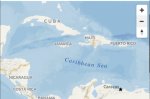
SPANNING A MILLION square miles and dotted with more than 700 islands, the Caribbean Sea was one of the last places colonized by Native Americans as they explored and settled North and South America. Archaeologists have long struggled to pinpoint the origins and movements of those intrepid seafarers. Now, thanks to genetic material gleaned from the bones of ancient Caribbean residents, the invisible history of this tropical archipelago is coming to light.
Among the surprising findings is that most of the Caribbean’s original inhabitants may have been wiped out by South American newcomers a thousand years before the Spanish invasion that began in 1492. Moreover, indigenous populations of islands like Puerto Rico and Hispaniola were likely far smaller at the time of the Spanish arrival than previously thought.
Extracting DNA from bones in warm, wet places like the Caribbean was impossible until a few years ago. But thanks to recent advances in genetic technology, a Harvard University lab run by geneticist David Reich was able to recover DNA from 174 individuals excavated at sites from Venezuela to the Bahamas.
The results, published December 23 in the journal Nature, follow on the heels of a July paper in Science that analyzed the genomes of 93 ancient Caribbean individuals at a University of Copenhagen lab. Because of the breakthrough, “we are able to paint a very detailed picture of the early migration history of the Caribbean,” said Johannes Krause, director of the Max Planck Institute for the Science of Human History and a co-author of the Science paper.
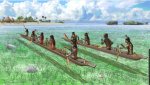
Both studies confirm that a wave of pottery-making farmers—known as Ceramic Age people—set out in canoes from the northeastern coast of South America starting some 2,500 years ago and island-hopped across the Caribbean. They were not, however, the first colonizers. On many islands they encountered a foraging people who arrived some 6,000 or 7,000 years ago from the coasts of Central America and northern South America.

SPANNING A MILLION square miles and dotted with more than 700 islands, the Caribbean Sea was one of the last places colonized by Native Americans as they explored and settled North and South America. Archaeologists have long struggled to pinpoint the origins and movements of those intrepid seafarers. Now, thanks to genetic material gleaned from the bones of ancient Caribbean residents, the invisible history of this tropical archipelago is coming to light.
Among the surprising findings is that most of the Caribbean’s original inhabitants may have been wiped out by South American newcomers a thousand years before the Spanish invasion that began in 1492. Moreover, indigenous populations of islands like Puerto Rico and Hispaniola were likely far smaller at the time of the Spanish arrival than previously thought.
Extracting DNA from bones in warm, wet places like the Caribbean was impossible until a few years ago. But thanks to recent advances in genetic technology, a Harvard University lab run by geneticist David Reich was able to recover DNA from 174 individuals excavated at sites from Venezuela to the Bahamas.
The results, published December 23 in the journal Nature, follow on the heels of a July paper in Science that analyzed the genomes of 93 ancient Caribbean individuals at a University of Copenhagen lab. Because of the breakthrough, “we are able to paint a very detailed picture of the early migration history of the Caribbean,” said Johannes Krause, director of the Max Planck Institute for the Science of Human History and a co-author of the Science paper.
Both studies confirm that a wave of pottery-making farmers—known as Ceramic Age people—set out in canoes from the northeastern coast of South America starting some 2,500 years ago and island-hopped across the Caribbean. They were not, however, the first colonizers. On many islands they encountered a foraging people who arrived some 6,000 or 7,000 years ago from the coasts of Central America and northern South America.